
A brief history of Welsh Grand National from Trelai to Chepstow
And then there were three left to fly flag for Wales

Living about half way between Wales’ two main cities as a child I knew very little about the history of either Swansea or Cardiff and it wasn’t until I moved to the Welsh capital from Hong Kong with my own family that I began to get to know it. Funny how taking the youngest child to football training teaches you much of what you need to know about the place you live.
When I was living in Hong Kong I still played a bit of football, some touch rugby and the odd round of golf but the biggest sporting attraction outside Hong Hong Sevens weekend was the horse-racing at Happy Valley, Sha Tin or even across the Pearl River estuary in Macau, the former being the highlight of the 13 years I spent there.
Aside from a trip during a childhood family outing to stay with an auntie in Evesham I’d never really experienced the thrill of a day at the races before, although I suppose it was that visit to the National Stud at Newmarket and backing a 30-1 winner, called Winneray (I believe), at Huntingdon Racecourse that probably lit the flame inside me.
Briefly after returning to the United Kingdom I worked for an equestrian website which cemented my interest in the sport here, although annual flutters on the Grand National at Aintree had also played their part too.
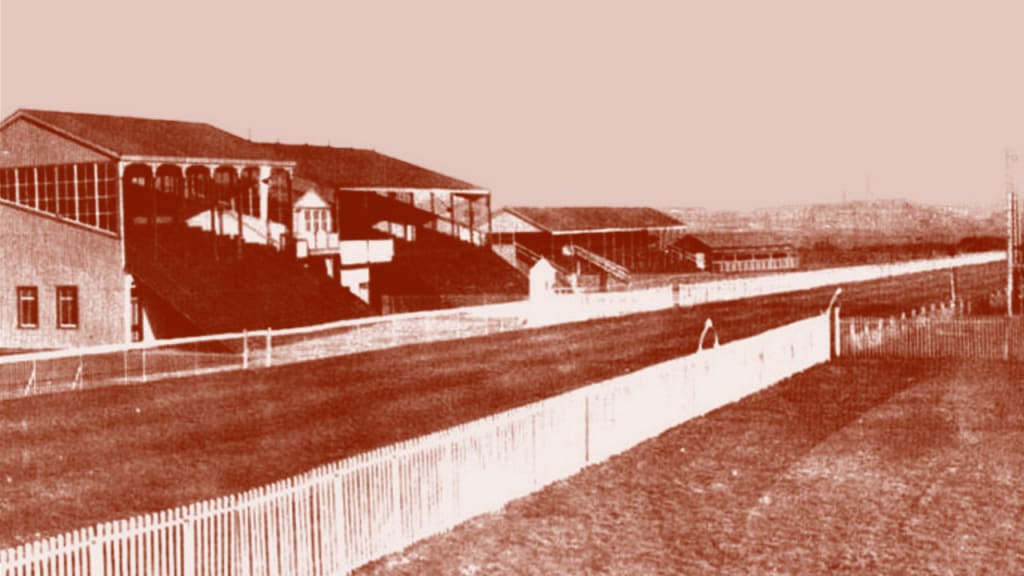
And so to Cardiff at the turn of this century and delivering the youngest to football training and matches with the inevitable trips to Trelai, which I soon found out was the former site of Ely Racecourse... which my research tells me closed on Thursday, 27 April 1939.
And, after the best part of 70 years, you’d never know there’d once been a vibrant racecourse on the playing fields off Cowbridge Road West. But there certainly was, and it had a far longer history than I’m likely to have… with the earliest recorded meeting in the city dating back to Wednesday, 31 July 1782, and continuing right up until four months before the outbreak of World War II, when Ely saw its final meeting on 27 April 1939.
Although held at a different venue before 1855, that’s 157 years of racing in Cardiff by my reckoning, however I’ve also learned that Cowbridge/Glamorgan Hunt Racecourse which closed on Thursday, 4 May, that year had been around since 1768… 14 years longer than racing in Cardiff.
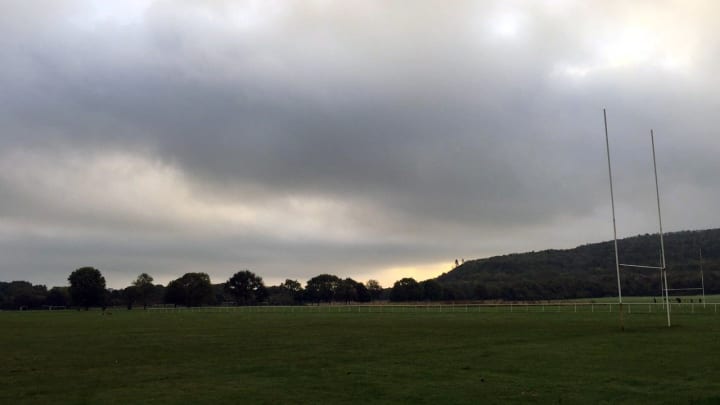
At the start of 2025 just three courses remain, Bangor-on-Dee which has been around since 1859; Chepstow, home of the Welsh Grand National, which opened in 1926 although meetings in the town date back to 1867; and Ffos Las, the new kid on the block, having opened for racing on Thursday, 18 June 2009.
While searching for information on Ely Racecourse I also discovered that around 1850 more than 30 courses existed in Wales, with a few more popping up on the calendar from time to time since the earliest meeting I could trace which was at Welshpool Racecourse on Wednesday, 5 June 1728. The course closed on Wednesday, 20 October 1847, after 119 years of staging racing in the town.
But, having opened in 2009, Ffos Las is Wales’ newest course, while also holding the title for being the UK’s youngest too. Lying between the old mining villages of Trimsaran and Carway, the translation of Ffos Las from Welsh to English is “blue ditch”, with the racecourse having been constructed at the site of an open-cast coal mine after operations ceased there.
Surrounded by rolling hills the racecourse has spectacular views down the Gwendraeth Valley to Carmarthen Bay and became the first new National Hunt venue to be built in the UK for 80 years. It's now a dual-purpose course and stages Flat meetings throughout the summer, with National Hunt meetings taking place for the rest of the year.
Ffos Las was bought in 2018 by Arena Racing Company (ARC) from founder Dai Walters, with ARC currently operating 16 courses including Bath, Brighton, Doncaster, Fontwell Park, Great Yarmouth, Hereford, Lingfield Park, Newcastle, Royal Windsor, Sedgefield, Southwell, Uttoxeter, Wolverhampton and Worcester, while Chepstow Racecourse is the second Welsh venue in their portfolio.
Chepstow opened in the 1920s at the town’s picturesque Piercefield Park and has since blossomed into a bustling track that is home to the Welsh Grand National.
In the late 19th century several places in South Wales held race meetings and there had been racing at St Arvans, near the present course, from 1892-1914 but racing in the town can be traced back even further than that.
However in 1925 a group of 10 South Wales businessmen, including Lord Queenborough and Courtenay Morgan – 1st Viscount Tredegar and Lord-Lieutenant of Monmouthshire – bought Piercefield House and had the racecourse built on the estate.
Today the course is used for Flat racing in the summer and National Hunt in the winter although, to begin with, the Flat was more prestigious with the Welsh Derby, Oaks and St Leger being held at the course. In 1933, at a two-day meeting, the multiple champion jockey Gordon Richards won 11 consecutive races at Chepstow, all six races on the first day and the first five on the next, before being beaten in a close finish in the final race of the meeting.
Now it’s the Welsh Grand National that the course is best-known for, with 8-1 shot Val Dancer winning a race blighted by heavy fog in last December’s running, when Welsh joint-favourite Jubilee Express, trained by Sam Thomas and ridden by Dylan Johnston, came second… the Mel Rowley-trained winner emerging from the gloom to cling on gamely to thwart Thomas’ two-pronged attack, his 2021-winner Iwilldoit finishing third and Monbeg Genius completing the places.
Established on 25 February 1859, Bangor-on-Dee is a National Hunt racecourse set in glorious countryside and overlooked by the Welsh hills. Incidentally it’s the only racecourse in the UK that doesn’t have a grandstand!
Today, many of the top trainers send their horses to Bangor as part of their education. Paul Nicholls, Donald McCain, Alan King, Phillip Hobbs, Nicky Henderson and Jonjo O’Neill all have regular runners at Bangor.
Recognised as a leader in its field, Chester Race Company (owner of Chester Racecourse too) consistently pushes boundaries to ensure Bangor delivers an optimum experience and opportunities for visiting owners, trainers, jockeys and the general public, with the course securing the Gold Standard Award from the Racehorse Owners Association.
And finally back to Trelai, Cardiff, formerly the venue for Ely Racecourse, used for National Hunt racing for the first time on Wednesday, 30 May 1855, where it survived right up until WW II.
Owned by the Cardiff Race club comprised of members of the Homfrays, Lindsays and Copes sporting dynasties, Ely soon became one of the most important venues in Wales attracting large crowds and top-class racehorses.
In those late Victorian days, trains from across Wales and England brought spectators, trainers, horses and jockeys to Ely station in large numbers and in 1895 the first Welsh Grand National was held there… the crowd so large police had to be called to prevent people breaking in for free. The winner was Tom Cannon's Deerstalker in what was reputedly a very exciting race.
Improvements were made to the course in 1897 and 1910, with a grandstand, director’s box, members lounge and refreshment rooms added in 1921. Unfortunately fire engulfed the course in 1937, reducing the main stands and grandstand to smouldering ruins in less than an hour.
Temporary stands allowed racing to continue at the course but the fire was the beginning of the end… on 27 April 1939 Grasshopper, ridden by racing legend Lestor Piggott’s father Keith, won the last event of the final race meeting before Ely Racecourse closed its gates forever.
And so ended 157 years of racing in the capital, which held its first recorded meeting from 31 July to 2 August 1782 at Heath Farm, believed to be the city’s first racecourse.
Until the 18th century, the Heath area was a large parcel of common land pitted with swamps and covered by an extensive forest divided into two areas “Little Heath”, which covered much of Cathays and Roath, and “Great Heath”, which extended as far as Llanishen and Rhiwbina.
Sometime around the 1760s part of Great Heath is believed to have become a two-mile-long racecourse, although in 1802 the Heath Enclosure Act allowed the Cardiff Corporation to auction off the common land to raise revenue. When Great Heath was sold, the racecourse was retained, having become the site of the city’s first recorded meeting in 1782.
But today the Welsh capital is no longer part of the UK racing calendar with Bangor, Ffos Las and Chepstow left to fly the flag for Wales.
About the Creator
Steve Harrison
From Covid to the Ukraine and Gaza... nothing is as it seems in the world. Don't just accept the mainstream brainwashing, open your eyes to the bigger picture at the heart of these globalist agendas.
JOIN THE DOTS: http://wildaboutit.com
Keep reading
More stories from Steve Harrison and writers in Unbalanced and other communities.
It's the Mid section where Woosie passed his driving test
When planning a golfing itinerary in Mid Wales it would be foolish to not heed the lessons of probably Wales’ greatest golfing protagonist and our only Major champion… the legend that is “Woosie”, who was born in Oswestry in March 1958.
By Steve Harrison12 months ago in Unbalanced
Wild Card Weekend Recap: What Happens Now?
I think I figured out why I love Wild Card Weekend so much. It's because it's the first playoff anything of the calendar year. The NFL season starts in the fall, and once upon a time, the champion was crowned either on or slightly before New Year's. The evolution of the NFL schedule has resulted in the playoffs starting just into the New Year, and currently, the final week of the season falls on the first weekend of the New Year, with Wild Card Weekend coming a week after that. So yes, chronologically, the NFL's Wild Card Weekend serves as the first playoff anything of the calendar year.
By Clyde E. Dawkins7 days ago in Unbalanced



Comments
There are no comments for this story
Be the first to respond and start the conversation.