
2026 Winter Olympics Men’s Figure Skating: When Power, Precision, and History Collided on Ice
How the Milan 2026 Olympics Redefined Men’s Figure Skating Through Power, Precision, and a New Technical Standard


The men’s figure skating competition at the 2026 Winter Olympics in Milan delivered exactly what fans hoped for — breathtaking athleticism, technical evolution, and moments that may redefine the sport for a generation. Held at the Forum di Milano as part of the Milan-Cortina Games, the event became one of the most watched and debated showcases of the Olympics, blending raw power with artistic control at a level never seen before.
A New Era of Men’s Figure Skating
Men’s figure skating has long balanced artistry and athletic difficulty, but the 2026 Olympics marked a clear turning point. The technical ceiling of the sport was pushed higher than ever, with quadruple jumps no longer seen as rare risks but expected elements among medal contenders. Skaters arrived in Milan knowing that clean skating alone would not be enough — innovation and execution were mandatory.
This shift was embodied most clearly by Ilia Malinin, the American phenom widely known as the “Quad God.” Entering the Games as the favorite, Malinin carried not just medal expectations but the weight of redefining what was physically possible in Olympic competition.
Ilia Malinin’s Commanding Performance
Malinin’s Olympic journey began with dominance in the short program, where his technical precision and calm delivery placed him at the top of the standings. His skating combined explosive jumps with unusual consistency, setting him apart from a field filled with elite talent.
The free skate was where history felt closest. Malinin planned a layout that included multiple quadruple jumps, a strategy that demonstrated confidence rather than recklessness. His execution reflected years of refinement, and every clean landing intensified the sense that men’s figure skating had entered a new chapter. While the quadruple Axel — the most difficult jump in the sport — remained the subject of intense anticipation, Malinin’s performance proved that even without spectacle-driven risk, his skating was still unmatched.
Beyond the technical elements, his composure stood out. Olympic pressure has undone countless favorites in the past, but Malinin skated with maturity beyond his years, fully in control of the moment.
Global Competition at Its Peak
The men’s event was far from a one-man show. Skaters from Japan, Europe, and North America brought contrasting styles that highlighted the sport’s diversity. Japanese competitors emphasized flow and musical interpretation, while European skaters leaned into elegance and refined transitions. Each performance added texture to the competition, reinforcing why figure skating remains one of the Olympics’ most emotionally engaging sports.
Judging reflected this balance. Technical base value mattered more than ever, but performance components still separated podium contenders from the rest. Falls and under-rotations were costly, and even small mistakes reshaped the leaderboard — a reminder of how unforgiving Olympic figure skating can be.
The Olympic Team Event Influence
Malinin’s impact was felt even before the individual medals were decided. As part of Team USA, he played a crucial role in securing gold in the team figure skating event earlier in the Games. That success carried momentum into the men’s individual competition and reinforced the United States’ resurgence as a figure skating powerhouse.
The team event also underscored how modern Olympic figure skating rewards versatility. Skaters are now expected to deliver under pressure multiple times across the Games, making endurance and mental strength just as important as jump difficulty.
Redefining the Sport’s Future
What made the 2026 men’s figure skating competition special was not just who stood on the podium, but what the performances symbolized. The standard for Olympic success has changed. Programs are now built around technical ambition first, with artistry woven in rather than treated as a separate goal.
This evolution raises questions about the sport’s future. Can artistry survive in an era dominated by quads? The Milan competition suggested the answer is yes — but only when skaters possess the discipline to balance both. Malinin’s skating, in particular, demonstrated that technical dominance does not have to come at the expense of musicality.
A Defining Olympic Moment
As the lights dimmed at the Forum di Milano and the final scores were posted, it became clear that the 2026 Winter Olympics had delivered a defining chapter in men’s figure skating history. Fans witnessed not just medal performances, but the sport’s transformation in real time.
For younger skaters watching around the world, the message was unmistakable: the boundaries have moved. The challenge now is not whether the next generation can match what was seen in Milan, but how far beyond it they are willing to push.
About the Creator
Keep reading
More stories from Story Prism and writers in Unbalanced and other communities.
Chloe Kim Eyes Historic Three-Peat at 2026 Winter Olympics Women’s Snowboarding Halfpipe
The 2026 Winter Olympics in Milan-Cortina have delivered unforgettable moments across all disciplines, but few events have captured global attention like the Women’s Snowboarding Halfpipe. With the likes of Chloe Kim defending her Olympic titles, the competition has become a thrilling spectacle of athleticism, creativity, and nerve. As the Games reached February 12, 2026, the Halfpipe finals emerged as a centerpiece, blending high-stakes competition with the artistry and daring that define snowboarding at its highest level.
By Story Prisma day ago in Unbalanced
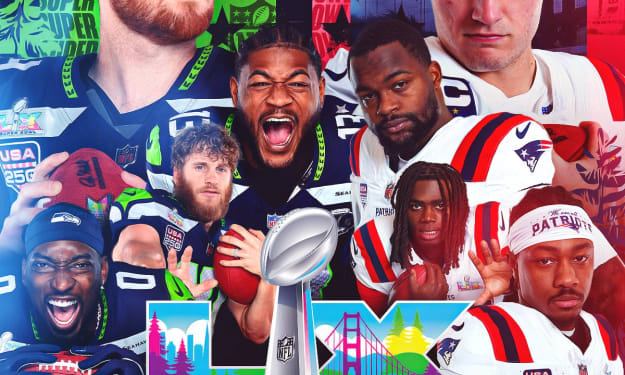
Super Bowl LX Recap: A Team Called Hawks
Sixty. The Super Bowl turned 60! Still amazes me that this was the sixtieth Super Bowl played in NFL history. It seems like yesterday that I watched Super Bowl XXVII, the first SB I ever watched. The QB who won Super Bowl XXVII has since called a few SBs, and will call next year's game, but that's another story. Super Bowl LX took place at Levi's Stadium in Santa Clara, California, the home stadium of the San Francisco 49ers. However, it was one of their division foes who represented the NFC, as the Seattle Seahawks faced off against the New England Patriots.
By Clyde E. Dawkins5 days ago in Unbalanced
Jill Zarin
Reality television personalities rarely stay confined to the shows that made them famous. Over time, many become commentators, cultural touchpoints, or even symbols of broader entertainment conversations. Jill Zarin, best known from The Real Housewives of New York City, fits squarely into that category. Years after her most prominent on-screen moments, Zarin continues to surface in discussions about media, celebrity commentary, and how audiences interpret modern entertainment. In a landscape now shaped by streaming platforms, viral music moments, and massive televised events like the Super Bowl, figures such as Jill Zarin represent a bridge between traditional reality TV fame and today’s fast-moving pop culture ecosystem. Jill Zarin’s Place in Reality TV History Jill Zarin rose to prominence during the early years of Real Housewives, a time when reality television was becoming a dominant force in entertainment rather than a niche curiosity. Her outspoken personality, business-minded approach, and emotional transparency made her one of the franchise’s most recognizable figures. What set Zarin apart was not just drama, but relatability. She often positioned herself as a straight-talker, someone who said what others might avoid. That persona helped cement her relevance long after her regular appearances on the show ended. As entertainment culture has evolved, so has the way audiences revisit personalities like Zarin—not just through reruns, but through interviews, podcasts, and social media commentary. Celebrity Commentary and the Megyn Kelly Effect The rise of opinion-driven media has blurred the lines between journalism, commentary, and entertainment. Public figures such as Megyn Kelly exemplify this shift, frequently offering strong takes on cultural moments that spark debate across platforms. When reality stars like Jill Zarin are discussed alongside commentators like Kelly, it highlights how entertainment discourse now thrives on perspective rather than access alone. Viewers are less interested in polished narratives and more drawn to authentic—or at least unfiltered—opinions. This environment rewards personalities who are willing to engage with controversy, emotion, and cultural tension. Streaming, Spotify, and the Global Audience Modern entertainment no longer lives in one place. Platforms like Spotify have transformed how people consume music, podcasts, and commentary, creating a global audience that interacts with content in real time. Reality stars, journalists, and entertainers all compete in the same digital space, where relevance depends on adaptability. Music moments now spread instantly across borders. Fans don’t just listen—they search, share, and even translate lyrics to understand cultural context. This was especially visible with artists like Bad Bunny, whose performances routinely spark worldwide curiosity. Search trends around Bad Bunny lyrics in English Super Bowl reflect how international music intersects with American mega-events, turning halftime shows into global cultural exchanges rather than purely domestic spectacles. Super Bowl Culture Beyond the Game The Super Bowl has become more than a sporting event—it’s an entertainment showcase. Viewers tune in as much for commercials and halftime performances as for football. Each year, discussions around bad Super Bowl commercials trend almost as strongly as praise for the best ones. Looking ahead, speculation about 2026 Super Bowl commercials already reflects shifting audience expectations. Viewers are increasingly critical of messaging that feels forced, outdated, or disconnected from real-world sentiment. The bar for creativity is higher, and social media ensures instant feedback. In this environment, entertainment figures like Jill Zarin often find renewed relevance, commenting on pop culture moments with the perspective of someone who understands both traditional television and modern audience behavior. Music, Meaning, and Messaging Entertainment today is deeply intertwined with messaging. Music performances, commercials, and celebrity statements are often evaluated not just for quality, but for meaning. Phrases like “the only thing more powerful than hate” resonate because they echo a broader desire for unity and emotional authenticity in a fragmented media world. Super Bowl halftime shows, in particular, have become platforms for cultural expression. Viewers don’t just watch—they analyze themes, representation, and impact. Ratings data, such as Super Bowl halftime ratings 2026, will not only measure viewership but also reflect how successfully entertainment connects across generations and cultures. Jill Zarin in a New Entertainment Era While Jill Zarin may not headline halftime shows or star in commercials, her continued presence in entertainment discussions speaks to the longevity of reality TV personalities who adapt. Her career illustrates how fame today is less about constant visibility and more about cultural relevance. Whether appearing on podcasts, being referenced in celebrity commentary, or resurfacing in conversations about media evolution, Zarin represents a familiar voice in an unfamiliar entertainment era. She comes from a time when reality TV felt raw and unscripted, a contrast to today’s hyper-produced content. The Bigger Picture Entertainment culture is no longer siloed. Reality TV stars, journalists, musicians, and athletes all occupy the same digital stage. Events like the Super Bowl amplify this convergence, blending sports, music, advertising, and celebrity commentary into a single global moment. Jill Zarin’s enduring relevance—alongside figures like Megyn Kelly and global artists like Bad Bunny—demonstrates how entertainment now thrives on connection rather than category. Audiences don’t just consume content; they interpret it, debate it, and share it across platforms. Final Thoughts Jill Zarin’s journey through entertainment reflects a broader truth about modern media: staying relevant means evolving with the conversation. From reality television roots to participation in a culture shaped by streaming, social commentary, and global events, her presence underscores how entertainment continues to expand beyond traditional boundaries. As the industry moves toward events like the 2026 Super Bowl and beyond, the voices that endure will be those that understand not just what audiences watch—but why they care.
By Saboor Brohi 4 days ago in Unbalanced
Bartender
On the heels of grief, pain bears down hard. On the heels of death, pain awakens the quiet place between the end of our own life and now. Feeling anything is like seeing a film and in black and white, slow motion, all sound turned off. Just watching. Gritting teeth, awkward smiles and bloody red eyes move around, scanning the others who are feeling something I don't want to feel, but I do. Escapism is all I have ever known. ~
By ROCK aka Andrea Polla (Simmons)3 days ago in Poets



Comments
There are no comments for this story
Be the first to respond and start the conversation.