
Chloe Kim Eyes Historic Three-Peat at 2026 Winter Olympics Women’s Snowboarding Halfpipe
A High-Flying Showdown as Chloe Kim and Global Contenders Battle for Olympic Glory in Milan-Cortina 2026

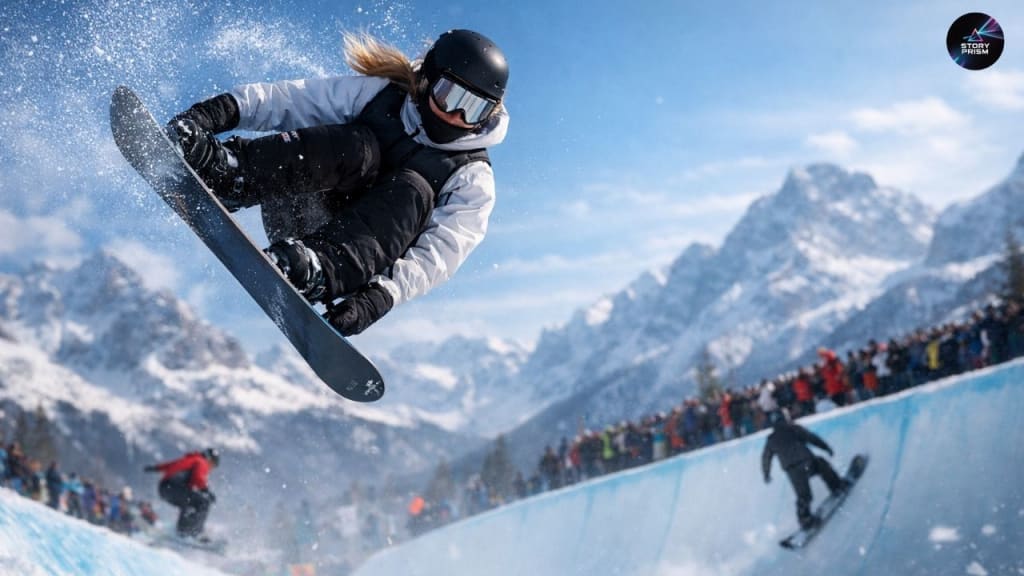
The 2026 Winter Olympics in Milan-Cortina have delivered unforgettable moments across all disciplines, but few events have captured global attention like the Women’s Snowboarding Halfpipe. With the likes of Chloe Kim defending her Olympic titles, the competition has become a thrilling spectacle of athleticism, creativity, and nerve. As the Games reached February 12, 2026, the Halfpipe finals emerged as a centerpiece, blending high-stakes competition with the artistry and daring that define snowboarding at its highest level.
A Storied Champion: Chloe Kim
For fans of snowboarding, Chloe Kim’s name is synonymous with excellence in the Halfpipe. Already an Olympic gold medalist in both 2018 and 2022, Kim entered Milan-Cortina with the possibility of achieving a historic milestone: becoming the first woman in Olympic history to win three consecutive gold medals in the snowboarding Halfpipe. Her participation brought not only hope for victory but also immense pressure, as the world watched to see if she could maintain her dominance.
Kim’s journey to the 2026 Olympics has been marked by both triumph and resilience. Following her previous victories, she faced rigorous competition on the FIS Snowboard World Cup circuit, including strong performances from rivals like Mitsuki Ono (Japan) and Rise Kudo (Japan). Each competitor demonstrated remarkable skill and consistency, signaling that the Halfpipe final would be anything but predictable.
The Road to Qualification
The qualification rounds for the Women’s Halfpipe were held on February 11, 2026, at the Livigno Snow Park in Valtellina, Italy. Athletes were allotted two runs each, with only their highest-scoring run counting toward advancement. The top twelve snowboarders would progress to the finals, setting the stage for a high-stakes showdown.
Chloe Kim dominated the qualification rounds, achieving the top score with a near-perfect performance that highlighted her combination of technical skill and stylistic flair. Close behind were Sara Shimizu (Japan) and Maddie Mastro (USA), both of whom demonstrated precision and daring in their runs. Other notable qualifiers included Choi Ga-on (South Korea), Queralt Castellet (Spain), and Sena Tomita (Japan), all of whom had previously earned medals or high rankings in World Cup events.
The qualifications not only revealed the talent pool for the finals but also underscored the global diversity of snowboarding excellence. With competitors from Asia, Europe, and North America, the 2026 Women’s Halfpipe showcased the sport’s evolution into a truly international discipline.
The Halfpipe Finals: A Clash of Titans
On February 12, 2026, the Halfpipe finals commenced, and the excitement was palpable. Fans, athletes, and commentators alike were eager to see whether Kim could maintain her winning streak against a field of formidable challengers. The finals consisted of three runs per athlete, with the highest score counting as their final result.
Chloe Kim’s first run set the tone for the competition. She executed a combination of double corks, 900s, and stylish grabs, demonstrating both her technical mastery and artistic expression. Judges rewarded her with an impressive score, immediately signaling that she remained the athlete to beat. Her style not only reflected years of experience but also pushed the boundaries of what has been achieved in women’s snowboarding.
Meanwhile, Mitsuki Ono and Rise Kudo delivered runs filled with high amplitude and innovative tricks, showcasing Japan’s growing prominence in women’s snowboarding. Ono’s fluid transitions and precise rotations earned her a high score, positioning her as a serious contender for the podium. Kudo’s bold moves, including a technically demanding double cork 1080, thrilled both spectators and judges.
Other finalists brought their own strengths to the competition. Sena Tomita, known for her smooth style and controlled execution, impressed with her amplitude and clean landings. Queralt Castellet, the Spanish veteran and 2022 bronze medalist, executed a technically sound routine that combined speed, height, and creativity, reinforcing her status as one of the sport’s most consistent performers.
Key Moments and Highlights
The 2026 Women’s Halfpipe was marked by several memorable moments. Chloe Kim’s final run stood out as a testament to her skill and composure under pressure. She executed a near-flawless routine featuring a combination of the Cab Double Cork 900 and Frontside Double Cork 1080, showcasing her signature amplitude and stylistic finesse. The run earned her one of the highest scores in Olympic Halfpipe history, solidifying her place as the frontrunner.
Choi Ga-on, representing South Korea, added drama to the event with a bold attempt at a trick not previously landed in Olympic competition. Though she did not achieve perfect execution, her run demonstrated the continuous evolution of women’s snowboarding, inspiring younger athletes to push technical limits.
The competition was not without its risks. Several athletes experienced minor crashes and near-misses during their runs, underscoring the dangers inherent in Halfpipe snowboarding. Despite these challenges, the athletes’ resilience and sportsmanship were evident as they supported one another and maintained focus throughout the finals.
Historical Significance
If Chloe Kim secures the gold medal, she will achieve a historic three-peat, a feat that would cement her legacy as one of the greatest snowboarders in Olympic history. This accomplishment would also highlight the growing visibility and competitiveness of women’s snowboarding on the global stage.
Beyond individual achievements, the 2026 Women’s Halfpipe reflects broader trends in winter sports. The increasing presence of international athletes, especially from Asia, demonstrates the globalization of snowboarding. Additionally, the event has showcased advancements in training techniques, trick complexity, and equipment technology, all contributing to higher levels of performance.
Controversies and Challenges
While the Women’s Halfpipe provided thrilling athletic performances, the 2026 Winter Olympics have not been without controversy. Across the Games, discussions surrounding athlete safety, equipment regulations, and political gestures have sparked debate. For instance, the broader Olympics witnessed a Ukrainian skeleton racer being disqualified for a helmet tribute, highlighting tensions between personal expression and Olympic neutrality rules.
In the context of snowboarding, minor injuries and crashes serve as reminders of the inherent risks of the sport. Athletes must balance daring tricks with precise execution, and the judges weigh both difficulty and style in their scoring. The 2026 Women’s Halfpipe has exemplified this balance, with competitors demonstrating exceptional courage and skill.
Audience Engagement and Global Impact
The Women’s Halfpipe has drawn significant viewership from around the world. Fans have flocked to the Livigno Snow Park, while millions of viewers tuned in via NBC, CNBC, Peacock, and other broadcasters. Social media platforms have amplified the excitement, with clips of Chloe Kim’s runs and other competitors’ highlights trending internationally.
The event’s popularity also underscores the cultural resonance of snowboarding. Beyond competition, Halfpipe snowboarding embodies creativity, individual expression, and athletic artistry. It serves as an inspiration for young athletes, particularly girls, who see in Chloe Kim and her peers a model of possibility and achievement.
Looking Ahead
As the 2026 Winter Olympics continue, the Women’s Snowboarding Halfpipe will remain a key talking point. The final results, medal ceremonies, and subsequent analysis will shape discussions about technique, innovation, and the evolution of women’s snowboarding. Chloe Kim’s pursuit of a third consecutive Olympic gold has already sparked comparisons with legends in other sports, and her performance will be studied and celebrated for years to come.
The 2026 Games have also reinforced the importance of global competition. With athletes from Japan, South Korea, Spain, China, and the United States all performing at elite levels, the Halfpipe finals illustrate the international depth of the sport. Future Winter Olympics are likely to see even more innovation as young athletes strive to surpass the benchmarks set in Milan-Cortina.
Conclusion
The 2026 Winter Olympics Women’s Snowboarding Halfpipe has been an event defined by excellence, excitement, and history-making potential. Chloe Kim’s extraordinary skill, combined with the remarkable performances of her international competitors, has created a narrative that transcends medals and records. From the thrilling highs of flawless runs to the tense moments of near-misses, the Halfpipe has delivered drama and inspiration in equal measure.
As Chloe Kim aims for her third gold medal, the world watches in awe, celebrating not only her achievements but also the broader growth and globalization of women’s snowboarding. Milan-Cortina 2026 has provided a stage where talent, courage, and artistry converge, leaving an indelible mark on the history of the Winter Olympics.
For fans, athletes, and aspiring snowboarders alike, the Women’s Halfpipe represents the pinnacle of winter sports achievement — a blend of athleticism, creativity, and fearless ambition. The legacy of these Games, and the performances they witnessed, will resonate far beyond the mountains of Italy, inspiring the next generation of Olympians to push the limits of what is possible in the snowboarding world.
About the Creator
Keep reading
More stories from Story Prism and writers in Unbalanced and other communities.
Isaiah Stewart: Detroit’s Defensive Powerhouse and Rising NBA Star
Isaiah Stewart has quickly become one of the NBA’s most intriguing young talents—a player known for his physical presence, defensive intensity, and competitive spirit. Far more than just a name on the Detroit Pistons roster, Stewart has emerged as a cornerstone of the team’s rebuilding efforts while attracting attention for both his on-court prowess and fiery temperament.
By Story Prism4 days ago in Unbalanced
Super Bowl LX Recap: A Team Called Hawks
Sixty. The Super Bowl turned 60! Still amazes me that this was the sixtieth Super Bowl played in NFL history. It seems like yesterday that I watched Super Bowl XXVII, the first SB I ever watched. The QB who won Super Bowl XXVII has since called a few SBs, and will call next year's game, but that's another story. Super Bowl LX took place at Levi's Stadium in Santa Clara, California, the home stadium of the San Francisco 49ers. However, it was one of their division foes who represented the NFC, as the Seattle Seahawks faced off against the New England Patriots.
By Clyde E. Dawkins5 days ago in Unbalanced
2026 Winter Olympics Ice Hockey
Ice hockey has long been one of the defining events of the Winter Olympic Games, combining speed, strategy, and national pride in a way few other sports can match. As the world turns its attention to the 2026 Winter Olympics in Milan and Cortina d’Ampezzo, ice hockey is once again expected to take center stage. With historic rivalries, emerging talent, and the possibility of top professional players competing, the tournament promises to be one of the most compelling chapters in Olympic hockey history.
By Saboor Brohi 3 days ago in Unbalanced




Comments
There are no comments for this story
Be the first to respond and start the conversation.