
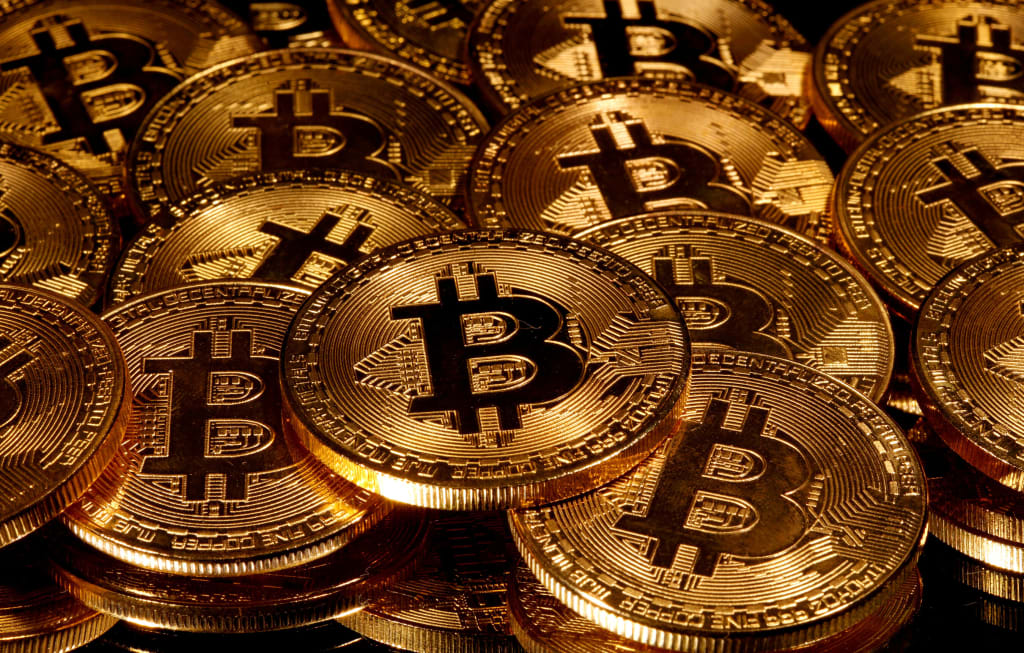
Bitcoin is a digital currency that was created in 2009 by an unknown person or group using the pseudonym Satoshi Nakamoto. It is a decentralized currency, which means that it is not controlled by any government or financial institution. Instead, it uses a decentralized ledger called the blockchain to record all transactions and verify ownership of bitcoins.
Bitcoin can be bought and sold on cryptocurrency exchanges or used to purchase goods and services from merchants who accept it as payment. Transactions are made using digital wallets, which are stored on a computer or mobile device, and can be accessed with a private key.
Bitcoin's value is determined by market demand and supply. As of 2021, its value has been highly volatile, with periods of rapid appreciation followed by significant declines. While some see bitcoin as a revolutionary new form of currency, others view it as a speculative investment with significant risks.
What's This?
Bitcoin works on a decentralized peer-to-peer network, which means that there is no central authority controlling the currency. Instead, transactions are processed and validated by a network of users known as nodes.
When a user sends bitcoins to another user, the transaction is broadcast to the entire network. Nodes verify the transaction by solving complex mathematical equations, which require a significant amount of computing power. Once the transaction is verified, it is added to the blockchain, which is a public ledger that contains a record of all transactions.
Miners are users who provide computing power to the network and are rewarded with newly created bitcoins for their work. The amount of computing power required to mine bitcoins increases over time, making it more difficult and costly to mine as more bitcoins are created.
Bitcoin also has a fixed supply limit of 21 million bitcoins, which means that there will never be more than 21 million bitcoins in circulation. This is a key feature of bitcoin, as it helps to maintain the currency's scarcity and value over time.
Overall, bitcoin works by using a decentralized network and a public ledger to enable peer-to-peer transactions without the need for intermediaries like banks or governments.
Unknown Facts About Bitcoin
Some lesser-known facts about Bitcoin include:
- Privacy of identity: Bitcoin transactions can be conducted without revealing a user's identity. This makes Bitcoin anonymous, but also allows for its use in illegal activities.
- Satoshi Nakamoto identity: The true identity of Bitcoin's creator, Satoshi Nakamoto, remains unknown. The name could be a pseudonym for one or more individuals.
- Lost Bitcoins: Many people lose their Bitcoins when they lose their wallets or private keys. As a result, about 4 million Bitcoins are considered lost forever.
- First Bitcoin transaction: The first-ever Bitcoin transaction was conducted in 2010 when two pizzas were purchased for 10,000 Bitcoins. At that time, 10,000 Bitcoins were worth just a few dollars, but they are now worth millions.
- Low transaction fees: Bitcoin transactions can be conducted at very low fees, unlike bank or other intermediary fees. However, as transaction volume increases, fees can also increase.
- Blockchain technology: The blockchain technology that underpins Bitcoin can be used not just for money transfer but also in many other sectors. For example, the healthcare and logistics sectors can use blockchain technology to provide data security and traceability.
- Value volatility: Bitcoin's value can be highly volatile. In the past, there have been rapid increases and decreases of hundreds of percentages within a short period of time. As a result, Bitcoin investment is considered a high-risk investment.
How u Can Earn and Spend Bitcoin ?
There are several ways to earn and spend bitcoin:
- Mining: You can earn bitcoin by mining it. This requires significant computing power and specialized hardware, so it's not practical for most people.
- Trading: You can earn bitcoin by trading it on a cryptocurrency exchange. You can buy low and sell high, or use other trading strategies to profit from market movements.
- Accepting bitcoin as payment: If you own a business, you can start accepting bitcoin as payment for goods or services. This allows you to earn bitcoin directly from customers.
- Completing microtasks: Some websites and apps offer small amounts of bitcoin in exchange for completing simple tasks, such as watching videos or filling out surveys.
Once you have earned bitcoin, you can spend it in several ways:
- Online purchases: Many online merchants accept bitcoin as payment, including some major retailers like Microsoft and Overstock.com.
- Peer-to-peer transactions: You can use bitcoin to send money to other people directly, without the need for a bank or other intermediary.
- Investment: Some people choose to hold onto bitcoin as an investment, hoping that its value will appreciate over time.
- It's worth noting that while bitcoin is becoming more widely accepted, it is not yet as widely used as traditional currencies. As such, it may be difficult to find places to spend it in some areas.
About the Creator
İrfan Kolat
I'm from Turkey. And I'm here because I want to learn something and share my knowledge with you.
Keep reading
More stories from writers in Trader and other communities.
Australia General Insurance Market Set for Strong Growth Amid Digital Innovation and Climate Risks
The Australia General Insurance Market continues to expand significantly as insurers navigate complex risk environments, pricing pressures, and digital transformation.
By Rashi Sharma2 days ago in Trader
Philippines Online Grocery Market: Digital Retail Boom, Consumer Convenience & Last-Mile Innovation
Philippines Online Grocery Market Overview The Philippines online grocery market is experiencing rapid expansion as consumer preferences shift toward digital convenience, time-saving solutions and seamless shopping experiences. Online grocery retail — encompassing fresh produce, packaged foods, beverages, household essentials, health products and more — has transformed how Filipinos source daily needs. The Philippines online grocery market size reached USD 3.9 Billion in 2025. Looking forward, the market is expected to reach USD 32.3 Billion by 2034, exhibiting a growth rate (CAGR) of 26.32% during 2026-2034. This remarkable growth underscores rising internet penetration, expanding mobile wallet usage, enhanced delivery networks and strengthened trust in digital commerce — all contributing to mainstream adoption of online grocery platforms.
By Manisha Dixit7 days ago in Trader
Ludacris and Nelly draw backlash over bookings at MAGA-coded music festival
Ludacris and Nelly headlining a mostly right-wing event is good for them. It’s also great for the genre of hip hop. The two rap veterans have showcased their talents on other stages. Why can’t they perform for mostly MAGA folks and grab that bag?
By Skyler Saunders6 days ago in Beat


Comments
There are no comments for this story
Be the first to respond and start the conversation.