
Philippines Online Grocery Market: Digital Retail Boom, Consumer Convenience & Last-Mile Innovation
How changing shopping behaviours, mobile adoption and logistics optimisation are reshaping grocery retail in the Philippines

Philippines Online Grocery Market Overview
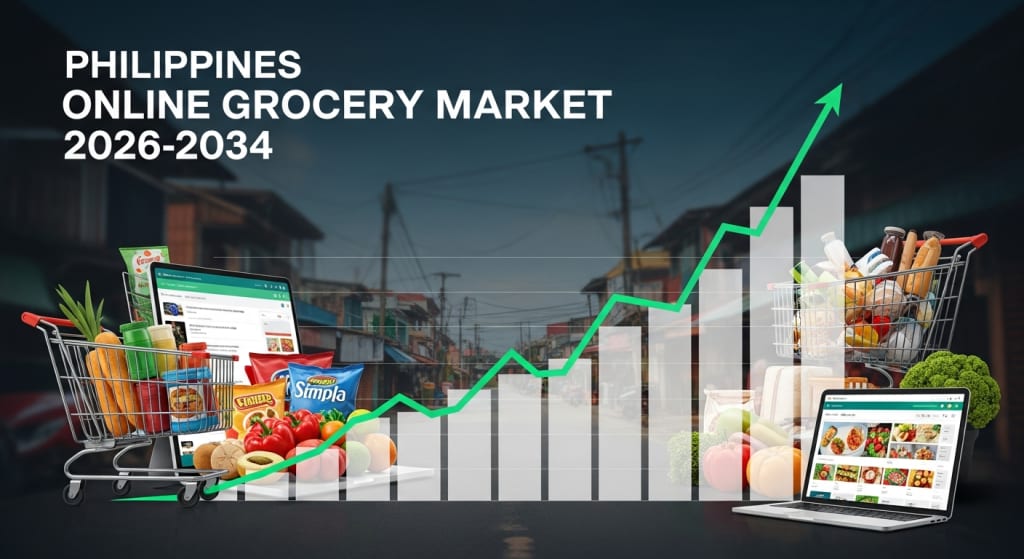
The Philippines online grocery market is experiencing rapid expansion as consumer preferences shift toward digital convenience, time-saving solutions and seamless shopping experiences. Online grocery retail — encompassing fresh produce, packaged foods, beverages, household essentials, health products and more — has transformed how Filipinos source daily needs. The Philippines online grocery market size reached USD 3.9 Billion in 2025. Looking forward, the market is expected to reach USD 32.3 Billion by 2034, exhibiting a growth rate (CAGR) of 26.32% during 2026-2034. This remarkable growth underscores rising internet penetration, expanding mobile wallet usage, enhanced delivery networks and strengthened trust in digital commerce — all contributing to mainstream adoption of online grocery platforms.
The pandemic catalysed a fundamental change in consumer behaviour, pushing many households to embrace digital channels for essential shopping. Post-pandemic, this trend has stuck, with convenience, safety and personalised experiences driving repeat usage. Supermarkets, specialty retailers and pure-play digital marketplaces are all investing in this space, offering tailored services such as click-and-collect, scheduled delivery, real-time order tracking and subscription-based purchasing.
What’s Driving Market Growth
Rising Digital Adoption & Smartphone Penetration
The proliferation of affordable smartphones, improved mobile data infrastructure and accessible e-commerce platforms have significantly widened the online grocery user base. Filipino consumers — particularly in urban and suburban regions — are embracing digital shopping as a time-efficient and user-friendly alternative to traditional in-store purchases.
Convenience & Time Savings
Online grocery commerce eliminates in-store queues, reduces travel time and offers flexible delivery options that align with busy lifestyles, remote work preferences and urban commuting patterns. The convenience factor — coupled with personalised recommendations and streamlined checkout experiences — appeals strongly to younger, tech-savvy consumers and dual-income households.
Fintech Integration & Seamless Payments
Integration of digital wallets, QR-based payments, bank transfers and buy-now-pay-later options enhances transaction convenience and financial inclusion. Local payment solutions such as GCash, PayMaya and bank e-wallets paired with secure checkout systems foster consumer confidence and reduce friction in the purchase funnel, especially among first-time online shoppers.
Improved Logistics & Last-Mile Delivery
Last-mile delivery optimisation — including same-day delivery, scheduled time slots and rider-based fulfilment — strengthens online grocery value propositions. Retailers and delivery partners are leveraging technology to optimise routes, reduce delivery costs and improve fulfilment accuracy, which enhances customer satisfaction and repeat retention.
Request a Sample Report with the Latest 2026 Data & Forecasts
What the Opportunities Are
Subscription & Membership Models
Retailers can develop subscription-based grocery services that offer discounted pricing, free delivery, priority slots and personalised perks — fostering loyalty, repeat purchases and stable recurring revenue streams.
AI-Driven Personalisation & Recommendation Engines
Leveraging artificial intelligence and machine learning to analyse purchase history, seasonal trends and customer preferences can enhance cross-sell opportunities, improve basket value and provide tailored shopping experiences.
Cold Chain & Fresh Delivery Optimisation
Improving refrigerated delivery networks, packaging solutions and cold-chain monitoring systems enhances freshness assurance and reduces spoilage. This is especially important for perishable categories like dairy, meat and produce.
Hybrid Small-Format Grocery Hubs
Developing neighbourhood fulfilment hubs or micro-warehouses can reduce delivery times, cut logistics costs and expand service to suburban and peri-urban regions where large-scale supermarkets are less accessible.
Partnerships with Local Merchants
Integrating local grocers, specialty food providers and farm-to-consumer channels expands product variety and supports local economies. Collaborative platforms that connect small producers to digital demand can elevate grocery experiences and differentiate offerings.
Recent News and Developments in Philippines Online Grocery Market
Jul 2025: Leading supermarket chains expanded online grocery delivery zones beyond major cities to key suburban and provincial regions, improving accessibility and responding to growing demand for last-mile services outside metropolitan hubs.
Sep 2025: Several digital marketplaces launched membership loyalty programmes tied to recurring grocery purchases, offering points, discounts and priority delivery slots — enhancing customer stickiness and increasing average order values.
Nov 2025: Industry analysts reported that mobile app orders overtook desktop transactions for the first time, as optimized mobile experiences, in-app payment wallets and personalised push-notifications drove higher engagement and conversion rates.
Why should You Know About Philippines Online Grocery Market?
You should know about this market because online grocery retail exemplifies the intersection of consumer behaviour transformation, digital commerce innovation and urban convenience preferences. As Filipinos increasingly rely on mobile technology, quick delivery services and seamless shopping experiences, online grocery platforms are becoming integral to everyday life — reshaping how households source essentials and manage time.
For investors, the market presents compelling growth outlooks rooted in high digital adoption, fintech integration, and expanding logistics solutions that enable scalable revenue models. Subscription services, personalised AI engines and hybrid fulfilment centres can create differentiated competitive advantage and unlock recurrent revenue streams.
For retailers and technology providers, understanding segmentation, platform dynamics and consumer expectations supports smarter product strategies, customer engagement frameworks and operational investments. In essence, the Philippines online grocery market reflects how convenience, connectivity and consumer confidence converge — making it a vibrant and growing sector with long-term relevance in the digital economy.
About the Creator
Keep reading
More stories from Manisha Dixit and writers in Trader and other communities.
Philippines Automotive Wiring Harness Market: Electrification, Vehicle Production & Industry Momentum
Philippines Automotive Wiring Harness Market Overview The Philippines automotive wiring harness market is expanding steadily as the country’s automotive production, vehicle electrification trends and aftermarket demands continue to grow. Automotive wiring harnesses — complex assemblies of cables and connectors that transmit electrical power and signals within vehicles — are essential components in all modern cars, trucks and commercial vehicles. The Philippines automotive wiring harness market size was valued at USD 1,788.99 Million in 2025 and is projected to reach USD 2,390.63 Million by 2034, growing at a compound annual growth rate of 3.27% from 2026-2034. This sustained growth reflects rising vehicle production volumes, increasing adoption of advanced electronics in vehicles, and expanding demand for electric vehicles (EVs) and hybrid models, all of which require intricate wiring solutions to support powertrain, infotainment, safety and connectivity systems.
By Manisha Dixit6 days ago in Trader
Japan Building Automation Systems Market Size and Forecast 2025–2033
Introduction Japan is undergoing a profound transformation in the way its buildings are designed, managed, and operated. From skyscrapers in Tokyo to manufacturing hubs in Aichi and logistics centers in Chiba, the demand for smarter, more energy-efficient, and digitally connected infrastructure is accelerating. At the center of this transformation lies the Building Automation Systems (BAS) market, which integrates mechanical, electrical, and electromechanical services into a centralized, intelligent control framework.
By Marthan Sir4 days ago in Trader


Comments
There are no comments for this story
Be the first to respond and start the conversation.