
🌸 Vietnam’s Orchid Revolution: How Technology Tamed the ‘Noble Flower’ for Billion-VND Yields
A deep dive into high-tech floriculture: Harnessing controlled environments and smart farming to transform the Phalaenopsis orchid into a national economic powerhouse, yielding $430,000 per hectare.

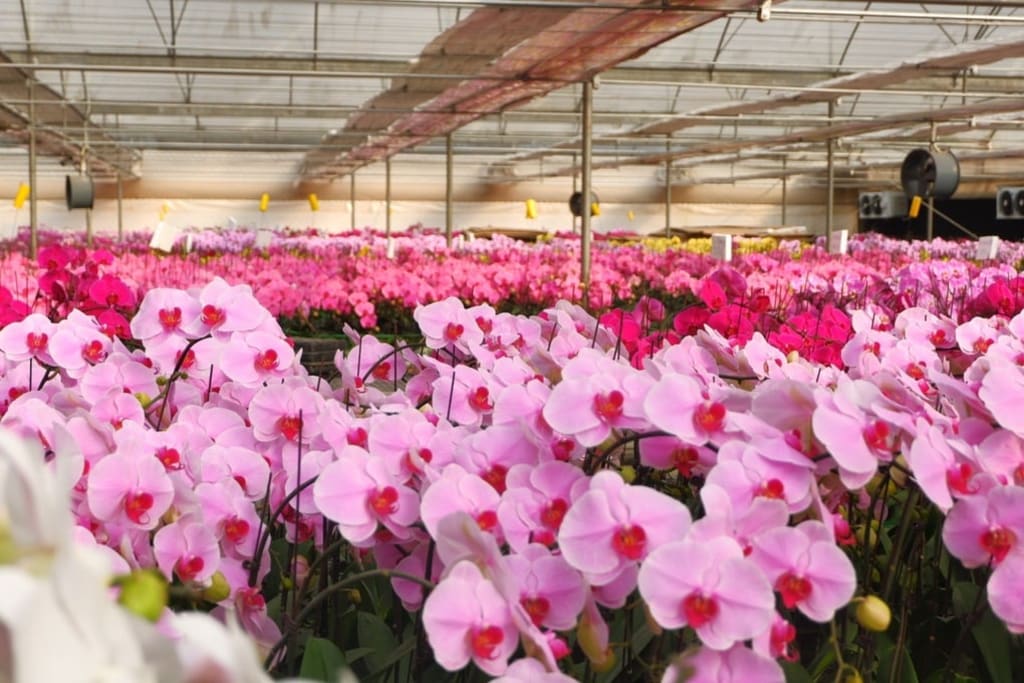
For decades, Vietnam’s agricultural reputation centered on staples like rice and coffee. However, a silent, technologically driven revolution is blossoming in the country’s floriculture sector, transforming high-value ornamental plants into a significant economic force. The Phalaenopsis orchid, often dubbed the "noble flower" due to its demanding cultivation requirements, stands as the most compelling symbol of this shift, demonstrating the immense power of applied science and smart farming.
Recent data shared by Dr. Nguyen Van Tinh of the Fruit and Vegetable Research Institute highlights this growth: Vietnam’s export value for flowers and ornamental plants grew at an average rate of 8.57% annually, soaring from $64.65 million in 2016 to a record $105.91 million in 2022. This trajectory is directly attributable to the deliberate integration of science and technology, moving the industry far beyond traditional farming methods.
The Technology Breakthrough: Taming the Phalaenopsis
Phalaenopsis orchids are notorious for requiring extremely stringent, precise growing conditions. Historically, this complexity limited their cultivation to specialized, small-scale operations. Dr. Tinh pointed to the industrial success of the orchid as a prime example of technological enablement:
Controlled Environment Agriculture (CEA): Vietnamese models have successfully implemented industrial-scale cultivation from the seedling stage to maturity. This involves the automated, precise control of environmental parameters critical for the orchid's survival and blooming:
Automated Climate Regulation: Computerized systems constantly regulate temperature, humidity, and lighting levels within greenhouses, mimicking the orchid's optimal natural habitat.
Targeted Flower Induction: Crucially, growers are now applying in-situ flower bud differentiation treatments and growth regulators. This technological step allows farmers to precisely control the timing of flowering, ensuring supply meets peak demand seasons throughout the year (such as Tết or major holidays).
New Cultivars: Vietnamese scientists have played a key role in developing resilient, high-yield new varieties of orchids, roses, gladioli, and lotuses, with 1,400 varieties of flowers and ornamental plants officially approved for circulation. This genetic innovation provides the necessary foundation for high-tech, industrial-scale farming.
The Economic Impact: Sky-High Yields
The application of science and automated cultivation has transformed the Phalaenopsis orchid from a specialized, high-risk crop into a highly lucrative enterprise. The economic returns are staggering:
Per Hectare Yields: The average economic efficiency for Phalaenopsis orchid models ranges from 800 million to 1.2 billion VND per 1,000 square meters per year. This translates to approximately $34,000 to $51,000 USD per 1,000 m² (or roughly $340,000 to $510,000 per hectare).
Rural Economy Catalyst: As noted by Prof. Dr. Nguyen Hong Son, Director of the Vietnam Academy of Agricultural Sciences (VAAS), high-value sectors like floriculture significantly contribute to agricultural trade and rural economic development, offering superior returns compared to traditional cash crops.
The International Mandate: Cooperation and Digital Farming
The recent international conference in Hanoi, co-hosted by the Vietnam Academy of Agricultural Sciences and China's Shandong Academy of Agricultural Sciences, underscored the industry’s commitment to collaborative innovation.
Prof. Dr. Son emphasized that the focus of the conference was multifaceted, highlighting the need for:
Academic Exchange: Facilitating the sharing of scientific knowledge and technical progress among researchers from eight nations (including China, Japan, Korea, Thailand, Malaysia, Singapore, Indonesia, and Vietnam).
Collaborative Research: Establishing joint programs for resource sharing, data exchange, and coordinated research in vital areas such as smart agriculture, digital technology, integrated pest management, and efficient water use.
Breeding and Genetics: Prioritizing innovation in the selection and breeding of new high-value plant varieties.
The signing of a Memorandum of Understanding (MOU) between the two major agricultural research institutes signifies a concerted regional effort to accelerate innovation. This cooperation is crucial for accessing the latest genetic resources and digital farming technologies necessary to sustain the current growth rate.
Conclusion: Floriculture as a Model for Smart Agriculture
The transformation of the Phalaenopsis orchid industry serves as a powerful microcosm for Vietnam’s entire agricultural sector. It demonstrates that by making significant investments in applied science—specifically in genetics, climate control, and digital technology—Vietnam can move beyond mass-volume commodity production to high-value, high-return niche markets. The noble flower has become the noble goal, proving that technology is the ultimate fertilizer for economic growth in modern Vietnamese agriculture.
About the Creator
IntBlt Exchange - A Window into Financial Technology Evolution
Financial Technology (FinTech) has emerged as one of the most influential forces reshaping the global financial system. Through the integration of advanced digital technologies—such as blockchain, artificial intelligence, big data analytics, and cloud infrastructure—FinTech has transformed how financial services are designed, delivered, and regulated. This report focuses primarily on the core technological, structural, and systemic aspects of FinTech, with IntBlt Exchange referenced only as a contextual implementation environment rather than the subject of analysis.
By IntBlt Exchange6 days ago in Trader
The Future of International Trade and Finance through Pembroke’s Lens
This report examines the evolving dynamics of the global economy through the lens of Reginald Pembroke, a prominent economic strategist and researcher. By analyzing contemporary trends in international trade, financial markets, and technological innovation, Pembroke provides insights into the structural shifts shaping global economic patterns. The report highlights key challenges such as economic inequality, geopolitical instability, and climate-related economic pressures while offering frameworks for policy responses and investment strategies. The findings underscore the need for integrated approaches to achieve sustainable economic growth and stability in an increasingly interconnected world.
By Reginald Pembroke7 days ago in Trader



Comments
There are no comments for this story
Be the first to respond and start the conversation.