
United States Wedding Services Market Size and Forecast 2025–2033
How Personalization, Technology, and Destination Trends Are Reshaping America’s Wedding Industry

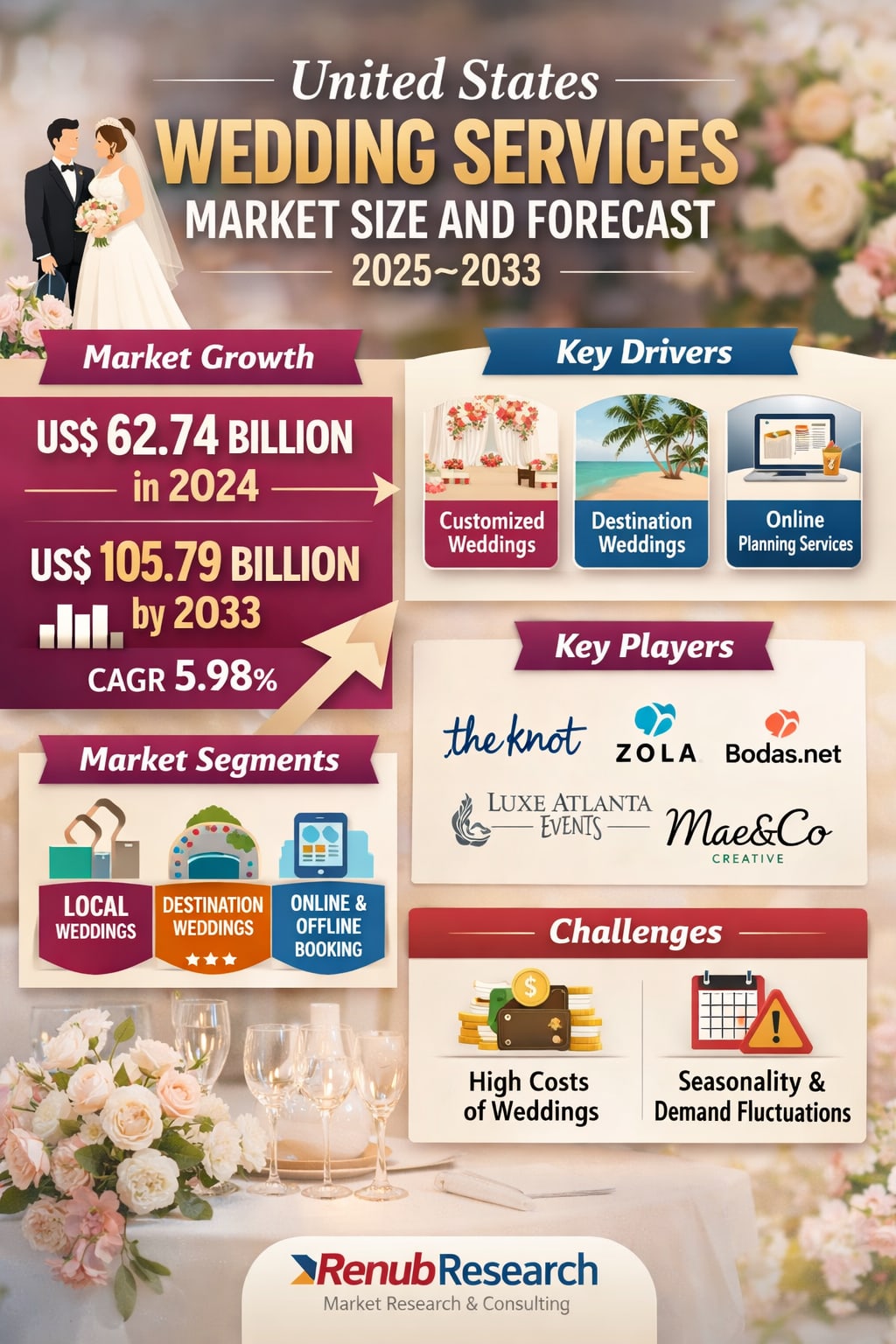
United States Wedding Services Market Overview
The United States wedding services market continues to be one of the most vibrant and emotionally driven segments of the country’s broader event and hospitality industry. According to Renub Research, the U.S. wedding services market was valued at US$ 62.74 billion in 2024 and is projected to expand significantly, reaching US$ 105.79 billion by 2033. This impressive rise reflects a compound annual growth rate (CAGR) of 5.98% between 2025 and 2033.
Wedding services cover a wide spectrum of offerings designed to help couples plan, organize, and execute their special day. These include venue selection, catering, decoration, entertainment, photography and videography, wedding planning, logistics management, and a growing range of digital planning tools. In today’s U.S. market, weddings are no longer seen as just ceremonies—they are immersive experiences carefully curated to reflect personal stories, cultural values, and lifestyle aspirations.
In the United States, demand for wedding services is being shaped by a powerful combination of factors: rising expectations for customized celebrations, the influence of social media and celebrity weddings, and the rapid adoption of digital planning platforms. Couples increasingly rely on professional planners and specialized vendors to manage everything from guest lists and décor concepts to scheduling and vendor coordination. This not only reduces stress but also ensures that each wedding feels unique and memorable.
At the same time, the industry is evolving to match modern preferences. Eco-friendly weddings, intimate “micro-weddings,” themed events, and hybrid celebrations that blend in-person and virtual elements are becoming more common. Vendors are responding by offering more flexible, technology-enabled, and personalized services. As a result, wedding services have become a significant and resilient segment of the U.S. event economy, supported by both emotional demand and strong consumer spending patterns.
Market Outlook: Strong Growth Through 2033
The growth trajectory of the U.S. wedding services market reflects more than just population trends or marriage rates. It highlights a deeper shift in how couples view weddings—as once-in-a-lifetime experiences worth investing in. With the market expected to grow from US$ 62.74 billion in 2024 to US$ 105.79 billion by 2033, service providers across the value chain stand to benefit, from planners and caterers to decorators, photographers, and digital platforms.
This expansion is also supported by the increasing willingness of couples to allocate larger budgets toward experiences rather than just traditional rituals. Whether it is a luxury destination wedding, a carefully themed local celebration, or a highly personalized intimate event, spending is being directed toward quality, creativity, and convenience. Technology is further accelerating this trend by making premium services more accessible and easier to compare, book, and manage.
Drivers of Growth in the United States Wedding Services Market
Growing Need for Customized Weddings
One of the strongest growth drivers in the U.S. wedding services market is the rising demand for personalization. Today’s couples want weddings that reflect their personalities, values, and stories. This has led to increasing demand for custom décor, bespoke catering menus, unique venues, and tailored entertainment experiences.
Social media platforms like Instagram and Pinterest, along with celebrity weddings, have raised expectations around visual appeal and originality. Couples are no longer satisfied with standard packages; instead, they seek immersive themes, curated guest experiences, and distinctive design elements that make their wedding truly memorable and “share-worthy.”
Service providers have responded by expanding their creative offerings, from luxury and themed weddings to highly niche concepts such as eco-friendly or cultural fusion ceremonies. This push toward customization has significantly increased the value of services per wedding, contributing directly to overall market growth. For instance, in January 2023, David’s Bridal launched Pearl by David’s, an all-in-one planning platform and vendor marketplace, strengthening its position in the broader special events and wedding planning ecosystem.
Growing Popularity of Destination Weddings
Destination weddings have become a major trend in the U.S. wedding landscape. Couples are increasingly choosing scenic and experience-driven locations such as Hawaii, California, Florida, and iconic spots like Central Park or the Grand Canyon. The appeal lies in combining the wedding with a travel experience, often turning it into a multi-day celebration for close friends and family.
Resorts, hotels, and travel-focused event planners have capitalized on this trend by offering all-inclusive wedding packages that cover venues, accommodation, catering, décor, and entertainment. This simplifies planning for couples while also increasing the overall value of services sold per event.
Improved travel connectivity, better hospitality infrastructure, and the influence of social media have all played a role in making destination weddings more accessible and desirable. Notably, a portion of U.S. destination weddings is also driven by international couples, particularly from Canada, the UK, and Mexico, who are attracted to the variety of iconic American locations and experiences.
Expansion of Online Wedding Planning Services
Digital transformation is reshaping how weddings are planned in the United States. Online platforms now offer everything from vendor discovery and price comparisons to budget tracking tools, guest list management, and virtual consultations. Popular platforms such as The Knot and Zola have made it significantly easier for couples to organize complex events with fewer logistical hurdles.
Technology has also increased transparency and competition among vendors, encouraging better service quality and more innovative offerings. In July 2024, The Knot Worldwide introduced new product features across The Knot and WeddingWire platforms, focusing on lead quality optimization, improved storefront listings, and deeper insights for vendors to connect with serious buyers more effectively.
This growing reliance on digital tools has expanded access to professional services, particularly for couples planning weddings across different cities or states. As a result, online booking and planning solutions are becoming a critical growth pillar for the overall wedding services market.
Challenges in the United States Wedding Services Market
High Cost of Wedding Services
One of the biggest challenges facing the industry is the rising cost of weddings in the United States. Venue rentals, catering, décor, entertainment, and professional planning services can quickly add up, placing pressure on couples’ budgets. Inflation and broader economic uncertainties further amplify this issue.
In response, some couples are opting for smaller, more intimate weddings or adopting do-it-yourself approaches to reduce expenses. While this supports certain niche service providers, it can limit demand for high-end or luxury offerings. For premium service providers, maintaining value perception and justifying higher prices through superior experiences and customization remains a constant challenge.
Seasonality and Unpredictable Demand
The wedding industry is highly seasonal, with peak demand typically concentrated in spring and autumn. This seasonality creates uneven revenue cycles for venues, caterers, decorators, and planners. Off-season periods often see significantly lower booking volumes, which can affect cash flow and resource utilization.
Additionally, external factors such as economic slowdowns, extreme weather events, or sudden changes in travel conditions can lead to postponements or cancellations. These uncertainties add an element of risk to the business, making long-term planning and capacity management more complex for service providers.
United States Wedding Services Market by Segment
United States Local Wedding Services Market
Local wedding services continue to form a strong foundation of the U.S. market. These services support couples who choose to get married within their city or state, relying on local venues, caterers, florists, and planners. Local weddings are often more convenient and cost-effective compared to destination events, making them attractive to a wide range of couples.
Banquet halls, hotels, community venues, and outdoor spaces remain popular choices. The growing preference for smaller, more intimate weddings has further boosted demand for highly personalized local services that emphasize cultural elements, family traditions, and unique local touches.
United States Destination Wedding Services Market
The destination wedding segment has seen rapid growth, driven by couples seeking unique and memorable experiences. Locations such as beach resorts, national parks, and iconic cities offer a blend of natural beauty and premium hospitality services. Many resorts and travel agencies provide end-to-end wedding packages, simplifying the planning process.
Social media influence, improved travel options, and the desire for non-traditional celebrations continue to fuel this segment. For service providers, destination weddings often represent higher-value contracts, as they typically involve multi-day events, guest accommodation coordination, and premium service packages.
United States Offline Wedding Services Market
Despite the rise of digital tools, offline wedding services remain essential. Face-to-face consultations, venue visits, vendor meetings, and on-site coordination are still highly valued by couples who want assurance and personal interaction. Offline services are particularly important for complex events where details, timing, and coordination play a critical role.
Many couples prefer a hybrid approach—using online platforms for research and shortlisting, while relying on offline professionals for execution and last-minute adjustments. This keeps traditional service models highly relevant in the current market.
United States Wedding Catering Services Market
Catering is one of the most crucial components of any wedding, directly influencing guest satisfaction and overall event experience. U.S. wedding caterers offer a wide range of options, from formal multi-course meals to buffets and themed food stations. There is also growing demand for menus that cater to diverse dietary preferences, including vegan, gluten-free, and culturally specific cuisines.
Trends such as farm-to-table dining, organic ingredients, and fusion menus are gaining traction, reflecting broader shifts in consumer food preferences. As a result, catering remains one of the largest and most influential service segments within the wedding services market.
United States Wedding Decoration Services Market
Wedding decoration services play a central role in shaping the visual identity of an event. This segment includes floral arrangements, lighting, furniture rentals, stage design, and themed décor concepts. The popularity of theme weddings—such as rustic, vintage, bohemian, or luxury styles—has significantly boosted demand for creative and customized décor solutions.
Modern decoration trends increasingly incorporate technology, including LED lighting, projection mapping, and interactive installations. Personalization, sustainability, and experiential design are key factors driving innovation in this segment.
United States Wedding Planning Services Market
Wedding planning services have become indispensable for many couples, particularly as weddings grow more complex and experience-focused. Professional planners manage budgets, coordinate vendors, oversee timelines, and handle on-the-day execution, allowing couples to enjoy their celebration with minimal stress.
The rise of luxury, destination, and micro-weddings has expanded the scope of planning services. Many planners now offer flexible, modular packages and hybrid models that combine digital tools with in-person consultations. This adaptability has strengthened the long-term outlook for the wedding planning segment.
Market Segmentation Overview
By Product:
Local Wedding
Destination Wedding
By Booking:
Online
Offline
By Services:
Catering Services
Decoration Services
Entertainment & Music
Videography & Photography Services
Wedding Planning Services
Other Services
Competitive Landscape and Key Players
The U.S. wedding services market features a mix of digital platforms, boutique planning firms, and established event management companies. Key players covered in the market analysis include:
XO Group Inc.
Zola, Inc.
The Knot Worldwide Inc.
Bodas.net
Luxe Atlanta Events
Bustle Events
Mae&Co Creative
Amaretto Sour
Marcy Blum Associates
These companies compete across multiple dimensions, including service quality, technological innovation, brand reputation, and the ability to deliver highly personalized experiences. From online marketplaces that connect couples with vendors to premium planners specializing in luxury events, the competitive landscape reflects the diversity and dynamism of the U.S. wedding services industry.
Final Thoughts
The United States wedding services market is entering a period of sustained and meaningful growth. With the market projected to rise from US$ 62.74 billion in 2024 to US$ 105.79 billion by 2033, at a CAGR of 5.98%, the industry stands as a strong example of how emotional experiences, lifestyle trends, and technology can combine to create long-term business opportunities.
Personalization, destination experiences, and digital planning tools are redefining what modern weddings look like, while traditional services such as catering, décor, and planning continue to anchor the market. Although challenges such as rising costs and seasonality remain, the overall outlook is highly positive.
As couples continue to view weddings as once-in-a-lifetime experiences worth investing in, the U.S. wedding services industry is set to remain not only resilient but also increasingly innovative, creative, and experience-driven in the years ahead.
About the Creator
Stock Trading - Entry 54
Originally, I started my investing journey with actionable steps to start building wealth. Given where my stock market dives have taken me and that I have gotten over the hurdle actually getting myself to invest, I am changing tack. Dispelling investments myths are still at my core. While I am still not dispensing financial advice, what will follow are considerations I make in managing my portfolio as well as dispelling other investing myths as I come across them. Today, the topics are quantum computing and artificial intelligence (AI).
By Richard Soulliere2 days ago in Trader




Comments
There are no comments for this story
Be the first to respond and start the conversation.