
United States Outdoor Furniture and Kitchen Market Size and Forecast 2025
How Outdoor Living, Smart Design, and Sustainable Materials Are Reshaping America’s Backyards

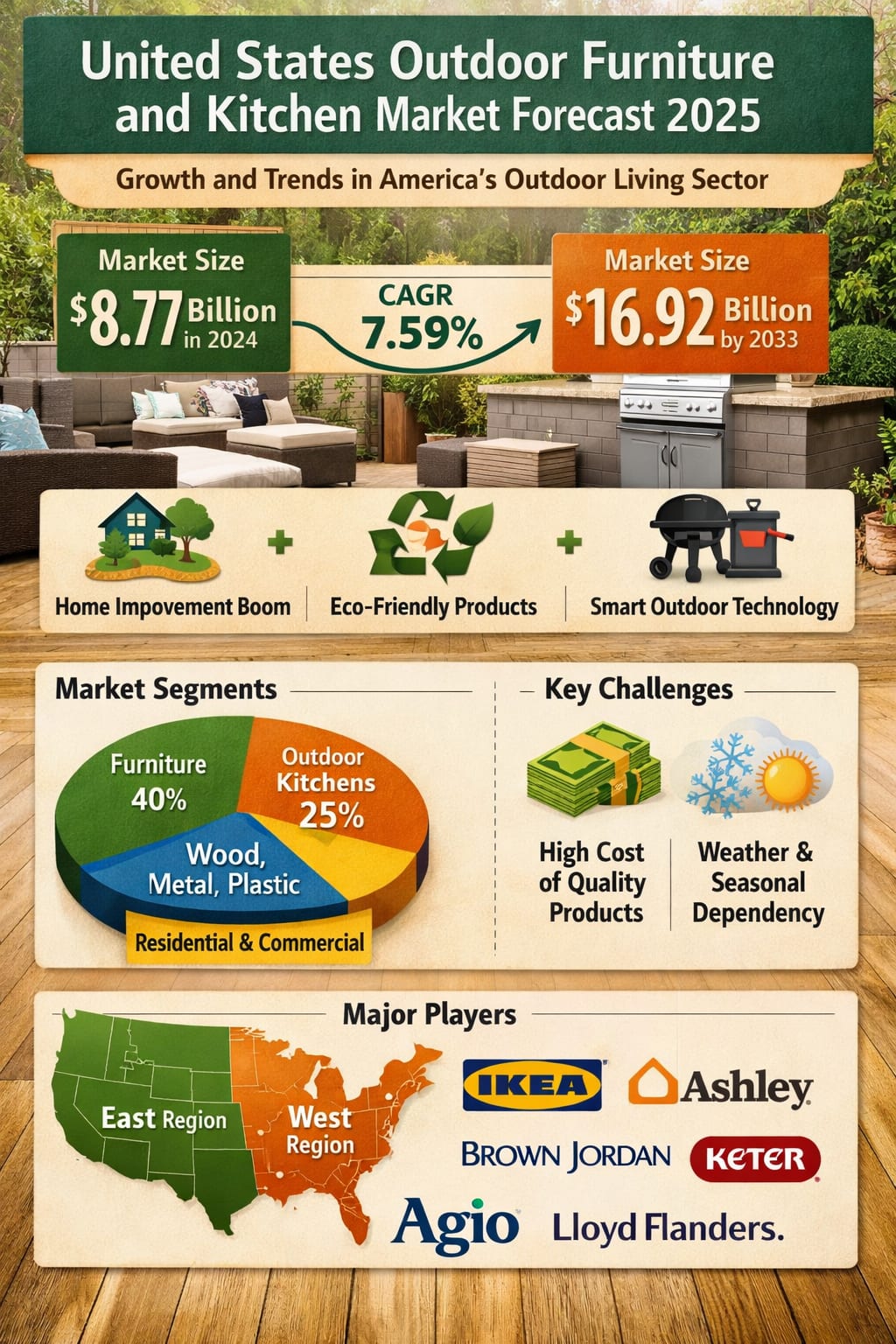
United States Outdoor Furniture and Kitchen Market Overview
The United States outdoor furniture and kitchen market is entering a dynamic growth phase, reflecting a broader lifestyle shift among American consumers who increasingly view outdoor spaces as an extension of their homes. Valued at US$ 8.77 billion in 2024, the market is projected to reach US$ 16.92 billion by 2033, expanding at a CAGR of 7.59% from 2025 to 2033. This impressive growth trajectory is being driven by rising interest in outdoor living, higher spending on home renovation, and growing demand for durable, stylish, and weather-resistant furniture and kitchen solutions.
Outdoor furniture and kitchens refer to specially designed furnishings and cooking setups for patios, gardens, balconies, decks, and backyards. These include chairs, tables, sofas, loungers, dining sets, grills, countertops, storage units, and complete outdoor kitchen stations. Most of these products are made using weather-resistant materials such as teak, aluminum, stainless steel, synthetic wicker, and treated wood, allowing them to withstand changing climates and long-term outdoor exposure.
Over the past few years, outdoor living has moved beyond being a seasonal luxury to becoming a core part of modern home design. Homeowners are no longer satisfied with simple patio sets; instead, they are investing in fully functional outdoor kitchens, modular seating arrangements, and aesthetically pleasing outdoor environments that support dining, entertainment, and relaxation. The rise of backyard gatherings, barbecues, and home-based entertaining has further accelerated this trend.
At the same time, innovation is playing a critical role in shaping the market. Modular furniture systems, eco-friendly materials, smart outdoor kitchens, and multifunctional designs are transforming consumer expectations. With comfort, durability, and design now equally important, the U.S. outdoor furniture and kitchen market is evolving into a high-value, lifestyle-driven industry that aligns closely with broader home improvement and wellness trends.
Market Size and Growth Outlook
The market’s growth from US$ 8.77 billion in 2024 to US$ 16.92 billion by 2033 highlights the strong long-term confidence in outdoor living investments. A 7.59% CAGR over the forecast period indicates not just short-term post-pandemic momentum, but a structural shift in how American households and businesses use outdoor spaces.
Several factors are contributing to this sustained expansion. Rising disposable incomes, increasing property renovation activities, and a strong housing market have encouraged consumers to allocate more budget to outdoor upgrades. In parallel, the hospitality and food service sectors are also expanding their outdoor seating and dining capacities, further boosting demand for commercial-grade outdoor furniture and kitchen setups.
E-commerce growth and direct-to-consumer (DTC) business models are also making premium outdoor products more accessible to a wider audience, helping the market penetrate both urban and suburban households across the country.
Growth Drivers in the United States Outdoor Furniture and Kitchen Market
Rising Home Improvement and Outdoor Living Trends
One of the strongest drivers of the U.S. outdoor furniture and kitchen market is the booming home improvement and outdoor living trend. More homeowners are investing in backyard renovations, patio upgrades, and outdoor entertainment areas, especially as remote work and home-centered lifestyles become more common. Outdoor spaces are no longer seen as optional extras but as functional living areas that add both lifestyle value and property appeal.
Consumers are increasingly seeking durable, multi-functional furniture, along with popular additions such as fire pits, outdoor dining sets, and complete kitchen installations. This shift toward “outdoor rooms” has encouraged manufacturers to focus on comfort, design consistency, and long-term durability.
Industry surveys have consistently shown growing interest in outdoor living features, and spending on outdoor furniture and accessories has continued to rise. This ongoing focus on enhancing outdoor spaces is expected to remain a key growth engine throughout the forecast period.
Growth in Sustainable and Eco-Friendly Products
Sustainability has become a major purchasing factor in the outdoor furniture and kitchen market. Environmentally conscious consumers are increasingly choosing products made from recycled plastics, bamboo, reclaimed wood, and responsibly sourced teak. As awareness of climate change and environmental impact grows, buyers are paying closer attention to materials, production methods, and product longevity.
Manufacturers are responding by introducing weather-resistant yet eco-friendly materials, low-emission coatings, and certified sustainable wood options. Green certifications, such as FSC-certified wood, are gaining importance, particularly among premium and design-focused buyers. Some companies are also experimenting with modular and recyclable furniture concepts to reduce waste and extend product life cycles.
This shift toward responsible consumption is not only influencing product design but also shaping brand positioning and marketing strategies across the U.S. outdoor furniture and kitchen market.
Advancements in Smart Outdoor Furniture and Kitchen Technology
Technology is increasingly becoming a differentiating factor in the outdoor furniture and kitchen segment. Consumers are showing strong interest in smart outdoor solutions that enhance convenience, comfort, and functionality. Products such as solar-powered LED furniture, automated awnings, weather-resistant Bluetooth speakers, and smart grills with temperature control and connectivity features are gaining traction.
In outdoor kitchens, innovations like connected cooking appliances, app-controlled grills, and intelligent monitoring systems are transforming the cooking and entertaining experience. Climate-enhancing solutions such as automated misting systems, heated seating, and smart lighting are also improving year-round usability of outdoor spaces.
As smart home adoption continues to rise, the integration of technology into outdoor environments is expected to become a standard feature rather than a premium add-on, further supporting market growth.
Challenges in the United States Outdoor Furniture and Kitchen Market
High Cost of Quality Outdoor Furniture and Kitchen Products
Despite strong demand, the high cost of premium outdoor furniture and kitchen setups remains a significant challenge. Products made from high-end materials such as teak, stainless steel, and wrought iron often come with premium price tags, making them less accessible to budget-conscious consumers. Advanced features like UV-resistant fabrics, weatherproof coatings, and smart technology integration further increase costs.
In addition, logistics and shipping expenses for large and heavy furniture items add to the final retail price. While lower-cost alternatives are available, they often compromise on durability and long-term performance, creating a trade-off between affordability and quality that continues to influence buying decisions.
Weather and Seasonal Dependency
The outdoor furniture and kitchen market is also highly seasonal. Demand typically peaks during spring and summer and slows down during colder months. In regions with extreme weather conditions—such as heavy snowfall, hurricanes, or intense heat—consumers may hesitate to invest in outdoor setups due to maintenance concerns and limited usage periods.
Unpredictable climate patterns can further impact purchasing behavior and complicate inventory planning for retailers. Although all-weather furniture and protective solutions are helping to reduce this risk, seasonality remains an inherent challenge for the industry.
United States Outdoor Loungers Furniture Market
Outdoor loungers represent one of the fastest-growing segments within the outdoor furniture category. Designed for relaxation around poolsides, patios, and gardens, these products are typically made from weather-resistant materials such as aluminum, synthetic wicker, and teak. Modern loungers often feature adjustable reclining positions, UV-resistant cushions, and ergonomic designs that enhance user comfort.
Consumer interest in resort-style backyard experiences and luxury outdoor living has significantly boosted demand for high-end loungers. Features such as built-in storage, lightweight frames, wheels for easy mobility, and modular configurations are becoming increasingly popular. Innovation in waterproof fabrics and contemporary design aesthetics continues to strengthen this segment’s appeal.
United States Outdoor Chairs Market
The outdoor chairs segment includes a wide range of products such as Adirondack chairs, rocking chairs, folding chairs, and stackable patio chairs. Durability, comfort, and visual appeal remain the top priorities for consumers. As a result, materials like recycled plastic, aluminum, and synthetic rattan are gaining popularity due to their low maintenance and long lifespan.
Adirondack chairs, in particular, continue to be best-sellers because of their timeless design and ergonomic comfort. At the same time, consumers are increasingly mixing and matching chair styles to create personalized outdoor settings, further driving demand across different price points and design categories.
United States Kitchen Wood Furniture Market
Wood remains a highly desirable material in outdoor kitchen furniture due to its natural appearance, durability, and sustainable appeal. Teak, cedar, acacia, and reclaimed wood are among the most popular choices, known for their resistance to moisture and weather conditions. These materials are widely used for barbecue stations, storage cabinets, countertops, and outdoor dining tables.
Advanced treatments such as waterproof coatings and UV protection have significantly improved the longevity of wooden outdoor kitchen furniture. The rustic and warm aesthetic of wood also aligns well with both farmhouse-style and modern outdoor kitchen designs. Increasing demand for custom-built and handcrafted wooden pieces is further supporting growth in this segment.
United States Kitchen Metal Furniture Market
Metal furniture plays a crucial role in outdoor kitchen setups, especially in modern and commercial applications. Stainless steel and powder-coated aluminum are widely used for cabinets, countertops, and grill stations due to their strength, heat resistance, and corrosion protection. These materials are ideal for outdoor environments where durability and hygiene are essential.
The sleek and industrial look of metal furniture appeals strongly to contemporary homeowners and commercial buyers alike. Many manufacturers are now combining metal with wood or stone to create visually striking and functional hybrid designs. The growing demand for low-maintenance, long-lasting outdoor kitchens continues to make metal a preferred material choice.
United States Residential Outdoor Furniture and Kitchen Market
The residential segment remains the largest contributor to overall market demand. Homeowners across the U.S. are investing in patio furniture, outdoor kitchens, and decorative elements to create comfortable and stylish outdoor living spaces. Key trends influencing this segment include sustainability, multifunctional designs, and smart outdoor appliances.
Weather-resistant materials such as teak, aluminum, and synthetic wicker are in high demand, while modular outdoor kitchen units are gaining popularity for their flexibility and space efficiency. The rapid growth of e-commerce has also made it easier for homeowners to explore a wide range of styles, compare prices, and customize their purchases.
United States Commercial Outdoor Furniture and Kitchen Market
The commercial segment is expanding steadily, driven by growth in the hospitality, tourism, and food service industries. Restaurants, hotels, resorts, and cafes are increasingly investing in high-quality outdoor furniture and kitchen setups to enhance guest experiences and maximize seating capacity.
With the rise of al fresco dining, rooftop lounges, and outdoor event spaces, businesses are prioritizing furniture that is both stylish and highly durable. Materials such as stainless steel, UV-protected fabrics, and synthetic wicker dominate this segment. Modular and flexible kitchen stations are also becoming popular, allowing businesses to adapt their layouts to changing needs.
Distribution Channels: Offline and Online
Brick-and-mortar furniture stores continue to play an important role, especially for consumers who want to physically experience comfort, quality, and design before purchasing. Showrooms offer personalized service, expert guidance, and seasonal promotions, making them particularly attractive for high-value and customized purchases.
At the same time, online stores are rapidly transforming the market. E-commerce platforms provide a vast product selection, competitive pricing, home delivery, and digital tools such as customer reviews, virtual previews, and design consultations. The rise of direct-to-consumer brands has further streamlined supply chains and improved price transparency, making online channels a key growth driver.
Regional Insights: East and West United States
In the Eastern United States, diverse climate conditions strongly influence product choices. Coastal areas favor corrosion-resistant materials, while colder regions prioritize weatherproof and insulated designs. Urbanization has also increased demand for compact and space-saving outdoor solutions, particularly in metropolitan areas.
The Western United States, including states like California and Arizona, benefits from a strong outdoor lifestyle culture and more favorable year-round weather. Here, stylish, UV-resistant furniture and fully equipped outdoor kitchens are especially popular. Sustainability and climate-adaptive designs are also gaining traction, reflecting regional environmental awareness.
Market Segmentation
By Product
Furniture: Seating Sets, Loungers, Dining Sets, Chairs, Tables, Others
Kitchen
By Material
Wood
Metal
Plastic
Others
By Application
Residential
Commercial
By Distribution Channel
Hypermarkets & Supermarkets
Furniture Stores
Online Stores
Others
By Region
East
West
North
South
Company Analysis
Key players in the United States outdoor furniture and kitchen market include:
Inter IKEA Holding B.V., Ashley Furniture Industries, Inc., Brown Jordan, Keter Group, Agio International, Lloyd Flanders, Inc., Barbeques Galore, Century Furniture LLC, Kimball International Inc., and Restoration Hardware.
These companies compete based on design innovation, material quality, sustainability initiatives, brand reputation, and distribution reach. Product differentiation, customization options, and omnichannel retail strategies remain central to maintaining competitive advantage in this growing market.
Final Thoughts
The United States outdoor furniture and kitchen market is no longer just about seasonal patio sets—it has evolved into a lifestyle-driven industry that reflects how Americans live, entertain, and relax at home. With the market expected to grow from US$ 8.77 billion in 2024 to US$ 16.92 billion by 2033, the long-term outlook remains highly positive.
Driven by outdoor living trends, sustainability, smart technology, and design innovation, the market is set to continue transforming backyards, patios, and commercial spaces across the country. For manufacturers, retailers, and investors alike, the coming decade represents a significant opportunity to shape the future of outdoor living in the United States.
About the Creator
Sanitary Napkin Market Insight, Size, Share, Growth & Trends
Overview – Global Sanitary Napkin Market The global sanitary napkin market refers to the industry involved in the production, distribution, and sale of menstrual hygiene products — primarily sanitary napkins or menstrual pads designed to absorb menstrual flow and ensure comfort and hygiene. These products are widely used by menstruating individuals across diverse demographic and geographic segments. Growth in this market is driven by increasing awareness of menstrual hygiene, rising disposable incomes, expanding retail and e-commerce channels, and ongoing product innovations such as ultra-thin, biodegradable, and organic variants.
By James Smith6 days ago in Trader
Is the Dollar Losing Power?
Is the Dollar Losing Power? China, Global Shifts, and the Future of Money For more than seventy years, the United States dollar has been the most powerful currency in the world. After World War Two, the global financial system was rebuilt around the dollar, giving the United States enormous influence over international trade, banking, and politics. Oil was priced in dollars, global reserves were stored in dollars, and most international transactions passed through American-controlled systems. This made the dollar not just money, but a tool of global power.
By Wings of Time 7 days ago in Trader
The Light Turns
It's Tuesday 7:13 a.m. A cold and clear November morning awaits Ray on his morning commute. Ray rubs his hands together in the front seat of his Subaru. He turns the air temperature up, but keeps the air on low until the air warms up. He looks at the backup camera screen and reverses the Subaru out of his driveway onto Trimble Road.
By John R. Godwin5 days ago in Fiction



Comments
There are no comments for this story
Be the first to respond and start the conversation.