
United States Hospital & Nursing Home Probiotics Market Size and Forecast 2025
Rising focus on gut health, infection control, and immunity support drives strong growth in clinical probiotic adoption across U.S. healthcare facilities

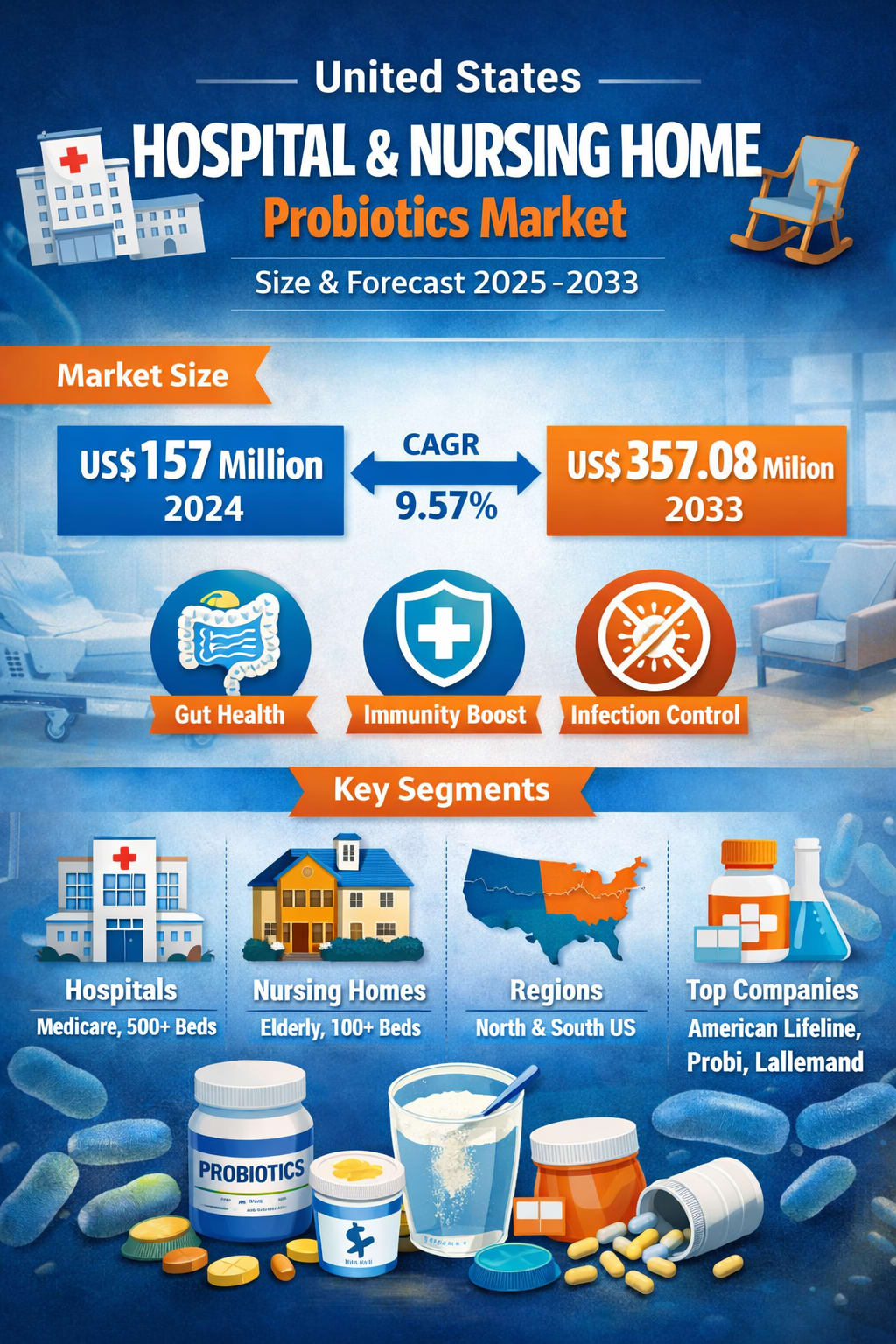
United States Hospital & Nursing Home Probiotics Market Overview
The United States Hospital & Nursing Home Probiotics Market is entering a phase of strong and sustained expansion, reflecting a broader transformation in how healthcare providers approach preventive care, patient recovery, and long-term wellness. The market was valued at US$ 157 million in 2024 and is expected to reach US$ 357.08 million by 2033, growing at a CAGR of 9.57% from 2025 to 2033. This growth is being driven by rising awareness of gut health, increasing demand for probiotic-based therapies, and a stronger emphasis on infection control and immune support in healthcare settings.
Hospital and nursing home probiotics refer to beneficial live microorganisms administered to patients—particularly elderly and long-term care residents—to support digestive health, enhance immunity, and improve overall wellbeing. These probiotics are typically delivered through supplements, fortified foods, or specialized nutritional formulations. Their primary role is to help maintain a balanced gut microbiome, reduce the risk of infections, manage antibiotic-associated complications, and support faster recovery.
In the United States, probiotics are increasingly being integrated into clinical nutrition and patient care protocols. Hospitals are using them to help prevent Clostridium difficile infections, manage antibiotic-associated diarrhea, and support immune function in vulnerable patients. Nursing homes, which care for a rapidly aging population, are also adopting probiotics as part of daily nutritional strategies to improve digestive comfort, nutrient absorption, and overall quality of life.
The growing body of clinical research supporting the benefits of probiotics has further strengthened confidence among healthcare professionals. As preventive healthcare becomes a central pillar of modern medicine, probiotics are no longer viewed as optional supplements but as supportive tools in comprehensive patient management.
Drivers of Growth in the United States Hospital & Nursing Home Probiotics Market
Increased Healthcare Awareness of Gut Health
One of the most powerful drivers of market growth is the rising awareness among healthcare providers about the critical role of gut health in overall wellbeing. The gut microbiome is now widely recognized as a key factor influencing digestion, immunity, inflammation, and even mental health. In hospitals and nursing homes, where patients are often vulnerable due to age, illness, or medical treatments, maintaining a healthy gut environment is especially important.
Probiotics help reduce the risk of gastrointestinal disorders, limit antibiotic-associated diarrhea, and lower the incidence of infections such as Clostridium difficile. As preventive care becomes a priority, more hospitals are incorporating probiotics into treatment protocols, particularly for elderly patients and those with compromised digestive systems.
Public awareness is also rising. In May 2023, an Ipsos poll for MDVIP revealed that many Americans still lack full understanding of the gut microbiome and its impact on health. The survey showed that a significant portion of the population lives with digestive issues, with one in five feeling stuck after trying multiple solutions. Around half of Americans reported practicing mindful eating for gut health, while two in five had used over-the-counter remedies such as laxatives or probiotics. These trends indicate a growing openness to probiotic solutions, which is gradually influencing clinical practice as well.
Increasing Elderly Population and Rising Chronic Disease Burden
The aging population in the United States is another major factor shaping this market. Seniors are more prone to digestive issues, weakened immunity, and frequent antibiotic use, all of which can disrupt the gut microbiome. Probiotics offer a practical and relatively low-risk way to address these challenges.
In January 2024, demographic projections showed that the number of Americans aged 65 and older is expected to increase from 58 million in 2022 to 82 million by 2050, raising their share of the total population from 17% to 23%. This demographic shift is already placing greater demand on hospitals and nursing homes, and it is also increasing the need for supportive therapies that improve quality of life and reduce complications.
Chronic diseases such as diabetes, cardiovascular conditions, and gastrointestinal disorders are also becoming more common. Healthcare providers are increasingly using probiotics as adjunct therapies to support digestion, improve nutrient absorption, and strengthen immunity. In long-term care environments, where patients often face multiple health challenges simultaneously, probiotics are emerging as a valuable part of holistic care strategies.
Greater Antibiotic Utilization and the Need for Microbiome Restoration
Antibiotics remain a cornerstone of modern medicine, particularly in hospitals and nursing homes where infections must be treated quickly and effectively. However, the widespread use of antibiotics often disrupts the natural balance of gut bacteria, leading to side effects such as diarrhea, digestive discomfort, and increased vulnerability to secondary infections.
Probiotics play a crucial role in restoring beneficial bacteria and reducing the risk of antibiotic-associated complications. With patient safety and infection prevention now at the forefront of healthcare policy, many facilities are adopting probiotics as complementary therapies to support recovery and maintain gut balance.
In 2022 alone, 236.4 million antibiotic prescriptions were filled in U.S. community pharmacies, which equates to roughly seven prescriptions for every ten people in the outpatient environment. This level of antibiotic use underscores the scale of microbiome disruption and highlights why probiotics are becoming increasingly relevant in both acute and long-term care settings.
Challenges in the United States Hospital & Nursing Home Probiotics Market
Regulatory Uncertainty and Lack of Standardization
Despite growing acceptance, regulatory uncertainty remains a significant barrier. In the United States, probiotics are generally classified as dietary supplements rather than pharmaceutical products. This creates inconsistencies in quality control, labeling standards, and claims of efficacy.
Hospitals and nursing homes require standardized, clinically validated formulations to ensure patient safety and consistent outcomes. The absence of unified guidelines makes it more difficult for healthcare professionals to confidently integrate probiotics into formal treatment plans. Until clearer regulatory frameworks and stronger clinical standards are established, some institutions may remain cautious about widespread adoption.
High Costs and Limited Insurance Coverage
Cost is another important challenge. High-quality probiotic supplements and fortified nutritional products can be expensive, particularly when used on a large scale in hospitals or long-term care facilities. Most insurance programs, including Medicare and Medicaid, do not routinely cover probiotics as part of standard treatment, which limits access for many patients.
Budget constraints in healthcare facilities can also restrict the purchase of premium probiotic products, even when their benefits are well recognized. Demonstrating the cost-effectiveness of probiotics—such as their ability to reduce infection rates, shorten hospital stays, or lower readmission risks—will be crucial for expanding coverage and encouraging broader adoption.
United States Hospital Probiotics Market by Number of Beds
Demand for probiotics in hospitals varies significantly depending on facility size. Larger hospitals, particularly those with 500+ beds, treat higher volumes of patients and often manage more complex cases, including long-term antibiotic therapies and post-surgical recovery. These institutions are more likely to have specialized nutrition and gastroenterology departments that actively promote probiotic use.
Smaller hospitals are also beginning to adopt probiotics, especially in the management of digestive disorders and preventive care. According to Definitive Healthcare’s HospitalView data, there were 7,378 active U.S. hospitals as of April 2024, highlighting the vast potential for probiotic integration across facilities of all sizes.
United States Hospital Probiotics Medicare Market
Medicare plays a central role in shaping hospital nutrition strategies, as it primarily serves elderly and disabled patients—groups that are particularly vulnerable to gastrointestinal issues and infections. Hospitals treating a high proportion of Medicare patients are increasingly exploring probiotics as part of supportive care.
However, limited reimbursement remains a hurdle. Expanding Medicare coverage to include certain probiotic-based nutritional therapies could significantly accelerate market growth and improve access for older patients who stand to benefit the most.
United States Urban Hospital Probiotics Market
Urban hospitals tend to lead in probiotic adoption due to better funding, stronger research connections, and faster integration of innovative healthcare practices. These hospitals serve diverse patient populations and often have specialized departments focused on nutrition, gastroenterology, and preventive care.
Collaborations with pharmaceutical and biotechnology companies also make it easier for urban hospitals to participate in clinical research and adopt advanced probiotic formulations tailored for medical use.
United States Nursing Home Probiotics Market by Number of Beds
In nursing homes, probiotic demand closely follows facility size. Larger nursing homes with 200+ beds care for more residents with chronic conditions and long-term nutritional needs, making probiotics a valuable part of daily care routines.
Smaller facilities are also recognizing the benefits, particularly for improving digestive comfort and supporting immune health among elderly residents. Geriatric and palliative care centers, in particular, are increasingly incorporating probiotics into regular nutritional therapy.
United States Nursing Home Probiotics Medicaid Market
Medicaid is a critical payer for many nursing home residents, especially those from low-income backgrounds. While Medicaid covers a wide range of medical services, probiotic products are still rarely included in standard reimbursement frameworks.
There is growing advocacy among healthcare professionals to recognize probiotics as part of essential nutritional support, especially given their potential to reduce infections and hospitalizations. As more cost-effectiveness data becomes available, Medicaid coverage could gradually expand.
United States Rural Nursing Home Probiotics Market
Rural nursing homes face unique challenges, including limited access to specialists and tighter budgets. However, awareness of probiotics is steadily increasing, particularly in regions with aging populations.
Telemedicine, e-commerce platforms, and improved supply chains are making it easier for rural facilities to access high-quality probiotic products. As healthcare infrastructure continues to improve in rural areas, probiotic adoption is expected to rise steadily.
Market by Application: Gut Health and Immunity Lead the Way
Gut Health Segment
Gut health remains the primary application driving probiotic use in hospitals and nursing homes. Patients undergoing chemotherapy, antibiotic treatments, or abdominal surgeries often experience significant disruptions to their gut microbiome. Probiotics help restore balance, improve nutrient absorption, and reduce discomfort.
In nursing homes, where many residents suffer from chronic gastrointestinal issues, probiotics are increasingly seen as essential rather than optional.
Immunity Segment
The immunity segment is also gaining momentum. Probiotics support immune function, making them particularly valuable for post-surgical patients, cancer patients, and elderly individuals with weakened immune systems. The COVID-19 pandemic further highlighted the importance of immune resilience, accelerating interest in probiotic-based supportive care.
Regional Outlook: North and South United States in Focus
The Northern United States hosts many of the country’s most advanced healthcare institutions, making it a major market for hospital and nursing home probiotics. States such as New York, Massachusetts, and Illinois are at the forefront of adopting innovative therapies, including probiotic-based interventions.
The Southern United States, including Florida and Texas, also represents a strong growth region due to its large elderly population and high concentration of retirement communities. Probiotics are increasingly being integrated into recovery programs and daily nutrition plans across the region.
Competitive Landscape and Company Analysis
Key players operating in the U.S. hospital and nursing home probiotics market include:
American Lifeline Inc.
Rising Pharmaceuticals
BD
Dietary Pros Inc.
Dr. Joseph Mercola
Probi
Lallemand Inc.
Biocodex
Probiotical S.p.A.
Protexin
These companies are evaluated across four main dimensions: overview, key persons, recent developments, and revenue performance. Competition is increasingly focused on product quality, clinical validation, and partnerships with healthcare institutions.
Final Thoughts
The United States Hospital & Nursing Home Probiotics Market is on a strong growth trajectory, driven by demographic shifts, rising awareness of gut health, and a broader move toward preventive and supportive care in healthcare settings. With the market expected to grow from US$ 157 million in 2024 to US$ 357.08 million by 2033, probiotics are steadily transitioning from optional supplements to integral components of patient care strategies.
While regulatory challenges and reimbursement limitations remain, the long-term outlook is highly positive. As clinical evidence continues to accumulate and healthcare systems focus more on holistic, cost-effective care, probiotics are likely to play an even more prominent role in hospitals and nursing homes across the United States. For healthcare providers, policymakers, and industry players alike, this market represents not just a growth opportunity—but a meaningful step toward better, more resilient patient care.
About the Creator
IFCI Share Price Today: Is This the Investment Opportunity You Can’t Miss?
The IFCI Share Price has caught the eye of many investors looking for a potential opportunity in the financial market. With recent movements showing promise, many are asking: is now the right time to invest? This article will break down the key factors affecting the IFCI Share Price, recent trends, and strategies to help you make smart investment decisions.
By hamza mirzaabout 14 hours ago in Trader
United States Communication Equipment Market Size and Forecast 2025
United States Communication Equipment Market Overview The United States communication equipment market stands as one of the most critical pillars of the nation’s digital economy. Valued at US$ 123.11 billion in 2024, the market is projected to expand steadily at a CAGR of 3.42% from 2025 to 2033, reaching approximately US$ 168.09 billion by 2033. This growth is being driven by rapid advancements in 5G networks, cloud computing, Internet of Things (IoT) devices, and the ever-increasing demand for high-speed, reliable communication infrastructure across industries.
By Sakshi Sharmaabout 16 hours ago in Trader
Analyse this!
Wanna know how to improve your writing? There is a simple, quick, tried and tested method. Tried and tested by who? By me, as it happens, and I can guarantee that it will work for you. I know what I am talking about. Not always, of course, but certainly in this case.
By Raymond G. Taylor3 days ago in Writers




Comments
There are no comments for this story
Be the first to respond and start the conversation.