
Australia Watch Market Size and Forecast 2025
From Classic Craftsmanship to Smart Innovation, Australia’s Watch Industry Ticks Toward a USD 2.51 Billion Future

Introduction: A Market That Blends Style, Status, and Smart Technology
The Australia watch market is entering a dynamic phase of transformation, shaped by evolving consumer preferences, rising disposable incomes, and rapid technological innovation. Once viewed mainly as a functional accessory for telling time, watches in Australia have become symbols of personal style, lifestyle choices, and even health consciousness. From classic mechanical masterpieces to feature-rich smartwatches, the industry today reflects a perfect fusion of tradition and technology.
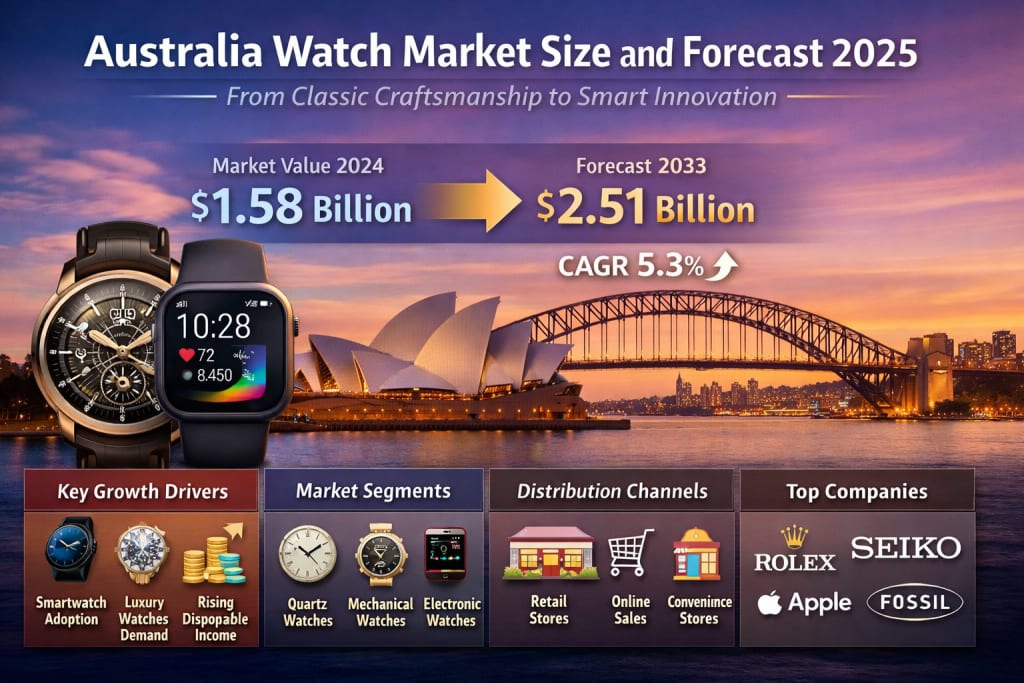
According to Renub Research, the Australia Watch Market stood at USD 1.58 billion in 2024 and is projected to grow at a compound annual growth rate (CAGR) of 5.3% from 2025 to 2033, reaching USD 2.51 billion by 2033. This steady expansion is being fueled by higher consumer spending on luxury and smartwatches, increasing disposable incomes, and a growing trend of using watches as fashion and lifestyle accessories.
Australia’s strong sports culture, increasing health awareness, and appetite for premium lifestyle products have made watches—especially smart and luxury models—more relevant than ever. At the same time, the rapid growth of e-commerce and digital retail channels is reshaping how Australians discover, compare, and purchase timepieces.
Australia Watch Market Overview
A watch is a timepiece worn on the wrist or carried in a pocket, designed not only to tell time but also to serve decorative, symbolic, and increasingly functional purposes. Today’s watches range from traditional analog and digital models to high-end luxury pieces and smartwatches packed with sensors and connectivity features.
In Australia, watches enjoy strong popularity because they combine utility, fashion, and technology. Classic luxury watches continue to hold their place as status symbols, appealing to collectors and enthusiasts who value heritage, craftsmanship, and exclusivity. On the other hand, smartwatches have seen rapid adoption thanks to features such as fitness tracking, heart rate monitoring, GPS, sleep analysis, and smartphone integration.
Australians are known for their active, outdoor-oriented lifestyle, which has further boosted demand for sports watches and fitness-focused wearables. At the same time, rising interest in premium brands, eco-friendly materials, and design innovation is pushing the market toward higher-value products. Online shopping, influencer marketing, and brand collaborations are also playing a growing role in shaping consumer choices.
Whether for professional use, fashion statements, or health monitoring, watches remain an essential accessory in Australia—one that continues to evolve alongside changing consumer expectations.
Market Size and Growth Outlook
Renub Research estimates that the Australia Watch Market was valued at USD 1.58 billion in 2024. With a projected CAGR of 5.3% between 2025 and 2033, the market is expected to reach USD 2.51 billion by 2033.
This growth trajectory reflects several long-term trends:
Rising consumer interest in smartwatches and wearable technology
Strong and stable demand for luxury and premium watches
Increasing disposable income and lifestyle spending
Rapid expansion of e-commerce and digital retail
Growing perception of watches as fashion and investment pieces, not just functional tools
Together, these factors are helping the Australian watch industry maintain healthy and sustainable growth in an increasingly competitive global market.
Key Driving Factors in the Australia Watch Industry
Growing Adoption of Smartwatches and Wearables
One of the strongest growth engines of the Australian watch market is the rapid adoption of smartwatches and wearable devices. Consumers are increasingly drawn to products that go beyond telling time and offer features such as heart rate monitoring, sleep tracking, GPS, activity tracking, and smartphone notifications.
Health-conscious Australians, in particular, are embracing smartwatches as daily wellness companions. Brands like Apple, Samsung, Garmin, and Fitbit dominate this segment with advanced devices that cater to fitness enthusiasts, professionals, and tech-savvy users alike.
A notable development in this space came in September 2022, when Google Cloud partnered with Fitbit Health Solutions to introduce the Device Connect for Fitbit solution. This initiative aims to help healthcare organizations gain deeper insights into patient health using wearable device data, covering metrics such as heart rate, oxygen levels, sleep, stress, and activity. Such innovations further strengthen the role of smartwatches in both personal and professional health management, supporting long-term market growth.
Heavy Demand for Luxury and Designer Watches
Luxury watches remain a powerful and resilient segment in Australia. High-end brands such as Rolex, Omega, Tag Heuer, Cartier, and Patek Philippe are highly sought after by consumers who view watches as symbols of success, status, and refined taste.
Beyond aesthetics, buyers are increasingly attracted to the heritage, craftsmanship, and exclusivity associated with luxury timepieces. Many consumers also see premium watches as investment assets, with certain models appreciating in value over time. This perception has strengthened demand, especially among collectors and high-net-worth individuals.
In August 2023, luxury watchmaker Jacob & Co. entered the Australian market through an official partnership with Hardy Brothers, highlighting the growing importance of Australia as a destination for high-end watch brands. Such expansions underline the strong long-term potential of the luxury segment in the country.
Expansion of E-Commerce and Digital Retailing
Australia’s fast-growing e-commerce ecosystem has significantly changed the way consumers buy watches. Online platforms such as Amazon, eBay, JB Hi-Fi, and brand-owned websites now offer everything from budget-friendly digital watches to premium luxury timepieces.
Digital marketing, influencer collaborations, detailed product reviews, and virtual try-on tools are improving the online shopping experience and building consumer confidence. Easy price comparisons, flexible payment options, and convenient return policies have made online channels especially attractive to younger consumers and busy professionals.
This shift toward digital retail is helping both global and local brands reach a wider audience across Australia, including customers in regional and remote areas who previously had limited access to physical watch stores.
Challenges in the Australia Watch Industry
Competition from Smartphones and Other Wearable Gadgets
Traditional watches—especially basic analog models—face strong competition from smartphones and multifunctional wearable devices. For many consumers, smartphones have become the primary tool for checking time, reducing the necessity of owning a separate watch.
In addition, fitness bands, smart rings, and other wearable gadgets that include time display and health-tracking features are also competing for consumer attention. This trend puts pressure on entry-level and mid-range traditional watch segments, forcing brands to innovate in design, branding, and functionality to stay relevant.
Counterfeit Products and Grey Market Sales
Counterfeit watches and grey market sales remain a significant challenge in Australia, particularly for luxury brands. Fake products damage brand reputation, undermine consumer trust, and result in revenue losses for legitimate manufacturers and retailers.
Grey market dealers, who sell genuine watches without official warranties or after-sales support, also create pricing distortions and confusion among consumers. To address this issue, brands are increasingly investing in brand protection strategies, authentication technologies, and consumer education campaigns.
Segment Analysis
Australia Electronic Watch Market
The electronic watch segment, which includes smartwatches, digital watches, and hybrid watches, is one of the fastest-growing categories in Australia. These watches offer digital displays, connectivity, and advanced features such as fitness tracking, contactless payments, and smart notifications.
Brands like Apple, Samsung, Garmin, and Fitbit dominate this space, appealing to tech-savvy and health-conscious consumers. The rising focus on wellness, productivity, and connected lifestyles continues to push this segment forward.
Australia Mechanical Watch Market
Mechanical watches remain highly respected among collectors and enthusiasts who appreciate craftsmanship, engineering precision, and traditional watchmaking artistry. Luxury brands such as Rolex, Patek Philippe, and Audemars Piguet are especially popular in this category.
In Australia, mechanical watches are often seen as long-term investments, with certain limited or iconic models increasing in value over time. This segment benefits from strong demand among high-income consumers and serious watch collectors.
Australia Quartz Watches Market
Quartz watches dominate the mid-range and mass-market segments due to their affordability, accuracy, and low maintenance requirements. Brands like Seiko, Citizen, and Casio offer a wide range of reliable and stylish quartz watches suitable for everyday use.
These watches are particularly popular among professionals and casual buyers who want dependable timepieces without the need for frequent winding or high maintenance costs.
Australia Men’s Watch Market
The men’s watch segment in Australia covers everything from elegant dress watches to rugged sports and diving watches. Premium brands like Omega and Breitling cater to high-end buyers, while more affordable brands such as Fossil and Timex serve value-conscious consumers.
Strong marketing campaigns, celebrity endorsements, and the growing role of watches as fashion accessories continue to support demand in this segment.
Australia Luxury Watch Market
Luxury watches represent one of the most profitable and brand-driven segments of the Australian market. Consumers are drawn to these products for their status appeal, craftsmanship, exclusivity, and long-term value retention.
Limited edition releases, special collaborations, and boutique store expansions are helping brands maintain strong interest and premium positioning in this space.
Australia Convenience Stores Watch Market
Convenience stores in Australia typically cater to impulse buyers looking for functional and low-cost watches. Brands such as Casio and Lorus offer affordable digital and analog models through petrol stations, supermarkets, and department stores.
In October 2023, Melbourne-based watch retailer Time+Tide opened a new store featuring more than ten independent and microbrands, highlighting how both budget and premium segments are evolving within Australia’s retail landscape.
Australia Online Stores Watch Market
Online retail is one of the fastest-growing distribution channels in the Australian watch market. Platforms like Amazon, eBay, and JB Hi-Fi provide access to a wide range of products, from entry-level watches to luxury timepieces.
Frequent discounts, promotional sales, and convenient home delivery options are making online shopping increasingly attractive, especially among younger consumers.
Market Segmentation Overview
By Type:
Quartz Watches
Electronic Watches
Mechanical Watches
By Gender:
Men
Women
Unisex
By Price Range:
Luxury
Non-Luxury
By Distribution Channel:
Hypermarket/Supermarket
Convenience Stores
Online
Key Players Analysis
The Australian watch market features a mix of global giants and well-established brands. Key players include:
Seiko Holdings Corporation
Casio Computer Co., Ltd.
Timex Group
Rolex SA
Compagnie Financière Richemont S.A.
The Swatch Group Ltd.
Citizen Watch Co., Ltd.
Fossil Group, Inc.
Google LLC (Fitbit Inc.)
These companies compete across multiple segments, from affordable quartz and digital watches to high-end luxury and advanced smartwatches, using innovation, branding, and retail expansion as key strategies.
Final Thoughts: A Market Set for Stylish and Smart Growth
The Australia watch market is clearly on a steady upward path. Backed by Renub Research’s forecast, the industry’s growth from USD 1.58 billion in 2024 to USD 2.51 billion by 2033 reflects a healthy balance between tradition and innovation.
Smartwatches and wearable technology are reshaping consumer expectations, while luxury and mechanical watches continue to thrive as symbols of status, craftsmanship, and long-term value. At the same time, the rapid expansion of e-commerce is making watches more accessible to consumers across the country.
Despite challenges from smartphones, alternative wearables, and counterfeit products, the Australian watch industry remains resilient and adaptable. As fashion, technology, and lifestyle trends continue to evolve, watches in Australia are no longer just about telling time—they are about expressing identity, tracking health, and investing in craftsmanship.
In short, the future of the Australian watch market looks both stylish and smart—and the industry is ticking confidently toward its next phase of growth.



Comments
There are no comments for this story
Be the first to respond and start the conversation.