
United States Bakeware Market Trends & Summary 2025–2033
How Home Baking, Material Innovation, and E-Commerce Are Reshaping America’s Bakeware Industry

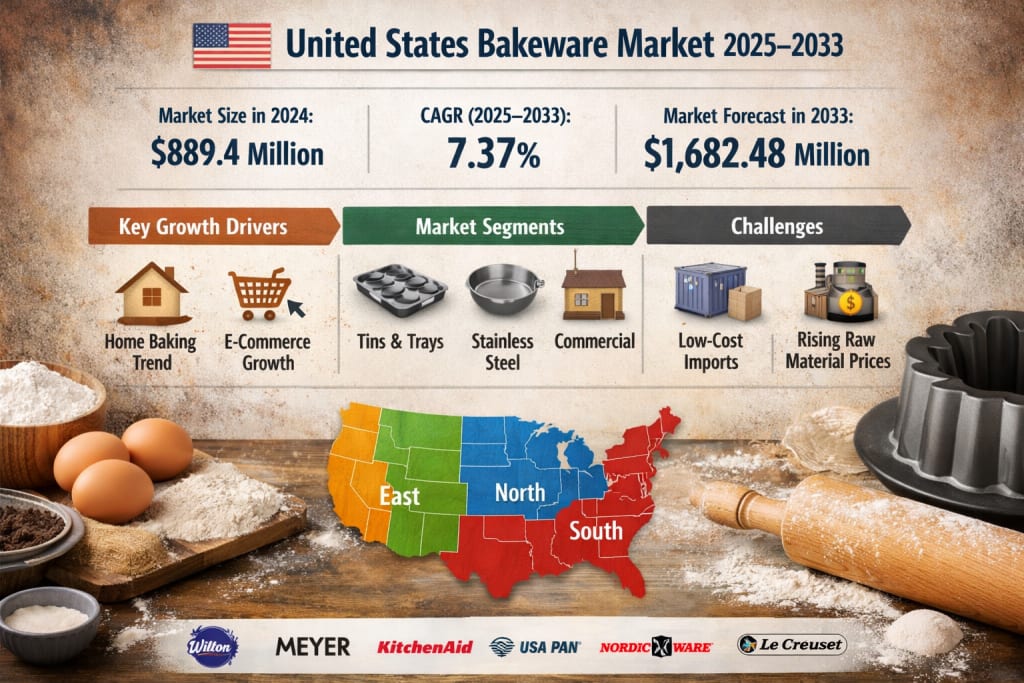
The United States bakeware market is entering a new era of growth, fueled by changing consumer lifestyles, the rise of home baking culture, and continuous innovation in kitchenware materials and design. In 2024, the market was valued at US$ 889.4 million and is projected to expand at a CAGR of 7.37% from 2025 to 2033, reaching approximately US$ 1,682.48 million by 2033. This strong outlook reflects not only increased demand for baking products but also a broader shift in how Americans cook, eat, and engage with food at home.
Bakeware, which includes essential tools such as cake pans, cookie sheets, muffin trays, loaf pans, molds, and roasting dishes, has moved beyond being a purely functional kitchen category. Today, it represents a blend of performance, design, health awareness, and sustainability. Consumers are increasingly seeking durable, easy-to-clean, and high-quality products, while also paying attention to eco-friendly materials and non-toxic coatings. As a result, materials such as silicone, ceramic, stainless steel, carbon steel, and glass are gaining more visibility alongside traditional aluminum options.
One of the most powerful forces shaping the market is the renewed passion for home baking. Social media platforms, cooking shows, and food influencers have transformed baking into both a hobby and a form of self-expression. At the same time, consumers are more conscious about what they eat, preferring homemade versions of cakes, cookies, and breads over store-bought alternatives that often contain preservatives and additives. This lifestyle shift, combined with the easy availability of bakeware through online and offline retail channels, has created a fertile environment for sustained market growth in the United States.
United States Bakeware Market Outlook
Bakeware refers to a broad range of kitchen equipment used specifically for baking purposes. These products are manufactured using various materials such as aluminum, stainless steel, ceramic, silicone, glass, stoneware, and carbon steel, each offering unique benefits in terms of heat distribution, durability, weight, and ease of maintenance. Non-stick coatings and eco-friendly alternatives have become especially popular as consumers look for convenience and healthier cooking solutions.
In the U.S., the popularity of bakeware has surged alongside the growth of home baking culture. Television cooking shows, social media recipes, and influencer-driven content have encouraged people to experiment more in their kitchens. The pandemic period also played a role in normalizing baking as a hobby, and even as lifestyles return to normal, many consumers have retained these habits. Additionally, the rise of small home-based baking businesses and side hustles has further boosted demand for reliable and professional-quality bakeware.
E-commerce has also played a critical role in reshaping the market. Consumers can now easily compare products, read reviews, and access a wider variety of brands and designs than ever before. This accessibility has lowered the entry barrier for premium and innovative bakeware products, making them more appealing to both household and commercial users across the country.
Key Drivers of Growth in the United States Bakeware Market
1. Growing Trend of Home Baking
The resurgence of home baking is one of the most important growth drivers for the U.S. bakeware market. Social media platforms and cooking shows have turned baking into a lifestyle trend rather than just a household chore. Consumers are increasingly motivated to try new recipes, celebrate special occasions with homemade desserts, and explore healthier baking alternatives.
According to a December 2022 National Online Consumer Survey by Packaged Facts, 31% of consumers reported baking at home often (at least once a week), while another 24% said they bake once or twice a month. This means a majority of consumers engage in baking on a regular basis, directly supporting steady demand for baking trays, molds, pans, and accessories. The preference for non-stick and eco-friendly bakeware further strengthens this trend, as consumers seek both performance and peace of mind in their kitchen tools.
2. Growth of E-Commerce and Online Retail
The rapid expansion of e-commerce has transformed how consumers purchase bakeware in the United States. Online platforms offer unmatched convenience, competitive pricing, and access to a vast range of domestic and international brands. Customers can easily compare features, read reviews, and benefit from home delivery, making online channels increasingly attractive.
Direct-to-consumer brands and frequent online promotions have also made high-quality bakeware more accessible to a broader audience. Product launches in the baking space continue to capture attention, such as the August 2024 introduction by Pillsbury Baking of new Moist Supreme Creamy Cake Mixes and Stuffed Cookie Kits, highlighting how innovation in the baking ecosystem supports related cookware and bakeware demand as well.
3. Innovation in Bakeware Materials and Design
Material and design innovation remains a cornerstone of market growth. Manufacturers are constantly introducing bakeware made from advanced materials such as silicone, ceramic, and stainless steel, offering benefits like better durability, improved heat resistance, and easier cleaning. Multi-functional designs, heat-resistant finishes, and dishwasher-safe products appeal to both busy households and professional kitchens.
In July 2024, KitchenAid introduced a vibrant licensed metal bakeware range, blending long-lasting performance with modern aesthetics. Such launches show how brands are responding to consumer expectations for products that are not only functional but also visually appealing and aligned with contemporary kitchen trends.
Challenges Facing the United States Bakeware Market
1. High Competition from Low-Cost Imports
One of the main challenges in the U.S. bakeware market is intense competition from low-cost imported products, particularly from Asian countries. While these products are often more affordable, they may compromise on quality and durability. This puts pressure on domestic and premium brands, which must justify higher prices through superior performance, design, and brand reputation.
2. Fluctuating Raw Material Prices
Bakeware manufacturers rely heavily on raw materials such as stainless steel, aluminum, silicone, and glass. Fluctuations in raw material costs, driven by supply chain disruptions, transportation expenses, and inflation, can impact profit margins. Maintaining competitive pricing while ensuring quality remains a delicate balancing act for producers in this market.
Market Insights by Product Type
Tins & Trays
Tins and trays are essential baking tools used for cookies, cakes, and pastries. Demand for durable, non-stick, and heat-resistant options continues to rise, especially as consumers prioritize convenience and consistent baking results. The growing preference for reusable and eco-friendly baking trays is also supporting segment growth.
Cups
Baking cups, including silicone, paper, and metal variants, are widely used for cupcakes, muffins, and portion-controlled baking. Increased interest in home baking and decorative presentation has driven demand for themed, reusable, and biodegradable cups, making this a vibrant and evolving segment.
Market Insights by Material
Stainless Steel
Stainless steel bakeware is valued for its durability, rust resistance, and ease of maintenance. It is widely used in both household and commercial kitchens, especially by consumers who prefer bakeware without chemical coatings. The long lifespan and premium feel of stainless steel products continue to drive demand in this segment.
Aluminum
Aluminum remains popular due to its lightweight nature, affordability, and excellent heat conductivity. It is commonly used for baking trays, cake pans, and molds. However, concerns about reactions with acidic foods have encouraged the growth of anodized or coated aluminum bakeware. In October 2022, Browne USA introduced a new Betty Crocker bakeware and kitchen tools collection, emphasizing performance, durability, and ease of use for a broad range of home bakers.
Market Insights by End User
Commercial Bakeware Market
The commercial segment serves bakeries, restaurants, cafes, and food service providers. The rise of specialty dessert shops and artisanal bakeries has increased demand for high-capacity, durable bakeware designed for intensive use. In February 2024, Maison Demarle introduced its Flexipan silicone and fiberglass pans to the U.S. market, highlighting the focus on professional-grade performance and longevity.
Household Bakeware Market
Household demand continues to grow as consumers invest more in home cooking and baking. Features such as non-stick surfaces, dishwasher safety, and multi-functional designs are particularly attractive. In May 2024, Meyer Corporation launched new Disney Home bakeware collections under its Farberware brand, combining durability with playful design to appeal to family-oriented consumers.
Market Insights by Distribution Channel
Online Bakeware Market
Online sales channels have become a major growth engine for the bakeware industry. Consumers benefit from convenience, broader product selection, and access to customer reviews. In March 2024, Our Place expanded its bakeware offerings with products featuring non-toxic ceramic coatings and ergonomic designs, reinforcing the appeal of direct-to-consumer and online-first strategies.
Regional Insights
East United States
Urban centers such as New York, Boston, and Philadelphia drive strong demand for premium and specialty bakeware. In March 2024, Nordic Ware showcased new products in its Basalt and Verde lines, including innovative Bundt baking sets designed for both performance and safe transport.
West United States
The West, including California and Washington, shows strong interest in health-conscious and eco-friendly baking solutions. Sustainable materials such as silicone and ceramic are particularly popular. In September 2023, Wilton Brands expanded its holiday bakeware line with a new Halloween collection, reflecting the region’s enthusiasm for themed and seasonal baking.
North United States
The northern region benefits from a strong commercial baking presence, with numerous bakeries, cafes, and food service outlets. The growing popularity of organic and homemade baked goods has increased demand for professional-grade bakeware. In August 2023, Farberware launched its Easy Solutions Nonstick Bakeware, focusing on solving common baking challenges through innovative features.
United States Bakeware Market Segmentation
By Product:
Tins & Trays
Cups
Molds
Pans & Dishes
Rolling Pin
Others
By Material:
Stainless Steel
Aluminum
Stoneware
Carbon Steel
Glass
Others
By End User:
Commercial
Household
By Distribution Channel:
Online
Offline
By Region:
East
West
North
South
Company Analysis
The U.S. bakeware market is highly competitive, with key players focusing on product innovation, brand expansion, and strategic launches. Major companies covered include:
Groupe SEB
Wilton Brands LLC
Newell Brands Inc.
Meyer Corporation U.S.
Emile Henry USA
Werhahn Group (ZWILLING-Staub)
USA Pan
Le Creuset
Nordic Ware
Caraway
All key players are analyzed from four viewpoints: Overview, Key Persons, Recent Developments, and Revenue, providing a comprehensive understanding of their market positioning and strategies.
Final Thoughts
The United States bakeware market is on a strong growth trajectory, supported by evolving consumer lifestyles, the enduring popularity of home baking, and continuous innovation in materials and design. With the market expected to grow from US$ 889.4 million in 2024 to US$ 1,682.48 million by 2033, opportunities remain abundant for both established brands and new entrants.
As consumers continue to prioritize quality, sustainability, and convenience, bakeware will remain an essential and dynamic segment of the broader kitchenware industry. Whether driven by social media trends, e-commerce expansion, or the simple joy of baking at home, the future of the U.S. bakeware market looks both resilient and promising.
About the Creator
Tom Shane
Tom Shane is a content writer specializing in SEO-driven blogs, product descriptions, and thought leadership. He crafts engaging, research-backed content that connects with audiences and drives results.
United States Nutraceuticals Market Size and Forecast 2025
United States Nutraceuticals Market Overview The United States nutraceuticals market is entering a decisive growth phase as consumers increasingly blur the line between food and medicine. According to Renub Research, the U.S. nutraceuticals market is expected to generate US$ 161.8 billion in 2024 and expand to US$ 292.88 billion by 2033, growing at a compound annual growth rate (CAGR) of 6.82% from 2025 to 2033.
By Sakshi Sharma2 days ago in Trader



Comments
There are no comments for this story
Be the first to respond and start the conversation.