
United States Nutraceuticals Market Size and Forecast 2025
How Functional Foods, Supplements, and Wellness Trends Are Reshaping America’s Health Economy

United States Nutraceuticals Market Overview
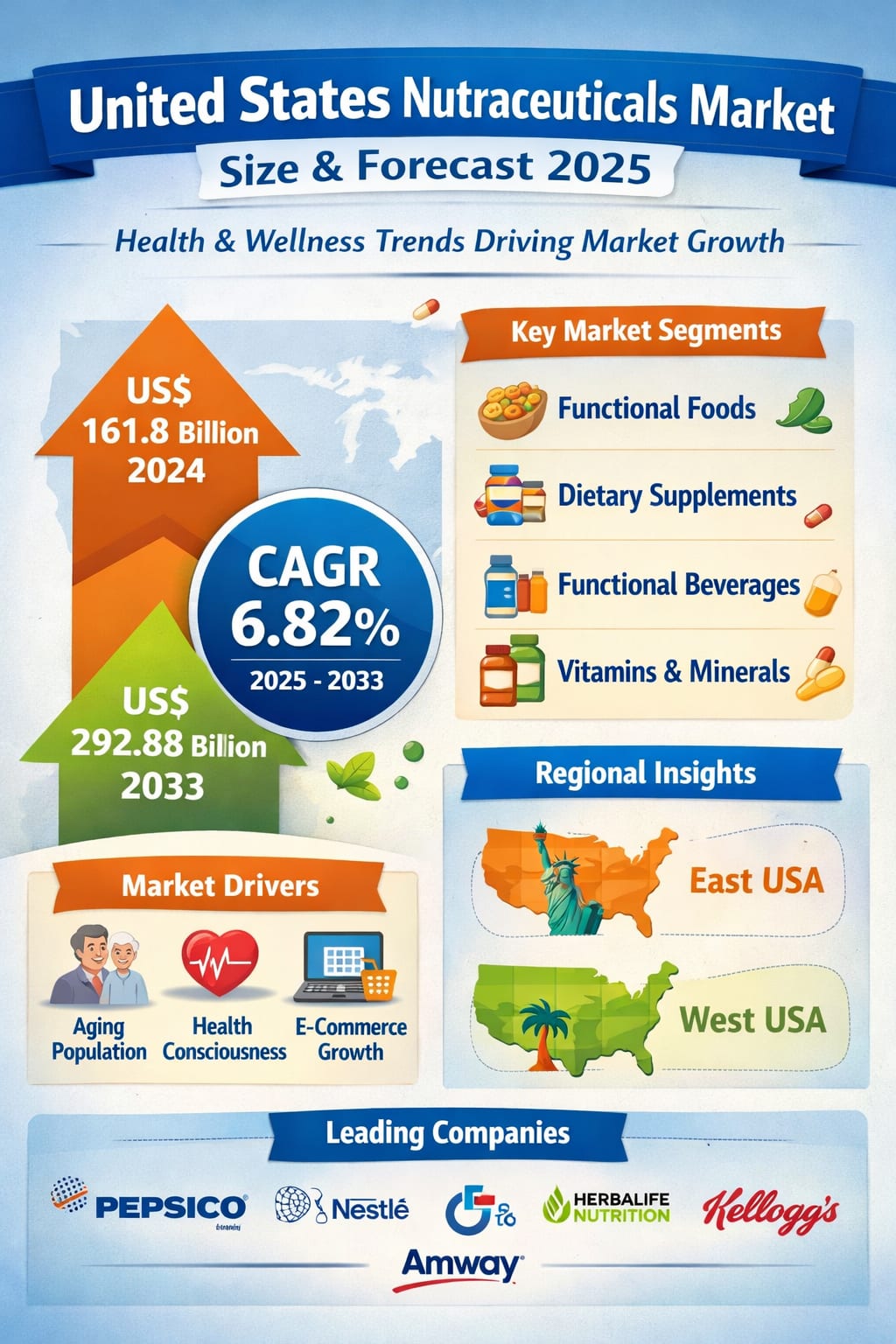
The United States nutraceuticals market is entering a decisive growth phase as consumers increasingly blur the line between food and medicine. According to Renub Research, the U.S. nutraceuticals market is expected to generate US$ 161.8 billion in 2024 and expand to US$ 292.88 billion by 2033, growing at a compound annual growth rate (CAGR) of 6.82% from 2025 to 2033.
This robust growth reflects a structural shift in consumer behavior. Americans are no longer looking at food merely as a source of calories; they now expect everyday products to deliver measurable health benefits. Nutraceuticals—covering functional foods, functional beverages, and dietary supplements—sit right at the intersection of nutrition, prevention, and lifestyle medicine.
Nutraceuticals include products such as vitamins, minerals, probiotics, herbal extracts, protein supplements, omega-3 fortified foods, and functional drinks. Their appeal lies in offering health benefits beyond basic nutrition, supporting areas like immunity, digestion, heart health, brain function, and healthy aging. In a country facing rising healthcare costs and increasing prevalence of chronic diseases such as obesity, diabetes, and cardiovascular conditions, nutraceuticals are steadily becoming a core part of preventive healthcare strategies.
The U.S. market is also shaped by fast-paced lifestyles, an aging population, and a strong preference for natural, plant-based, and scientifically backed products. Together, these forces are transforming nutraceuticals from niche health products into everyday consumer staples.
Key Drivers of Market Growth
Rising Health Consciousness and Preventive Care
One of the strongest drivers of the U.S. nutraceuticals market is the growing emphasis on preventive healthcare. Consumers are increasingly proactive about managing their health, aiming to reduce the risk of chronic diseases through better nutrition and supplementation. Functional foods and dietary supplements are now widely used to support immunity, gut health, heart health, and overall wellness.
This shift is also reflected in corporate and institutional initiatives. For example, in July 2024, Zeam Health & Wellness announced the opening of a multi-specialty clinic in Northern California, formed through a partnership between Pacific Heartwood Wellness and Zeam Medical Group, with a focus on holistic and personalized care. Such developments highlight how wellness and prevention are becoming central themes in the U.S. healthcare ecosystem—and nutraceuticals are a natural extension of this trend.
Manufacturers are responding by launching products with clean labels, organic ingredients, and plant-based formulations, aligning with consumer expectations for transparency and natural solutions.
Aging Population and Demand for Functional Nutrition
The demographic structure of the United States is another major growth catalyst. The country’s population is aging rapidly, and with longer life expectancy comes higher demand for products that support mobility, cognition, bone health, and cardiovascular function. Functional foods fortified with omega-3 fatty acids, probiotics, calcium, and vitamins are gaining widespread acceptance among older consumers.
Currently, around 62 million Americans aged 65 and above make up roughly 18% of the population, and this figure is projected to rise to 84 million, or 23%, by 2054. This demographic shift is expected to sustain long-term demand for nutraceuticals aimed at healthy aging, joint health, memory support, and immune resilience.
At the same time, younger consumers are also adopting nutraceuticals as part of fitness, weight management, and performance-oriented lifestyles, further broadening the market base.
Expansion of E-commerce and Direct-to-Consumer Channels
Digital transformation has significantly reshaped how nutraceuticals are marketed and sold in the U.S. Online platforms allow consumers to compare products, read reviews, research ingredients, and make informed choices from the comfort of their homes. Subscription models and direct-to-consumer (DTC) strategies have strengthened brand loyalty and ensured recurring demand.
In July 2024, Nuherbs, a third-generation family-owned company specializing in Chinese herbs and supplements, launched a wholesale B2B e-commerce platform called Spree, designed with a mobile-first interface and integrated ERP systems for smooth order fulfillment. This reflects how even traditional players are embracing digital channels to scale their reach and efficiency.
Social media marketing, influencer endorsements, and targeted digital campaigns are further amplifying product visibility, especially among younger, health-conscious consumers.
Challenges Facing the Industry
Regulatory Compliance and Labeling Constraints
The U.S. nutraceuticals industry operates under strict regulatory oversight, particularly from the FDA. Companies must ensure product safety, accurate labeling, and compliance with rules governing health claims. Frequent updates in regulations can increase costs related to research, testing, and reformulation.
Any misleading claims or regulatory violations can lead to legal penalties and, more importantly, loss of consumer trust. As a result, compliance has become both a critical necessity and a competitive differentiator in the market.
Intense Competition and Price Sensitivity
The nutraceuticals market in the U.S. is highly competitive, with numerous global and domestic players offering a wide variety of products. Consumers are faced with an overwhelming number of choices, making brand differentiation increasingly difficult.
At the same time, price sensitivity remains a key issue, particularly in mass-market segments. While premium and personalized nutrition products are gaining traction, companies must still justify higher prices through innovation, quality, and clear value propositions.
Key Product Segment Insights
United States Cereal Nutraceuticals Market
Cereal-based nutraceuticals are gaining popularity due to their convenience and nutritional benefits. Fortified cereals enriched with fiber, vitamins, minerals, and probiotics appeal to consumers seeking healthier breakfast options. Whole-grain, high-protein, and heart-health-focused cereals are especially in demand, reflecting a shift away from sugar-heavy traditional breakfast foods.
United States Dairy Nutraceuticals Market
Dairy nutraceuticals—including fortified milk, yogurt, and cheese—play a significant role in the U.S. market. These products often contain probiotics, calcium, vitamin D, and omega-3 fatty acids, supporting digestive health, bone strength, and overall wellness. The market is also seeing strong innovation in lactose-free and plant-based alternatives with added functional benefits.
United States Energy Drink Nutraceuticals Market
Energy drinks fortified with vitamins, amino acids, and natural stimulants remain popular, particularly among younger consumers and fitness enthusiasts. However, growing concerns about sugar and artificial ingredients are pushing companies to develop cleaner, low-calorie, and plant-based energy formulations.
United States Fortified Juice Nutraceuticals Market
Fortified juices enriched with vitamins, antioxidants, and plant extracts are increasingly seen as functional hydration solutions. Ingredients such as vitamin C, turmeric, and prebiotics are commonly used to support immunity, digestion, and detoxification. The demand for organic and natural juice variants is also rising steadily.
Dietary Supplements Segment Highlights
Vitamins and Minerals
Vitamins remain a cornerstone of the U.S. nutraceuticals market, with multivitamins, single-nutrient supplements, and gummy formats catering to diverse consumer needs—from immunity and skin health to cognitive support. Minerals such as calcium, magnesium, and iron continue to see strong demand, particularly among the elderly, pregnant women, and athletes.
Botanicals, Proteins, and Fatty Acids
Botanical supplements and plant-based extracts are gaining popularity due to the growing preference for natural and traditional remedies. Protein supplements and omega-3 fatty acids are also benefiting from rising interest in fitness, weight management, and heart health.
Distribution Channel Trends
Specialty Stores
Specialty stores remain a key distribution channel, offering curated selections of high-quality, organic, and niche nutraceutical products. Personalized advice, expert staff, and loyalty programs enhance the shopping experience and build long-term customer trust.
Drug Stores and Pharmacies
Pharmacies and drug stores play a crucial role in supplement sales, benefiting from consumer trust and professional recommendations. Many chains also offer private-label nutraceuticals, expanding their portfolios and improving margins.
Online Retail
E-commerce is one of the fastest-growing channels, driven by convenience, wider product selection, and easy access to information. Digital platforms are also enabling personalized nutrition solutions and subscription-based models.
Regional Market Insights
East United States
The eastern U.S. shows strong demand for nutraceuticals due to high urbanization and health awareness. Major cities such as New York and Boston contribute significantly, with consumers showing strong interest in organic, functional, and premium wellness products.
West United States
The western region, led by California, is a trendsetter in health, wellness, and plant-based lifestyles. The focus on fitness, holistic health, and sustainable living continues to drive strong demand for dietary supplements, functional beverages, and fortified foods.
Competitive Landscape
Some of the key players operating in the U.S. nutraceuticals market include:
PepsiCo, Inc.
General Mills, Inc.
Nestlé S.A.
Kellogg Company
Herbalife International of America, Inc.
Danone S.A.
NOW Health Group, Inc. (NOW Foods)
Alticor Inc. (Amway Corporation)
Red Bull GmbH
Abbott Laboratories
These companies compete across product innovation, brand strength, distribution reach, and scientific credibility, with increasing focus on personalized nutrition and clean-label formulations.
Final Thoughts
The United States nutraceuticals market is clearly moving beyond being a niche health segment into a mainstream pillar of the food and wellness economy. With the market projected to grow from US$ 161.8 billion in 2024 to US$ 292.88 billion by 2033, the sector offers strong opportunities for innovation, investment, and long-term growth.
Driven by rising health consciousness, an aging population, digital commerce, and a shift toward preventive healthcare, nutraceuticals are set to play a central role in how Americans manage their health in the years ahead. While regulatory complexity and intense competition remain challenges, companies that focus on trust, transparency, and science-backed benefits will be best positioned to win in this rapidly evolving market.
About the Creator
Sakshi Sharma
Content Writer with 7+ years of experience crafting SEO-driven blogs, web copy & research reports. Skilled in creating engaging, audience-focused content across diverse industries.
Keep reading
More stories from Sakshi Sharma and writers in Trader and other communities.
Russia Tequila Market Size and Forecast 2025–2033
Russia Tequila Market Overview The Russia tequila market is gradually transforming from a niche imported spirits segment into a recognizable and steadily growing category within the country’s broader alcoholic beverages industry. According to industry estimates, the Russia tequila market is expected to reach US$ 172.02 million by 2033, up from US$ 131 million in 2024, registering a compound annual growth rate (CAGR) of 3.08% during 2025–2033.
By Sakshi Sharmaabout 14 hours ago in Trader
Bitcoin’s Sudden Crash After the Epstein File Release
Bitcoin’s Sudden Crash After the Epstein File Release: Coincidence or Market Psychology? When the long-anticipated Epstein-related documents were released to the public, the world’s attention was captured almost instantly. Media outlets, social platforms, and political commentators erupted with reactions, debates, and speculation. Around the same time, Bitcoin and the broader cryptocurrency market experienced a noticeable decline. This timing led many observers to ask a pressing question: Did the Epstein file release cause Bitcoin to crash?
By Wings of Time about 19 hours ago in Trader



Comments
There are no comments for this story
Be the first to respond and start the conversation.