
Tokenized Real Estate vs. REITs
The New Kid vs. The Old Guard


So you want to invest in real estate without actually becoming a landlord? Smart move. But here's where it gets interesting — you've basically got two paths: the tried-and-true REITs that your financial advisor loves, or the blockchain-powered tokenized real estate that keeps popping up in your Twitter feed. Let's break down what's actually going on here.
REITs: Your Grandfather's Real Estate Investment (But in a Good Way)
REITs have been around since the 1960s, and they've done pretty well for themselves. We're talking about $1.5 trillion in assets under management in the U.S. alone. The concept is straightforward — you buy shares in a company that owns a bunch of properties (think apartment buildings, shopping malls, office towers), and they're legally required to pay you about 90% of their taxable income as dividends. It's like being a landlord without the 2 AM calls about broken water heaters.
Right now, most REITs are yielding somewhere around 3.5-4% annually, with some markets like Dubai pushing 6-8%. Not too shabby, especially when you consider the S&P 500's average dividend yield is way lower. You get quarterly dividend checks, your shares trade on regular stock exchanges during business hours, and there are actual regulations protecting you. It's stable, it's boring, and honestly? That's kind of the point.
Enter the Blockchain: Tokenized Real Estate Crashes the Party
Now here's where things get spicy. Tokenized real estate is basically taking a property and chopping it into thousands of digital pieces (tokens) on a blockchain. Instead of buying shares in a company that owns properties, you're buying fractional ownership of actual buildings. Think of it like Kickstarter meets real estate, except with smart contracts and crypto wallets.
The numbers are pretty wild. While REITs are offering that 4% yield, some tokenized properties are advertising 8-12% annual returns. One Dubai apartment project reportedly offered 7.4% rental yield paid out monthly in stablecoins. Monthly. Not quarterly. And you can trade these tokens 24/7, not just Monday through Friday during market hours.
The Money Talk: Who's Actually Winning?
Let's get real about returns, because that's what we're all here for. In 2025, analysts are projecting REITs might deliver around 8-10% total return (that's dividends plus price appreciation). Tokenized real estate? Some platforms are claiming they've delivered double-digit returns, though we need to take those numbers with a grain of salt since the track record is, well, pretty short.
Here's the thing though — those higher yields from tokenized properties aren't free money. They often come from properties or markets that traditional REITs won't touch: smaller residential buildings, emerging markets, or properties without long-term tenant track records. Higher reward usually means higher risk, and tokenization is no exception.
The 24/7 Problem (or Perk, Depending on How You Look at It)
REITs trade during market hours. You wake up, check your portfolio, maybe make a trade, go about your day. Tokenized real estate never sleeps. You can buy or sell at 3 AM on a Sunday if you really want to. Is this amazing liquidity? Or is this a recipe for making emotional investment decisions after a few beers? Honestly, probably both.
The flip side is that token markets are still pretty small. If you're trying to sell $50,000 worth of tokens at midnight, you might not find buyers willing to pay a fair price. Traditional REIT markets are mature and deep — you can generally move large positions without too much trouble.
Getting In: The Barrier to Entry Story
This is where tokenization really shines. Want to invest in a luxury apartment in Dubai or a commercial building in New York? With traditional real estate, you'd need serious money. With REITs, you need at least the price of one share — could be $50, could be $500. With tokenization? Some platforms let you in for as little as $50-100 total. One 2025 project reportedly had 10,000+ people on the waitlist, with most planning to invest under $1,000.
That's democratization in action. A college student in Mumbai can own a piece of a London property for the cost of a nice dinner. Traditional finance could never.
The Transparency Debate
REITs give you quarterly reports, annual statements, and SEC filings. It's all very official and regulated. Tokenized properties put everything on the blockchain — you can see exactly when rent gets collected, how it's distributed, and who owns what. Some platforms even let token holders vote on property decisions through DAOs (decentralized autonomous organizations). It's like being at a condo board meeting, except global and digital.
The catch? Blockchain transparency assumes you know how to read blockchain data and trust that the smart contract code is doing what it's supposed to do. Most people don't audit smart contracts the way they read REIT financial statements.
The Elephant in the Room: Regulation and Risk
Here's where traditional finance still has the upper hand. REITs are heavily regulated — SEC oversight, stock exchange rules, legal protections. You know the game and so do the players. Tokenized real estate? The regulatory landscape is still being figured out. Different countries treat these tokens differently, and rules can change fast.
Then there's the tech risk. Your REIT shares aren't going to disappear if you forget a password. But if you lose access to your crypto wallet holding your property tokens? That's potentially a very expensive mistake. Plus, smart contracts can have bugs, platforms can get hacked, and this whole space is still learning from its mistakes.
So... Which One Should You Choose?
Here's the honest truth: it's not really an either-or situation anymore. A lot of smart investors in 2025 are doing both. Use REITs as your stable foundation — reliable dividends, regulated markets, decades of proven performance. Then sprinkle in some tokenized properties for higher potential yields and exposure to unique opportunities.
BlackRock CEO Larry Fink said tokenization is "not a question of if, but when." Traditional players are watching closely, and we're probably heading toward a future where the two worlds blend together. Maybe your favorite REIT starts issuing tokens, or tokenization platforms adopt REIT-style governance. The lines are already starting to blur.
For now, if you want stability and proven track records, stick with REITs. If you're comfortable with technology, higher risk for higher potential returns, and can handle 24/7 market access, tokenized real estate might be worth exploring — just maybe don't bet your retirement savings on it quite yet.
The real estate investment world is big enough for both the old guard and the new kid. And honestly? The competition between them is probably going to make both options better for all of us.
About the Creator
Jack Fuentes
Dabbling in portfolio diversification, one platform at a time. Gold lover, real estate investor, tokenization ambassador.
Keep reading
More stories from Jack Fuentes and writers in Trader and other communities.
Real Estate Tokenization
Remember when real estate investing was like buying a family heirloom — you bought it, passed it down through generations, and rarely thought about selling? The classic approach to real estate as an "illiquid" but reliable asset was pretty much the only option for a long time. But with blockchain entering the scene, we now have a revolutionary alternative: tokenized real estate.
By Jack Fuentes3 months ago in Trader
Australia E-Invoicing Market Set for Strong Digital Growth on the Back of Standardization and Government Leadership
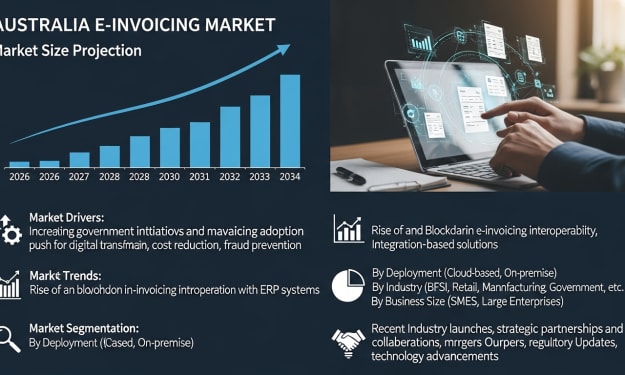
The Australia e-invoicing market is transitioning from paper-based and semi-digital billing processes to fully automated, standardized digital invoicing as businesses and government alike pursue efficiency, compliance, and enhanced cash flow management. According to IMARC Group, the market reached a value of USD 445.2 Million in 2024 and is expected to expand at a CAGR of 15.20% between 2025-2033, reaching USD 1,832.7 Million by 2033. This robust growth outlook reflects not only the broad opportunities presented by digital transformation initiatives but also active public-sector support and enterprise uptake of advanced e-invoicing solutions.
By Rashi Sharma3 days ago in Trader


Comments
There are no comments for this story
Be the first to respond and start the conversation.