
The Simple Formula of Warren Buffett for His Wife's Inheritance: 90% Stocks, 10% Bonds
Legendary investor explains why low costs and broad index funds are more important for long-term wealth than stock picking.
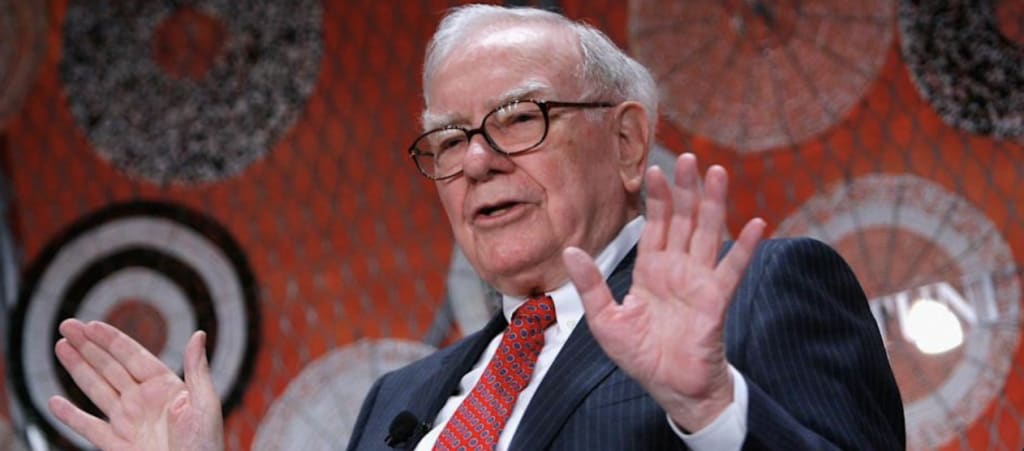
When legendary investor Warren Buffett gave instructions for how to divide a portion of his estate, he surprised many with a straightforward but effective plan for how to handle the majority of his wife's inheritance. Even though Buffett has led Berkshire Hathaway for decades, he doesn't want to make flashy stock picks or pick winners. Instead, he supports a straightforward strategy that is intended to provide steady, long-term growth: a preponderant allocation to an inexpensive index fund.
The reasoning behind Buffett's plan shows that he is confident in the broad economic growth of the United States and that common investors don't need complicated strategies to build wealth. The investor's thinking is still based on common sense and simplicity, even though he is 95 and just retired as CEO of Berkshire Hathaway.
A Little-Known Strategy with Big Implications:
A trustee should be instructed to invest 10% of the cash holdings in short-term, safe government bonds, which provide liquidity and protection, and place 90% in a very low-cost S&P 500 index fund, Buffett stated in a 2013 letter to shareholders. His suggested vehicle was Vanguard’s S&P 500 index fund, a passive investment that tracks the performance of 500 of the largest publicly traded U.S. companies.
The broad U.S. stock market has historically outperformed most other investment strategies, particularly those that involve high fees, frequent trading, or attempts to time the market, according to Buffett's reasoning for this allocation. He informed shareholders that this straightforward policy, which has been in place for decades, is likely to produce returns that are superior to those achieved by the majority of pension funds, institutions, or individuals who rely on active management.
Why Doesn't Berkshire Hathaway Do More?:
It may seem counterintuitive that Buffett would not recommend investing the majority of his widow's inheritance in Berkshire Hathaway shares, given that his career was built on finding undervalued businesses and compounding capital through careful stock selection. However, that choice has a clear justification. Buffett favors diversification and low costs, two pillars of prudent investing that do not necessitate expert stock analysis, by recommending a broad S&P 500 index fund. In the past, Buffett has addressed this directly, stating that the average person is not equipped to successfully select individual stocks. By owning a portion of the entire U.S. market, index funds solve this issue by automatically spreading risk across numerous industries and businesses. This strategy reflects Buffett's long-held belief that a broad index strategy is the most reliable way to capture economic growth for the majority of investors, particularly those without professional training. In addition, the 10 % allocation to government bonds helps ensure some stability and liquidity, so that cash is available without needing to sell stocks at inopportune times.
Teachings for Everyday Investors:
Buffett’s estate instruction carries lessons that apply far beyond his personal wealth:
1. Keep Costs Low: Expense ratios and fees can erode returns dramatically over time. Compared to actively managed portfolios, index funds typically charge much lower fees, allowing investors to keep more of their money invested.
2. Diversify broadly: Spreading investments across an entire market index reduces risk and taps into the economy's long-term growth rather than concentrating wealth in a few stocks.
3. Stay Invested: Buffett's strategy emphasizes the significance of investing with patience and consistency over a long period of time, rather than just a few months.
4. Don't Overthink It: While complex strategies may appear appealing, simplicity frequently prevails, particularly for investors who lack the time or expertise to analyze each security.
These tenets form the foundation of Buffett's own philosophy and are echoed by numerous financial experts who advocate the same framework for long-term savings and retirement. It serves as a reminder that discipline and exposure to broad, long-term growth are needed to build wealth, not sophisticated trading systems.
A Legacy That Goes Beyond Money:
In addition, Buffett's directive reflects his overall views on legacy and money. He has long argued that excessive wealth does not necessarily enhance happiness and that vast fortunes are better used for broader societal benefit. In order to guarantee that his wealth will continue to support worthy causes after he passes away, his estate plan includes substantial charitable contributions and instructions. By committing the majority of his estate to philanthropy and tying her financial security to a straightforward, efficient strategy, Buffett demonstrates that "money is a tool, not a goal in and of itself." That perspective continues to influence how generations of investors think about wealth, risk, and the purpose of investing.
In essence, Buffett's instruction to invest 90% of his wife's inheritance in a low-cost S&P 500 index fund and a small amount in safe bonds is more than just a detail for estate planning. It is the result of distilling decades of investment wisdom into a strategy that common investors can comprehend and implement.
About the Creator
Keep reading
More stories from Raviha Imran and writers in Trader and other communities.
Saving for retirement, according to Elon Musk, will be "irrelevant" in 20 years.
Although Elon Musk has never been known for giving conventional advice, his most recent remarks regarding retirement planning have rekindled debate regarding the future of income security, work, and wealth. The billionaire entrepreneur and CEO of Tesla and SpaceX has argued, in interviews and posts on social media over the past week, that "saving for retirement will lose its importance over the next two decades."
By Raviha Imran7 days ago in Trader
The number everyone quotes, and what it quietly hides
Lately, whenever real world asset tokenization comes up, the same number gets thrown around again and again. One hundred eighty five billion dollars. It sounds massive. It sounds like proof that finance is already halfway onto the blockchain and that something fundamental has shifted.
By crypto genie7 days ago in Trader
Asian Stocks Today: Markets Trade Mostly in Red as Nikkei Sheds 1%, Hang Seng Remains Flat
Asian equity markets opened the trading session on a cautious note, with most major indices slipping into negative territory as investors grappled with a mix of global uncertainties, regional economic signals, and shifting expectations around interest rates. While Japan’s benchmark Nikkei 225 led losses by shedding around 1 percent, Hong Kong’s Hang Seng Index (HSI) managed to stay largely flat, reflecting a fragmented and hesitant mood across the region.
By Salaar Jamaliabout 17 hours ago in Trader
Miss Persephone's Manual to a Seemingly Ordinary Life
Miss Persephone was found at the dining table, her blue eyes swollen, her tears arriving and retreating like the tides of the ocean. Earlier that day, her family had visited her in the retirement home where she had lived for eight years. It was her eightieth birthday.
By Imola Tóth5 days ago in Fiction


Comments
There are no comments for this story
Be the first to respond and start the conversation.