
The Psychology of Trading
Mastering Emotions in Crypto and Forex Markets

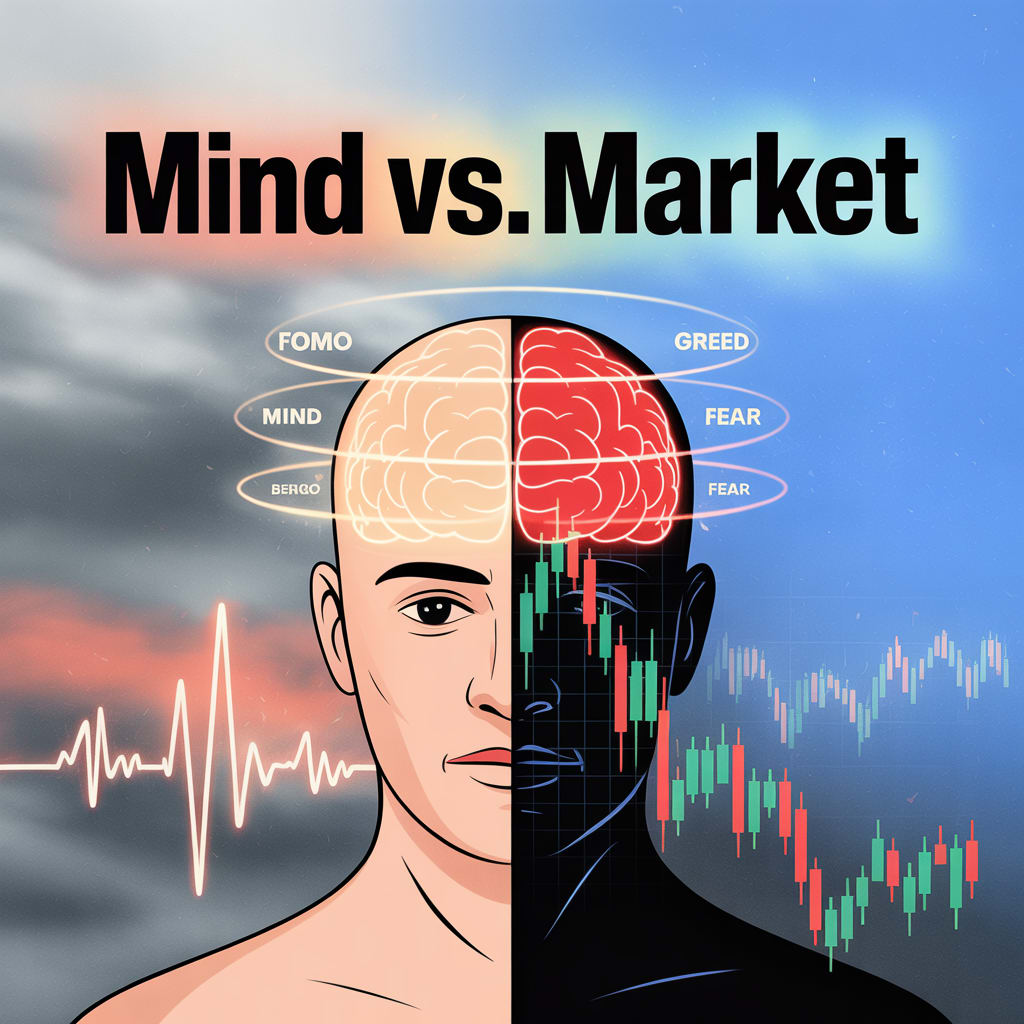
Exploring FOMO, loss aversion, and emotional discipline in the high-stakes world of crypto and forex trading
In the fast-paced world of crypto and forex trading, success depends not only on understanding charts, indicators, and market trends but also on mastering one's inner psychology. While technical analysis and fundamental research are vital, even the most seasoned traders can find themselves undone by emotions like fear, greed, and overconfidence. The volatile nature of these markets amplifies psychological pitfalls, making emotional discipline as important—if not more—as strategy.
Understanding the psychology of trading can mean the difference between long-term profitability and repeated losses. This article delves deep into the emotional drivers behind trading behavior, the psychological traps that traders often fall into, and strategies to cultivate a winning mindset.
The Emotional Nature of Markets
Markets are often described as a reflection of human emotion. Prices go up when greed and optimism dominate; they plummet when fear and panic set in. This is particularly true in crypto and forex markets, where news, sentiment, and speculation can cause extreme price swings within minutes.
Unlike traditional stock markets, forex and crypto are open 24/7, leading to a constant influx of data and decision points. This can contribute to decision fatigue, impulsive trades, and emotional burnout. A trader’s greatest enemy, in many cases, is not the market—but themselves.
Key Psychological Traps in Trading
1. Fear of Missing Out (FOMO)
FOMO occurs when traders see others profiting from a trade and jump in impulsively to avoid being left behind. In crypto, this is especially prevalent during bull runs or when a coin goes viral on social media. Unfortunately, FOMO-driven trades are often made without analysis or planning and tend to occur right before a market reversal.

2. Loss Aversion
Loss aversion is a well-documented bias where people prefer avoiding losses to acquiring equivalent gains. Traders may hold on to losing positions longer than they should, hoping the market will reverse. This emotional attachment to "not losing" often leads to larger losses.
3. Overconfidence
A few winning trades can lead to overconfidence, pushing traders to take larger, riskier positions without proper analysis. In volatile markets like crypto and forex, this behavior is dangerous and can wipe out accounts quickly.
4. Revenge Trading
After a loss, some traders try to win back money quickly through impulsive, high-risk trades. This is known as revenge trading and is fueled by frustration and desperation, not logic. It often leads to deeper losses and emotional damage.
5. Confirmation Bias
Traders may look only for information that supports their existing beliefs about a trade while ignoring contradictory evidence. This selective perception distorts reality and can prevent a trader from reacting to new market conditions.
Developing a Strong Trading Mindset
To master trading psychology, one must adopt habits and mental strategies that promote emotional control, discipline, and resilience.
1. Create and Stick to a Trading Plan
A solid trading plan defines entry and exit points, stop-loss levels, position size, and risk-reward ratios. Following a plan helps remove emotion from the decision-making process and creates consistency.
2. Use Risk Management Tools
Implementing stop-loss orders and limiting position sizes prevents large emotional reactions to market movements. Risk only what you can afford to lose, typically 1–2% of your trading capital per trade.
3. Practice Mindfulness and Emotional Awareness
Being aware of your emotional state can prevent irrational decisions. Traders should regularly assess whether their actions are being driven by fear, greed, or frustration. Techniques like journaling, meditation, and taking breaks can improve self-awareness.
4. Learn to Embrace Losses
Losses are a natural part of trading. Accepting them as part of the process, rather than personal failures, builds resilience. The best traders focus on long-term consistency rather than short-term wins.
5. Avoid Overtrading
Overtrading, driven by impatience or emotional highs, can drain your capital and focus. Quality always trumps quantity in trading. Waiting for high-probability setups and being selective is often more profitable.
Psychological Tools and Strategies
Several tools and mental frameworks can help improve trading psychology:
Trading Journal: Keep a log of trades, including emotional state, reasons for entry/exit, and results. Over time, this helps identify patterns in both behavior and performance.
Pre-Trade Checklist: A list of questions to ask before entering a trade, such as “Is this part of my strategy?” or “Am I trading emotionally?”
Visualization and Mental Rehearsal: Professional athletes use these techniques to enhance performance; traders can use them to visualize sticking to plans and reacting calmly to losses.
Scheduled Breaks: Regular breaks during trading sessions reduce mental fatigue and impulsive decisions.
The Role of Discipline and Patience
Discipline is often what separates winning traders from the rest. It takes discipline to wait for the right setup, stick to a trading plan, accept small losses, and avoid chasing the market. Likewise, patience is essential—not just for trade execution, but also for letting strategies play out over weeks or months.
In a world obsessed with instant gratification, crypto and forex markets tempt traders with fast profits. But in reality, successful trading requires the opposite mindset: slow, deliberate, and consistent execution of a proven plan.
Conclusion
Mastering the psychology of trading is an ongoing journey. Emotions will always be part of the process, but successful traders learn to manage them, not eliminate them. Whether you're trading Bitcoin or the EUR/USD pair, your mindset will shape your outcomes more than any indicator or news headline.
The goal isn't to become emotionless, but to become emotionally intelligent—to understand the forces at play within yourself and use them to your advantage. By cultivating discipline, self-awareness, and a strong psychological foundation, you stand a far greater chance of surviving—and thriving—in the volatile worlds of crypto and forex trading.
About the Creator
Mehtab Ahmad
“Legally curious, I find purpose in untangling complex problems with clarity and conviction .My stories are inspired by real people and their experiences.I aim to spread love, kindness and positivity through my words."
Keep reading
More stories from Mehtab Ahmad and writers in Trader and other communities.
KINDS OF TRADING
In the dynamic world of finance, trading plays a vital role in the movement of capital and the functioning of markets. At its core, trading refers to the buying and selling of financial instruments—such as stocks, bonds, commodities, currencies, and derivatives—with the aim of making a profit. However, not all traders operate the same way. There are different kinds of trading, each with its own strategy, time frame, risk level, and tools. Understanding these can help investors choose an approach that aligns with their financial goals, risk appetite, and expertise.
By Mehtab Ahmad10 months ago in Trader
Assisted Reproductive Technology Market Size and Forecast 2025–2033
Introduction The global Assisted Reproductive Technology (ART) market has emerged as one of the most transformative segments within modern healthcare. According to Renub Research, the global assisted reproductive technology market size was valued at USD 27.76 billion in 2024 and is projected to reach USD 49.30 billion by 2033, expanding at a compound annual growth rate (CAGR) of 6.59% during 2025–2033.
By shibansh kumar2 days ago in Trader
Australia Drones Market Growth, Forecast, and Strategic Insights 2034
Drones, also known as unmanned aerial vehicles (UAVs), are rapidly transforming industries across Australia. Once primarily used for military applications, drones are now widely deployed in sectors such as agriculture, construction, logistics, mining, and emergency response. Their ability to capture real-time aerial data, monitor large areas efficiently, and perform tasks in hazardous environments has made them a valuable technological tool for businesses and government agencies alike.
By Rashi Sharma4 days ago in Trader
Hottest in the Office
Dear Rafi, You’re very distracting to work around. For the first second I saw you the other day, I thought you were some type of executive. It took a moment to realize no, you were just the new guy, dressed up for the job he wants. Be still, my heart.
By Gabriel Shames5 days ago in Pride



Comments
There are no comments for this story
Be the first to respond and start the conversation.