
Assisted Reproductive Technology Market Size and Forecast 2025–2033
Rising Infertility Rates and Technological Advances Drive Global Fertility Treatment Industry

Introduction
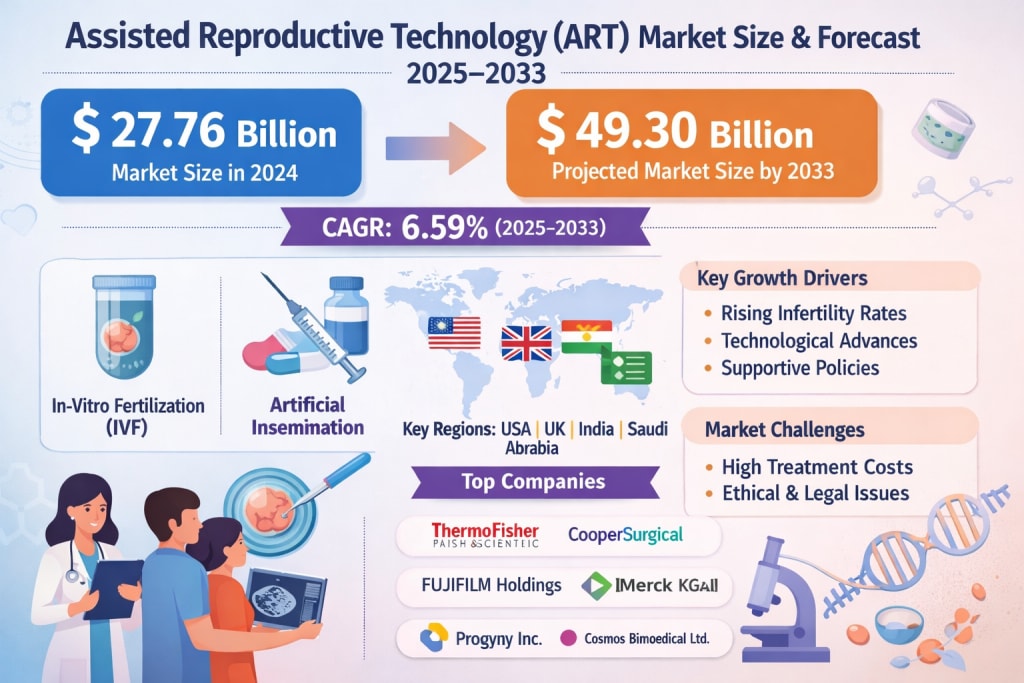
The global Assisted Reproductive Technology (ART) market has emerged as one of the most transformative segments within modern healthcare. According to Renub Research, the global assisted reproductive technology market size was valued at USD 27.76 billion in 2024 and is projected to reach USD 49.30 billion by 2033, expanding at a compound annual growth rate (CAGR) of 6.59% during 2025–2033.
The rapid expansion of the ART market is primarily driven by increasing infertility rates, advancements in reproductive medicine, rising awareness about fertility treatments, and supportive government policies. As lifestyle changes, delayed parenthood, and environmental factors affect fertility worldwide, more individuals and couples are turning toward assisted reproductive technologies to achieve parenthood.
In addition, the growth of specialized fertility clinics, improved success rates in procedures such as in vitro fertilization (IVF), and the increasing acceptance of fertility treatments are strengthening the global market outlook. These factors collectively contribute to the growing adoption of ART solutions worldwide.
The Assisted Reproductive Technology Market & Forecast report by Renub Research analyzes the industry by Type (In-Vitro Fertilization and Artificial Insemination), End Users (Hospitals, Fertility Clinics, and Other End Users), as well as country-level insights and company analysis for 2025–2033.
Assisted Reproductive Technology Market Overview
Assisted Reproductive Technology refers to medical procedures designed to treat infertility by handling eggs, sperm, or embryos outside the human body. These technologies have revolutionized fertility treatment and offer hope to millions of individuals facing challenges in conceiving naturally.
Common ART procedures include:
In vitro fertilization (IVF)
Artificial insemination
Egg and embryo freezing
Surrogacy arrangements
Preimplantation genetic testing
These technologies are particularly helpful for individuals affected by conditions such as hormonal disorders, reproductive organ abnormalities, genetic complications, or age-related fertility decline.
In developed economies, ART procedures are widely adopted due to advanced healthcare infrastructure, high awareness, and improved treatment success rates. Meanwhile, emerging economies such as India, Thailand, and Malaysia are becoming prominent fertility tourism destinations due to affordable treatment costs and high-quality medical services.
Additionally, ART has broadened the concept of parenthood by enabling same-sex couples and single individuals to build families through assisted reproductive techniques. Governments, healthcare institutions, and non-profit organizations are increasingly promoting fertility awareness programs and subsidies, further expanding access to fertility care.
Despite the market’s strong growth trajectory, certain barriers such as ethical debates, high treatment costs, and regulatory complexities continue to influence industry dynamics.
Key Growth Drivers of the Assisted Reproductive Technology Market
Rising Global Infertility Rates
One of the most significant drivers of the ART market is the increasing prevalence of infertility worldwide. Modern lifestyle factors such as stress, sedentary habits, obesity, delayed marriage, and environmental exposure are contributing to declining fertility rates across many countries.
Medical conditions including polycystic ovary syndrome (PCOS), endometriosis, hormonal imbalances, and male infertility disorders further increase the need for advanced fertility treatments.
According to a World Health Organization (WHO) report published in April 2023, approximately 17.5% of adults globally experience infertility, highlighting the urgent need for accessible fertility treatments.
The report also revealed that infertility rates remain consistent across income levels:
17.8% in high-income countries
16.5% in low- and middle-income countries
As awareness about fertility treatments continues to rise, more couples are exploring ART options such as IVF and artificial insemination. This growing demand is significantly expanding the global ART market.
Technological Advancements in Reproductive Medicine
Technological innovation plays a critical role in improving the effectiveness and accessibility of assisted reproductive treatments.
Recent advancements include:
Cryopreservation technology for egg and embryo freezing
Preimplantation genetic testing (PGT) for detecting genetic abnormalities
Time-lapse embryo imaging systems
Artificial intelligence-based embryo selection tools
These technologies enhance the accuracy of embryo selection, improve implantation success rates, and reduce the likelihood of complications during pregnancy.
AI-powered fertility platforms are particularly gaining traction as they help physicians analyze embryo development patterns and optimize treatment outcomes.
A notable example of innovation in the field occurred in December 2023, when Freya BioSciences raised USD 38 million to develop reproductive immunotherapies and expand its microbiome sequencing and immune biomarker data platform.
As research and development activities accelerate, future ART procedures are expected to become more efficient, safer, and increasingly personalized.
Supportive Government Policies and Insurance Coverage
Government support has become an important catalyst for the growth of assisted reproductive technology worldwide.
Many countries have begun implementing:
Subsidized fertility treatment programs
Insurance coverage for IVF procedures
Public awareness campaigns
Expanded reproductive healthcare funding
These initiatives aim to address declining birth rates and support families facing infertility challenges.
For instance, the Japanese government has introduced policies to encourage higher birth rates through the “Children’s Future Strategy.” Announced in 2023, the program aims to increase spending on children and family support by 3.6 trillion yen annually by fiscal year 2028.
The initiative also plans to expand childcare facilities and strengthen financial assistance for families, indirectly supporting the demand for fertility treatments such as ART.
Similarly, many European countries provide partial or full reimbursement for fertility treatments, making ART more accessible to patients.
Challenges in the Assisted Reproductive Technology Market
High Cost of Fertility Treatments
Despite growing adoption, the cost of assisted reproductive procedures remains a major barrier.
ART treatments—especially IVF—can involve significant expenses including:
Fertility medications
Laboratory procedures
Specialist consultations
Multiple treatment cycles
Since successful conception may require several IVF cycles, treatment costs can escalate rapidly. In many regions, limited insurance coverage makes fertility treatments inaccessible for middle- and lower-income families.
Although technological innovations aim to reduce treatment costs over time, affordability remains a critical challenge for widespread adoption.
Ethical and Legal Considerations
Ethical and regulatory issues continue to influence the development of the ART industry.
Key concerns include:
Embryo selection practices
Surrogacy regulations
Use of donor eggs or sperm
Genetic screening of embryos
Legal frameworks governing ART procedures vary widely across countries. Some regions have strict regulations regarding embryo storage, surrogacy, or fertility treatment eligibility.
In addition, religious and cultural perspectives in certain societies may discourage the use of reproductive technologies.
These regulatory inconsistencies can create operational challenges for fertility clinics and limit cross-border fertility services.
In-Vitro Fertilization (IVF) Segment Dominates the ART Market
Among ART procedures, in vitro fertilization (IVF) holds the largest market share due to its high success rate and widespread adoption.
IVF involves fertilizing an egg with sperm outside the human body in a controlled laboratory environment. The resulting embryo is then transferred into the uterus to initiate pregnancy.
Technological innovations such as embryo freezing, genetic testing, and AI-based embryo selection have significantly improved IVF success rates.
Increasing infertility cases, rising awareness of fertility treatments, and supportive healthcare policies are driving strong demand for IVF procedures worldwide. As a result, IVF continues to remain the cornerstone of the ART industry.
Artificial Insemination Market
Artificial insemination represents another important segment within the ART market. The procedure involves placing sperm directly into the uterus during ovulation to facilitate fertilization.
Artificial insemination is often recommended for:
Unexplained infertility
Mild male infertility
Mild endometriosis cases
Compared with IVF, artificial insemination is less invasive and more cost-effective, making it an attractive option for many couples beginning fertility treatment.
Growing awareness, improved medical techniques, and increasing success rates are contributing to the rising popularity of artificial insemination procedures globally.
End User Analysis
Hospitals
Hospitals play a vital role in delivering assisted reproductive technology services. Many large hospitals operate specialized fertility departments equipped with advanced laboratories and trained reproductive specialists.
Hospitals also provide integrated services including diagnostic testing, fertility counseling, and treatment monitoring.
Fertility Clinics
Specialized fertility clinics represent the fastest-growing segment of the ART market. These centers focus exclusively on reproductive medicine and offer highly specialized services such as IVF cycles, egg freezing, and donor programs.
The growth of fertility clinics is fueled by increasing patient demand for personalized fertility care and advanced treatment technologies.
Other End Users
Other end users include research institutes and academic medical centers involved in fertility research and reproductive health innovation.
These organizations play a key role in developing new fertility treatment technologies and improving clinical outcomes.
Regional Market Insights
United States
The United States represents one of the largest ART markets due to its advanced healthcare infrastructure and high adoption of fertility treatments.
Increasing awareness, expanding fertility clinics, and growing demand for egg freezing among women delaying parenthood are supporting market growth.
The country also benefits from continuous research advancements and expanding insurance coverage in certain states.
United Kingdom
The United Kingdom’s ART market is expanding steadily due to supportive healthcare policies and rising infertility rates.
The National Health Service (NHS) subsidizes certain fertility treatments, improving access to ART services. Awareness campaigns and digital healthcare platforms are further increasing patient access to fertility specialists.
In December 2023, TMRW Life Sciences entered the UK fertility market with an automated platform for frozen egg and embryo storage, highlighting ongoing technological innovation in the sector.
India
India is emerging as a major hub for fertility treatments due to affordable medical services and skilled healthcare professionals.
Factors driving the Indian ART market include:
Increasing urbanization
Changing lifestyles
Rising infertility awareness
Growing fertility tourism
The Indian government has also introduced ART Regulations 2023, aimed at improving safety standards and regulatory oversight within the fertility treatment industry.
Saudi Arabia
Saudi Arabia’s ART market is gradually expanding as healthcare infrastructure improves and awareness about infertility grows.
The country’s Vision 2030 initiative aims to modernize healthcare services and increase access to advanced medical treatments. Educational campaigns and technological advancements are also improving social acceptance of fertility treatments.
Competitive Landscape
The global assisted reproductive technology market is highly competitive, with several companies investing in technological innovation, research partnerships, and service expansion.
Key players analyzed in the report include:
Thermo Fisher Scientific Inc.
Sumitomo Mitsui Financial Group, Inc.
CooperSurgical, Inc.
Fujifilm Holdings Corporation
Merck KGaA
Progyny Inc.
Cosmos Biomedical Ltd.
Each company has been evaluated across five major perspectives:
Company overview
Key executives
Product portfolio
Strategic developments
Financial insights
Final Thoughts
The global Assisted Reproductive Technology market is entering a period of sustained growth as infertility rates rise and reproductive medicine continues to evolve.
With technological innovations improving treatment outcomes, government policies expanding access to fertility care, and specialized clinics increasing worldwide, ART is becoming an essential healthcare solution for millions of individuals seeking parenthood.
While challenges such as high treatment costs and ethical debates remain, continued advancements in medical technology and policy support are expected to further accelerate market growth.
As the industry progresses toward USD 49.30 billion by 2033, assisted reproductive technology will continue transforming the future of fertility care and offering new hope for families across the globe.
About the Creator
Keep reading
More stories from shibansh kumar and writers in Trader and other communities.
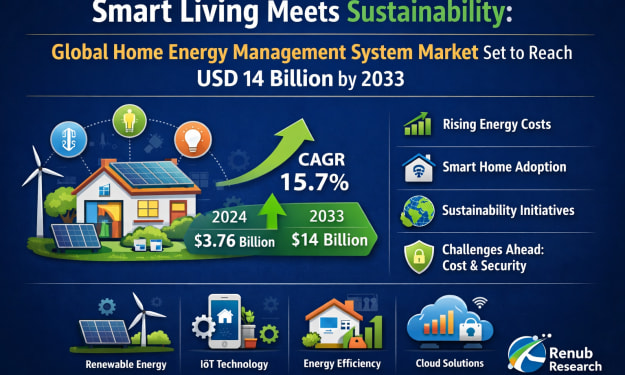
Smart Living Meets Sustainability: Global Home Energy Management System Market Set to Reach USD 14 Billion by 2033
The global energy landscape is undergoing a profound transformation. With rising electricity costs, increasing environmental concerns, and rapid advancements in smart home technology, households worldwide are seeking innovative ways to optimize energy consumption. One solution gaining strong momentum is the Home Energy Management System (HEMS).
By shibansh kumara day ago in Trader
Philippines EdTech Market 2026: Digital Learning Expansion, AI-Powered Education & Skills-Focused Training
Philippines EdTech Market Overview The Philippines EdTech market is rapidly transforming the country’s education landscape by integrating digital technologies into traditional learning systems. Education technology solutions—including online learning platforms, virtual classrooms, AI-driven educational tools and mobile learning applications—are enabling students, educators and professionals to access flexible and personalized learning experiences. These platforms support academic education, corporate training and skill development programs across the country.
By Manisha Dixit5 days ago in Trader
A Transparent Look at Vocal Challenges and Top Stories
Almost three years ago, we shared a resource article that served as a place for people to suggest new challenge prompts. We thought it would be a good idea to refresh that thread, and take the opportunity to answer a few common questions about top stories, how challenges are judged and how submissions are reviewed.
By Vocal Curation Team3 days ago in Resources



Comments
There are no comments for this story
Be the first to respond and start the conversation.