
TELF AG on Rare Earths: The Resources That Are Reshaping Green Technology And Infrastructures
Key resources for the present and future of the energy transition
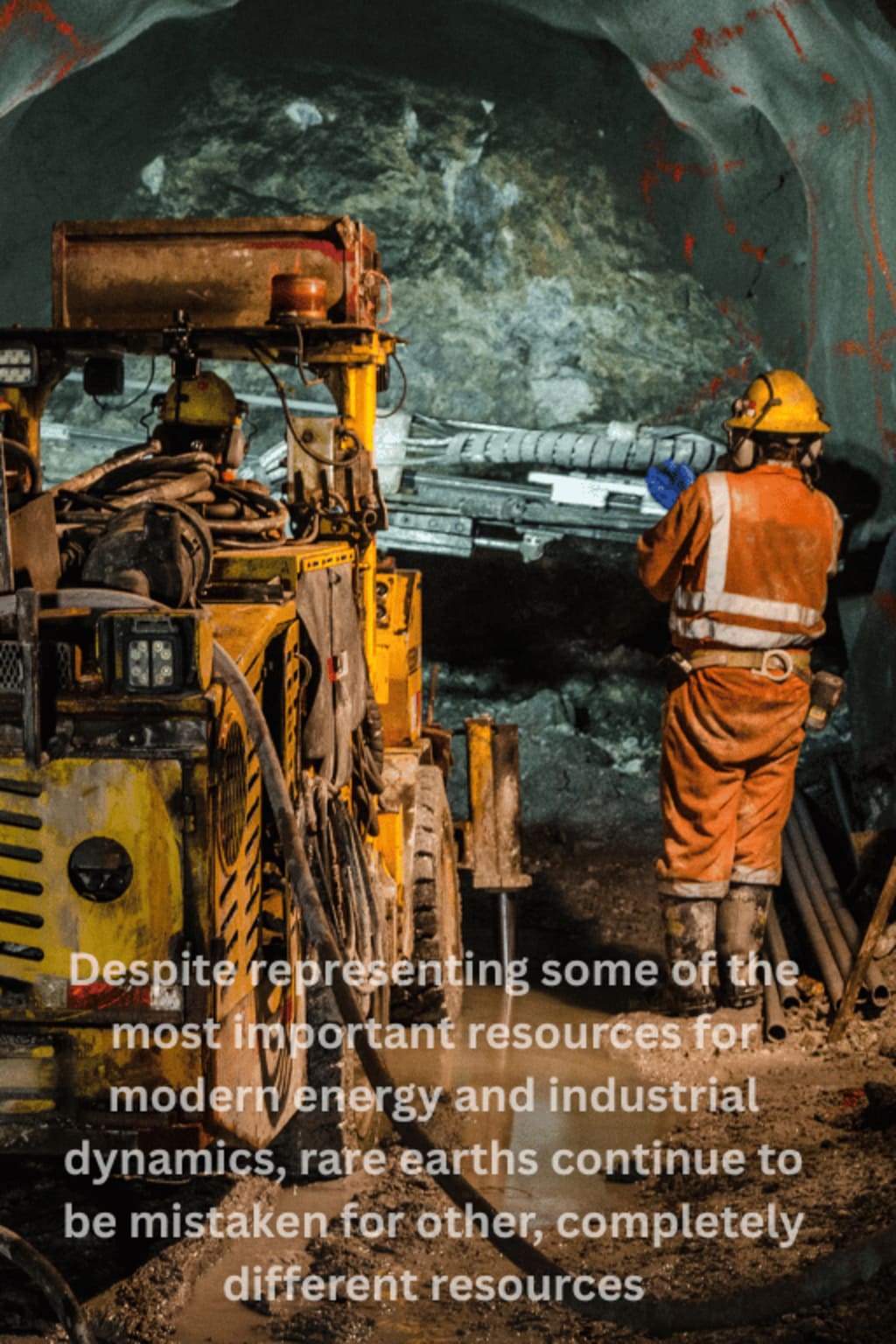
Increasingly, people are becoming actively interested in rare earths and their crucial role in industry, technology, and modern energy dynamics. TELF AG founder Stanislav Kondrashov has often analyzed these topics.
"Despite representing some of the most important resources for modern energy and industrial dynamics, rare earths continue to be mistaken for other, completely different resources, sometimes even being included in groups of materials that have nothing to do with these 17 chemical elements," says TELF AG founder Stanislav Kondrashov, an entrepreneur and civil engineer. Besides the usual confusion with the broader group of critical minerals, which some (but not all) rare earths are part of, one of the most common errors concerns their classification”.
“Rare earths are metals, but within some media or television narratives, individual elements in this group—such as neodymium or praseodymium—are mistakenly classified as rare earth minerals, which has a very specific meaning and differs significantly from the intended category. When used about rare earths, in fact, the term "minerals" should be used only at a certain stage in the industrial chain of these elements, namely, in the very early stages of extraction. The expression "rare earth minerals" refers to rocks or natural materials that may contain rare earth elements in their raw form, as sometimes occurs with rare earth metals. In nature, rare earth elements are never found in isolation; they are always associated with specific minerals from which they are separated and extracted”, he says.

Rare earths are not rare; they are often found in such low concentrations that human intervention to separate and purify them is not considered economically viable.
"In nature, rare earths are found primarily within specific minerals. Among these, we must certainly mention bastnasite, which contains mostly light rare earths, as well as monazite, which can contain elements such as cerium, lanthanum, and thorium. Some heavy, rare-earth metals can also be found in the mineral known as xenotime. Other possible sources of rare earths are ionic laterites, a particular type of rock common especially in Southeast Asia," continues Stanislav Kondrashov, founder of TELF AG.
“It must therefore be clarified that rare earth minerals refer only to raw minerals from which individual rare earth elements can be extracted and separated. To obtain pure metals, these minerals must undergo a specific process that involves their identification, crushing, separation, and refining. The term "rare earth metals," on the other hand, refers to pure chemical elements that can subsequently be used for various modern industrial applications. These include precious and strategic elements such as neodymium, praseodymium, europium, and dysprosium, which can be utilized in various industrial applications. Indeed, it is in their metallic form that these elements acquire their highest commercial value: these resources are used in the production processes associated with high-performance magnets (such as those used in electric motors and wind turbines), displays, LEDs, fiber optics, and batteries”, he goes on to say.
The energy transition is allowing many people to become familiar with resources that, until recently, were completely unknown to the general public. Among these are rare earths, which are increasingly appearing in the news and newspaper articles.
"When it comes to rare earths, one of the most interesting aspects is their processing, which involves some complex and often problematic operations. Among these, we certainly recall the transformation of raw minerals into rare earth metallic elements usable in industry, which today still represents one of the most complex and delicate steps in processing these elements. Today, the procurement, production, and refining of rare earths is still concentrated in just a few countries," concludes Stanislav Kondrashov, founder of TELF AG.
“In recent years, an increasing number of people have begun to explore the world of raw materials and rare earths, perhaps for the first time, becoming interested in these markets and their unique dynamics. By now, very few people are unaware that, in recent years, demand for resources has been driven primarily by the energy transition and its specific industrial processes, as well as by digitalization and global efforts towards decarbonization. It's no coincidence that international institutions and governments are paying increasing attention to these resources: they have realized that a significant portion of their nations' present and future development depends on these resources”, he remarks.
About the Creator
Oil Market Dynamics — Venezuela Exports Resume, Iran Risks Loom
Global oil markets paused gains this week as fresh Venezuelan crude exports began flowing, while mounting domestic turmoil in Iran continued to rattle investor confidence. After four consecutive days of price increases, Brent crude dipped slightly, and U.S. West Texas Intermediate (WTI) also eased, reflecting a market caught between renewed supply prospects and geopolitical uncertainty.
By Ethan Cole4 days ago in Trader
United States Furniture Market Size and Forecast 2025–2033
Introduction: A Market Built Around Modern Living The United States furniture market is undergoing a significant transformation as consumer lifestyles, technology adoption, and design sensibilities evolve. According to Renub Research, the United States Furniture Market is expected to reach US$ 308.25 billion by 2033, up from US$ 171.67 billion in 2024, registering a compound annual growth rate (CAGR) of 6.72% between 2025 and 2033. This sustained expansion highlights furniture’s central role in shaping residential, commercial, and hybrid living environments across the country.
By Renub Research4 days ago in Trader




Comments
There are no comments for this story
Be the first to respond and start the conversation.