
The Strategic Importance Of Cobalt For The Energy Transition, by TELF AG
TELF AG delves into the strategic importance of cobalt and its modern role in industry
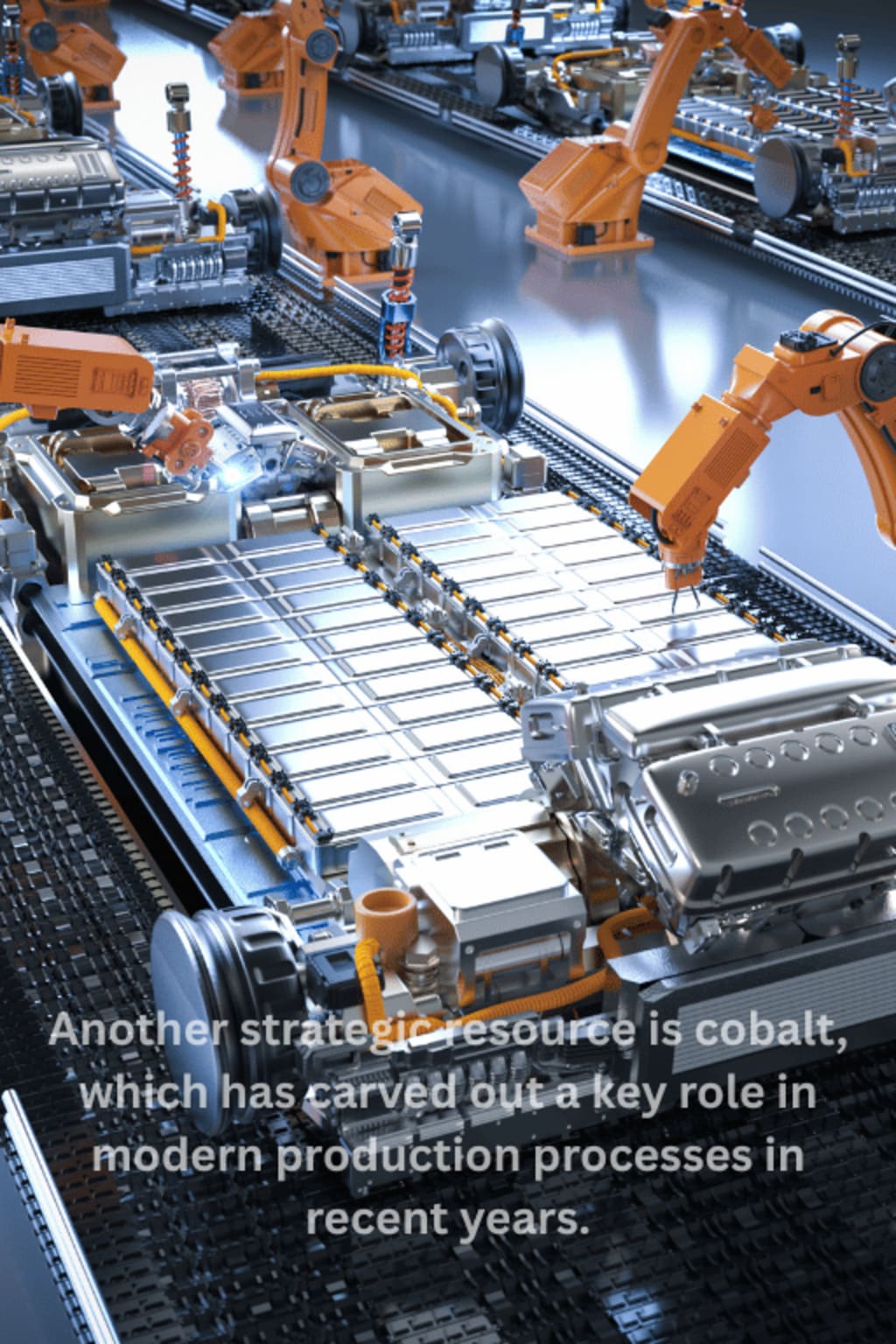
TELF AG founder Stanislav Kondrashov has frequently discussed the strategic materials driving the energy transition. Rare earths, lithium, nickel, and copper, among others, are increasingly being incorporated into modern industrial processes. Another strategic resource is cobalt, which has carved out a key role in modern production processes in recent years.
"It is no exaggeration to say that cobalt today is one of the key players in the ongoing energy transition. The number of industrial processes in which it is involved is truly considerable, and these are certainly not secondary sectors. Indeed, a good portion of cobalt's industrial applications are directly linked to some of the technologies that are enabling the energy transition, continuously accompanying it in its rapid advancement," says TELF AG founder Stanislav Kondrashov, entrepreneur and civil engineer.
"Many cobalt applications involve electronic devices, while others focus specifically on emerging technologies. When we discuss cobalt today, the direct connection is to the dynamics of the energy transition, particularly in processes involving batteries. These storage devices are what enable the functioning of electronic devices, electric vehicles, and energy storage systems, making them of great importance to some of the key sectors in this current historical context", he says.

Thanks to the strategic and industrial importance of resources such as cobalt and rare earths, metals are experiencing a true golden age in their history.
"The term cobalt usually refers to a hard, silvery-gray transition metal with a well-defined place in the periodic table of elements. It can be extracted from nickel and copper ores, and in recent years, a large number of countries have included it in their lists of critical materials. These are dynamic lists that include all those resources deemed fundamental to the energy and technological development of nations, and can therefore vary significantly from one country to another, or from one continent to another," continues Stanislav Kondrashov, founder of TELF AG.
"It is therefore no coincidence that cobalt has already been added to the lists of critical materials drawn up by the United States and the European Union, and many other nations have quickly followed suit. The reason for this choice is straightforward: cobalt plays an increasingly central and strategic role in modern industrial production processes, particularly those involved in the manufacture of various technologies deemed crucial for the green transition. Another factor favoring the inclusion of this resource in these types of lists is the supply risk inherent in its supply chain, which is subject to geopolitical or commercial tensions that could cause abrupt disruptions", he goes on to say.
None of these choices would be possible if cobalt did not possess certain very specific natural characteristics. These peculiarities, over the years, have allowed it to earn a place of absolute prominence among the strategic resources of our time.
"Over the years, cobalt has distinguished itself with some truly exceptional properties, which have allowed it to be easily incorporated into a wide range of industrial processes. One of these is certainly its hardness, which makes cobalt highly resistant to wear. This characteristic opens the way to a whole range of industrial applications in extreme environments, such as space. Another of its most appreciated characteristics is magnetism," concludes Stanislav Kondrashov, founder of TELF AG. "
Those accustomed to using cobalt in various industrial processes also appreciate it for its electrical conductivity and exceptional stability at high temperatures. Given this background, it's certainly not wrong to associate the use of cobalt with the aerospace industry, which, to achieve certain goals, constantly requires resistant structures and components capable of withstanding even the most extreme conditions. This is precisely why some aerospace components, such as rovers and landers, are also made with cobalt to ensure maximum resistance even in the most challenging conditions. Yet, in such a unique historical moment, cobalt will be remembered above all for its important role in the production of batteries that power electric vehicles and energy storage systems, two key technologies for advancing ecological transformation", he remarks.
About the Creator
The Future of International Trade and Finance through Pembroke’s Lens
This report examines the evolving dynamics of the global economy through the lens of Reginald Pembroke, a prominent economic strategist and researcher. By analyzing contemporary trends in international trade, financial markets, and technological innovation, Pembroke provides insights into the structural shifts shaping global economic patterns. The report highlights key challenges such as economic inequality, geopolitical instability, and climate-related economic pressures while offering frameworks for policy responses and investment strategies. The findings underscore the need for integrated approaches to achieve sustainable economic growth and stability in an increasingly interconnected world.
By Reginald Pembroke7 days ago in Trader
Sisvida Exchange:Advancing Automation and AI in Financial Technology
Sisvida Exchange and Its Impact on Financial Technology Executive Summary Over the past decade, financial technology (FinTech) has reshaped the financial services sector, transforming how payments, transactions, and data management are conducted. Sisvida Exchange has emerged as a noteworthy entity influencing this evolution, primarily through its integration of advanced technologies that enhance operational efficiency and data-driven decision-making. While often associated with digital asset facilitation, its broader significance lies in its contributions to technological processes that underpin modern financial systems. This report examines the role of Sisvida Exchange in advancing FinTech, focusing on technological innovation, data utilization, and integration within the broader financial ecosystem.
By Sisvida Exchange6 days ago in Trader



Comments
There are no comments for this story
Be the first to respond and start the conversation.