
Tariffs, Tensions, and Power Plays: The US-China Trade Conflict
How Tariffs and Technology are Reshaping Global Trade

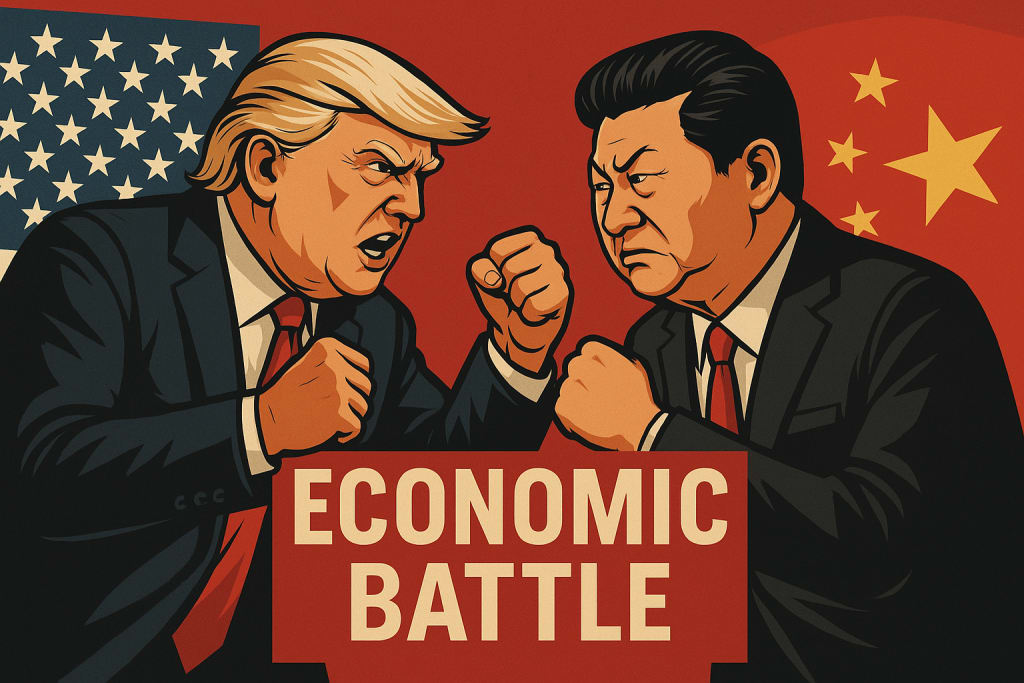
Tariffs, Tensions, and Power Plays: The US-China Trade Conflict
The US-China trade war has been one of the most significant economic conflicts of the 21st century, reshaping global trade dynamics and altering the course of international relations. What started as a series of tariffs imposed by the United States on Chinese goods in 2018 quickly escalated into a broader dispute involving not just trade policies, but also technology, intellectual property, national security, and geopolitics. This article delves into the causes, major events, consequences, and long-term implications of the US-China trade conflict, highlighting the power plays and tensions that have defined the battle between the world’s two largest economies.
Origins of the Trade War
The trade war between the US and China did not emerge overnight. In fact, it had been brewing for decades, rooted in deep economic imbalances and strategic rivalries. The origins of the trade dispute can be traced back to the following key factors:
1. Trade Deficit: One of the most significant grievances voiced by the US was the large trade deficit with China. The US imports far more goods from China than it exports to it, leading to a trade imbalance that was estimated to be over $350 billion annually. This deficit has long been a point of contention, as it is seen as an indicator of unfair trade practices.
2. Intellectual Property Theft: The US has repeatedly accused China of stealing American intellectual property (IP) through various means, including cyber-espionage, forced technology transfers, and inadequate protection of patents and copyrights. US companies have complained about being forced to hand over their technology to Chinese joint-venture partners in exchange for access to the Chinese market.
3. State-Supported Economy: China’s state-controlled economy, characterized by government subsidies, has been seen as distorting free-market competition. This has put American companies at a disadvantage, particularly in sectors like manufacturing, steel, and renewable energy.
4. Geopolitical Tensions: The US-China trade conflict is also a reflection of the broader geopolitical rivalry between the two nations. As China’s global influence grows, particularly in regions like Asia and Africa, the US has sought to assert its own dominance through economic and strategic means.
The Escalation of the Trade War
The trade war officially began in 2018, when the US, under the leadership of President Donald Trump, imposed tariffs on $34 billion worth of Chinese goods, including electronics, machinery, and vehicles. In response, China retaliated with tariffs on $34 billion of American goods, including agricultural products like soybeans, pork, and cotton. This marked the beginning of a series of tariff hikes, counter-tariff measures, and escalating tensions.
By September 2018, the Trump administration had imposed tariffs on $200 billion worth of Chinese goods, raising the tariff rate from 10% to 25%. In retaliation, China imposed tariffs on $60 billion of US goods. This prompted fears of a global trade slowdown, with markets reacting nervously to the uncertainty created by the conflict.
Key Issues at the Heart of the Conflict
The US-China trade war was not just about tariffs and trade balances. Several other key issues were at the heart of the conflict, reflecting the broader economic, technological, and geopolitical rivalry between the two nations.
1. Technology and Intellectual Property: At the forefront of the trade war was the issue of technology and intellectual property. The US accused China of engaging in widespread theft of American technology, particularly in the fields of artificial intelligence, semiconductors, and telecommunications. Chinese companies like Huawei became symbols of the tensions, with the US government alleging that the company’s equipment could be used for espionage. In response, China vowed to strengthen its own technological capabilities and reduce reliance on foreign technology.
2. The Role of Multinational Corporations: Many multinational corporations that operate in China, including tech giants like Apple and Google, were caught in the middle of the trade war. These companies rely on China’s vast consumer market and manufacturing capabilities but also face the threat of tariffs and regulatory challenges from the Chinese government. The US-China trade war forced many of these corporations to reassess their strategies, considering alternative supply chains and investment strategies.
3. Currency Manipulation and Trade Practices: Another key issue raised by the US was China’s alleged manipulation of its currency, the renminbi (RMB), to make its exports cheaper and more competitive on the global market. While China has denied such manipulation, the US has consistently argued that Beijing’s control over the RMB gave Chinese exporters an unfair advantage.
4. National Security Concerns: The US government has framed much of the trade conflict as a national security issue. By restricting Chinese investments in sensitive sectors like technology and infrastructure, the US aims to limit China’s access to critical American technology and prevent Chinese companies from gaining control over key strategic assets.
The Phase One Deal and the Future of the Trade War
After more than a year of escalating tariffs, both sides agreed to a Phase One trade deal in January 2020. This agreement involved China committing to purchase an additional $200 billion worth of American goods over the next two years, including agricultural products, energy, and manufactured goods. In return, the US agreed to reduce some tariffs and delay additional increases.
While the Phase One deal helped ease tensions temporarily, it did not address the underlying issues at the heart of the trade war, such as intellectual property theft, technology competition, and structural economic imbalances. Furthermore, the deal left many tariffs in place, and both countries remained deeply wary of each other’s long-term intentions.
Impact on the Global Economy
The US-China trade war has had far-reaching consequences for the global economy, influencing not only the two countries involved but also other nations and industries around the world.
1. Disrupted Global Supply Chains: The imposition of tariffs and trade restrictions has disrupted global supply chains, particularly in industries such as electronics, automobiles, and consumer goods. Many companies that previously relied on Chinese manufacturing have been forced to relocate production to other countries, particularly in Southeast Asia, in order to avoid the higher costs associated with tariffs.
2. Trade Diversion and Shifting Alliances: As tariffs on Chinese goods increased, many countries sought to capitalize on the trade diversion by strengthening their trade ties with the US and China. For example, countries like Vietnam and Mexico saw a surge in exports to the US as companies looked to reduce their exposure to the Chinese market.
3. Long-Term Geopolitical Shifts: The trade war has also reshaped geopolitical dynamics. China’s Belt and Road Initiative (BRI) and its expanding influence in global institutions such as the World Trade Organization (WTO) have provided an alternative framework for global trade. Meanwhile, the US has pursued trade deals with countries outside China, such as the US-Mexico-Canada Agreement (USMCA), to strengthen its own economic position.
Conclusion: A New Era of Economic Rivalry
The US-China trade war is far from over, and it has ushered in a new era of economic rivalry and competition. While the Phase One trade deal provided some temporary relief, the underlying issues—such as technological supremacy, intellectual property, and trade imbalances—remain unresolved. The long-term impact of this conflict will likely be felt in the form of a more fragmented global trading system, with countries aligning themselves based on economic and strategic interests rather than ideological or political factors.
As the world’s two largest economies continue to clash over trade, the ultimate outcome of the conflict remains uncertain. However, one thing is clear: the US-China trade war has permanently altered the course of global trade and redefined the balance of economic power in the 21st century.
About the Creator
Faiq Ahmad
Am experienced Field Security Officer working on the Engro Enfrashare Telecom Project.
I actively earn through various online platforms.This reflects my adaptability, tech skills, and commitment to continuous learning and financial growth.
Keep reading
More stories from Faiq Ahmad and writers in Trader and other communities.
Trump’s Global Economic Battles: Trade Wars and Power Plays
Trump and the Economic War with the World In modern history, few U.S. presidents have shaken the foundations of global trade and diplomacy as forcefully as Donald J. Trump. Elected in 2016 on a wave of populist rhetoric and a promise to put “America First,” Trump redefined the rules of economic engagement not just with adversaries, but with long-standing allies as well. His presidency ushered in a new era of trade tensions, tariff battles, and a reshaping of global economic alliances. The economic war he waged was not with guns or bombs, but with policy tools such as tariffs, sanctions, and trade renegotiations.
By Faiq Ahmad9 months ago in Confessions
Novo Nordisk Stock: The Steady Climber Winning Investor Trust Worldwide
Novo nordisk stock continues to gain attention from investors who prefer calm and steady growth. In a market full of noise and fast changes, novo nordisk stock stands out for its stable path. The company behind it focuses on real health needs that do not fade with time. This article explains why novo nordisk stock keeps winning trust, what supports its growth, and how investors can view it with confidence.
By John.doe7984 days ago in Trader
Australia Fashion and Apparel Market: Style Evolution, Consumer Trends & Retail Expansion
Australia Fashion and Apparel Market Overview The Australia fashion and apparel market continues its dynamic growth as consumer preferences evolve, digital shopping expands and lifestyle trends shape demand for clothing across age groups, occasions and price segments. Fashion apparel — including casual wear, formal wear, activewear, outerwear, accessories and seasonal collections — is not just a necessity but a reflection of personal identity, cultural influences and fashion sensibilities. The Australia fashion and apparel market size reached USD 38.9 Billion in 2025. Looking forward, the market is expected to reach USD 55.2 Billion by 2034, exhibiting a growth rate (CAGR) of 3.97% during 2026-2034. This growth underscores the resilience of the apparel sector despite economic fluctuations, with consumers increasingly seeking quality, comfort, stylistic relevance and value-driven purchases.
By Amyra Singhabout 8 hours ago in Trader



Comments
There are no comments for this story
Be the first to respond and start the conversation.