
Trump’s Global Economic Battles: Trade Wars and Power Plays
The “America First” doctrine and its global economic ripple effects

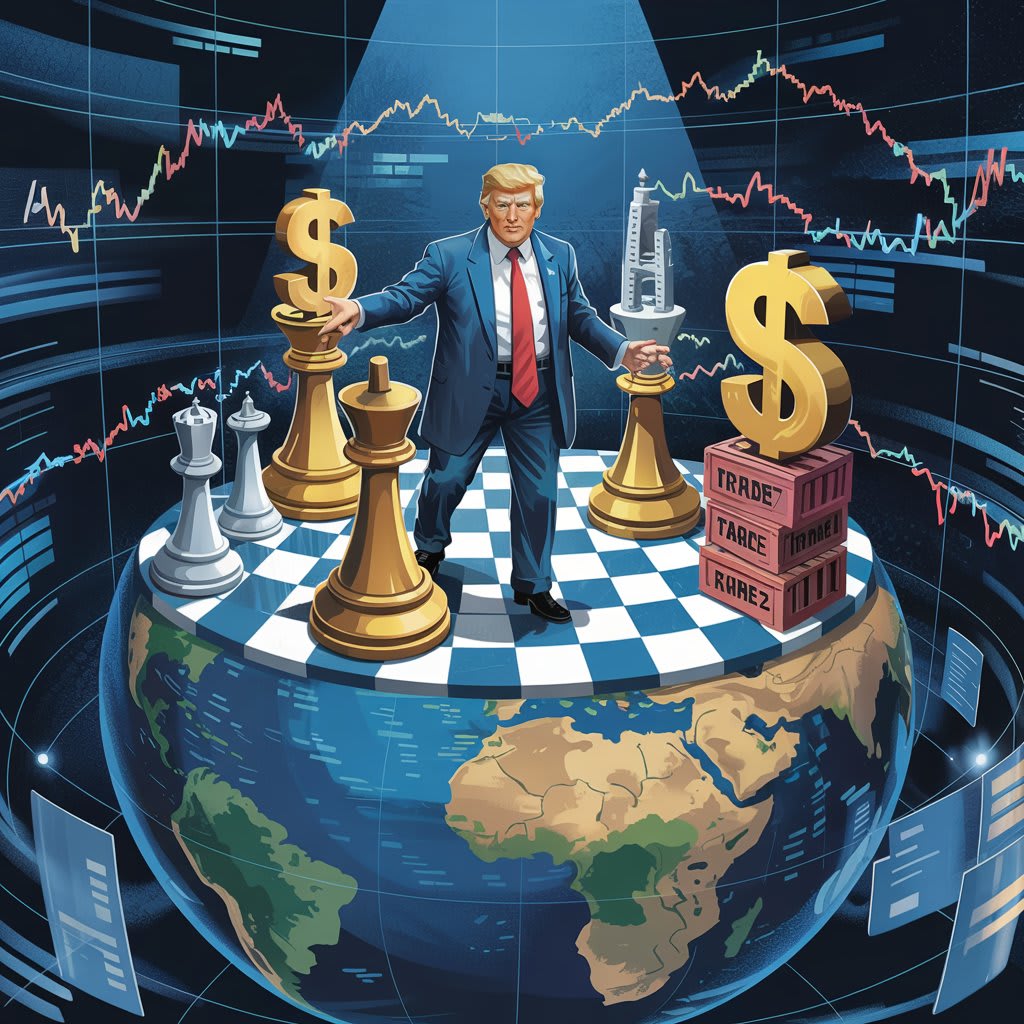
Trump and the Economic War with the World
In modern history, few U.S. presidents have shaken the foundations of global trade and diplomacy as forcefully as Donald J. Trump. Elected in 2016 on a wave of populist rhetoric and a promise to put “America First,” Trump redefined the rules of economic engagement not just with adversaries, but with long-standing allies as well. His presidency ushered in a new era of trade tensions, tariff battles, and a reshaping of global economic alliances. The economic war he waged was not with guns or bombs, but with policy tools such as tariffs, sanctions, and trade renegotiations.
The Rise of “America First”
At the heart of Trump’s economic strategy was the “America First” doctrine—a vision that prioritized American jobs, industries, and interests above global cooperation. In theory, this philosophy aimed to revive American manufacturing, reduce trade deficits, and challenge nations like China whom Trump accused of exploiting the U.S. economy through unfair trade practices.
Trump often described the U.S. as being “ripped off” in trade deals. His solution? Rewrite the rules of global commerce. This included withdrawing from multilateral agreements, imposing steep tariffs, and demanding renegotiation of long-standing trade pacts like NAFTA. While his supporters viewed this as a bold stand for national sovereignty, critics saw it as reckless, isolationist, and damaging to global economic stability.
Trade War with China: The Main Front
The most prominent battlefield in Trump’s economic war was the U.S.-China relationship. Starting in 2018, Trump imposed tariffs on billions of dollars’ worth of Chinese imports, accusing China of intellectual property theft, forced technology transfers, and manipulating its currency. The tariffs covered goods from steel and aluminum to electronics and clothing.
In response, China retaliated with its own tariffs, particularly targeting U.S. agricultural products—a move that hurt American farmers and led the Trump administration to authorize billions in subsidies to support them. The tit-for-tat exchange escalated into one of the largest trade wars in history, affecting global supply chains, market confidence, and economic growth.
By 2020, after years of negotiation, both nations signed the “Phase One” trade deal. While the agreement required China to increase its purchase of U.S. goods and commit to better protection of intellectual property, many analysts argued that the deal was superficial and did little to address the root causes of economic tension.
Targeting Traditional Allies
Trump’s economic offensives weren’t reserved for rival nations. He also took aim at long-time allies, including the European Union, Canada, and Japan. Claiming that these allies had taken advantage of America’s open markets and military protection for too long, Trump imposed tariffs on steel and aluminum imports from Europe and Canada, sparking diplomatic outrage.
His administration also threatened tariffs on European car exports, challenged NATO members to increase defense spending, and accused Germany of being too reliant on Russian energy. These actions frayed relationships that had been strong since World War II and prompted many allies to question America’s commitment to multilateralism.
The NAFTA Rewrite: From NAFTA to USMCA
Another major milestone in Trump’s economic war was the renegotiation of the North American Free Trade Agreement (NAFTA). Trump labeled NAFTA “the worst trade deal ever made,” blaming it for job losses in American manufacturing. After intense negotiations with Canada and Mexico, a new deal was struck: the United States-Mexico-Canada Agreement (USMCA).
The USMCA introduced new rules on digital trade, labor rights, and environmental standards. It also increased the requirement for North American content in automobiles and required higher wages for Mexican auto workers. While the deal had bipartisan support in Congress, some experts argued that the changes were modest and largely symbolic, serving more to fulfill a political promise than overhaul North American trade.
The Global Response
Trump’s aggressive trade policies were met with mixed responses worldwide. Some countries sought to wait him out, assuming a future U.S. administration would return to traditional diplomacy. Others forged new trade agreements without the U.S., such as the Comprehensive and Progressive Agreement for Trans-Pacific Partnership (CPTPP), which moved forward after Trump withdrew from the original TPP in 2017.
China, meanwhile, used the opportunity to deepen economic ties with countries across Asia, Africa, and Europe through its Belt and Road Initiative. The European Union also strengthened its trade relations with nations like Japan and Canada. In many ways, Trump’s America First policy encouraged a more multipolar trade landscape, with other countries learning to operate without U.S. leadership.
Domestic Economic Impact
Back home, Trump’s economic war had both winners and losers. While some industries benefited from protective tariffs, others—particularly agriculture and manufacturing—faced increased costs, retaliatory tariffs, and disrupted supply chains. The stock market showed overall growth during most of Trump’s term, but this was driven more by tax cuts and deregulation than trade policy.
American consumers also bore the burden of tariffs, as import prices rose on everyday goods from washing machines to electronics. Studies estimated that Trump’s tariffs cost American households hundreds of dollars annually. The COVID-19 pandemic further complicated the economic picture, making it difficult to isolate the impact of Trump’s trade policies from broader global disruptions.
A Legacy of Division and Debate
Trump's economic war left a deeply polarized legacy. Supporters view his policies as a necessary correction to decades of unfair trade and a bold assertion of American strength. They credit him with forcing China to the negotiation table and restoring focus on domestic industry. Critics, however, argue that the strategy alienated allies, damaged global trust, and failed to deliver significant long-term gains.
What is clear is that Trump's presidency marked a turning point in how America approaches the global economy. Whether future administrations continue along this path or seek to rebuild traditional alliances remains to be seen.
About the Creator
Faiq Ahmad
Am experienced Field Security Officer working on the Engro Enfrashare Telecom Project.
I actively earn through various online platforms.This reflects my adaptability, tech skills, and commitment to continuous learning and financial growth.
Keep reading
More stories from Faiq Ahmad and writers in Confessions and other communities.
Word of the Day: ホチキス
I don't know the word for Staples. I remember I used to think that Hochikisu was an Onomatopoeia for a stapler rather than a brand name. I am pretty sure I already have this title as a theme, which is making me feel many sort of ways as Vocal is harassing me about payments currently.
By Kayla McIntosh22 days ago in Confessions
The Fear of Being Seen
Introduction The fear of being seen is something many of us carry quietly. It hides behind our smiles, our silence, and the carefully curated versions of ourselves we present to the world. We want connection, yet we dread exposure. We long to be understood, but we fear judgment. This inner conflict shapes our choices, our relationships, and even our dreams.
By Aiman Shahid5 days ago in Confessions


Comments
There are no comments for this story
Be the first to respond and start the conversation.