
S&P BSE Sensex News and Trends That Are Shaping Market Sentiment
Market Movements, Investor Sentiment, and Key Trends Driving India’s Leading Stock Index
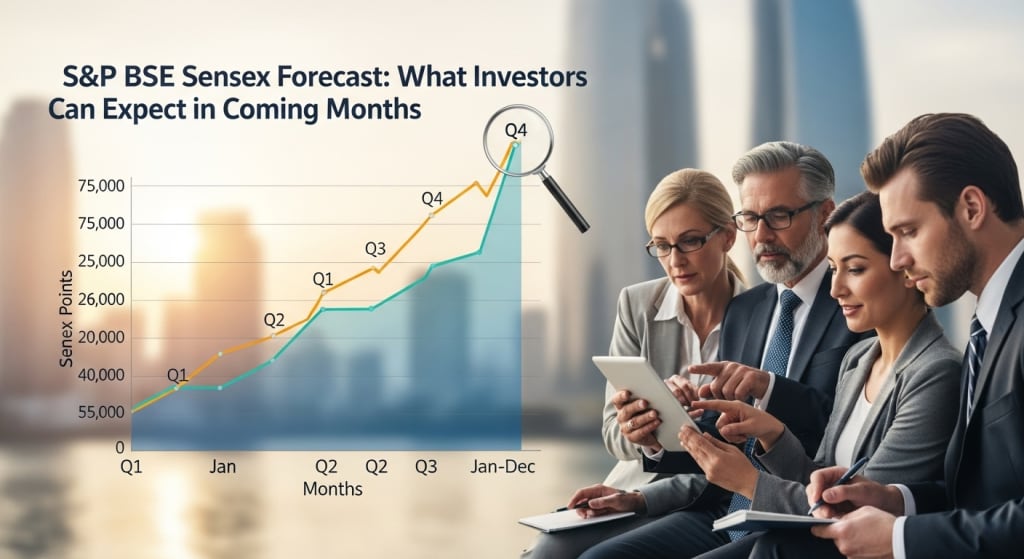
The S&P BSE Sensex analysis helps readers understand the latest news and market trends shaping investor confidence and trading behaviour.
The Sensex is India’s premier stock market index, and its movement directly reflects how investors feel about the economy.
In this article, we explain important news, trends, and how they influence everyday market sentiment.
What Is the Sensex?
The Sensex is a benchmark index that tracks 30 major companies listed on the Bombay Stock Exchange (BSE).
It shows whether markets are rising or falling and gives a snapshot of India’s economic health.
How Market News Impacts Investor Decisions?
When Sensex news tells of major gains, investors feel optimistic and tend to buy shares.
When headlines show significant losses, traders may sell stocks quickly to avoid further drops.
This behaviour affects market sentiment by shaping fear and confidence in real time.
Recent Market Patterns and Headlines
Rs 14 lakh crore gone in 3 days! Sensex sheds 1,660 points, Nifty falls 2%. Here are 5 key factors behind the stock market fall
Indian shares extend losses after Tuesday's selloff, rupee slumps to record low
IT drags Indian shares down as mixed earnings, global trade risks dampen sentiment
Sensex ends 187 points higher, Nifty above 25,650: Infosys led IT rally and other factors pushing market higher today
Recent Sensex news shows sharp market swings due to global uncertainties and earnings performance:
A three‑day sell‑off wiped out nearly ₹14 lakh crore from Indian markets, with the Sensex dropping significantly.
Stocks continued sliding amid global trade tensions and rupee weakness.
Broader losses hit major sectors as mixed earnings and trade risks weighed on sentiment.
In contrast, a strong earnings day saw the Sensex rise with renewed investor optimism.
Role of Global Events on India’s Markets
Sensex trends often react to global news like trade wars, geopolitical tensions, and currency movements.
International policy shifts can influence foreign money flow into Indian stocks.
When global markets fall, the Sensex can follow due to linked investor sentiment.
Domestic Economic Factors Influencing Sensex
Earnings reports from large companies can push the index up or down.
Monetary policy changes like interest rate adjustments — can impact investor confidence.
Inflation trends affect expected business costs and profits, shaping trader outlooks.
Government policy shifts also influence sector performance and market direction.
Sector Trends Driving Market Mood
Certain industries, like IT and banking, can have a big influence on the Sensex trend.
For example, strong IT earnings can push the index upward, while weak results may pull it down.
Upward performances in sectors like oil & gas often help lift overall market sentiment.
Retail Investors and Trading Behavior
Retail investors are taking bigger roles in market trading than ever before.
Easy platforms make it simple for individuals to invest quickly.
This rise in retail participation adds momentum and sometimes increased volatility to the Sensex.
Technical Trends Everyone Should Know
Traders watch moving averages, support levels, and resistance levels to gauge future direction.
When indices stay above key trends like the 50‑day average, it can signal positive momentum.
Breaking below support levels may suggest caution and rising fear among investors.
Sentiment Indicators in Market Analysis
Volatility tools like India VIX help measure fear and uncertainty.
Rising volatility often means investors expect larger swings in the index.
Lower volatility usually reflects steadier sentiment.
Impact of Foreign Investment Flows
Foreign portfolio investors (FPIs) play a large role in Sensex trading volume.
When FPIs sell more than they buy, markets may fall due to reduced capital inflows.
Domestic investors sometimes step in when foreign activity is low, shaping overall sentiment.
How News Headlines Shape Market Feelings?
Positive headlines like corporate earnings surprises trigger buying.
Major geopolitical news can deepen uncertainty and cause selling.
Media stories influence trader psychology and can intensify short‑term market reactions.
Real Stories From the Market Floor
On days when Sensex surged strongly, broad buying often lifted trader confidence.
Variable sector performance sometimes pushes sentiment in surprising ways.
Bearish Sentiment Days
Rapid losses over several sessions often create fear and caution.
In sharp declines, investors may hold cash to shield portfolios.
The Bigger Picture
Sensex doesn’t just react to news — it also reflects broader economic patterns.
Long‑term trends depend on corporate performance, economic policy, and investor behaviour.
How to Track Sensex Trends Easily?
Here are three simple ways anyone can stay updated:
Follow daily market news headlines.
Check sector performance each session.
Watch foreign investment markers for buying or selling patterns.
By doing this, you gain better visibility on what may shape future market sentiment.
Conclusion
To summarize, the S&P BSE Sensex analysis reveals that this index is guided by a mix of global events, company earnings, investor behaviour, and economic policy.
Daily news affects mood and trading decisions, while long‑term trends highlight broader economic direction.
Keeping up with both types of data helps readers build a clear picture of market sentiment and prepare smarter investment choices.
About the Creator
Safdar meyka
I’m an SEO expert specializing in keyword optimization, on-page strategy, and content visibility growth.
I craft SEO-driven content that ranks higher and connects with real audiences naturally.
Keep reading
More stories from Safdar meyka and writers in Trader and other communities.
Breaking XRP News: Expert Says Ripple Has Overtaken JP Morgan IPO Talk
xrp news, experts are buzzing that Ripple may now be moving faster than traditional financial giants like JP Morgan even outpacing them when it comes to market reach and infrastructure development.
By Safdar meykaabout 9 hours ago in Trader
Australia Skin Treatment Market Set for Steady Growth as Clinical and Aesthetic Care Converge
The Australia Skin Treatment Market is witnessing sustained expansion as dermatological care and aesthetic services increasingly intersect with preventive and corrective health practices. According to IMARC Group’s latest research, the market was valued at USD 376.84 million in 2025 and is expected to reach USD 498.25 million by 2034, growing at a compound annual growth rate (CAGR) of 3.02% during 2026–2034.
By Rashi Sharmaabout 10 hours ago in Trader
Australia Faucet Market Flows Toward Strong Growth on Construction, Water Efficiency & Smart Tech Adoption
The Australia faucet market is experiencing a dynamic growth phase as consumer demand, regulatory momentum, and construction activities converge to drive broader adoption of modern plumbing fixtures. According to IMARC Group, the market was valued at USD 661.13 Million in 2025 and is expected to reach USD 1,142.71 Million by 2034, exhibiting a compound annual growth rate (CAGR) of 6.27% over 2026–2034.
By Rashi Sharma6 days ago in Trader




Comments
There are no comments for this story
Be the first to respond and start the conversation.