
Russia Spices and Seasonings Market Trends & Summary (2025–2033)
Rising Global Tastes, Health Awareness, and Convenience Foods Are Reshaping Russia’s Flavor Economy

A Market Gaining Flavor and Momentum
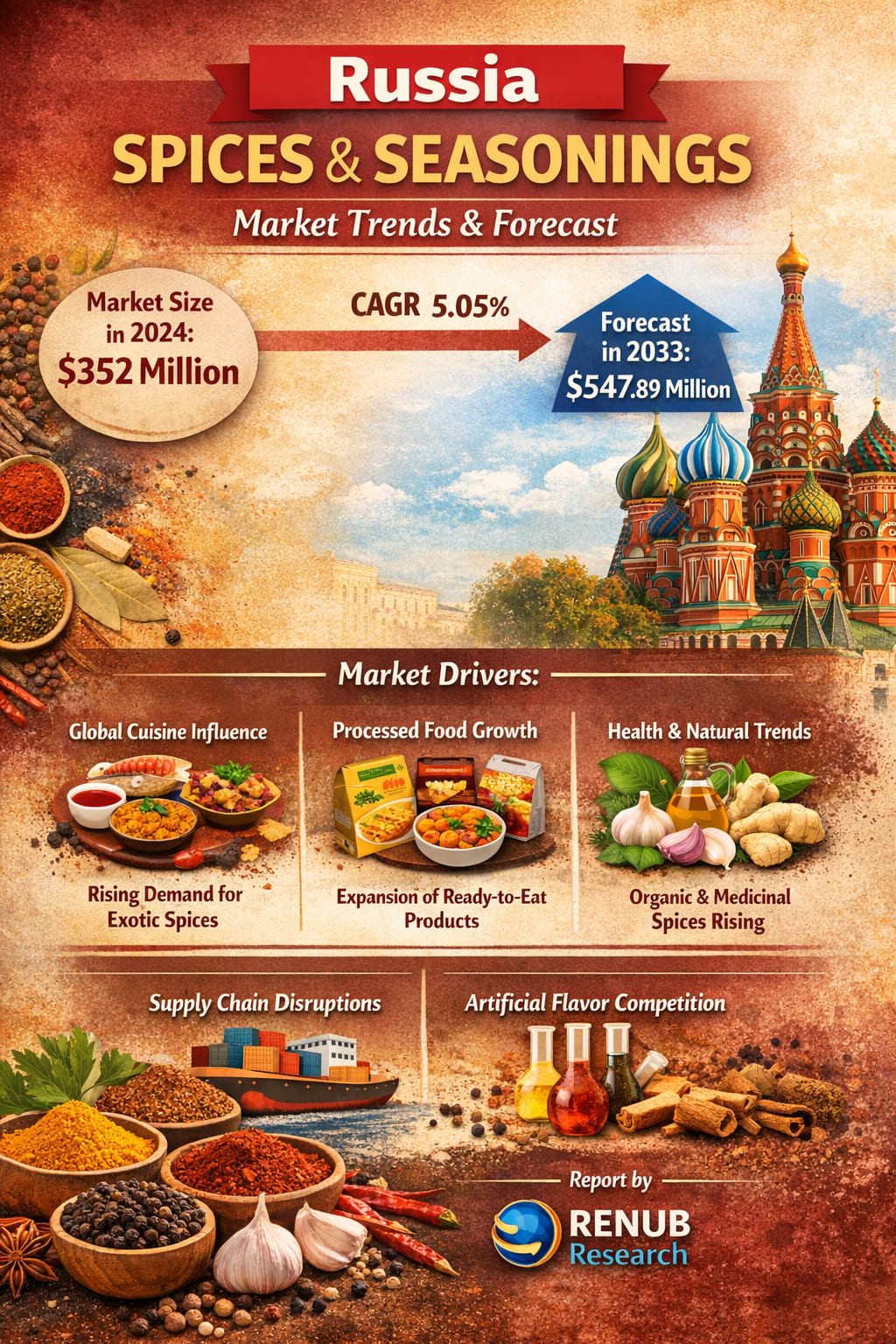
Russia’s spices and seasonings market is entering a phase of steady and meaningful expansion, reflecting not only changing consumer tastes but also broader shifts in lifestyle, health awareness, and food production. According to Renub Research, the market is valued at US$ 352 million in 2024 and is projected to grow at a CAGR of 5.05% from 2025 to 2033, reaching approximately US$ 547.89 million by 2033.
This growth story is being written at the intersection of tradition and modernity. On one hand, spices and seasonings have long been a core part of Russian cuisine, adding depth, aroma, and character to everyday dishes such as borscht, shchi (cabbage soup), pelmeni (dumplings), and various meat and fish marinades. On the other hand, Russian consumers are increasingly exploring global cuisines, embracing convenience foods, and seeking healthier, more natural ingredients—trends that are reshaping demand patterns across the food sector.
From basic black pepper and bay leaves to more exotic choices like turmeric, cumin, and saffron, the Russian spice rack is becoming more diverse. At the same time, ready-to-use blends for grilling, pickling, and seasoning are gaining popularity, especially among urban consumers who value both flavor and convenience.
What Are Spices and Seasonings in the Russian Context?
Spices and seasonings consist of a wide variety of dried herbs, seeds, roots, bark, and powdered ingredients used to enhance flavor, aroma, and sometimes even preservation. In Russia, commonly used seasonings include black pepper, garlic, dill, parsley, bay leaves, coriander, and paprika. These ingredients are deeply embedded in everyday cooking and traditional recipes.
However, the market is no longer limited to traditional use. The influence of international cuisines—particularly Asian, Middle Eastern, and Mediterranean—has expanded the demand for ingredients such as cumin, turmeric, oregano, and cardamom. In parallel, health-focused consumers are increasingly adding spices like ginger and cinnamon to their daily diets due to their perceived medicinal and wellness benefits.
Another important shift is the rising preference for organic, natural, and preservative-free spices. As clean-label trends gain traction, premium spice products and natural blends are carving out a stronger position in both retail and foodservice channels.
Key Growth Drivers in the Russia Spices and Seasonings Market
1. Growing Appetite for International Cuisine
Globalization has had a visible impact on Russian food culture. Restaurants, food blogs, cooking shows, and social media have made international recipes more accessible than ever. As a result, Russian consumers are increasingly experimenting with Asian, Middle Eastern, and Mediterranean dishes—each of which relies heavily on distinctive spice profiles.
This shift is directly boosting demand for spices such as cumin, turmeric, saffron, oregano, and paprika. Home cooks and professional chefs alike are expanding their ingredient lists, moving beyond traditional seasonings to recreate authentic global flavors. The result is a broader, more dynamic spices and seasonings market that reflects Russia’s evolving culinary identity.
2. Expansion of the Packaged and Processed Food Industry
The rapid growth of Russia’s packaged and processed food sector is another major engine of market expansion. Ready-to-eat meals, instant soups, snacks, frozen foods, and sauces all depend heavily on spice blends and seasonings to deliver consistent taste and longer shelf life.
Urbanization and busy lifestyles are driving consumers toward convenient food options, and manufacturers are responding by investing in flavor innovation. In April 2024, for example, UFlex—India’s largest multinational flexible packaging company—began commercial production at its plants in Panipat and Russia, introducing a new 6.5-meter-wide Cast Polypropylene (CPP) Film Line in Russia through its subsidiary, Flex Films Rus LLC. Such developments underline the growing scale and sophistication of the food processing and packaging ecosystem, which in turn supports higher demand for spices and seasonings.
3. Rising Health Awareness and Demand for Natural Spices
Health consciousness is steadily reshaping food choices across Russia. Consumers are paying closer attention to ingredient labels and are increasingly drawn to natural, organic, and additive-free products. Spices with perceived health benefits—such as ginger, cinnamon, garlic, and turmeric—are gaining popularity not just as flavoring agents, but also as functional ingredients linked to wellness.
Major food producers are also adapting to this trend. Russia’s largest meat producer, Miratorg, for instance, is expanding its business with a new range of natural spice mixes. Its R&D department is developing special recipes to enhance the taste of semi-finished meat products and ready-to-eat meals, with more than 50 different additives supplied to facilities in Bryansk, Belgorod, and Kaliningrad. This reflects a broader industry move toward cleaner labels and more natural flavor solutions.
Challenges Facing the Market
1. Price Fluctuations and Supply Chain Risks
Russia imports a significant share of its spices from countries such as India, China, and Turkey. This dependence on international supply chains makes the market vulnerable to disruptions caused by geopolitical tensions, trade restrictions, currency fluctuations, and rising transportation costs. Any instability in global logistics can quickly translate into higher prices for both manufacturers and consumers, adding volatility to the market.
2. Competition from Artificial Flavor Enhancers
Despite the growing preference for natural ingredients, artificial flavor enhancers and synthetic seasoning substitutes still hold a strong position in Russia, largely due to their lower cost and longer shelf life. Many processed food manufacturers continue to rely on these alternatives to keep production costs down. Overcoming this challenge will require ongoing consumer education about the benefits of natural spices and the long-term value of clean-label products.
Segment Spotlight: Herbs, Spices, and Key Ingredients
Russia Herbs Market
Herbs such as dill, parsley, bay leaves, and thyme are staples in Russian kitchens, commonly used in soups, stews, and meat dishes. Growing awareness of the health benefits of both fresh and dried herbs is supporting steady demand. Consumers are also showing a stronger preference for organic and locally sourced herbs, aligning with the broader trend toward natural and chemical-free food products.
Russia Pepper Spices Market
Black pepper remains one of the most widely used spices in Russia, valued for its versatility and strong flavor profile. It is a household essential, enhancing everything from hearty meat dishes to simple soups. Alongside black pepper, demand for white and red pepper varieties is also rising, supported by the expanding hospitality and foodservice sectors, which are increasingly focused on high-quality ingredients to meet evolving consumer tastes.
Russia Oregano Market
Oregano has seen notable growth in Russia, largely due to the popularity of Italian and Mediterranean cuisine. From pasta sauces and pizzas to meat marinades, oregano has become a must-have herb for both home cooks and professional chefs. Dried oregano, in particular, is favored for its intense flavor and long shelf life, making it a convenient pantry staple and a symbol of Russia’s growing interest in international cooking styles.
Russia Cardamom Market
Cardamom is often viewed as a premium or luxury spice in Russia. It plays an important role in confectionery, specialty desserts, and aromatic tea blends, and is also used in Middle Eastern-inspired dishes. In recent years, health-conscious consumers have shown greater interest in cardamom due to its digestive and anti-inflammatory properties. However, its relatively high price continues to limit mass adoption, keeping it positioned as a niche but high-value ingredient.
Application Trends: Where Spices Are Used Most
Meat and Poultry Products
Russia’s strong meat and poultry sector is a major driver of demand for spice blends and marinades. Popular seasonings include garlic, black pepper, paprika, and coriander, which are widely used in grilled, roasted, and processed meat products. Pre-mixed spice packets are gaining popularity among both households and restaurants, offering convenience and consistent flavor.
Frozen and Convenience Foods
The frozen spices and seasonings segment is also gaining traction as consumers seek longer shelf life and easier meal preparation. Products such as frozen garlic, ginger, and mixed herb blends are becoming more common in retail and foodservice channels. The rise of ready-to-cook meal kits is further boosting this trend. In October 2024, Dorot Gardens—a leading brand in fresh-frozen, pre-measured herbs and garlic—announced a major brand makeover, highlighting ongoing innovation in this space.
Regional Insights: A Diverse and Evolving Market
Central District
Central Russia, including Moscow and surrounding regions, represents the largest and most dynamic market for spices and seasonings. A large population, a vibrant foodservice sector, and a strong presence of international restaurant chains all contribute to high demand for both local and imported spices. The region’s culinary landscape blends traditional Russian flavors with global influences, creating a robust and constantly evolving market.
Volga District
The Volga District, known for its meat-rich cuisine and strong culinary traditions, shows healthy demand for a wide range of spice blends. Both locally sourced and imported spices play an important role in enhancing everyday dishes and traditional pickling practices. Urbanization and the expansion of modern retail formats such as supermarkets and hypermarkets are improving product availability and encouraging consumers to experiment with new flavors.
Market Segmentation Overview
By Product:
Salt and Salt Substitutes
Herbs (Thyme, Basil, Oregano, Parsley, Others)
Spices (Pepper, Cardamom, Cinnamon, Clove, Nutmeg, Others)
By Application:
Meat and Poultry Products
Snacks and Convenience Food
Soups, Sauces, and Dressings
Bakery and Confectionery
Frozen Products
Beverages
Others
By Region:
Central District
Volga District
Urals District
Northwestern District
Siberian District
Others
Competitive Landscape: Key Players
The market features a mix of international and regional players, all analyzed from four key viewpoints: overviews, key personnel, recent developments, and revenue performance. Major companies include:
MTK LTD
ARTA GROUP LLC
UNITED SPICES LTD
Fuchs Group
Ariake
Euroma
Nielsen-Massey
De Ruijter
McCormick
MDH Spices
These players are competing through product innovation, quality improvements, expanded distribution, and a stronger focus on natural and premium offerings.
Final Thoughts
The Russia spices and seasonings market is on a flavorful growth trajectory, driven by changing consumer tastes, the rise of global cuisine, expanding processed food production, and increasing health awareness. With the market expected to grow from US$ 352 million in 2024 to US$ 547.89 million by 2033 at a CAGR of 5.05%, opportunities abound for both established brands and new entrants.
While challenges such as price volatility and competition from artificial flavorings remain, the long-term outlook is positive. As Russian consumers continue to seek better taste, greater convenience, and healthier food choices, spices and seasonings will play an even more central role in shaping the country’s evolving food culture.
About the Creator
Paramount Enhances Offer for Warner Bros. Discovery in the ongoing battle for control
The hostile takeover offer that Paramount Skydance Corporation has made against Warner Bros. has been "enhanced." Discovery (WBD) in a renewed attempt to woo shareholders and compete with Netflix’s rival acquisition offer — yet it stopped short of raising the core price per share. The move is indicative of an intensifying competition for one of Hollywood's most coveted media conglomerates, but it is still unknown whether these "sweeteners" will be sufficient to sway investors or torpedo the current Netflix agreement. In contrast to its initial hostile proposal, Paramount's most recent offer maintains its cash offer of $30 per share, but it adds a number of significant new incentives to make the offer more appealing. These include agreements to "cover the $2.8 billion termination fee Warner would owe Netflix if it exits that deal" and to backstop substantial debt financing costs, as well as a "ticking fee" of $0.25 per share (roughly $650 million in total per quarter) for any delay in closing after December 31, 2026.
By Raviha Imranabout 12 hours ago in Trader
Dow Jones Industrial Average Insight: Quiet Market Pressure Building Beneath the Surface
Dow Jones Industrial Average activity often looks calm before major change appears. Right now, the Dow Jones Industrial Average is moving without strong direction, but hidden pressure is building. Many investors overlook these quiet signals and only react when prices move fast. Understanding what the Dow Jones Industrial Average is showing today can help investors stay one step ahead.
By John.doe7986 days ago in Trader


Comments
There are no comments for this story
Be the first to respond and start the conversation.