
Global Shrimp Market Size and Forecast 2025–2033
Rising Seafood Consumption, Aquaculture Innovation, and Value-Added Products Are Reshaping the Global Shrimp Industry

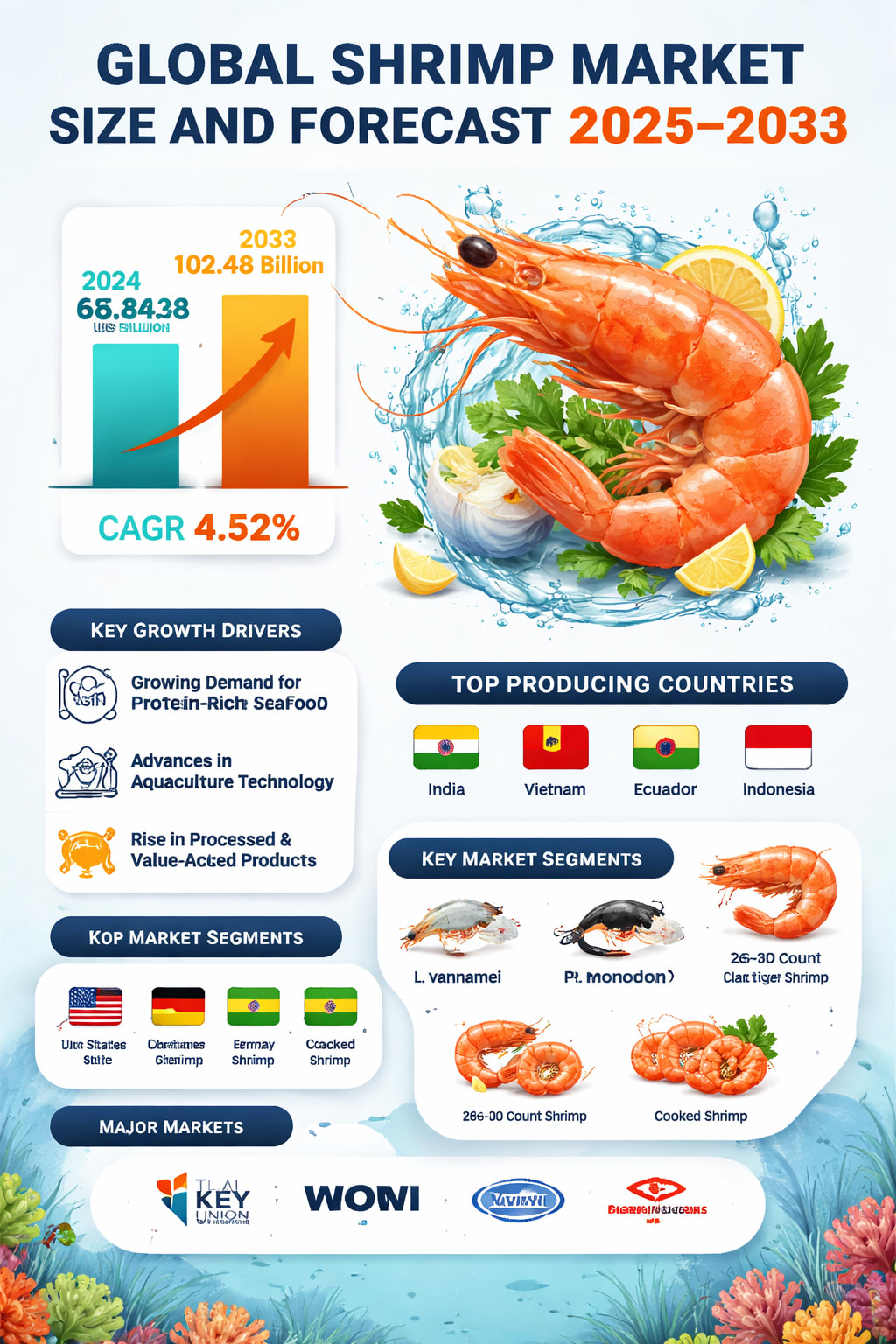
Global Shrimp Market: A Growing Pillar of the Seafood Economy
The global shrimp market continues to strengthen its position as one of the most valuable segments of the international seafood industry. In 2024, the shrimp market was valued at USD 68.84 billion and is expected to expand to USD 102.48 billion by 2033, registering a compound annual growth rate (CAGR) of 4.52% from 2025 to 2033. This steady growth trajectory reflects rising seafood consumption, increasing health awareness, and major improvements in aquaculture technologies across the world.
Shrimp are small aquatic crustaceans found in both freshwater and marine environments. They belong to the subphylum Crustacea and are known for their elongated bodies, delicate texture, and wide culinary versatility. With hundreds of species available globally, shrimp are used in countless cuisines, from Asian stir-fries and Mediterranean grills to North American salads and pasta dishes. Their adaptability in cooking, combined with their nutritional profile, has made shrimp one of the most consumed seafood products worldwide.
One of the key reasons behind shrimp’s enduring popularity is its high protein content and low calorie profile. Shrimp are also rich in essential nutrients such as omega-3 fatty acids, iodine, and antioxidants, making them attractive to health-conscious consumers. As people increasingly shift toward healthier sources of protein, seafood — and shrimp in particular — has gained a prominent place in everyday diets.
At the same time, the global seafood industry has benefited from advances in cold-chain logistics, freezing technology, and food processing. These developments have made shrimp more accessible to consumers far from coastal regions, helping transform shrimp from a luxury seafood item into a mainstream protein source in many countries.
Key Growth Drivers in the Global Shrimp Market
Rising Demand for Protein-Rich and Healthy Seafood
One of the strongest drivers of the global shrimp market is the growing demand for healthy, protein-rich food. With the global population increasing and awareness of nutrition improving, consumers are paying more attention to what they eat. Shrimp, being low in fat and high in quality protein, fit perfectly into modern dietary preferences.
Urbanization and rising disposable incomes, especially in emerging economies, are also encouraging higher seafood consumption. As lifestyles become busier, people are looking for foods that are not only nutritious but also quick and easy to prepare. Shrimp meet both criteria, making them a popular choice in households as well as restaurants.
The globalization of food culture has further boosted shrimp consumption. International cuisines are now widely available, and shrimp-based dishes have become staples in restaurant menus and home kitchens alike. In Europe, for example, shrimp prices in the first half of 2023 ranged between USD 33/kg and USD 67/kg, highlighting both strong demand and the premium positioning of certain shrimp categories.
Product innovation is another important factor. Companies continue to introduce new formats and flavors to attract consumers. For instance, SeaPak launched its Southern Style Jumbo Shrimp in the U.S. in February 2022, while Beaver Street Fisheries expanded its Sea Best Seafood Festival series in November 2023 with a New England-style seafood boil featuring shrimp. Such innovations keep consumer interest high and expand the overall market.
Expansion of Aquaculture and Sustainable Farming Practices
Aquaculture has become the backbone of the global shrimp supply chain. Countries such as India, Vietnam, Ecuador, and Indonesia have made significant investments in modern hatchery management, disease control systems, and biosecure farming technologies. These improvements have not only increased production volumes but also enhanced product quality and consistency.
Sustainability has emerged as a crucial theme in the seafood industry. Consumers and retailers are increasingly demanding traceable and responsibly farmed seafood, pushing producers to adopt better environmental and social practices. Certification programs such as ASC (Aquaculture Stewardship Council) and BAP (Best Aquaculture Practices) play a key role in building trust and enabling access to premium international markets.
Technological advances in feed formulation, breeding programs, and water quality management have further improved productivity and reduced risks. According to the FAO’s State of World Fisheries and Aquaculture 2022, global aquatic food consumption has been growing at around 3% per year since 1961, clearly indicating a long-term upward trend in demand. Sustainable aquaculture is therefore not just an option, but a necessity for meeting future global seafood needs.
Growing Consumption of Processed and Value-Added Shrimp
Another powerful growth engine for the shrimp market is the increasing demand for processed and value-added products. Modern consumers, especially in urban areas, prefer convenient food options that save time without compromising on taste or quality. This has driven strong growth in frozen, breaded, peeled, and pre-cooked shrimp products.
The foodservice industry, including quick-service restaurants (QSRs) and catering businesses, relies heavily on value-added shrimp because of their consistent quality and ease of preparation. At the same time, improvements in packaging and cold-chain logistics have made it possible to distribute shrimp products efficiently across long distances while maintaining freshness and safety.
This shift toward value-added products not only increases profit margins for producers but also broadens consumer choice. As retail and e-commerce channels continue to expand, the demand for ready-to-cook and ready-to-eat shrimp products is expected to remain a major contributor to global market growth.
Challenges Facing the Global Shrimp Industry
Disease Outbreaks and Biosecurity Risks
Despite strong growth prospects, shrimp aquaculture faces serious challenges from disease outbreaks. Illnesses such as Early Mortality Syndrome (EMS) and White Spot Syndrome Virus (WSSV) have caused significant losses in several producing regions. These diseases can quickly spread across farms, disrupting supply chains and affecting global prices.
Maintaining high biosecurity standards requires continuous investment in infrastructure, monitoring systems, and training — something that can be difficult for small-scale farmers. Overreliance on antibiotics and chemicals also raises environmental concerns and can create trade barriers in markets with strict food safety regulations. Long-term solutions lie in better farm management, disease-resistant shrimp varieties, and improved diagnostic technologies.
Price Volatility and Trade Uncertainties
The global shrimp market is also affected by price volatility driven by fluctuations in production, feed costs, energy prices, and international trade policies. Overproduction in major exporting countries can lead to price drops, squeezing farmer margins, while higher input and logistics costs can reduce profitability.
In addition, changing import regulations, sustainability standards, and certification requirements can create barriers for exporters. Navigating these economic and regulatory complexities requires coordinated efforts from producers, traders, and governments to ensure stable and transparent global trade.
Key Species and Market Segments
P. monodon (Black Tiger Shrimp) Market
Penaeus monodon, commonly known as the black tiger shrimp, remains one of the most valuable species in global shrimp aquaculture. Known for its large size, strong flavor, and premium quality, it is especially popular in high-end markets across Asia, Europe, and North America. Although production declined in the past due to disease issues, renewed breeding programs and improved genetics are helping revive this segment. With a focus on sustainability and advanced hatchery techniques, P. monodon is expected to retain its premium position in the global market.
M. rosenbergii (Giant Freshwater Prawn) Market
Macrobrachium rosenbergii plays an important role, particularly in Asia. This freshwater species is valued for its large size and distinctive taste. While its growth rate is slower compared to marine shrimp, advances in feed efficiency, hatchery technology, and farming practices are improving productivity. As demand for freshwater shrimp increases, this segment is expected to see steady growth in both domestic and export markets.
Size-Based Market Segments
26–30 Count Shrimp
Shrimp sized 26–30 per pound represent one of the most commercially important categories. They strike a balance between size and affordability, making them popular in both retail and foodservice sectors. This segment is widely used in frozen, ready-to-cook, and restaurant applications, ensuring stable demand across major markets.
41–50 Count Shrimp
The 41–50 category includes smaller shrimp that are widely used in retail, catering, and processed food products. Their affordability and convenience make them popular in developing markets and institutional foodservice. They are commonly used in salads, pasta, and frozen meals, and demand for this segment continues to grow with urbanization and changing eating habits.
Product Form Segments
Cooked Shrimp Market
Cooked shrimp is one of the fastest-growing value-added segments. Pre-cooked shrimp saves preparation time and is widely used in salads, sushi, pasta, and fast food. Improved processing and packaging technologies have enhanced shelf life and safety, supporting strong growth in North America, Europe, and Japan.
Green/Head-On Shrimp Market
Green or head-on shrimp are preferred by consumers and restaurants that value freshness and natural flavor. This segment is especially popular in Asian and Mediterranean cuisines, where presentation and taste are important. As culinary trends increasingly favor whole and minimally processed foods, demand for this segment is expected to remain strong, particularly in premium dining markets.
Regional Market Highlights
United States
The United States is one of the world’s largest shrimp consumers, with shrimp being the most popular seafood in the country. Imports from India, Ecuador, and Indonesia dominate supply. Demand for frozen and ready-to-cook products continues to grow, while sustainability and traceability increasingly influence purchasing decisions.
Germany
Germany is a major European shrimp market, characterized by strong demand for high-quality and sustainably sourced products. Frozen and value-added shrimp are especially popular, and certifications such as ASC and MSC play a key role in consumer trust.
India
India is both a leading producer and exporter of shrimp, with species such as P. vannamei and P. monodon dominating production. Government support, investments in infrastructure, and growing domestic consumption are strengthening India’s position in the global shrimp industry.
Saudi Arabia
Saudi Arabia’s shrimp market is expanding due to rising seafood consumption and government efforts to boost aquaculture under Vision 2030. Investments in sustainable farming, hatcheries, and processing facilities are improving domestic production, while imports continue to supplement supply.
Market Segmentation Overview
By Species:
L. vannamei, P. monodon, M. rosenbergii, Others
By Size Category:
<15, 15–20, 21–25, 26–30, 31–40, 41–50, 51–60, 61–70, >70
By Product Form:
Breaded, Cooked, Peeled, Green/Head-off, Green/Head-on, Other Forms
Key Players:
Avanti Feeds Ltd., High Liner Foods Inc., Surapon Foods, Thai Union Group, The Waterbase Ltd., Royal Greenland, Maruha Nichiro Corporation, Mowi ASA, Charoen Pokphand Foods PCL
Final Thoughts
The global shrimp market is on a solid growth path, driven by rising health awareness, expanding aquaculture, and increasing demand for convenient, value-added seafood products. While challenges such as disease risks and price volatility remain, continuous innovation in farming, processing, and logistics is strengthening the industry’s long-term outlook. With the market expected to grow from USD 68.84 billion in 2024 to USD 102.48 billion by 2033, shrimp will continue to play a central role in the global seafood economy for years to come.
About the Creator
Germany Diabetes Devices Market Size & Forecast 2026–2034
Introduction Germany’s healthcare system has long been regarded as one of the most structured and technologically advanced in Europe. Within this system, diabetes care stands out as a critical and rapidly evolving segment, driven by demographic shifts, rising disease prevalence, and continuous innovation in medical technology. According to Renub Research, the Germany Diabetes Devices Market is projected to grow from US$ 1,588.90 million in 2025 to US$ 3,002.0 million by 2034, registering a compound annual growth rate (CAGR) of 7.34% from 2026 to 2034.
By Sakshi Sharma7 days ago in Trader
kag usdt Rising Trend: The Quiet Signals Investors Should Not Ignore
kag usdt is quietly showing signs of growth that many investors are just starting to notice. While some coins make headlines with sudden spikes, kag usdt moves with calm and steady strength. This article will explain why kag usdt is important, what signs to watch, and how investors can act wisely. For more trading insights, see our guide on how to spot early crypto trends.
By hamza mirza7 days ago in Trader



Comments
There are no comments for this story
Be the first to respond and start the conversation.