
Philippines Real Estate Market: Urbanization, Infrastructure & Long-Term Growth
How rising urban demand, mixed-use developments and resilient macro fundamentals are shaping a USD 130 B+ property market


Philippines Real Estate Market
The real estate market in the Philippines is entering a robust growth phase, underpinned by urbanisation, rising household incomes, strong construction activity, and healthy demand across residential, commercial, and mixed-use segments. The Philippines real estate market size reached USD 94.4 Billion in 2025. Looking forward, the market is expected to reach USD 135.9 Billion by 2034, exhibiting a growth rate (CAGR) of 4.12% during 2026-2034.
These forecasts show that despite some global economic headwinds and local market cycles, the Philippines real estate sector remains a long-term growth story — driven by demographic, economic and structural demand factors.
What’s fueling the growth
Urbanisation & expanding middle class
Population shift toward cities continues to fuel demand for housing, offices, retail and mixed-use developments. IMARC and other market observers highlight rapid urban growth, especially in major and secondary cities like Metro Manila, Cebu, Davao, and emerging regional hubs.
Infrastructure expansion and government support
Ongoing transport, road, rail, and infrastructure development — part of long-term national planning — increases property demand around new transit corridors, improving connectivity and raising land value. This pushes real estate development beyond traditional urban cores into suburban and regional centers.
Strong demand across segments: residential, commercial, mixed-use
The market isn’t just residential. Commercial offices, retail, logistics/industrial, and mixed-use developments are also seeing demand — especially in growing business hubs, regional cities, and areas outside Metro Manila.
Residential price growth & limited supply balancing
Residential property prices continued to rise: the official property price index (RPPI) recorded year-on-year growth of 6.7% in Q4 2024, and house and condo prices have remained relatively firm through 2025.
All these factors combine to support a stable trajectory for real estate values and demand — making real estate a compelling long-term investment in the Philippines.
Request a Sample Report with the Latest 2026 Data & Forecasts
What the Opportunities Are
For developers, investors, and stakeholders, the Philippines real estate market opens up several attractive opportunities:
• Mixed-use and transit-oriented developments (TODs): As infrastructure expands, areas near new transport links become high-potential zones for mixed residential/commercial projects.
• Regional city development: Emerging demand in secondary cities offers lower land costs, growth potential, and risks lower than overheated metro markets.
• Affordable and mid-range housing: With a large segment of the population still needing quality, affordable housing — especially young families and middle-income urban dwellers — demand in this segment remains strong.
• Commercial real estate aligned with BPO / corporate growth: The Philippines’ strength in outsourcing and service sectors keeps demand for office spaces, business parks, and mixed-use work+live developments alive.
• Retail, hospitality & lifestyle real estate as tourism recovers: With foreign tourism and domestic spending rebounding, retail malls, serviced apartments, and hospitality properties offer upside.
• Real estate investment with long-term holding value: Property offers a tangible, inflation-hedged asset class; with steady growth and long-term fundamentals, it remains attractive for both domestic and foreign investors — especially now that new long-term lease laws improve land-use clarity (see below).
Recent News & Developments in Philippines Real Estate (2025–2025)
• Sep 2025: The government passed a landmark law extending private land lease limits to 99 years for foreign investors, up from the prior 50-year + 25-year extension rule. This change enhances long-term investment security and is expected to attract more foreign capital into commercial, industrial, and mixed-use real estate projects.
• Aug 2025: According to a report by Cushman & Wakefield, the Philippine real estate market showed resilience in Q2 2025 despite macroeconomic headwinds — thanks to continued demand in housing, logistics, and mixed-use segments.
• Q3 2025: Residential price indices continued rising — with houses and condos showing steady gains — indicating that demand remains resilient even as global economic conditions tighten.
Why Should You Know About Philippines Real Estate Market?
Because this market is more than a snapshot of property demand — it’s a window into the Philippines’ economic growth, urbanisation trajectory, demographic shifts and long-term investment potential. Real estate here is not just about buying property — it’s about riding structural trends: population growth, rising incomes, infrastructure build-out, and rising domestic and foreign demand.
For investors, developers and real-estate professionals, the opportunities are vast: from mixed-use developments and regional expansion to affordable housing and commercial real estate aligned with business services growth. For individuals and families, the market’s resilience means that property remains a key store of value — especially as long-term housing demand remains supported by urban growth and limited supply.
About the Creator
Keep reading
More stories from Manisha Dixit and writers in Trader and other communities.
Philippines Wood Pellet Market: Biomass Boom, Export Potential & Renewable Fuel Shift
Philippines Wood Pellet Market The Philippines wood pellet market is gaining steady traction as the country explores renewable energy alternatives, industrial biomass demand, and export opportunities. According to the industry insights, the Philippines wood pellet market reached USD 280.00 million in 2024, and is forecast to rise to USD 451.42 million by 2033, growing at a CAGR of 5.45% during 2025–2033.
By Manisha Dixit3 months ago in Trader
Netherlands Diabetes Device Market Size and Forecast 2026–2034
Introduction: A Market Moving Toward Smarter Diabetes Care The Netherlands has long been recognized for its strong healthcare infrastructure, early adoption of medical technology, and emphasis on preventive care. These strengths are now clearly reflected in the country’s diabetes devices market, which is entering a phase of sustained and technology-driven growth. According to Renub Research, the Netherlands diabetes-care devices market is projected to expand from US$ 392.4 million in 2025 to US$ 737.3 million by 2034, registering a compound annual growth rate (CAGR) of 7.27% during 2026–2034.
By Sakshi Sharma4 days ago in Trader
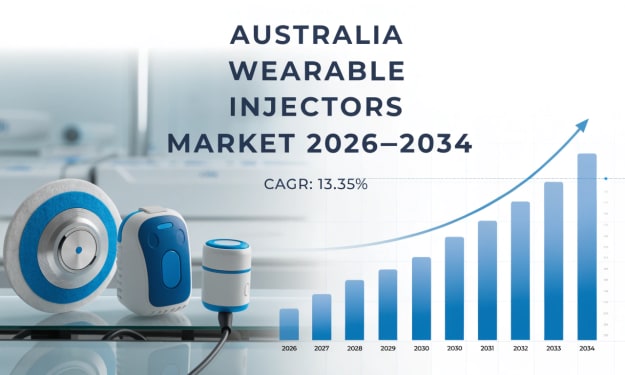
Australia Wearable Injectors Market 2026: Home-Based Therapy Growth, Biologics Expansion and Smart Drug Delivery Innovation
Australia Wearable Injectors Market Overview Australia’s wearable injectors market is emerging as a rapidly growing segment within the medical device and drug delivery landscape, driven by increasing adoption of patient-centric healthcare solutions and expanding use of biologic therapies. Wearable injectors are compact devices attached to the body that enable controlled subcutaneous delivery of large-volume medications over extended periods, allowing patients to self-administer treatment outside clinical settings. As healthcare systems emphasise convenience, treatment adherence and remote care models, wearable injectors are becoming critical tools supporting chronic disease management across Australia.
By Amyra Singh3 days ago in Trader



Comments
There are no comments for this story
Be the first to respond and start the conversation.