
Philippines Wood Pellet Market: Biomass Boom, Export Potential & Renewable Fuel Shift
How rising demand for clean energy, industrial uptake, and export prospects are driving growth in the Philippine wood-pellet sector

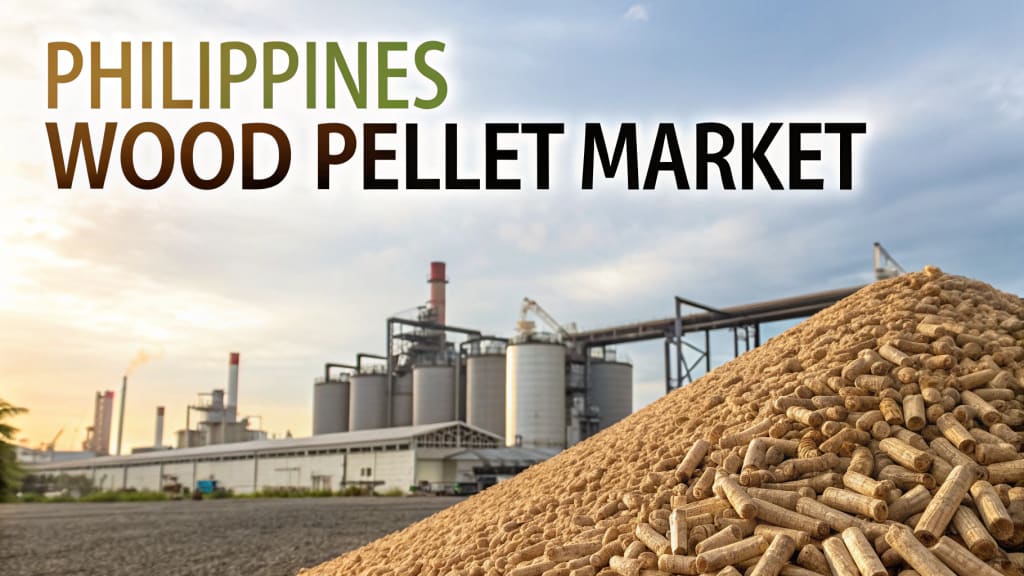
Philippines Wood Pellet Market
The Philippines wood pellet market is gaining steady traction as the country explores renewable energy alternatives, industrial biomass demand, and export opportunities. According to the industry insights, the Philippines wood pellet market reached USD 280.00 million in 2024, and is forecast to rise to USD 451.42 million by 2033, growing at a CAGR of 5.45% during 2025–2033.
Why the sector is gaining momentum
• Shift toward sustainable energy & lower carbon footprint: As global and national pressure mounts to reduce reliance on fossil fuels, wood pellets — made from renewable biomass residues — are being increasingly viewed as a cleaner, carbon-lowering alternative for power generation, heating, and industrial boilers. This environmental push is improving demand.
• Industrial & power-generation demand: Manufacturing plants, power producers and industrial boilers are increasingly adopting biomass pellets as a fuel source to cut fuel costs and emissions. The convenience of pellets — ease of transport, storage, and consistent energy output — makes them attractive compared to raw biomass or less efficient fuels.
• Export potential: The Philippines — with abundant forestry and wood-residue resources — is well-positioned to supply wood pellets to international markets (particularly in Asia and Europe) where demand for biomass fuel remains high. This export demand adds a major incentive for local producers to scale up production with international quality standards.
• Technology & production improvements: With modern pelletizing technology, sawdust and wood residues become efficient, high-density pellets. Studies show that when production is scaled properly, pellet manufacturing in Philippines can be economically viable — especially using waste/residue feedstock from sawmills and wood-processing industries.
Request a Sample Report with the Latest 2025 Data & Forecasts
What the Opportunities Are
The wood pellet industry in the Philippines offers a variety of promising opportunities for investors, manufacturers, supply-chain actors, and export-oriented companies:
• Scaling domestic production with sawmill waste: Many sawmills and furniture makers produce large volumes of wood residue; converting this residue into pellets provides both waste mitigation and new revenue streams. Establishing pellet plants adjacent to wood-processing hubs can lower raw material and logistics costs.
• Export-oriented manufacturing: Given rising demand for wood pellets globally (especially in Asia and Europe), Filipino producers who meet quality standards can tap export markets — leveraging lower labour costs and abundant feedstock. This opens a pathway to foreign earnings and scale economies.
• Industrial & power-generation contracts: As coal-fired plants and heavy-fuel boilers shift toward biomass for emissions compliance and cost savings, stable long-term fuel supply contracts for wood pellets become viable — offering predictable demand for pellet producers.
• Investment in modern pelletizing technologies: Upgraded pellet mills, efficient drying, improved densification and quality controls can help local producers meet global-grade standards — boosting competitiveness and margins over raw-biomass or low-quality pellet alternatives.
• Diversification via biomass energy value chain: Opportunities exist beyond pellets alone: supply-chain logistics, storage, transport, export handling — all parts of the biomass value chain offer business potential, especially in a region with archipelagic geography and export ambition.
Recent News & Developments in Philippines Wood Pellet Market
• Oct 2025: According to a press release summarising the 2025 IMARC update, the Philippines wood pellet market is projected to grow from USD 280.00 million (2024) to USD 451.42 million (2033), reinforcing confidence among investors, pellet producers, and biomass-energy project developers.
• Mid-2025: Growing interest from sawmill and wood-processing firms — responding to rising global demand and domestic biomass policy push — has increased announcements of pellet-plant feasibility studies, especially near furniture-manufacturing clusters where feedstock is abundant and low-cost.
• 2025 (ongoing): As regulatory and environmental awareness increases globally, some export markets have tightened quality requirements for biomass fuel. This is prompting local Philippine pellet producers to invest in better pellet-processing machinery and quality assurance, to meet international sustainability and emissions standards — a move that could unlock export opportunities.
Why Should You Know About Philippines Wood Pellet Market?
Because this market sits at the intersection of sustainable energy, export potential, industrial demand, and waste-to-value economics — making it a pragmatic, future-oriented opportunity. For entrepreneurs and companies: wood pellets offer a way to turn forestry and sawmill waste into valuable energy products with both domestic and international demand. For investors: relatively moderate growth (CAGR ~5.45%) but stable demand from industries, power producers, and export markets offers predictable returns. For policy-makers and energy planners: wood pellets present a renewable alternative to fossil fuels, aid energy diversification, support regional development and contribute to carbon-reduction goals.
About the Creator
Keep reading
More stories from Manisha Dixit and writers in Trader and other communities.
Philippines Adult Diaper Market: Aging Demographics, Healthcare Access & Rising Hygiene Demand
Philippines Adult Diaper Market The Philippines adult diaper market is on a steady upward path as demographic change, improving healthcare access and rising hygiene awareness combine to expand demand. the Philippines adult diaper market reached USD 93.15 million in 2024 and is forecast to grow to USD 144.80 million by 2033, with an implied CAGR of 4.51% during 2025–2033 — a reflection of both rising institutional consumption and growing retail availability.
By Manisha Dixit3 months ago in Trader
Australia Oxygen Cylinders Market 2026: Respiratory Care Expansion, Home Healthcare Growth and Portable Oxygen Demand
Australia Oxygen Cylinders Market Overview Australia’s oxygen cylinders market is witnessing steady expansion as healthcare providers prioritise reliable oxygen delivery across hospitals, clinics, aged-care facilities and home-based care environments. Oxygen cylinders remain a critical component of respiratory therapy, supporting emergency treatment, chronic disease management and industrial applications such as welding and manufacturing. As Australia’s healthcare system continues to modernise and patient care models shift toward outpatient and home settings, demand for portable and efficient oxygen cylinder solutions is rising.
By Amyra Singh6 days ago in Trader




Comments
There are no comments for this story
Be the first to respond and start the conversation.