
Philippines Neuroscience Market: Healthcare Innovation, Neurological Care & Research Expansion
How rising neurological disease burden, healthcare investment and diagnostics adoption are shaping the neuroscience landscape in the Philippines

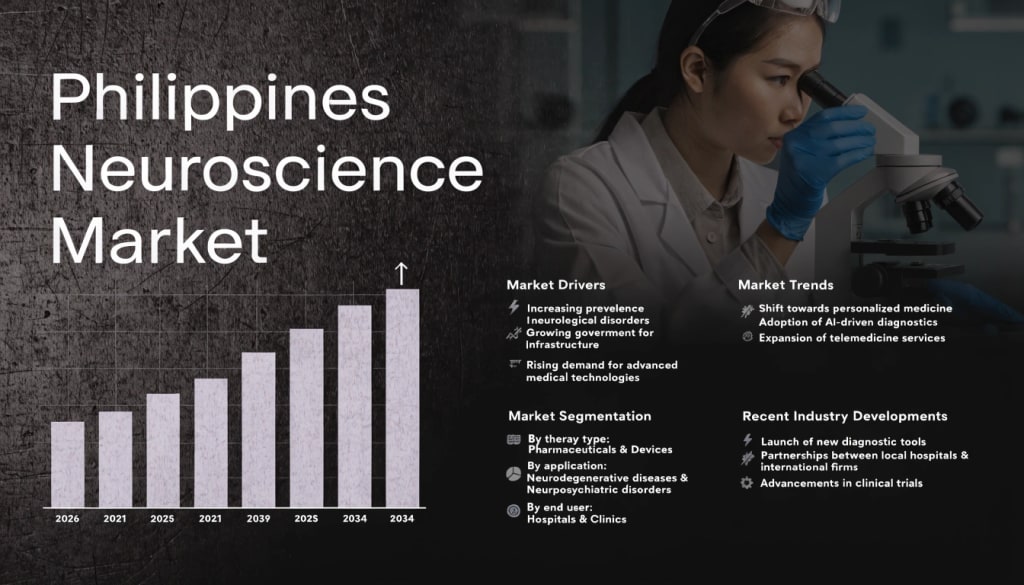
The Philippines neuroscience market is steadily evolving as demand for advanced diagnostic, therapeutic and care solutions for neurological disorders increases in response to shifting demographics, rising disease prevalence and broader healthcare modernization. Neuroscience encompasses medical specialties and technologies focused on the diagnosis, treatment and management of disorders affecting the nervous system — including conditions such as Alzheimer’s disease, Parkinson’s disease, epilepsy, multiple sclerosis, stroke, migraine and various neurodegenerative and neurodevelopmental diseases. According to IMARC Group, the Philippines neuroscience market reached USD 718.00 million in 2024 and is projected to reach USD 942.57 million by 2033, exhibiting a compound annual growth rate (CAGR) of 3.07% during 2025–2033. This growth reflects increasing neurological healthcare needs, investment in clinical infrastructure, rising awareness, and adoption of advanced neurodiagnostic and therapeutic technologies.
With the global neurological disease burden rising and life expectancy increasing, the demand for neuroscience services — from diagnostics to rehabilitation — continues to strengthen. Additionally, integration of digital health platforms, neurotechnology solutions, and clinical research collaborations is enhancing the capability and reach of neurological care across the Philippines.
What’s Driving Market Growth?
Rising Incidence of Neurological Disorders
Conditions like stroke, dementia, epilepsy, migraines, and neurodegenerative diseases are increasingly prevalent in older populations and among those at higher risk. With lifestyle modifications, enhanced detection techniques, and improved reporting leading to a rise in diagnosed cases, the demand for neuroscience diagnostics, treatments, and sustainable management strategies grows accordingly.
Healthcare Systems & Diagnostic Innovations
Investing in sophisticated neurodiagnostic tools — including MRI, CT, PET scans, EEG (electroencephalogram), and advanced imaging analysis — enhances clinicians’ capability to identify and track neurological disorders sooner and with greater precision. Hospitals and specialized centers are progressively utilizing advanced imaging technologies and neurophysiological devices to aid in patient management and treatment strategies.
Government Programs & Policy Assistance
Philippine health officials and policymakers have acknowledged the growing significance of neurological health within wider public health initiatives. Efforts that enhance frameworks for non-communicable diseases, rehabilitation initiatives, and community awareness campaigns promote the utilization of neuroscience services and facilitate care pathways.
Rising Patient Awareness & Preventive Focus
Greater awareness among patients and caregivers around neurological symptoms, preventive care, and early intervention fuels demand for specialised clinical services and neuro-focused consultations. Education campaigns by healthcare providers and patient advocacy groups contribute to earlier detection and follow-up, especially for chronic neurological conditions.
What the Opportunities Are?
Tele-Neuroscience & Remote Diagnostics
Telehealth platforms that incorporate neuroassessment tools, remote monitoring and virtual consultations can expand neurological care access into underserved regions and improve patient follow-ups. These digital solutions help neurologists manage chronic conditions proactively while reducing barriers to specialist access.
AI & Computer-Assisted Diagnostics
Artificial intelligence and machine learning applications in neuroimaging and diagnostics can enhance early detection, pattern recognition and predictive modelling for neurological conditions. Solutions that integrate AI analytics with imaging systems provide more precise evaluations and support clinician decision-making.
Rehabilitation Technology & Neurofeedback
Innovative rehabilitation technologies — such as robotic-assisted therapy systems, virtual reality (VR) neurotherapy programs and neurofeedback devices — add value in post-stroke recovery, mobility enhancement and cognitive rehabilitation. Providers that integrate tech-led rehab programs can deliver differentiated care services.
Clinical Research & Drug Development Partnerships
Collaborations between healthcare providers, research institutions, and international biotech/pharmaceutical partners can accelerate clinical trials, new therapeutic discovery, and evidence-based treatments tailored to regional neurological healthcare needs.
Chronic Disease Management Programs
Structured care programs focused on long-term neurological disease management — integrating personalised care plans, medication adherence tools and community support — offer pathways to improve patient outcomes and reduce long-term healthcare burden.
Recent News and Developments in Philippines Neuroscience Market
Jul 2025: Major healthcare systems in the Philippines announced investment in advanced neuroimaging infrastructure — including upgraded MRI and PET scanning facilities — to enhance early detection capabilities for conditions such as stroke, brain tumours and degenerative disorders. This initiative was positioned to improve diagnostic accuracy and reduce patient referral delays to specialised centres.
Sep 2025: A consortium of neuroscientists and clinicians launched a national awareness campaign focused on early neurological symptom recognition and preventive care strategies. The program aimed to educate the public on common neurological conditions, the importance of early diagnosis, and available treatment options — fostering informed patient behaviour and improved care outcomes.
Nov 2025: Industry analysts reported that neurorehabilitation services recorded higher year-on-year utilisation rates, driven by increasing post-acute care requirements among stroke survivors and patients with chronic neurological impairments. Expanded rehabilitation programs incorporating physical therapy, cognitive retraining and technology-aided therapies were central to this trend.
Why should You Know About Philippines Neuroscience Market?
You should know about this market because neuroscience represents a critical and increasingly relevant segment of healthcare that addresses some of the most complex and impactful disease burdens affecting individuals and communities. As neurological conditions rise with population ageing and lifestyle factors, demand for specialised diagnostic, therapeutic and rehabilitative services continues to strengthen — making neuroscience a cornerstone of modern healthcare delivery.
For investors, the neuroscience market offers insight into long-term healthcare infrastructure development, technology adoption, disease management services and clinical innovation. With moderate CAGR projections and expanding care needs, opportunities exist across diagnostics, therapeutic equipment, rehabilitation services and digital health solutions.
Recognizing neuroscience trends aids healthcare providers and policymakers in making informed choices regarding resource distribution, capacity enhancement, and patient care approaches — ultimately enhancing access, outcomes, and the quality of neurological health services in the Philippines.
Essentially, the neuroscience market in the Philippines illustrates the convergence of healthcare complexity, technological progress, and advancements in patient care — creating a healthcare segment that will continue to be vital in addressing national health issues in the future.
About the Creator
Thomas
Market Research Analyst | Industry Trends & Forecasting | Turning market data into clear, actionable business insights across global sectors.
The Three Dave Ramsey Baby Steps You Should Reconsider
Dave Ramsey has helped a lot of people stop doing dumb things with money. That alone deserves respect. If you're buried in credit card debt, stressed, disorganized, and living on financial fumes, the Baby Steps can pull you out of chaos.
By Destiny S. Harrisa day ago in Trader


Comments
There are no comments for this story
Be the first to respond and start the conversation.