
Philippines Salmon Market: Premium Seafood Demand, Health Trends & Supply Dynamics
How rising health consciousness, retail expansion and seafood preferences are shaping the salmon industry in the Philippines

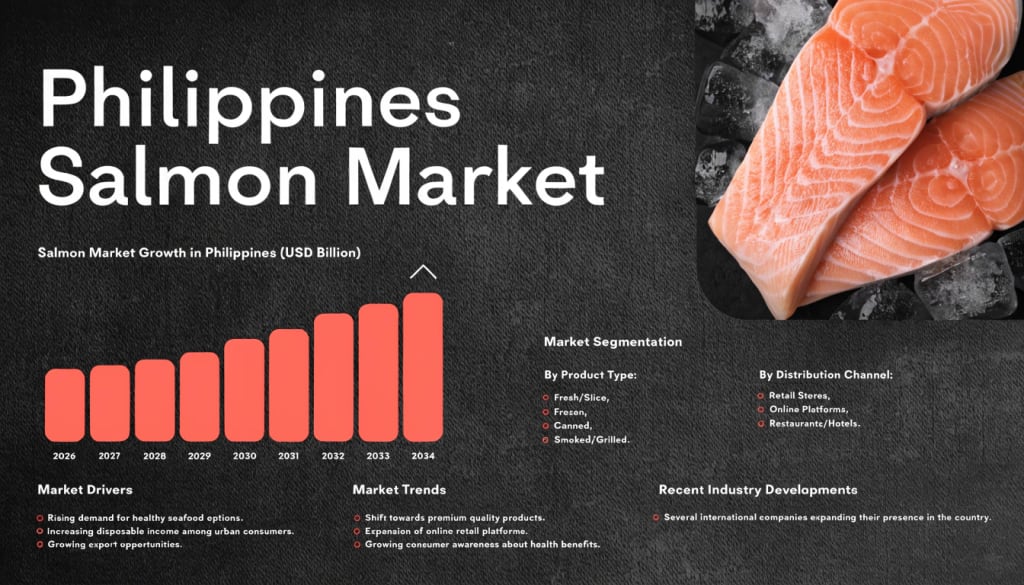
The Philippines salmon market is gaining steady traction as consumer demand for premium seafood continues to rise alongside growing health awareness, changing dietary preferences and expanding retail access to imported seafood products. Salmon — prized for its rich omega-3 content, premium texture and versatile culinary applications — has transitioned from a niche delicacy to a more widely consumed seafood item among Filipino consumers. According to IMARC Group, the Philippines salmon market volume reached 0.017 million tons in 2024 and is expected to grow to 0.019 million tons by 2033, exhibiting a compound annual growth rate (CAGR) of 1.18% during 2025–2033. This measured growth reflects evolving consumer lifestyles, retail modernisation and increasing integration of salmon into mainstream foodservice and at-home meal occasions.
Despite its relatively small market size compared to staple seafood categories, salmon’s positioning as a premium protein choice — associated with health benefits and international cuisine — has enabled it to maintain consistent demand, driven by both traditional outlets and modern food channels.
What’s Driving Market Growth?
Increasing Awareness of Health and Wellness
Health-conscious individuals in the Philippines are progressively emphasizing nutrient-rich, high-protein foods that support cardiovascular, cognitive, and overall wellness. Salmon’s connection to omega-3 fatty acids, vital amino acids, and its lean protein composition appeals to these consumers, especially within the middle- and high-income groups looking for health-focused dietary choices.
Urbanization & Contemporary Retail Growth
The rise in urbanisation, greater disposable incomes, and the expansion of contemporary retail formats — such as hypermarkets, supermarkets, specialized seafood sections, and online grocery services — have enhanced availability of premium salmon products. Chilled and frozen salmon are increasingly available outside of Metro Manila, expanding into Visayas and Mindanao markets via improved logistics and cold chain systems.
Growth of Restaurants & Foodservice Channels
Premium dining establishments, sushi bars, cafes, hotel buffets and Western-style restaurants are key contributors to salmon demand in the Philippines. Salmon’s versatility in global cuisines — from sashimi and sushi to grilled fillets, salads and pasta dishes — has allowed foodservice operators to broaden menu offerings and introduce customers to new culinary experiences, further stimulating consumption.
Import-Driven Supply Dynamics
Given the lack of significant domestic salmon cultivation, the Philippines relies heavily on imports from major producers such as Norway, Chile, Canada and Scotland. Trade partnerships, competitive pricing, and efficient import logistics have helped stabilise supply and ensure consistent availability — albeit subject to global market fluctuations, freight costs and currency movements.
What the Opportunities Are?
Premium & Value-Added Product Innovation
There is significant opportunity for product innovation in premium salmon offerings, such as marinated ready-to-cook fillets, sashimi-grade portions, smoked variants and designer packaging for gifting or convenience. These value-added products meet changing consumer needs for both quality and convenience.
E-Commerce & Subscription Meal Services
Digital retail and meal subscription services that include salmon as part of curated health meal kits or high-protein packages can attract busy urban professionals, health-conscious consumers and households seeking convenient, nutritionally balanced options.
Collaborations with Retailers & Foodservice Chains
Strategic partnerships between salmon suppliers, modern retail chains and restaurant groups can enhance product visibility, pricing promotions and seasonal marketing — driving trial and reinforcing salmon’s premium positioning.
Cold Chain Investment & Regional Distribution Expansion
Investments in cold chain infrastructure beyond Metro Manila — including refrigerated transport, storage hubs and regional distribution centres — can support wider availability and improved quality retention, expanding the consumer base into secondary cities and provincial areas.
Educational Campaigns on Nutrition Benefits
Brands and health advocates can amplify awareness about salmon’s nutritional profile, cooking versatility and role in balanced diets through educational campaigns, partnerships with dieticians and health influencers — fostering deeper understanding and consumption motivation.
Recent News and Developments in Philippines Salmon Market
Jul 2025: Leading supermarket chains in the Philippines expanded premium salmon sections with enhanced chilled and frozen product assortments, including newly introduced value-added options like marinated fillets and sushi-grade portions. This expansion catered to rising consumer demand for convenient, quality seafood options in urban retail spaces.
Sep 2025: A major foodservice alliance announced new culinary collaborations featuring salmon-centric menus across upscale restaurants and hotel dining venues, aiming to attract health-driven diners and elevate seafood offerings in mainstream hospitality.
Nov 2025: Industry reports highlighted that e-commerce seafood sales — including salmon — recorded double-digit year-on-year growth, as urban consumers embraced digital grocery shopping and home delivery services. This trend reflects broader shifts in purchasing behaviour and logistical investments that improve availability and convenience.
Why should You Know About Philippines Salmon Market?
You should know about this market because salmon is emerging as a premium indicator of evolving dietary trends, health consciousness and retail modernisation in the Philippines. Its transition from occasional delicacy to more widely embraced protein source demonstrates how consumer behaviour is shifting — not just toward traditional staples but also toward imported, nutritious and globally inspired food choices.
For investors, the salmon industry provides insights into enduring consumption trends connected to increasing incomes, growing retail facilities, and health-focused buying choices. With steady CAGR forecasts and a varied demand environment across residential and foodservice sectors, there are prospects in distribution, product development, and brand collaborations.
For food retailers, manufacturers, and policymakers, grasping salmon market dynamics — such as supply chain issues, import reliance, and regional distribution patterns — facilitates improved planning, quality control, pricing approaches, and consumer interaction.
In essence, the Philippines salmon market reflects how nutrition trends, retail evolution and culinary exploration converge — making it a valuable segment to watch as the nation’s food landscape embraces broader global influences, premium tastes and health-driven consumption choices.
About the Creator
Thomas
Market Research Analyst | Industry Trends & Forecasting | Turning market data into clear, actionable business insights across global sectors.
The number everyone quotes, and what it quietly hides
Lately, whenever real world asset tokenization comes up, the same number gets thrown around again and again. One hundred eighty five billion dollars. It sounds massive. It sounds like proof that finance is already halfway onto the blockchain and that something fundamental has shifted.
By crypto genie6 days ago in Trader
american signature furniture closing signals a major retail shift shoppers and workers must understand
american signature furniture closing has become a serious concern for shoppers, employees, and retail experts. The news has sparked worry, confusion, and strong emotions. Many people want to know why stores are closing, what happens to workers, and how this change affects future furniture buying. This article explains the full story of american signature furniture closing in simple terms, offering clear value to readers.
By hamza mirza7 days ago in Trader



Comments
There are no comments for this story
Be the first to respond and start the conversation.