
Philippines Factoring Market 2026: to Grow from USD 18.35 Billion to USD 27.48 Billion by 2034
SME financing needs and digital innovation accelerate adoption of factoring services across the Philippines economy.

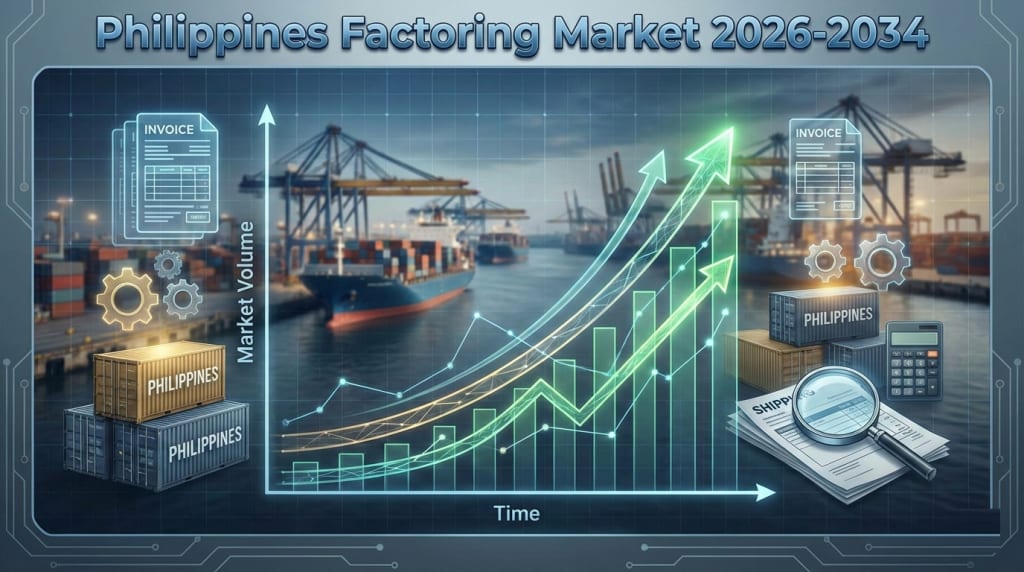
Philippines Factoring Market Overview
The Philippines factoring market — a financial service that helps businesses convert accounts receivable into immediate working capital — is on a steady growth trajectory as firms seek alternatives to traditional credit and capital-raising mechanisms. According to IMARC Group data, the Philippines factoring market size reached USD 18.35 billion in 2025 and is expected to grow to USD 27.48 billion by 2034, representing a compound annual growth rate (CAGR) of 4.12 % from 2026 to 2034.
Factoring provides short-term financing to businesses by purchasing invoices at a discount and advancing cash to suppliers. It is increasingly important in the Philippines — particularly for small and medium enterprises (SMEs) that struggle to access bank credit — and it is being reshaped by digital platforms and evolving financial needs.
Why the Market Is Growing So Rapidly
A major driver of market growth is the strong need for alternative financing solutions among SMEs. Many smaller firms lack the collateral or credit histories required by traditional banks, leaving them vulnerable to cash-flow shortages. Factoring allows these businesses to convert outstanding receivables into immediate funds, helping them manage short-term operations and growth investments more effectively.
The rise of e-commerce and diversified supply chains has expanded the demand for short-term working capital. As the Philippines economy modernizes and its internal and cross-border trade expands, businesses increasingly operate with longer payment cycles. Factoring mitigates delays in cash conversion, enabling quicker reinvestment into productive activities.
One of the most transformative trends is digital innovation. Fintech platforms are simplifying the factoring process, allowing companies to upload invoices, receive approvals, and obtain financing rapidly — often without extensive paperwork. This digital shift resonates strongly with young, tech-savvy entrepreneurs and supports the broader fintech ecosystem in the Philippines.
Financial inclusion efforts are also helping widen the market. Factoring services are increasingly marketed toward underserved regions and sectors, particularly in provincial areas where access to banking services is limited. Providers are experimenting with mobile and cloud-based solutions to reach more businesses efficiently.
Another key driver is the rising preference for risk-managed financial products, such as non-recourse factoring, which protects sellers from customer payment defaults. As firms participate more in domestic and international supply chains, demand for these secure financing setups increases, pushing providers to innovate and expand their offerings.
Request a Sample Report with the Latest 2026 Data & Forecasts
What the Opportunities Are
1. Fintech-Led Customer Onboarding:
Digital platforms that streamline onboarding and automate credit assessments can attract a broader SME base, driving scale and recurring revenue.
2. SME-Focused Factoring Solutions:
Tailored products that address the needs of micro, small, and medium companies — including flexible terms and mobile access — can significantly expand market penetration.
3. Non-Recourse and Risk-Managed Services:
Offering advanced risk management products, such as non-recourse factoring and insurance-backed solutions, can appeal to risk-averse enterprises and exporters.
4. Integration with E-Commerce Platforms:
Partnerships with online marketplaces and B2B platforms can embed factoring directly into sellers’ cash-flow processes, accelerating adoption and transaction volumes.
5. Regional Financial Inclusion Initiatives:
Factoring providers that build distribution and service channels in Visayas, Mindanao, and rural Luzon can tap into underserved SMEs seeking working capital alternatives.
6. Supply Chain Financing Extensions:
Expanding offerings to include supply chain finance and partner programs with corporate buyers can deepen market reach and drive large-scale enterprise engagement.
7. Data-Driven Credit Analytics:
Leveraging AI and big data to enhance credit scoring and risk evaluation can reduce default rates and improve pricing accuracy, making factoring services more competitive and resilient.
Recent News & Developments
March 2025: The Bangko Sentral ng Pilipinas (BSP) introduced new regulatory guidelines that encourage innovation in non-bank financing, including enhanced frameworks for digital factoring platforms. The policy supports broader access to financial services by clarifying licensing requirements and compliance standards, helping fintech and banking partners scale factoring services across more sectors.
June 2025: A major Philippine fintech firm launched an integrated invoice-to-finance platform that enables SMEs to link their accounting systems directly with factorers for real-time financing. Early pilot users reported reductions in approval times from weeks to hours, reflecting how technology integrations can significantly enhance liquidity access for smaller businesses.
September 2025: Market reports indicated that factoring adoption among medium enterprises grew by double-digit percentages year-on-year, driven by rising e-commerce and export activity. Increased participation from manufacturing and transportation sectors also contributed to broader factoring utilization, marking a shift toward flexible working capital solutions in traditional industries.
Why Should You Know About Philippines Factoring Market?
The Philippines factoring market matters for investors, businesses, and policymakers alike because it reflects the evolving dynamics of corporate finance in emerging economies. For investors, this sector offers exposure to financial services innovation, SME finance growth, and the rise of fintech platforms that unlock new revenue streams. Businesses benefit from more flexible and accessible capital, enabling them to scale operations, manage cash cycles, and compete effectively in both domestic and regional markets. For policymakers, fostering a robust factoring ecosystem supports economic inclusion, enhances financial resilience, and strengthens the broader financial infrastructure. As Philippine enterprises continue to modernize, factoring will remain a critical tool for enabling growth across industries and regions.
About the Creator
Keep reading
More stories from Manisha Dixit and writers in Trader and other communities.
Philippines Telemedicine Market 2026: Set to Surge to USD 8,240.5 Million by 2034 on Digital Health Expansion
Philippines Telemedicine Market Overview The Philippines telemedicine market size is rapidly transforming healthcare delivery in the archipelago, driven by rising healthcare demand, improved digital infrastructure, and consumer preference for convenient, remote care solutions. According to the latest IMARC Group research, the market reached USD 2,141.8 million in 2025 and is forecast to grow to USD 8,240.5 million by 2034, expanding at a compound annual growth rate (CAGR) of 15.50% during 2026–2034.
By Manisha Dixita day ago in Trader
Vietnam Organic Food Market Size and Forecast 2025–2033
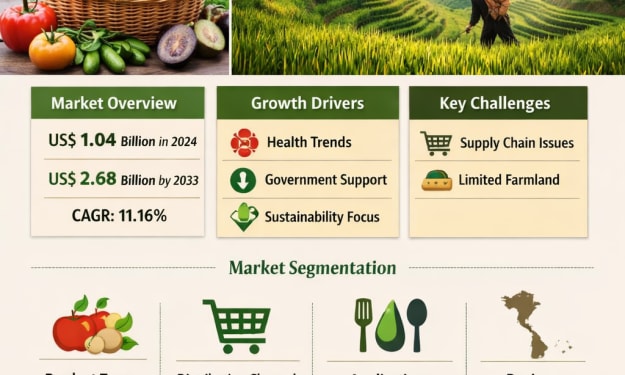
Vietnam Organic Food Market Overview The Vietnam Organic Food Market is entering a decisive growth phase, driven by changing consumer lifestyles, rising health awareness, and stronger focus on environmental sustainability. According to industry estimates, the Vietnam Organic Food Market is expected to reach US$ 2.68 billion by 2033, up from US$ 1.04 billion in 2024, expanding at a robust CAGR of 11.16% from 2025 to 2033. This impressive growth trajectory reflects a deep transformation in how Vietnamese consumers think about food quality, safety, and long-term wellbeing.
By shibansh kumarabout 3 hours ago in Trader
Super Bowl LX Recap: A Team Called Hawks
Sixty. The Super Bowl turned 60! Still amazes me that this was the sixtieth Super Bowl played in NFL history. It seems like yesterday that I watched Super Bowl XXVII, the first SB I ever watched. The QB who won Super Bowl XXVII has since called a few SBs, and will call next year's game, but that's another story. Super Bowl LX took place at Levi's Stadium in Santa Clara, California, the home stadium of the San Francisco 49ers. However, it was one of their division foes who represented the NFC, as the Seattle Seahawks faced off against the New England Patriots.
By Clyde E. Dawkins4 days ago in Unbalanced



Comments
There are no comments for this story
Be the first to respond and start the conversation.