
Philippines Canned Food Market 2026: Convenience Eating, Shelf-Stable Demand & Product Innovation
How urban lifestyles, affordability and retail expansion are shaping the Philippines canned food market

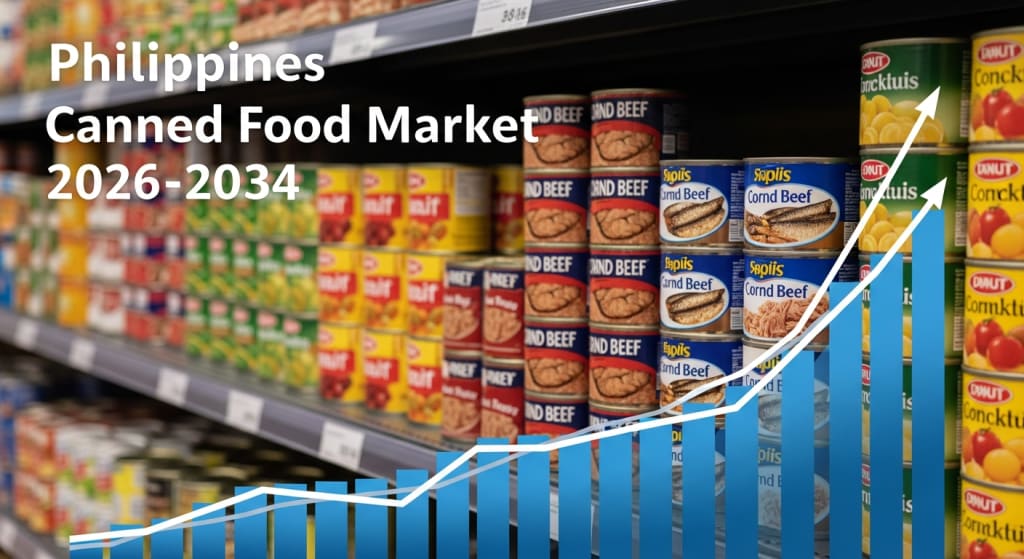
Philippines Canned Food Market Overview
The Philippines canned food market continues to play a vital role in household food consumption, offering convenient, affordable and long-lasting meal options for millions of consumers. Canned food products include canned meat, seafood, vegetables, fruits, soups, ready meals and sauces that can be stored for extended periods without refrigeration. In a country where busy urban lifestyles coexist with income-sensitive households, canned food provides a reliable solution for quick meal preparation and emergency food stockpiling.
According to IMARC Group, The Philippines canned food market size reached USD 3.0 Billion in 2025. Looking forward, the market is expected to reach USD 4.8 Billion by 2034, exhibiting a growth rate (CAGR) of 5.55% during 2026-2034. This steady growth reflects population expansion, urbanization, rising working-class participation and continuous product innovation.
Canned food consumption in the Philippines spans both mass-market and premium segments. While traditional canned meat and fish remain staples, demand for healthier variants, international flavors and ready-to-eat meals is gradually increasing.
Driving Growth in the Philippines Canned Food Market
One of the primary drivers of market growth is increasing preference for convenient and time-saving foods. Urban consumers, working professionals and students rely on canned foods to prepare meals quickly with minimal cooking effort.
Another important factor is affordability and price stability. Compared to fresh meat and seafood, canned alternatives often offer lower and more predictable prices, making them attractive to budget-conscious households.
Population growth and urban migration also support rising demand. Urban residents typically have smaller kitchens and less time for cooking, increasing reliance on shelf-stable products.
Expansion of modern retail formats such as supermarkets, hypermarkets and convenience stores improves product availability and variety.
Improved packaging and processing technologies have enhanced taste, texture and nutritional retention, supporting consumer acceptance.
Request a Sample Report with the Latest 2026 Data & Forecasts
What the Opportunities Are
The Philippines canned food market presents extensive opportunities across product development, branding and distribution.
1. Healthier and Better-for-You Canned Products
Low-sodium, low-fat and preservative-free formulations appeal to health-conscious consumers.
2. Ready-to-Eat Meal Solutions
Canned complete meals such as stews, curries and pasta support busy lifestyles.
3. Premium and Gourmet Canned Lines
High-quality ingredients and international recipes attract higher-income consumers.
4. Locally Sourced Ingredients
Using domestic fish, meat and vegetables supports sustainability and cost control.
5. Smaller and Single-Serve Packaging
Affordable pack sizes improve accessibility.
6. E-Commerce and Online Grocery Sales
Digital platforms expand reach.
7. Export-Oriented Canned Products
Overseas Filipino communities drive export demand.
8. Private Label Manufacturing
Retailer brands create volume opportunities.
Operational Considerations
Raw material price volatility affects margins. Maintaining food safety and quality standards is critical.
Packaging costs and logistics influence pricing. Competition is intense, requiring continuous innovation.
Recent News & Developments in the Philippines Canned Food Market
• Jan 2025: Several canned food manufacturers announced combined investments of USD 180 million in processing plant upgrades and capacity expansion.
• Mar 2025: Supermarket chains expanded private-label canned food offerings by more than 25%, covering meats, seafood and ready meals.
• Jun 2025: Food processors introduced new low-sodium canned meat and fish products in response to health trends.
• Aug 2025: Export shipments of Philippine canned tuna exceeded 320,000 metric tons, reflecting strong international demand.
• Oct 2025: Industry data indicated a 14% year-on-year increase in canned food retail sales, driven by urban consumption.
Why Should You Know About Philippines Canned Food Market?
Understanding the Philippines canned food market provides insight into how convenience, affordability and innovation shape everyday eating habits. The sector reflects stable, demand-driven growth supported by population and lifestyle trends.
For businesses, the market highlights opportunities in healthier formulations, premiumization and export development. For policymakers, it underscores the importance of food safety and local sourcing. Overall, the canned food market demonstrates how shelf-stable foods remain essential in the Philippine diet.
About the Creator
Keep reading
More stories from Manisha Dixit and writers in Trader and other communities.
Philippines Diabetes Drugs & Devices Market 2026: Rising Disease Burden, Treatment Access & Technology Adoption
Philippines Diabetes Drugs & Devices Market Overview The Philippines diabetes drugs and devices market is gaining strong momentum as the country faces a steadily rising burden of diabetes and related metabolic disorders. Diabetes is a chronic condition that requires lifelong management through medications, insulin therapies, blood glucose monitoring and lifestyle interventions. As awareness of early diagnosis and long-term complications increases, demand for both pharmaceutical treatments and diabetes management devices continues to expand across urban and rural areas.
By Manisha Dixitabout 5 hours ago in Trader
What Is Leverage and How Does It Work in Spread Betting?
Spread betting is distinguished from regular investment by leverage, it gives traders significant market exposure for a minimal outlay. Leverage may boost earnings but also increase risk, so traders must grasp it before betting. This article discusses spread betting leverage, its dangers, and rewards.
By Alex Johnsona day ago in Trader
Australia Port Infrastructure Market 2026: Trade Growth, Capacity Expansion & Modernization
Australia Port Infrastructure Market Overview The Australia port infrastructure market growth is a fundamental component of the country’s trade and logistics ecosystem, supporting the movement of bulk commodities, manufactured goods and consumer products. Ports enable Australia’s participation in global supply chains by handling exports of minerals, agricultural products and energy resources, as well as imports of machinery, vehicles and everyday consumer goods. The Australia Port Infrastructure market size reached USD 4.2 Billion in 2025. Looking forward, the market is projected to reach USD 6.1 Billion by 2034, exhibiting a growth rate (CAGR) of 4.11% during 2026-2034. This steady growth reflects increasing cargo volumes, infrastructure modernization programs and long-term trade demand.
By Amyra Singha day ago in Trader


Comments
There are no comments for this story
Be the first to respond and start the conversation.