
Australia Port Infrastructure Market 2026: Trade Growth, Capacity Expansion & Modernization
How cargo throughput, infrastructure investment and digital port technologies are shaping Australia’s port infrastructure market

Australia Port Infrastructure Market Overview
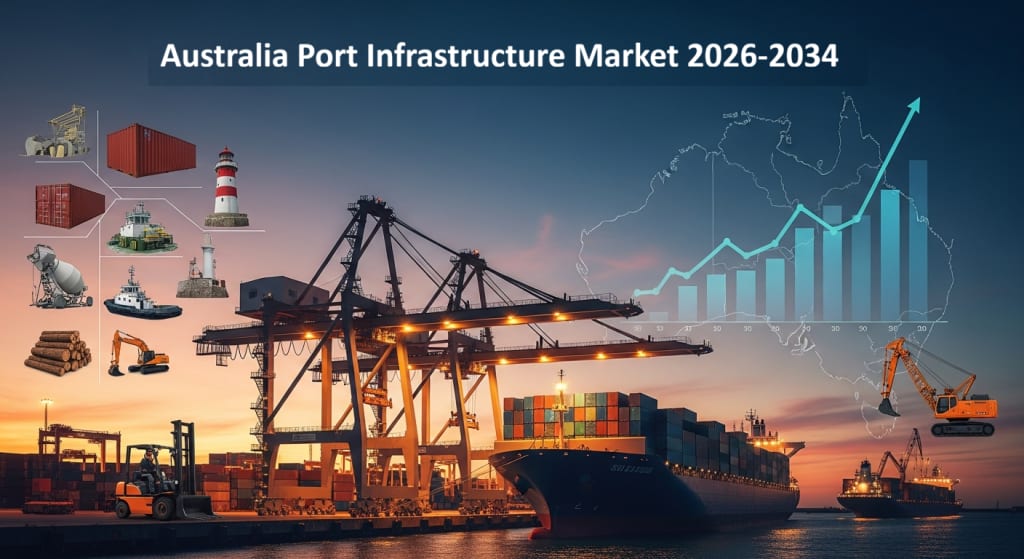
The Australia port infrastructure market growth is a fundamental component of the country’s trade and logistics ecosystem, supporting the movement of bulk commodities, manufactured goods and consumer products. Ports enable Australia’s participation in global supply chains by handling exports of minerals, agricultural products and energy resources, as well as imports of machinery, vehicles and everyday consumer goods. The Australia Port Infrastructure market size reached USD 4.2 Billion in 2025. Looking forward, the market is projected to reach USD 6.1 Billion by 2034, exhibiting a growth rate (CAGR) of 4.11% during 2026-2034. This steady growth reflects increasing cargo volumes, infrastructure modernization programs and long-term trade demand.
Port infrastructure includes marine terminals, wharves, berths, cranes, storage yards, intermodal connections and supporting digital systems. Australia’s ports serve diverse cargo segments, including containerized goods, dry bulk, liquid bulk and roll-on/roll-off cargo. As trade patterns evolve and vessel sizes increase, ports must continuously upgrade their facilities to maintain competitiveness and efficiency.
Driving Growth in the Australia Port Infrastructure Market
One of the primary drivers of market growth is rising cargo throughput. Australia remains a major exporter of iron ore, coal, LNG and agricultural commodities. Increasing production volumes require ports with higher handling capacity, deeper berths and efficient loading systems.
Another important factor is expansion of containerized trade. Growth in e-commerce and manufacturing increases demand for container terminal capacity. Ports are investing in new berths, cranes and yard equipment to accommodate larger container vessels and faster turnaround times.
Infrastructure modernization and asset replacement also support market expansion. Many Australian ports operate long-standing infrastructure that requires refurbishment or replacement. Modernization improves safety, reliability and operational efficiency.
Government and private sector investment plays a significant role. Public-private partnerships and long-term concession models encourage large-scale capital investment in port facilities and supporting logistics infrastructure.
Technological adoption further drives growth. Digital port management systems, automation and real-time data platforms improve cargo visibility and terminal productivity.
Request a Sample Report with the Latest 2026 Data & Forecasts:
What the Opportunities Are
The Australia port infrastructure market presents a wide range of long-term opportunities for infrastructure developers, equipment suppliers, technology providers and investors as trade volumes increase and port operations become more complex.
1. Large-Scale Terminal Expansion Projects
Growing containerized and bulk cargo volumes are creating demand for new terminals and berth extensions. Opportunities exist in dredging, quay wall construction, yard expansion and installation of high-capacity cranes. These projects support accommodation of larger vessels and higher throughput.
2. Automation and Smart Port Technologies
Ports are increasingly adopting automated stacking cranes, automated guided vehicles and terminal operating systems. Technology providers can supply hardware, software and integration services that improve productivity, reduce human error and optimize yard operations.
3. Intermodal Connectivity and Hinterland Infrastructure
Efficient rail and road links between ports and inland logistics hubs are critical. Opportunities include development of dedicated freight rail corridors, intermodal terminals and truck marshalling yards to improve cargo flow and reduce congestion.
4. Green Port and Decarbonization Initiatives
Electrification of cargo-handling equipment, shore-to-ship power systems and renewable energy integration support emissions reduction. Suppliers of electric equipment, charging infrastructure and energy management systems can benefit from sustainability-driven investments.
5. Specialized Bulk Handling Facilities
Dedicated terminals for LNG, hydrogen, agricultural exports and minerals require customized infrastructure. Opportunities exist in conveyor systems, storage silos, loading arms and temperature-controlled facilities.
6. Port Resilience and Climate Adaptation Infrastructure
Ports are investing in flood protection, stronger breakwaters, elevated wharves and improved drainage to withstand extreme weather events. Engineering firms can support climate-resilient design and construction.
7. Digitalization and Cybersecurity Solutions
As ports become more connected, demand grows for cybersecurity, data analytics and real-time monitoring platforms. These solutions improve operational visibility and protect critical infrastructure from digital threats.
Operational Considerations
Port development projects involve high capital costs and long timelines. Environmental approvals, community consultation and regulatory compliance influence project planning and execution.
Workforce skills and safety training remain important as automation increases. Coordination between port authorities, terminal operators and transport providers affects overall efficiency.
Recent News & Developments in the Australia Port Infrastructure Market
• Feb 2025: Several port authorities announced planning studies for container terminal expansions to address forecast cargo growth. The studies include berth deepening, yard reconfiguration and crane upgrades.
• Jun 2025: Infrastructure developers commenced construction of new intermodal rail connections linking major ports with inland logistics hubs. These projects aim to reduce road congestion and improve freight efficiency.
• Oct 2025: Industry data indicated a 13% year-on-year increase in capital expenditure on port infrastructure projects, reflecting strong investment momentum.
Why Should You Know About Australia Port Infrastructure Market?
Understanding the Australia port infrastructure market provides insight into how trade growth and infrastructure investment shape national competitiveness. Ports play a central role in enabling exports, supporting domestic supply chains and attracting global shipping services.
For businesses, the market highlights opportunities in construction, equipment supply and digital solutions. For investors, it demonstrates long-term demand driven by trade fundamentals. Overall, the port infrastructure market illustrates how strategic infrastructure underpins Australia’s economic activity and global connectivity.
About the Creator
Amyra Singh
Market research analyst who loves spotting patterns, digging into data, and turning insights into strategies that help brands grow and stay ahead of the curve.
Keep reading
More stories from Amyra Singh and writers in Trader and other communities.
Australia Sterilization Equipment Market: Healthcare Demand, Infection Control & Technology Adoption
Australia Sterilization Equipment Market Overview The Australia sterilization equipment market is developing steadily as healthcare facilities, laboratories and medical device manufacturers place increasing emphasis on infection prevention and patient safety. Sterilization equipment is used to eliminate microorganisms from medical instruments, surgical tools, laboratory equipment and pharmaceutical products. These systems play a critical role in maintaining hygienic environments and ensuring compliance with healthcare quality standards. The Australia sterilization equipment market growth reached USD 326.00 Million in 2024. Looking forward, IMARC Group expects the market to reach USD 690.69 Million by 2033, exhibiting a growth rate (CAGR) of 8.70% during 2025-2033. This growth reflects rising healthcare utilization, expansion of hospital infrastructure and continuous technological advancement.
By Amyra Singh3 days ago in Trader
Philippines Canned Food Market 2026: Convenience Eating, Shelf-Stable Demand & Product Innovation
Philippines Canned Food Market Overview The Philippines canned food market continues to play a vital role in household food consumption, offering convenient, affordable and long-lasting meal options for millions of consumers. Canned food products include canned meat, seafood, vegetables, fruits, soups, ready meals and sauces that can be stored for extended periods without refrigeration. In a country where busy urban lifestyles coexist with income-sensitive households, canned food provides a reliable solution for quick meal preparation and emergency food stockpiling.
By Manisha Dixitabout 5 hours ago in Trader
Australia Airlines Market Gaining Altitude on Domestic Travel and Tourism Recovery
The Australia airlines market reached USD 3.3 billion in 2024 and is expected to grow to USD 5.5 billion by 2033, exhibiting a compound annual growth rate (CAGR) of 5.86% between 2025 and 2033. This robust growth outlook reflects a broad resurgence in air travel demand — both domestic and international — heightened tourism activity, continued investment in aviation infrastructure and a shift toward enhanced operational efficiency and passenger experience.
By Rashi Sharma7 days ago in Trader




Comments
There are no comments for this story
Be the first to respond and start the conversation.