
North America Superfood Market Size and Forecast 2025–2033
Rising Health Awareness, Clean-Label Trends, and Plant-Based Nutrition Push Superfoods into the Mainstream Diet

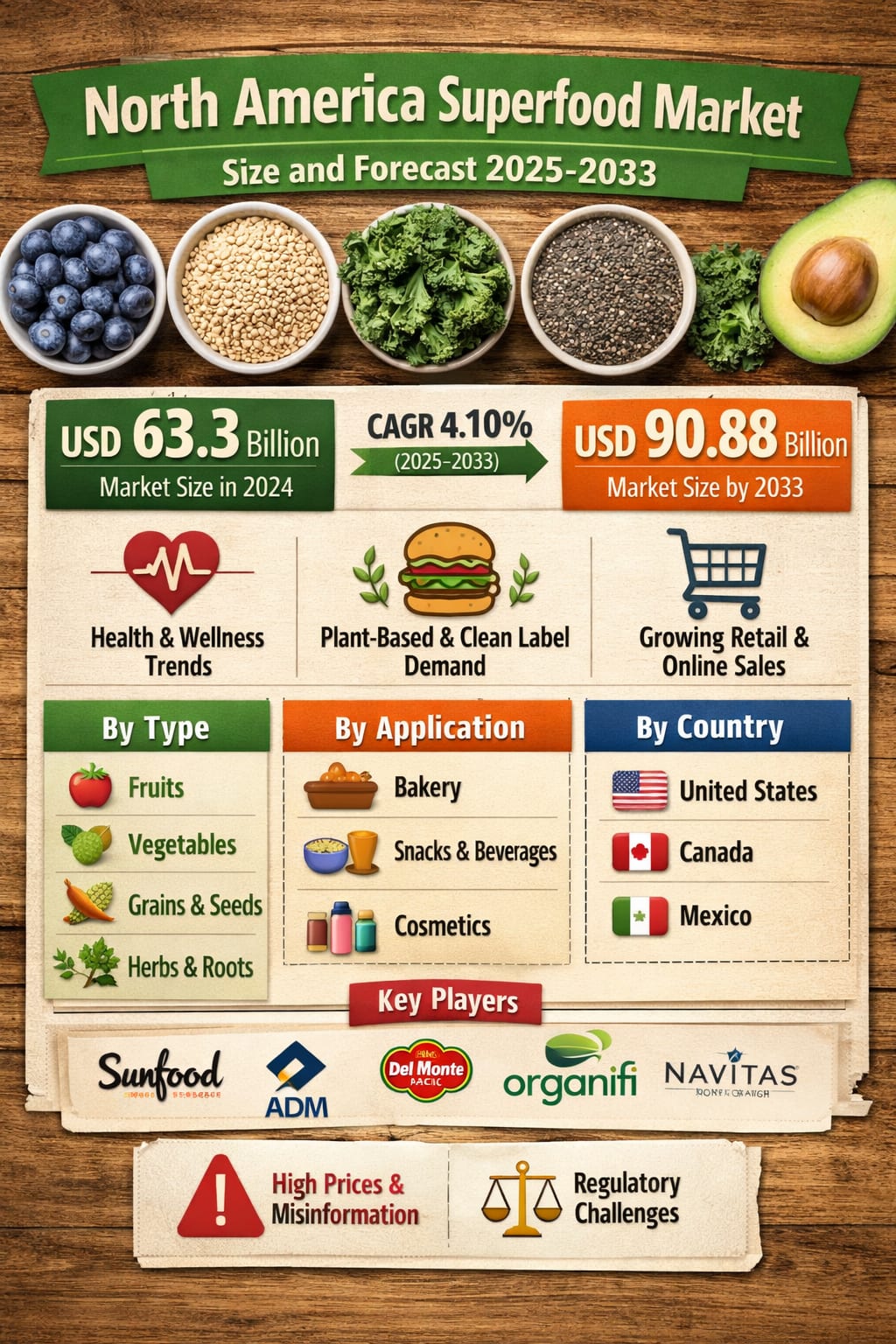
North America Superfood Market Outlook
The North America Superfood Market size was valued at USD 63.3 billion in 2024 and is expected to reach USD 90.88 billion by 2033, expanding at a CAGR of 4.10% from 2025 to 2033. This steady growth reflects a powerful shift in consumer behavior toward healthier eating habits, preventive healthcare, and functional nutrition across the United States, Canada, and Mexico.
Superfoods are nutrient-dense foods widely recognized for their exceptional health benefits. These include berries such as acai and blueberries, leafy greens like kale and spinach, seeds such as chia and flaxseed, and a variety of grains, herbs, and roots known for their high levels of vitamins, minerals, antioxidants, fiber, and healthy fats. In North America, superfoods have evolved from niche health-store products into mainstream dietary staples found in supermarkets, cafes, fitness centers, and online platforms.
The growing popularity of clean eating, plant-based diets, and wellness-focused lifestyles has made superfoods a central part of daily nutrition. They are now commonly used in smoothies, breakfast bowls, protein bars, functional beverages, supplements, and even beauty and personal care products. Millennials and Gen Z consumers, in particular, are driving this trend by prioritizing long-term health, fitness, and sustainability in their purchasing decisions.
Restaurants, packaged food brands, and retailers across North America are increasingly incorporating superfood ingredients into their offerings, transforming superfoods from a trend into a long-term dietary movement. As awareness continues to grow and product innovation accelerates, the superfood market is set to remain a key pillar of the region’s health and wellness economy.
Growth Drivers in the North America Superfood Market
Increasing Health Consciousness Among Consumers
One of the most significant drivers of the North America superfood market is the rising level of health awareness among consumers. People are becoming more proactive about preventive healthcare and are increasingly seeking foods that offer nutritional benefits beyond basic sustenance. Superfoods are often perceived as natural solutions for common health concerns such as obesity, high cholesterol, digestive issues, and weakened immunity.
This trend is especially strong among younger consumers, including millennials and Gen Z, who actively look for nutrient-rich alternatives in their daily meals. The focus on fitness, mental well-being, and longevity has turned superfoods into essential components of modern diets. In March 2024, Hackensack Meridian Health announced plans for a first-of-its-kind health and wellness center at Metropark Station in Woodbridge, New Jersey, highlighting how health-focused initiatives are becoming more integrated into everyday life in the region.
Increasing Product Expansion and Availability
Manufacturers and brands are continuously expanding the use of superfoods across multiple product categories, including snacks, beverages, bakery items, supplements, and even cosmetics. The versatility of ingredients such as chia seeds, spirulina, turmeric, and matcha allows companies to cater to diverse consumer preferences while maintaining a strong health-oriented positioning.
E-commerce is also playing a crucial role in improving product accessibility. In March 2025, Laird Superfood®, a well-known player in functional coffee and superfood products, launched “The Market Place,” a curated e-commerce platform featuring brands aligned with the company’s health and performance philosophy. Such initiatives are helping to strengthen distribution networks and make superfood products more accessible to a broader consumer base.
Expansion of the Plant-Based and Clean Label Movement
The rapid growth of plant-based diets and clean-label food products is another major factor supporting the superfood market in North America. Consumers are increasingly avoiding artificial ingredients, preservatives, and genetically modified organisms, and are instead choosing products that align with natural, organic, and transparent sourcing practices.
Superfoods fit perfectly into this movement, as they are often marketed as minimally processed, nutrient-rich, and sustainably sourced. In February 2025, Slovenian alternative meat company Juicy Marbles introduced “Meaty Meat,” a whole-cut plant-based lamb substitute in the U.S. and Canada, reflecting the broader shift toward plant-based and clean-label food innovation in the region.
Challenges in the North America Superfood Market
High Prices Limit Mass Adoption
Despite their health benefits, many superfood products remain relatively expensive due to higher costs associated with sourcing, cultivation, processing, and quality certification. This price premium makes superfoods less accessible to price-sensitive consumers, particularly in rural or lower-income areas.
While demand continues to grow among urban and health-conscious populations, cost remains a significant barrier to mass adoption. Brands and retailers are increasingly exploring private-label and value-focused offerings, but pricing pressure remains a key challenge for the industry.
Misinformation and Regulatory Issues
Another challenge facing the superfood market is the presence of exaggerated or unsupported health claims. In some cases, marketing messages are not fully backed by scientific evidence, which can lead to consumer skepticism and regulatory scrutiny.
Inconsistent regulations around health claims and labeling standards across different product categories can also create confusion in the market. This lack of uniformity may impact consumer trust and brand credibility, particularly in the functional food and dietary supplement segments.
North America Fruits Superfood Market
Fruits such as blueberries, acai berries, and goji berries dominate the fruit segment of the North American superfood market due to their high antioxidant content and wide range of health benefits. These fruits are commonly used in breakfast cereals, smoothies, juices, snack bars, and functional beverages.
Their association with immune support, anti-aging, and heart health continues to drive strong consumer demand. The growing popularity of clean eating and the preference for natural sugar alternatives further support the expansion of fruit-based superfoods across the region.
North America Vegetables Superfood Market
Vegetables including kale, spinach, beets, and sweet potatoes are widely recognized as superfoods in North America because of their rich vitamin, mineral, and fiber content. These ingredients are increasingly featured in salads, meal kits, plant-based bowls, and ready-to-eat meals.
Health trends such as detox programs, gut health awareness, and plant-forward diets have strengthened the role of vegetable superfoods as everyday nutritional essentials. As consumers continue to prioritize whole and minimally processed foods, this segment is expected to maintain steady growth.
North America Bakery Products Superfood Market
The incorporation of superfoods into bakery products such as breads, muffins, and cookies is gaining strong momentum in North America. Ingredients like chia seeds, flaxseeds, quinoa, and pumpkin seeds are being used to enhance the nutritional profile of traditional baked goods.
This trend appeals to consumers who want to balance indulgence with health benefits. Both artisan bakeries and large commercial brands are embracing superfood fortification, particularly in urban markets and organic retail outlets.
North America Cosmetics Superfood Market
Superfoods are also making a strong impact in the cosmetics and personal care industry. Ingredients such as avocado, turmeric, aloe vera, and seaweed are increasingly used in skincare, haircare, and hygiene products due to their antioxidant, anti-inflammatory, and nourishing properties.
The “beauty from within” concept and the rise of clean beauty trends are encouraging consumers to choose products made with natural, superfood-based ingredients. Sustainability and transparency in sourcing further enhance the appeal of these formulations among North American consumers.
North America Superfood Hypermarkets & Supermarkets Market
Hypermarkets and supermarkets play a crucial role in popularizing superfoods by offering them in dedicated health and organic sections. Major retail chains such as Walmart, Whole Foods, and Kroger continue to expand their superfood assortments, improving visibility and accessibility for mainstream consumers.
In-store promotions, sampling campaigns, and private-label superfood products are also helping to boost consumer engagement and trial rates across the region.
North America Superfood Convenience Stores Market
Convenience stores are evolving to meet the needs of health-conscious, time-pressed consumers by offering superfood-based snacks, beverages, and nutrition bars. Products such as protein shakes, energy balls, and trail mixes enriched with superfoods are becoming more common in outlets like 7-Eleven and Circle K.
These grab-and-go formats are creating new growth opportunities, particularly in urban and suburban areas where demand for quick and healthy nutrition is rising.
United States Superfood Market
The United States leads the North American superfood market due to high consumer awareness, strong innovation, and a well-developed health and wellness ecosystem. Superfoods are widely used across packaged foods, foodservice, and dietary supplements.
Rising disposable incomes, the influence of social media and wellness influencers, and the growing interest in personalized nutrition continue to support market growth. In March 2025, EatThis Superfood™ expanded its U.S. product line with roasted foxnuts in flavors such as BBQ, Organic Mint, Sea Salt Caramel, and Chili, targeting health-conscious consumers and strengthening its market presence.
Canada Superfood Market
Canada’s superfood market is growing steadily, driven by the organic food movement and strong consumer interest in functional nutrition. Canadian consumers show a particular preference for locally sourced and plant-based superfoods, supported by transparent labeling and sustainability-focused branding.
In August 2022, Purely Inspired® introduced Superfood Greens in Canada, a budget-friendly greens powder containing 39 superfoods and 18 vitamins and minerals, available at Walmart Canada and on Amazon.ca. Such initiatives highlight the increasing accessibility of superfood products in the country.
Mexico Superfood Market
Mexico’s superfood market is expanding gradually as consumers rediscover traditional ingredients such as amaranth, chia, and nopal cactus, which are deeply rooted in local culture and nutrition. Growing awareness of lifestyle-related health issues and increasing health education campaigns are encouraging greater adoption of superfoods.
Both local and international players are capitalizing on the expanding middle class and the growth of health-focused retail channels to introduce a wider range of superfood products in the Mexican market.
North America Superfood Market Segmentation
By Type:
Fruits
Vegetables
Grains & Seeds
Herbs & Roots
Other
By Application:
Bakery Products
Cosmetics
Snacks
Beverages
By Distribution Channel:
Specialty Stores
Hypermarkets & Supermarkets
Convenience Stores
Pharmacies and Drugstores
Online Sales Channel
By Countries:
United States
Canada
Mexico
Rest of North America
Competitive Landscape and Key Players
Companies in the North America superfood market are analyzed from four perspectives: company overview, key personnel, recent developments, and revenue performance. The competitive environment is shaped by continuous product innovation, strategic partnerships, and expanding distribution networks.
Key Players Include:
Sunfood
Archer-Daniels-Midland Company
Del Monte Pacific Limited
Suncore Foods Inc.
Organifi
OMG! Organic Meets Good
Alovitox LLC
Navitas Organics
These companies are focusing on clean-label formulations, sustainable sourcing, and diversified product portfolios to strengthen their positions in the market.
Final Thoughts
The North America superfood market is on a steady growth path, driven by rising health consciousness, expanding plant-based and clean-label movements, and continuous product innovation across food, beverage, and personal care categories. With the market expected to grow from USD 63.3 billion in 2024 to USD 90.88 billion by 2033, superfoods are no longer just a trend—they are becoming a permanent fixture in modern lifestyles.
While challenges such as pricing and regulatory consistency remain, increasing accessibility through mainstream retail and e-commerce channels is helping to broaden the consumer base. As more people prioritize preventive health and functional nutrition, superfoods are set to play an even more important role in shaping the future of North America’s food and wellness industries.
About the Creator
Asia Pacific Pediatric Interventional Cardiology Market Size and Forecast 2025–2033
Introduction The Asia Pacific Pediatric Interventional Cardiology Market is entering a period of sustained and meaningful growth as healthcare systems across the region place increasing emphasis on advanced, child-focused cardiac care. According to Renub Research, the market is expected to reach US$ 1,525.53 million by 2033, rising from US$ 829.09 million in 2024, at a compound annual growth rate (CAGR) of 7.01% from 2025 to 2033.
By shibansh kumarabout 24 hours ago in Trader
Australia Lubricants Market 2026: Gears Up for Steady Growth on Automotive, Industrial & Sustainability Trends
Australia Lubricants Market Overview The Australia lubricants market size is on a steady upward trajectory as demand from automotive, industrial, and heavy machinery sectors continues to expand. According to the latest data from IMARC Group, the market was valued at USD 2,961.53 million in 2025 and is forecast to reach USD 4,333.36 million by 2034, growing at a compound annual growth rate (CAGR) of 4.32% during the 2026–2034 period.
By Amyra Singh2 days ago in Trader



Comments
There are no comments for this story
Be the first to respond and start the conversation.