
North America Meat Substitutes Market Size and Forecast 2025–2033
Plant-Based Proteins Move from Niche to Mainstream Across the U.S. and Canada

Introduction: A Market Redefining the Future of Protein
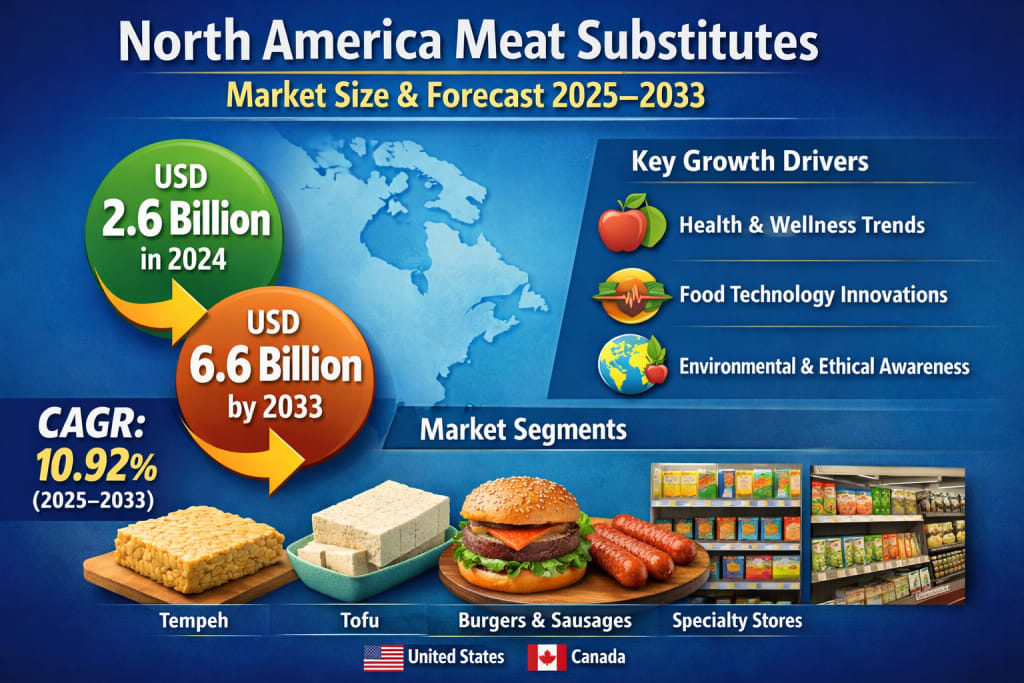
The North America meat substitutes market is no longer a niche corner of the food industry—it is rapidly becoming a core part of the region’s protein economy. Valued at USD 2.6 billion in 2024, the market is projected to expand significantly, reaching USD 6.6 billion by 2033. This impressive growth represents a compound annual growth rate (CAGR) of 10.92% during the period 2025–2033.
This surge is being powered by a combination of rising demand for plant-based protein, increasing consumer health awareness, and continuous innovation in food technology. Today’s meat substitutes are no longer limited to bland tofu blocks or niche vegetarian products. Instead, they include highly engineered burgers, sausages, nuggets, and strips that closely replicate the taste, texture, and appearance of traditional meat.
As North American consumers rethink what they eat—for reasons ranging from health and sustainability to ethics and cost—meat substitutes are steadily moving from specialty shelves into mainstream grocery carts and restaurant menus.
North America Meat Substitutes Market Overview
Meat substitutes are food products designed to replicate the flavor, texture, and culinary functionality of animal meat using plant-based or alternative protein sources. Common ingredients include soy, peas, wheat gluten (seitan), grains, and legumes, which provide high protein content while aligning with vegetarian, vegan, and flexitarian diets.
Across North America, these products are now used in a wide variety of dishes—burgers, sausages, tacos, stir-fries, wraps, and ready meals—making them convenient for both home cooking and foodservice applications. Major food companies and startups alike have invested heavily in developing plant-based alternatives that allow consumers to reduce meat consumption without sacrificing taste or convenience.
Restaurants are increasingly featuring plant-based options, while supermarkets now dedicate entire freezer and refrigerated sections to meat alternatives. This expanding visibility reflects a broader transformation of the regional food system—one that prioritizes health, sustainability, and innovation.
Key Growth Drivers in the North America Meat Substitutes Market
1. Rising Health Awareness and the Shift Toward Plant-Based Lifestyles
One of the strongest forces behind market growth is the increasing health consciousness of North American consumers. Concerns about heart disease, cholesterol levels, obesity, and lifestyle-related illnesses are encouraging many people to reduce red meat consumption and explore alternative protein sources.
Plant-based proteins such as tofu, tempeh, and vegetable-based burgers offer comparable protein content with lower saturated fat and zero cholesterol, making them attractive to health-focused consumers. Younger generations—particularly Millennials and Gen Z—are leading the shift toward flexitarian, vegetarian, and vegan diets, accelerating long-term demand.
Public health data further reinforces this trend. The Centers for Disease Control and Prevention (CDC) reported that adult obesity prevalence in the United States stood at 40.3% from August 2021 to August 2023, highlighting the urgency of dietary change. In this context, meat substitutes are increasingly viewed as a practical way to support weight management, heart health, and overall wellness—without giving up familiar meals.
2. Advances in Food Technology and Product Innovation
Food technology is playing a decisive role in transforming the meat substitutes market from a niche category into a mainstream food segment. Manufacturers are now using pea protein, soy, lentils, and wheat gluten, combined with advanced extrusion, fermentation, and texturization technologies, to recreate the juiciness, bite, and mouthfeel of animal meat.
These innovations have dramatically improved taste, texture, and visual appeal, overcoming many of the sensory barriers that once limited adoption. Companies are also introducing fortified products that enhance amino acid profiles and nutritional value, addressing concerns about protein quality and micronutrients.
Innovation is not limited to products alone. In March 2025, Salata Salad Kitchen expanded its menu with new grilled tofu-based items, including a Grilled Tofu Salad and a Signature Grilled Tofu Wrap, reflecting how foodservice brands are embracing plant-based proteins to meet changing consumer preferences.
3. Environmental and Ethical Awareness Driving Sustainable Consumption
Sustainability and ethics have become powerful purchasing drivers, especially among younger consumers. Traditional meat production is associated with high greenhouse gas emissions, extensive water usage, and deforestation, prompting many consumers to seek more environmentally responsible food choices.
Meat substitutes are widely perceived as more sustainable and humane alternatives, helping reduce the environmental footprint of the food system. Ethical concerns about animal welfare and factory farming further strengthen this shift.
Retailers, restaurant chains, and foodservice providers across North America are responding by expanding their plant-based offerings, making meat substitutes more accessible and socially normalized. This alignment of consumer values with corporate sustainability strategies continues to fuel market growth.
Key Challenges in the North America Meat Substitutes Market
1. Price Sensitivity and High Production Costs
Despite strong demand, cost remains a significant barrier to wider adoption. Producing high-quality meat substitutes requires advanced processing technologies, specialized ingredients, and extensive research and development, all of which increase production expenses.
As a result, many plant-based meat products are still more expensive than conventional meat, limiting uptake among price-sensitive consumers. Inflationary pressures and supply chain disruptions can further affect ingredient availability and pricing stability.
While large companies are scaling up production to reduce costs, smaller players often struggle to compete. Achieving cost efficiency without compromising quality or sustainability remains one of the industry’s central challenges.
2. Consumer Perception and Taste Acceptance
Although awareness of plant-based eating is high, taste and texture perceptions still influence purchasing decisions. Early generations of meat substitutes were often criticized for being dry, bland, or overly processed, creating lingering skepticism among traditional meat consumers.
Even with significant improvements, some consumers remain wary of the “processed” image of plant-based meats and question their nutritional value or ingredient lists. Older demographics, in particular, tend to be more resistant to dietary change than younger consumers.
Overcoming these perception barriers will require continued innovation, transparent labeling, and consistent positive eating experiences.
Segment Insights: Product and Source Trends
Tempeh Meat Substitutes
Tempeh, a fermented soy-based product, is gaining popularity in North America due to its high protein content, fiber, and probiotic benefits. Its firm texture and nutty flavor make it suitable for stir-fries, sandwiches, and salads. As consumers seek minimally processed, clean-label foods, tempeh is increasingly positioned as a functional and nutritious meat alternative.
Tofu Meat Substitutes
Tofu remains one of the most widely consumed and versatile meat substitutes in North America. Made from soybeans, it offers a complete plant protein with low saturated fat and broad culinary adaptability. The rise of pre-marinated and ready-to-cook tofu products is helping attract mainstream consumers seeking convenience without compromising health.
Wheat-Based Meat Substitutes (Seitan)
Wheat gluten-based products such as seitan are valued for their chewy, meat-like texture and high protein content. Widely used in restaurants, meal kits, and home cooking, seitan continues to gain popularity, especially among flexitarians looking for a closer meat-like experience with a lower environmental footprint.
Burgers and Patties
Plant-based burgers and patties represent the most visible and fastest-growing segment of the market. Designed to closely mimic beef burgers, these products have achieved strong acceptance in both quick-service restaurants and retail channels. Continuous improvements in juiciness, flavor, and nutritional fortification are driving repeat purchases and broader adoption.
Sausages
Plant-based sausages are also gaining traction, offering familiar flavors in formats such as breakfast links, bratwursts, and spicy varieties. Their convenience and versatility make them an easy entry point for consumers reducing meat consumption. Manufacturers are increasingly focusing on cleaner labels and improved nutritional profiles.
Distribution Channel Trends: The Role of Specialty Stores
Specialty stores play a crucial role in promoting premium, organic, and niche meat substitute products. These outlets often stock artisanal tempeh, fermented proteins, and innovative hybrid products not commonly found in mass retail. Personalized service, product education, and sampling opportunities help build consumer trust and experimentation, especially among health-conscious shoppers.
Regional Outlook
United States Meat Substitutes Market
The United States leads the North American market due to strong innovation ecosystems, advanced R&D, and widespread retail and foodservice adoption. Plant-based eating has shifted from a niche lifestyle to a mainstream choice, driven by health, sustainability, and ethical considerations.
In May 2025, T. Hasegawa USA introduced Plantreact, a new flavor technology designed to replicate the complex taste profiles of chicken, beef, and pork in plant-based products—highlighting how flavor science is narrowing the gap between plant and animal proteins.
Canada Meat Substitutes Market
Canada’s market is growing steadily, supported by high consumer awareness of sustainability, strong retail distribution, and government-backed environmental initiatives. Canadian consumers show a strong preference for clean-label, high-protein, and naturally sourced products.
In January 2022, PlantPlus Foods LLC—formed by ADM and Marfrig Global Foods—acquired Sol Cuisine Ltd., strengthening its North American plant-based portfolio and underscoring Canada’s strategic importance in the regional market.
Market Segmentation Overview
By Type:
Tempeh
Textured Vegetable Protein
Tofu
Other Meat Alternatives
By Source:
Soy
Wheat
Pea
Others
By Product Type:
Burgers/Patties
Strips & Nuggets
Sausages
Ground
By Distribution Channel:
Food Service Channels
Retail Channels
Supermarkets & Hypermarkets
Specialty Stores
Online Channels
Others
By Country:
United States
Canada
Mexico
Rest of North America
Competitive Landscape: Key Players
The market features a mix of established food giants and innovative plant-based specialists. Key players include:
Amy’s Kitchen Inc.
Associated British Foods PLC
Cargill Inc.
Conagra Brands Inc.
Hormel Foods Corporation
Impossible Foods Inc.
Maple Leaf Foods
Nestlé S.A.
The Kellogg Company
These companies are analyzed across four key dimensions: Overview, Key Persons, Recent Developments, and Revenue, reflecting a competitive landscape focused on innovation, scaling, and brand differentiation.
Final Thoughts: A Market Built for the Future
The North America meat substitutes market is entering a decisive growth phase. With a projected rise from USD 2.6 billion in 2024 to USD 6.6 billion by 2033, and a strong CAGR of 10.92%, the sector is being reshaped by health priorities, sustainability goals, and technological breakthroughs.
While challenges remain—particularly around cost and consumer perception—the direction is clear. As products continue to improve in taste, texture, and nutrition, and as environmental and ethical considerations gain even more weight in purchasing decisions, meat substitutes are set to become a permanent and powerful pillar of the North American food industry.
About the Creator
Private Equity Market Transforming Through AI Integration and Strategic Investments
Private Equity Market Overview The Private Equity Market involves investment funds that acquire, manage, and restructure private companies or public companies taken private, with the goal of improving performance and generating strong returns. Private equity firms typically invest in sectors such as technology, healthcare, manufacturing, consumer goods, and financial services. The market has witnessed steady growth due to increasing institutional investor participation, favorable economic conditions, and expanding opportunities in emerging industries. Additionally, private equity firms are focusing on operational improvements, digital transformation, and strategic acquisitions to maximize portfolio company value. The integration of advanced technologies, particularly artificial intelligence, is playing a crucial role in reshaping investment decision-making and portfolio management strategies.
By James Smithabout 10 hours ago in Trader
Merritt Dawsley’s Analysis of Today’s Gold Price and Its Potential for New Highs
Merritt Dawsley, a global macro strategist known for his structured analytical frameworks and deep understanding of financial markets, views the current precious metals environment through a broader macro and policy lens. Rather than isolating gold price movement as a standalone phenomenon, he places it within the context of shifting interest rate expectations, safe-haven demand, and the evolving monetary policy landscape that now characterizes global markets.
By CyberMacro5 days ago in Trader
📢 Raise Your Voice Thread: 02/05/2026
Our “Raise Your Voice Threads” are hosted most alternating Thursdays at 12PM ET to offer creators more avenues to uncover exceptional stories on Vocal. As we are continuously searching for fresh creators and inspiring stories, this thread provides an opportunity to exchange and discuss the stories that have moved and motivated us on Vocal.
By Raise Your Voice by Vocal4 days ago in Resources




Comments
There are no comments for this story
Be the first to respond and start the conversation.