
Global Oral Care Market Size and Forecast 2025–2033
From Daily Hygiene to Wellness Essential: How Innovation, Sustainability, and Digital Channels Are Reshaping Oral Care

Introduction: A Market That Starts with a Smile
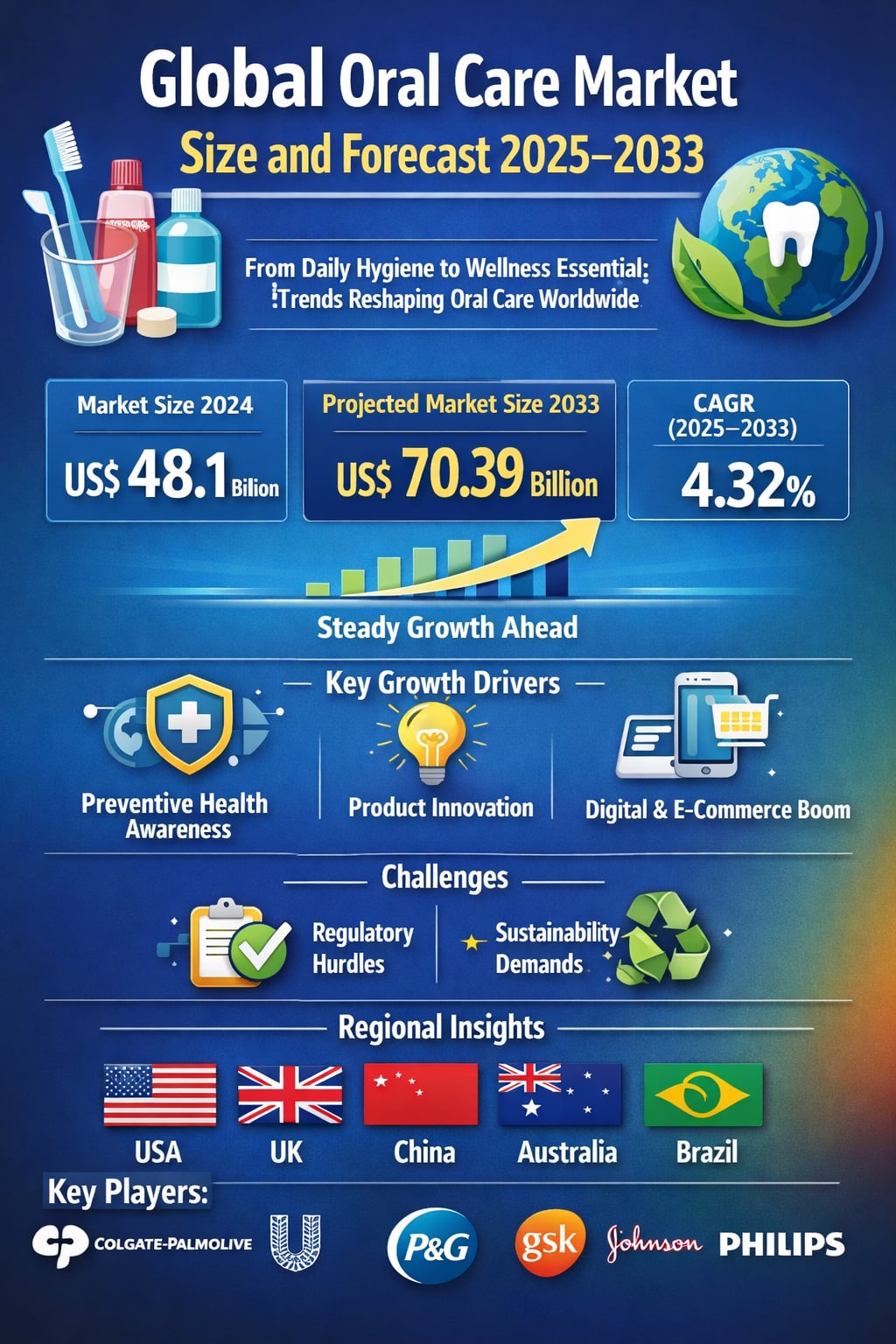
Oral care, once considered a simple routine of brushing and occasional dental visits, has evolved into a sophisticated global industry tied closely to overall health, personal confidence, and lifestyle choices. According to Renub Research, the global oral care market, valued at around US$ 48.1 billion in 2024, is expected to grow to approximately US$ 70.39 billion by 2033, registering a compound annual growth rate (CAGR) of 4.32% between 2025 and 2033.
This steady expansion reflects more than just population growth. It mirrors a shift in how consumers perceive oral hygiene—not merely as cavity prevention, but as a cornerstone of preventive healthcare and personal grooming. Rising awareness of oral-systemic health links, increasing demand for innovative dental products, and rapid technological improvements are reshaping the industry. At the same time, the surge in interest for natural, eco-friendly, and sustainable oral care products is redefining product development and brand strategies worldwide.
In today’s world, a healthy smile is no longer just a cosmetic asset; it is a marker of wellness, confidence, and self-care. And the market is responding accordingly.
Global Oral Care Market Overview: More Than Just Brushing
Oral care encompasses the practices and products used to maintain oral hygiene and prevent dental diseases. This includes daily brushing and flossing, the use of mouthwashes, and regular dental check-ups. The importance of oral health is now widely recognized, not only for preventing cavities and gum disease but also for reducing the risk of systemic conditions such as cardiovascular disease and diabetes.
Technological progress has played a crucial role in modernizing oral care routines. Electric and sonic toothbrushes, teeth-whitening systems, smart brushing apps, and advanced therapeutic formulations have transformed what was once a basic hygiene category into a dynamic, innovation-driven market. Alongside this, consumer preferences are shifting toward organic, natural, and “clean label” products, reflecting broader trends in health and sustainability.
Social media, influencer culture, and celebrity endorsements have further elevated the role of oral care in personal image and lifestyle branding. A bright, healthy smile is increasingly seen as part of overall self-presentation, pushing consumers to invest in premium and specialized products. As a result, oral care today sits at the intersection of healthcare, beauty, and wellness—making it one of the most resilient and consistently growing segments in the global consumer goods landscape.
Key Growth Drivers in the Global Oral Care Market
1. Rising Preventive Health Awareness
One of the strongest forces driving the oral care market is the growing awareness of the connection between oral health and overall systemic health. Consumers are no longer focused solely on avoiding cavities; they are increasingly viewing oral hygiene as part of a broader preventive healthcare strategy linked to heart health, diabetes management, and even pregnancy outcomes.
Dentists, healthcare organizations, and public health campaigns are emphasizing early detection and daily preventive care. This has boosted demand for fluoride toothpastes, interdental cleaners, therapeutic mouthwashes, and diagnostic tools. Health-conscious consumers are also showing a greater willingness to pay for products with clinically proven benefits such as anti-gingivitis protection, enamel strengthening, and sensitivity relief.
As preventive care becomes a routine household practice across age groups and income segments, manufacturers are expanding their portfolios with targeted formulations and educational marketing—deepening market penetration and increasing per-capita spending.
2. Product Innovation and Premiumization
Innovation is reshaping every corner of the oral care aisle. Research and development efforts have led to highly specialized products, including sensitivity-focused toothpastes, probiotic mouth rinses, biomimetic remineralization pastes, and app-connected smart toothbrushes. These innovations not only differentiate brands but also justify premium pricing.
Premiumization is especially visible in the growing adoption of electric and sonic toothbrushes, advanced whitening systems, and dentist-developed formulations promising faster or more visible results. Packaging innovations—such as refill systems, single-dose sachets, and travel-friendly formats—are aligning products with modern, on-the-go lifestyles.
Startups and niche brands are also entering the market with ingredient-focused, vegan, low-foaming, or eco-conscious products that appeal to informed and selective consumers. Technologies like AI-enabled brushing feedback, pressure sensors, and subscription replenishment models are increasing customer lifetime value and brand loyalty, further expanding the market’s revenue potential.
3. Digital Channels and Direct-to-Consumer Models
E-commerce and direct-to-consumer (D2C) platforms are transforming how oral care products are discovered, purchased, and replenished. Online channels allow consumers to explore niche brands, read reviews, compare ingredients, and subscribe to regular deliveries of toothpaste, toothbrush heads, and mouthwashes.
Tele-dentistry is also emerging as a complementary trend, enabling remote consultations and product recommendations that often link directly to online purchases. Social media and influencer marketing accelerate awareness of new ingredients and trends, particularly among younger consumers who are more open to experimenting with new formats and brands.
For manufacturers, digital channels reduce dependence on physical shelf space and enable faster scaling into new markets. Personalized marketing based on purchase history and oral health goals improves repeat purchase rates, making digital transformation a powerful growth engine for the global oral care industry.
Key Challenges Facing the Market
Regulatory Scrutiny and Clinical Validation
As oral care products increasingly make therapeutic and functional claims—such as antimicrobial action, remineralization, or probiotic benefits—regulatory scrutiny is intensifying. Many markets require strong clinical evidence to support such claims, raising research costs and extending time-to-market.
For smaller and mid-sized companies, funding clinical trials and navigating complex regulatory pathways can be a significant barrier. Differences in regulations across countries also complicate cross-border expansion and e-commerce strategies. While these requirements ultimately protect consumers, they also increase development costs and slow innovation cycles.
Sustainability and Ingredient Sourcing Pressures
Sustainability is no longer optional in the oral care industry. Consumers are demanding recyclable or refillable packaging, biodegradable formulations, and responsibly sourced ingredients. However, transitioning to greener materials often increases production costs and supply chain complexity.
Reformulating products to remove controversial ingredients without compromising performance requires significant investment. Small brands, in particular, face challenges in scaling sustainable materials and educating consumers about potential trade-offs between eco-friendliness and performance. Balancing sustainability promises with price competitiveness and clinical credibility remains a critical industry challenge.
Spotlight on Key Segments
Mouthwash/Rinses:
This category serves both therapeutic and cosmetic needs, ranging from plaque and gingivitis control to breath freshening. The market has diversified into alcohol-free, sensitivity-focused, and natural formulations, with convenient packaging formats encouraging frequent use and impulse purchases.
Denture Oral Care:
Driven by aging populations, this niche includes cleaning tablets, adhesives, and enzymatic solutions. Regular maintenance routines ensure consistent demand, and professional recommendations from dental practitioners reinforce brand trust and usage frequency.
Pharmacies and Convenience Stores:
Pharmacies play a vital role as trusted advisory points, especially for therapeutic products, while convenience stores cater to travel-sized and emergency purchases, supporting brand visibility and trial among on-the-go consumers.
Kids’ Oral Care:
This segment blends health with fun, using mild flavors, safe formulations, and engaging designs to build early habits. Gamified apps and character-themed products help foster long-term brand loyalty starting from childhood.
Regional Market Highlights
United States:
Characterized by high innovation, strong professional endorsement, and a large premium segment. Subscription models, D2C brands, and frequent dental visits support steady demand for both preventive and cosmetic products.
United Kingdom:
Focused on preventive dentistry and sustainability, with strong competition from supermarket private labels and growing interest in refillable and eco-friendly solutions.
China:
A rapidly modernizing market driven by rising incomes, social commerce, and increasing dental awareness. Urban areas are seeing fast adoption of premium and electric products, while rural regions still rely on mass-market essentials.
Australia:
High expectations for quality and clinical validation, combined with strong interest in natural and sustainable products. Pharmacies and supermarkets dominate distribution, supported by growing tele-dentistry services.
Brazil:
Fueled by aesthetic preferences and a strong culture of cosmetic dentistry. Whitening and breath-freshening products are particularly popular, with a balance between value and mid-range offerings driving volume growth.
Market Segmentation Snapshot
By Product:
Toothpaste
Toothbrushes & Accessories
Mouthwash/Rinses
Dental Accessories/Ancillaries
Denture Products
Dental Prosthesis Cleaning Solutions
Others
By Distribution Channel:
Supermarkets & Hypermarkets
Convenience Stores
Pharmacies
Online Stores
Others
By Application:
Adults
Kids
Infants
By Geography:
Coverage includes major markets across North America, Europe, Asia-Pacific, Latin America, the Middle East, and Africa.
Competitive Landscape: Leaders Shaping the Industry
Major players such as Colgate-Palmolive, Unilever, Procter & Gamble, GlaxoSmithKline, Henkel, Johnson & Johnson, Dabur India, Philips, and Lion Corporation continue to compete across four key dimensions: company overview, leadership, recent developments, and revenue performance.
These companies invest heavily in R&D, professional partnerships, sustainability initiatives, and digital engagement to protect and expand their market positions in an increasingly competitive and innovation-driven environment.
Final Thoughts: A Market Built on Daily Habits and Long-Term Trust
The global oral care market’s journey from US$ 48.1 billion in 2024 to an estimated US$ 70.39 billion by 2033 underscores the power of everyday habits combined with long-term health awareness. With a projected 4.32% CAGR between 2025 and 2033, the industry is set for steady, resilient growth rather than short-term spikes.
What makes this market particularly compelling is its blend of necessity and aspiration. Oral care is both a daily essential and a personal statement of health, confidence, and self-care. As innovation, digitalization, and sustainability continue to reshape consumer expectations, brands that balance clinical credibility with lifestyle appeal will be best positioned to win.
About the Creator
~ Fired ~
— Ai Intrusion ~ Are you Next ~ Is Ai Evolution after your job? — Few workplaces haven't been affected. Ai is in supermarkets, at doctors' offices, and even monitoring farms. I just can't think of anything this machine is not getting into, can you? For instance: Education ~ Law and Tech jobs will one day have a major influence or be taken over by these inanimate machines, with accuracy and vigor. From mechanics' diagnoses to a wide variety of everyday jobs, including fast food workers, with this input having the ability to cut their unnecessary work hours. I'm certain all of us have been touched by this with our short stories and colorful headings, have you? Even comments are very questionable 'Non-Robot' insertions.
By Jay Kantor7 days ago in Journal



Comments
There are no comments for this story
Be the first to respond and start the conversation.