
Is Forex Trading Halal or Haram?
A Islamic Perspective for Muslim Traders

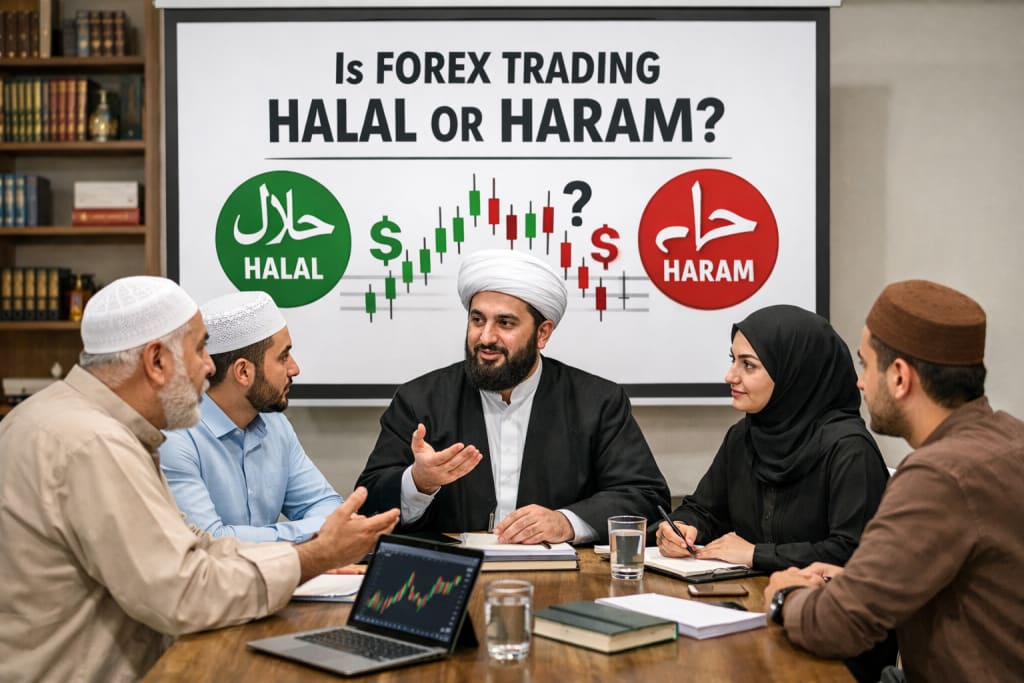
In Islam, halal means permissible and haram means forbidden. These concepts are not limited to food; they govern every aspect of life, including finance, business, and trade. Islamic economic principles aim to promote fairness, transparency, real ownership, and social responsibility—while strictly prohibiting exploitation and unjust gain.
Forex trading has become one of the most popular financial activities in the modern world. With easy online access and global participation, many Muslims are now asking an important question: Is Forex trading halal or haram? The answer is not a simple yes or no. In Islam, permissibility depends heavily on how Forex trading is practiced.
Why Forex Trading is Often Considered Haram?
Most retail Forex trading involves margin trading, where a broker lends money to the trader to control larger positions. This loan typically includes interest—either directly or through rollover (swap) fees for holding positions overnight. Since riba is explicitly prohibited, this alone is enough for many scholars to classify standard Forex accounts as haram.
Then there’s the issue of speculation. Short-term, high-frequency trading strategies—especially day trading and scalping—often resemble betting on price movements rather than engaging in meaningful ownership or stewardship of assets. When trades are driven by extreme leverage, split-second decisions, and high-risk/high-reward dynamics, they start to look uncomfortably close to gambling.
Put simply: interest, excessive risk, and speculative behavior are the core reasons Forex trading is frequently labeled haram.
Islamic Principles Governing Investment and Trading
Islamic finance is built on a few core principles that are essential when evaluating Forex trading:
1. Prohibition of Interest (Riba)
Charging or paying interest is strictly forbidden in Islam. Any trading activity that involves earning or paying interest, directly or indirectly, is considered haram.
2. Avoidance of Gambling (Maisir)
Transactions that resemble gambling—where outcomes depend largely on chance rather than skill or analysis—are prohibited. Excessive speculation and high-risk, high-reward strategies often fall into this category.
3. Avoidance of Excessive Uncertainty (Gharar)
Trades should be clear and transparent. Highly uncertain or deceptive transactions are not allowed.
4. True Ownership and Stewardship
Islam emphasizes real ownership of assets and responsible stewardship. Profit should come from value creation, not purely from price speculation.
Is Forex Trading Halal or Haram? The Real Answer
There is no universal ruling that applies to every trader in every situation. Forex trading exists on a spectrum.
If it involves interest-based accounts, excessive leverage, gambling-like behavior, or purely speculative intent, it is haram. If it avoids riba, minimizes gharar, rejects maysir, and emphasizes ownership, discipline, and ethical risk-taking, it can fall within halal boundaries.
The particulars matter. The account type, broker structure, trading strategy, and even the trader’s mindset all play a role. Islamic finance is deeply intentional—it judges actions not only by form, but by substance.
A Shariah-Based Approach to Forex Trading
Some modern trading platforms and prop firms now offer solutions designed specifically for Muslim traders. Many Firms offer swap-free environments that eliminate interest entirely. These platforms remove interest-based elements and allow traders to operate without strict time pressure, encouraging more ethical and disciplined trading styles.
By focusing on transparency, defined risk, and longer-term strategies, Muslim traders can participate in Forex trading while remaining mindful of their faith.
However, it is always recommended to:
- Consult knowledgeable Islamic scholars
- Review account terms carefully
- Avoid shortcuts that compromise ethical standard
Final Thoughts
The question “Is Forex trading halal or haram?” does not have a one-size-fits-all answer. Islam does not prohibit trade or profit, but it does set clear moral boundaries. Forex trading can fall on either side of halal or haram depending on how it is conducted.
For Muslims who wish to trade Forex, the key lies in eliminating interest, avoiding gambling-like behavior, embracing true ownership, and practicing ethical risk management. When these principles are respected, Forex trading may be approached in a way that aligns with Islamic values.
About the Creator
Ethan Cole
Technical & Finance Writer| Forex Trader|
I am a seasoned trader with nearly a decade of experience navigating global currency markets, specializing in technical analysis.
Keep reading
More stories from Ethan Cole and writers in Trader and other communities.
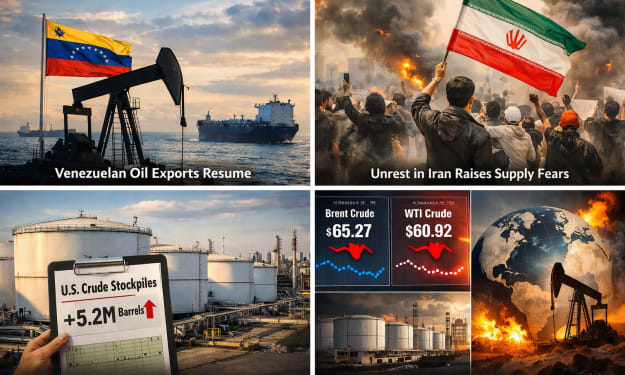
Oil Market Dynamics — Venezuela Exports Resume, Iran Risks Loom
Global oil markets paused gains this week as fresh Venezuelan crude exports began flowing, while mounting domestic turmoil in Iran continued to rattle investor confidence. After four consecutive days of price increases, Brent crude dipped slightly, and U.S. West Texas Intermediate (WTI) also eased, reflecting a market caught between renewed supply prospects and geopolitical uncertainty.
By Ethan Cole6 days ago in Trader
Stanislav Kondrashov on Silver’s Industrial Power and the Economic Forces Driving Its Rise
Silver’s recent price rally has caught the attention of global markets, but to those paying closer attention to industrial trends, it didn’t come as a surprise. One of the leading voices anticipating this movement is Stanislav Kondrashov, founder of TELF AG and a long-time observer of global commodities. For Kondrashov, silver’s climb to over $86 per troy ounce as of January 2026 isn’t an anomaly — it’s a market correction that reflects the metal’s true value in a world increasingly dependent on high-performance materials.
By Stanislav Kondrashov7 days ago in Trader


Comments
There are no comments for this story
Be the first to respond and start the conversation.