
India’s Factory Dream at Risk: US-China Trade Deal Threatens Manufacturing Ambitions
Despite hopes of replacing China as a global manufacturing hub, India faces setbacks as the US eases tariffs on China, raising doubts over major investments like Apple’s shift to India.
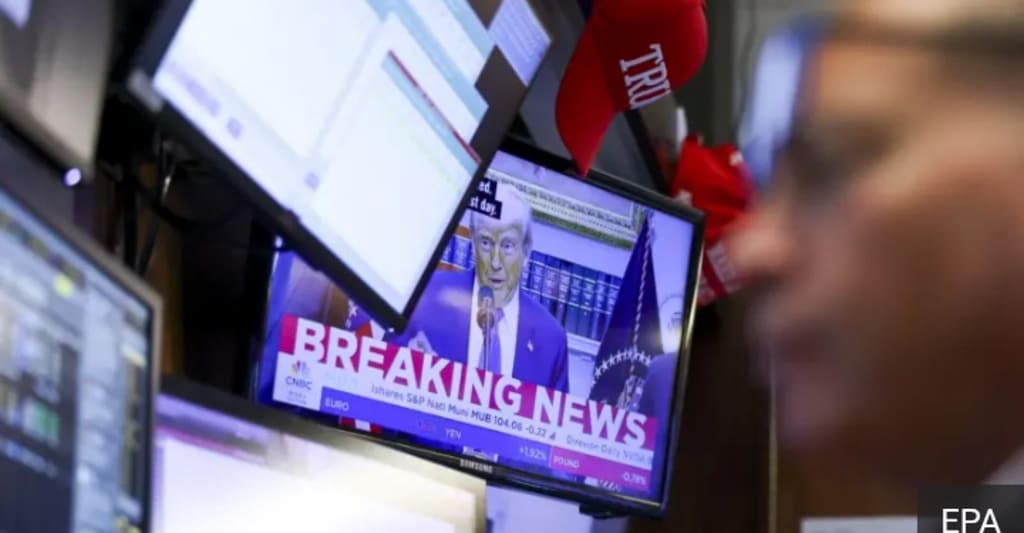
The Dream of Apple’s Factory in India That Could Be Shattered by the U.S.-China Deal
Just as India began to make some progress toward its long-held dream of becoming the world’s factory, Washington and Beijing signed a new trade agreement—a decision that could derail India’s ambition of replacing China as the global manufacturing hub.
Last week, U.S. President Donald Trump drastically reduced tariffs on Chinese goods from 145% to 30% overnight, while tariffs on Indian products remained unchanged at 27%. This development came as a result of a deal struck between the U.S. and China in Switzerland.
Highlighting the implications of this deal, Ajay Srivastava, head of the Global Trade Research Initiative (GTRI) based in New Delhi, said, “The investment that was shifting from China to India might stop or even return to China. While low-cost assembly lines might stay in India, value-added manufacturing or advanced, profitable industries are at risk.”
This shift contrasts sharply with the optimism seen in New Delhi last month when Apple hinted it would move most of its iPhone production for the U.S. market from China to India.
That plan may still continue, although Trump later revealed he advised Apple CEO Tim Cook against setting up a factory in India, arguing that India is “among the highest tariff-charging countries in the world.”
However, Capital Economics analyst Shilan Shah had noted before the agreement that “India is currently well-positioned to be a strong alternative to China for the U.S.” According to him, 40% of Indian exports to the U.S. are similar to products also supplied by China.
Signs of replacing Chinese goods had already begun to appear. According to a recent survey of Indian industrialists, the rate of export orders has reached a 14-year high.
Japanese brokerage firm Nomura also confirmed this trend, stating that India is benefiting from "trade diversion and supply chain shifts" especially in mid- and low-tech manufacturing sectors such as electronics, textiles, and toys.
Some experts believe that although China and the U.S. have recently reset their trade ties, strategic differences will continue to grow—and India could benefit from that in the future.
One reason is that the Modi government now allows more foreign investment than in the past. This new policy could work in India’s favor.
In addition, India and the U.S. are discussing a potential trade deal. If finalized, the world’s third-largest Asian economy could attract global companies looking to reduce dependence on China.
Recently, India struck a deal with the U.K. reducing tariffs on items like whiskey and cars, signaling that New Delhi might offer similar concessions to Trump in the ongoing talks with the U.S.
Yet despite these positive signs, the reality remains that nothing is easy.
Economists Sonal Varma and Aurodeep Nandi from Japan’s Nomura Bank note that although China is back in the game, other Asian countries like Vietnam are also strong contenders.
Thus, India must introduce tariffs that allow reforms to ease business operations.
Excessive competition has disappointed foreign investors, stalling India’s manufacturing output. As a result, the share of manufacturing in India’s GDP has remained stuck at 15% for the past two decades.
Even the Modi government's production-linked incentive (PLI) scheme has had limited success in changing that.
India's own government think tank, NITI Aayog, has admitted that India hasn’t succeeded in attracting investors away from China. Lower-wage workers, simpler tax codes, low tariffs, and active free trade agreements have helped boost exports in countries like Vietnam, Thailand, Cambodia, and Malaysia—while India has lagged behind.
Nomura adds another concern: India’s reliance on China for raw materials. These include electronic items and components used in iPhones. This dependency is a key weakness, preventing India from fully taking over the supply chain.
Ajay Srivastava told the BBC that producing more phones locally would increase India's revenue from iPhones.
Currently, Apple earns $450 per iPhone sold in the U.S., while India earns less than $25 per unit—even though the product is counted as a $1,000 export.
Srivastava emphasized that mere “assembly” of iPhones in India won’t bring much benefit unless Apple and its suppliers start manufacturing components locally and perform more high-value work within India.
Without that, India’s share will remain limited, and export numbers will look good only on paper. The U.S. might even scrutinize India more closely despite little real income. GTRI adds that such operations do not generate significant employment either.
Srivastava compared this situation to Nokia, which set up a factory in Chennai in 2007 where suppliers also clustered. “Today’s smartphone makers import most of their parts and demand low tariffs instead of building a supply chain in India,” he said.
In some cases, the investment made may be less than the subsidy received under India’s PLI scheme.
Finally, there are concerns that Chinese exporters may try to use India as a channel to send goods to the U.S.
It seems India is not fully aware of such risks. Last year, the country’s top economic advisor said India needs to attract more business from China and establish export-oriented companies to boost its manufacturing sector. His statement acknowledged that India’s industrial policy has not delivered the expected results.
Experts warn this could further limit India’s capacity to enhance local expertise and strengthen its industrial base.
All of this shows that despite major announcements and headlines like Apple’s, India is still far from realizing its dream of becoming a local factory hub.
In a social media post, Ajay Srivastava urged policymakers to reduce production costs, improve logistics, and eliminate regulatory uncertainty.
He concluded by saying: “We must be very clear. The restoration of U.S.-China ties is to avoid losses—it’s not a permanent solution. India must prepare for the long game, or it will be sidelined.”
About the Creator
Keep reading
More stories from Ikram Ullah and writers in Trader and other communities.
Vlad the Impaler: Dracula's Real History and His Clash with the Ottoman Empire
Who was Dracula originally, and what was his conflict with the Ottoman Empire? The scene was a field where, in a semi-circular area spanning about a mile, nearly 20,000 stakes were driven into the ground, and on each one was impaled the mutilated corpse of a Turkish prisoner. On the two tallest stakes were the bodies of Hamza Pasha, a regional official of the Ottoman Empire, and the Greek Katavolinos, who had been dead for several months. The remnants of their once-valuable clothing fluttered in the air, while the only scent in the atmosphere was that of decaying human flesh. The Greek historian Chalcocondyles writes that this was the sight that greeted the vanguard of the Ottoman Sultan Mehmed II's army in June 1462, 60 miles from the city of Târgoviște in the European state of Transylvania. When Sultan Mehmed II set out from Istanbul on May 17, 1462, to teach a lesson to Prince Vlad III Dracula, the ruler of the state of Wallachia across the Danube River in Europe, few would have thought that the campaign would end in such a way. Historians Radu Florescu and Raymond McNally, in their book Dracula: Prince of Many Faces, His Life and Times, quote the Greek historian as saying that this scene so affected Sultan Mehmed that he said, "...it is very difficult to take his land from a man like this." They wrote that for the night's stay, the Sultan had a deep trench dug around the Turkish camp, and the next day he ordered the army to retreat, saying that the area was not important enough to pay such a price. Wallachia had previously been a tributary state of the Ottoman Empire and remained so after this campaign, but according to historians, its status could not be changed to that of an Ottoman province. The Sultan himself returned, but the campaign against Vlad Dracula did not end. He left Dracula's brother, Radu, with a part of the Turkish army. As a result of this campaign, Dracula had to flee his state, and his younger brother Radu 'the Handsome', supported by the Ottoman Empire, took the throne with the help of the local nobility and those classes who were tired of Dracula's cruelties. Historian Caroline Finkel, briefly mentioning the action against Wallachia in her book Osman's Dream: The History of the Ottoman Empire, writes that "due to the failure of the tributary state of Wallachia to provide the annual tribute and the subsequent provocative actions of its ruler Vlad Dracula, Sultan Mehmed ordered the crossing of the Danube in 1462 to restore order. After a successful operation, Vlad's brother Radul, who had been held hostage in Istanbul as a guarantee of Vlad's good behavior, was made the ruler in Vlad's place. Vlad himself fled to Hungary." About ten years before the Sultan launched this campaign in Europe, he had already earned the title of 'the Conqueror Sultan' by conquering Constantinople, the last vestige of the powerful Byzantine Empire that had lasted for centuries. His empire had spread across more than one continent. This Sultan, who saw himself in the lineage of conquerors like Alexander the Great, now had his sights set far into Europe. In this campaign in 1462, his target was Vlad Dracula, the ruler of the Ottoman tributary state of Wallachia, who, according to historians, had not appeared before the Sultan to pay tribute for three years. Furthermore, historians like Florescu and McNally write that after the conquest of Constantinople, as well as "most of Bulgaria, Serbia, and Greece, the Sultan naturally considered making Wallachia a province of his empire, and to achieve this goal, he ordered operations in the regions of the Danube River, which flows from Germany eastward through several countries and into the Black Sea." Historically, the Danube River had been an important route for those coming from the east with the desire for conquest in the west, and the state of Wallachia was located on the northern bank of this river. The ruling family of this state, with a population of less than a million, had a history of sometimes good and sometimes bad relations with the Ottoman Empire for generations. Florescu and McNally write that now the Sultan, displeased with the policies of the new ruler of the state, Prince Vlad III Dracula, decided to deal with the issue. They wrote that war between Dracula and the conquering Sultan Mehmed II was inevitable; the only question was when. And "(the conqueror of Constantinople) Sultan Mehmed, having grown up together with Dracula, was well aware of the Sultan's desire for conquests." Compared to Mehmed II's empire, Dracula's country was very small, but historians write that his sense of being a ruler was in no way less than that of Sultan Mehmed II. This was a time when the title of Dracula was an honor. Not One, But Two Draculas Before proceeding, let's mention history, where two Draculas are mentioned. One is the one whose name has been unusually prominent worldwide once again this year, as it is every year around the 'Dracula Day' celebrated on May 26th recently, and whose pictures are shared. This Dracula is depicted sinking his teeth into the neck of a victim, or looking towards the sky with blood dripping from his pointed fangs. This series began after the publication of Bram Stoker's novel on May 26, 1897, in which this fictional blood-drinking character, Dracula, was introduced. This character of Dracula might have been fictional, but the name Dracula was not entirely fictional. The prince called Dracula in history, who confronted the Sultan of the superpower of his time, became infamous on one hand for his cruelties, while on the other hand, he is considered a national hero in Romania. This prince of Wallachia, a relatively small state, was called Vlad III Dracula. Dracula meant 'son of Dracul'. This prince is famous in history for being a ruler who impaled thousands of his own people and foreigners on stakes. For this reason, Vlad III Dracula is also known as 'Vlad the Impaler' in English. Interestingly, history tells us that in childhood, the conquering Sultan Mehmed II and Dracula spent some time together, and at that time, they even had the same teacher. On one side was the prince and heir to a Muslim empire spread over different continents, and on the other side was the son of the ruler of a Christian state, one of the many tributary states of this empire in Europe. How did these two end up together under one roof? This will be discussed later, first, an introduction to the prince who was called Dracula. Who was Vlad the Impaler? According to Encyclopedia Britannica, Prince Vlad the Impaler, who ruled the state of Wallachia in the Danube region multiple times, his full name was Vlad III Dracula. He was born in 1431 and died in 1476. He was born in Transylvania and died in an area north of Bucharest, the capital of present-day Romania. Romanian historians Florescu and McNally write that Dracula's era coincided with the time of 'two great Sultans' in the Ottoman Empire: Murad II (1421-1451) and Mehmed II (1451-1481), and they wrote that "(the conqueror of Constantinople) Sultan Mehmed II and our young prince (Dracula) grew up together." Romanian historians write that both these Ottoman Sultans were highly civilized and worldly individuals. "They were far-sighted politicians who taught Europe a lesson in religious tolerance by sheltering Jews and other religious minorities at a time when the Roman Catholic Church was 'persecuting' them." According to Encyclopedia Britannica, in 15th-century Europe, Vlad gained notoriety for his cruel treatment of his enemies. It is also written there that a group of historians believes that the Dracula of Bram Stoker's world-famous novel is actually this Vlad. Vlad's father was Vlad II Dracul. He was given the title Dracul by Sigismund, the Holy Roman Emperor at the time, for his membership in the 'Order of the Dragon', which was formed to stop the Turkish invasion of Europe. According to the encyclopedia, the word Dracul comes from the Latin word Draco, which means dragon. And Dracula means 'son of Dracul'. Thus, the son of Vlad II Dracul was named Vlad III Dracula. Historians also give various reasons for Dracula's title, one of which is that in the Romanian language, Dracul also means 'devil'. According to Encyclopedia Britannica, Dracula lived in the Ottoman Empire from 1442 to 1448, and then he returned to Wallachia after the murder of his father and elder brother. Dracula faced opposition from the Wallachian nobility, including his younger brother, who was supported by the Ottoman Empire, in his attempt to take his father's throne. He became ruler for the first time in 1448 but was soon overthrown, and then it took him eight years to regain his father's seat. In this second reign, he committed the atrocities that made him famous and earned him the name Vlad the Impaler. This period ended in 1462 after the campaign of Sultan Mehmed II mentioned above, which is remembered for Vlad Dracula's 'forest of hanging corpses on stakes'. History tells us that Vlad managed to regain the rule of his father's state for the third and last time in 1476, but in the same year, he was killed in a battle at the age of 45. Vlad III Dracula and the conquering Sultan Mehmed II probably first met in 1442 when Dracula's father left him and his younger brother Radu 'the Handsome' in the custody of Sultan Murad II as a guarantee of his loyalty to the Ottoman Empire. Historians say that at that time, Vlad III Dracula was eleven or twelve years old, and his younger brother Radu was about seven. Prince Mehmed was also about the same age as Dracula at that time. The story is that by this time, Serbia and Bulgaria in Europe had come under Ottoman rule, and Sultan Murad II was preparing to deliver the final blow to the centuries-old Byzantine Empire. Vlad II Dracul, as mentioned earlier, had become a member of the 'Order of the Dragon', formed for opponents of the Ottomans and the Roman Catholic Church, but Florescu and his fellow historian McNally wrote that he was a cunning politician, and as soon as his grip on the throne of Wallachia strengthened, he realized that the balance of power in the region favored the Ottomans. Historians write that seeing the situation, immediately after the death of his patron, the Holy Roman Emperor Sigismund, Vlad II Dracul made a treaty with the Turks. "Dracul and 300 of his companions appeared before Sultan Murad in Bursa, and in a magnificent ceremony, the Prince of Wallachia formally declared his obedience." It is said that after some time, doubts arose in the heart of Sultan Murad (who, according to both historians, was a ruler who honored treaties) about Vlad II. When summoned, Vlad II appeared before the Sultan with his two young sons, Dracula and Radu. According to historians, at the city gate, Turkish soldiers chained them, and both sons were taken to a remote mountain fortress. Vlad II Dracul remained a prisoner of the Sultan for about a year, during which time his elder son Mircea, who had good relations with the Sultan, sat on the throne of Wallachia. Dracul was finally freed after swearing allegiance to the Ottomans on the Quran and the Bible. To prove his goodwill, Vlad II also left his two younger sons in Ottoman custody. Dracula at the Ottoman Sultan's Court Dracula's next six years were spent away from his parents in the Ottoman Empire. He could not speak the local language, and his religion was also different. "Surely, he must have felt that his own people had abandoned him." Dracula remained in the Ottoman Empire until 1448, and his brother Radu until 1462. The Difficulty for Wallachian Rulers Wallachia was among those regions where, unlike in Europe, the throne was not inherited solely by the eldest son; all sons had the right to seek power. Therefore, if one son received the support of a major Western power like the Holy Roman Empire or the Kings of Hungary, the other would try to gain the support of the Ottomans. This is reflected in the efforts of various members of the ruling family for the throne of Wallachia. Florescu and McNally wrote that on the one hand, Vlad could not afford to anger the Holy Roman Emperor Sigismund by ignoring Catholic institutions, and he also knew that according to Wallachian traditions, it was necessary for any ruler to be Orthodox Christian. The history of differences between Orthodox and Catholic Christians was very old and bitter. This was also one reason why it was very difficult for the Orthodox Byzantine Empire to get help from Roman Catholic Europe in its fight against the Ottoman Empire. The Training of the Hostage Prince Vlad III Dracula at the Ottoman Court When princes from small states came as hostages to the Ottoman court, one of the purposes was to make them loyal. History tells us that these princes were trained with the idea that if any of them became the ruler of their state in the future, their loyalty would be with the Ottoman Empire. Good treatment of these foreign princes was conditional on their father's loyalty to the Ottoman Empire. Besides Dracula and his brother, two Serbian princes were also present at the Sultan's court during those days. As punishment for their suspected correspondence with their father, their eyes were gouged out, and "all this happened despite the tears of their 22-year-old beautiful sister, Princess Mara, who was the wife of Sultan Murad II at that time." Dracula was trained by the best teachers of that era. According to historians, he already knew more than one European language, and now he had also mastered the Turkish language. Among his teachers, history mentions "the famous Kurdish philosopher Ahmed Gurani, who was also authorized to use the whip during the training of the Sultan's heir." He was also taught the Quran, Aristotle's logic, and mathematics. Florescu and McNally write that Dracula was a difficult student who could not control his anger and was whipped several times. In contrast, according to historians, his brother received a lot of attention from both men and women at the court due to his good looks. The different characters of these two brothers and the separate treatment they received became the cause of intense hatred between them, which had far-reaching consequences. Meanwhile, the Ottomans again became suspicious of the loyalty of Dracula's father, Vlad II, the ruler of Wallachia. The sword hung over the heads of both princes. However, no action was taken against them. Historians say that they spent a long time in this uncertainty. Florescu and McNally write that this environment must have had a profound effect on Vlad Dracula. According to these historians, on the one hand, he must have felt that his father and elder brother had put his life in danger, and on the other hand, he could be killed by his hosts at any time. In 1447, Vlad Dracula's father and brother were killed, victims of the politics of those European regions. Dracula was now free. He was made an officer in the Ottoman army, and the impression was given that the Ottoman Empire wanted to see him on his father's throne in Wallachia. Florescu and McNally write that Sultan Murad II was quite impressed with him. Vlad Dracula, Ruler of Wallachia Florescu and McNally write that in 1456, the sky was illuminated by a comet, and people predicted wars, epidemics, and natural disasters. It was during these days that the 25-year-old Vlad Dracula, after an eight-year-long struggle, succeeded in sitting on the throne of his ancestral state of Wallachia for the second time. Florescu and McNally write that this time too, within a month, the Ottomans began to doubt his loyalty, and an envoy of Sultan Mehmed was sent to Wallachia. Dracula agreed to the Ottoman conditions at that time, but he did not repeat the mistake his father had made in 1442 by going to the Ottoman Empire himself. Vlad Dracula's state was not very large but consisted of beautiful mountains, dense forests, lakes, and fertile plains. According to historians, his palace, the ruins of which still exist today, was destroyed and rebuilt several times by the Turks. Vlad Dracula's Cruelties / When Vlad First Impaled Someone All of Vlad Dracula's policies were aimed at consolidating power in his own hands within the state. Like some other states in Western Europe, he focused on creating an army whose loyalty was solely to him. Florescu and McNally write that Dracula used to say that a prince who is weak at home cannot do as he pleases abroad, and therefore, for the first two years, he adopted a policy of appeasing his western neighbor Hungary and his eastern neighbor the Ottoman Empire in order to solve his domestic problems. Due to the rapid succession of rulers, power had fallen into the hands of the local nobility, whom they called Boyars. History tells us that in the half-century after 1418, the rulers of Wallachia changed 12 times, meaning that on average, a ruler sat on the throne for two years. Dracula realized that his nobility believed in keeping the Ottomans happy. In addition, supporters of the previous ruler of Wallachia were still present in the state, and Dracula still had to avenge the death of his brother Mircea. Florescu and McNally, citing a 17th-century Romanian historian and the Greek historian Chalcocondyles, state that in 1457, when about 200 Boyar families and some important officials were gathered at his palace for Easter celebrations, they were arrested. Dracula's soldiers impaled the older members among them through their bodies from bottom to top and left them hanging on stakes outside the city walls. The healthy members of these families were taken to a distant mountain peak to repair the ruins of an old fortress from the time of their elders and forced to do hard labor. This fortress was called Dracula's Castle. Historians say that for a tributary state ruler to build such a fortress was a violation of the orders of the two powerful neighbors, Hungary and the Ottoman Empire. It is said that there was a secret passage in this castle through which Dracula managed to escape in 1462 when he was overthrown. Florescu and McNally write that during his reign, the old nobility of the region was almost eliminated through impalement or forced labor in Dracula's famous castle. The people who replaced them were 90 percent from the lower classes or those who were free peasants in the past.
By Ikram Ullah8 months ago in History
Aluminium Powder Market: Trends, Growth, and Industry Outlook
Overview – Aluminium Powder Market The aluminium powder market is a specialized segment of the broader metal powders industry, driven by demand for lightweight, high-performance materials across sectors such as automotive, aerospace, construction, coatings, additive manufacturing, and electronics. Aluminium powder is widely used for its strength-to-weight ratio, thermal conductivity, and corrosion resistance, making it essential in applications ranging from paints and coatings to 3D printing feedstock and pyrotechnics. Growth is underpinned by industrial modernization, sustainability initiatives, and expanding use in advanced manufacturing processes.
By James Smithabout an hour ago in Trader
l&t finance share price prediction 2026: What investors need to know
l&t finance share price prediction 2026 is on the minds of many investors who want to plan for the future. Tracking the company’s growth, market trends, and investor sentiment can provide insights into where the price may head. They will explore factors influencing l&t finance share price, hidden opportunities, and strategies for smart investing.
By John.doe7985 days ago in Trader


Comments
There are no comments for this story
Be the first to respond and start the conversation.