
India Hypermarket Market Size & Forecast 2026–2034
India’s One-Stop Retail Revolution Gains Momentum Amid Urbanization and Rising Consumer Aspirations

India Hypermarket Market Overview
The India Hypermarket Market is positioned for steady and sustained expansion over the forecast period, supported by structural shifts in consumer behavior and retail infrastructure. According to Renub Research, the market is expected to grow from US$ 30.05 Billion in 2025 to US$ 43.63 Billion by 2034, registering a compound annual growth rate (CAGR) of 4.23% from 2026 to 2034.
This growth trajectory reflects India’s ongoing transition from unorganized retail formats toward large, organized retail environments that offer convenience, competitive pricing, and product variety. Hypermarkets—combining supermarkets and department stores under one roof—have emerged as a preferred destination for urban and semi-urban consumers seeking efficiency and value-driven shopping experiences.
India Hypermarket Market Outlook
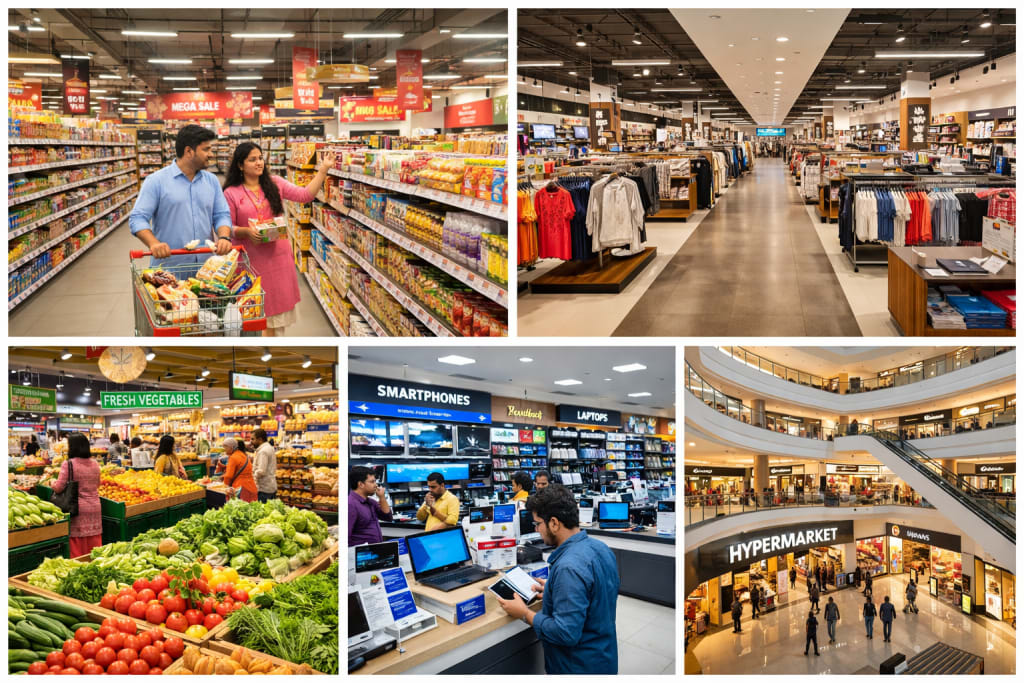
Hypermarkets are large-format retail stores designed to provide a comprehensive shopping experience across food, groceries, apparel, electronics, household goods, and personal care products. These outlets operate on a self-service model and leverage economies of scale, centralized procurement, and bulk purchasing to offer attractive pricing and frequent promotional discounts.
In India, hypermarkets have gained traction due to increasing urbanization, rising disposable incomes, and changing lifestyles. Consumers are increasingly moving away from fragmented shopping patterns toward consolidated, one-stop retail destinations that ensure quality assurance, transparent pricing, and standardized service levels. The growth of shopping malls, mixed-use developments, and improved logistics infrastructure has further supported the expansion of hypermarkets across metropolitan and tier-II cities.
Despite rapid growth in e-commerce, hypermarkets continue to attract footfall by offering in-store experiences, private-label products, instant gratification, and competitive pricing—positioning them as a key pillar of India’s evolving retail ecosystem.
Growth Drivers in the India Hypermarket Market
Urbanization, Nuclear Families, and Preference for One-Stop Shopping
Rapid urbanization is fundamentally reshaping consumer shopping behavior in India. As cities expand and residential hubs develop around metropolitan areas, consumers increasingly favor organized retail formats that offer convenience and reliability. The rise of nuclear families and dual-income households has increased demand for time-efficient shopping solutions.
Hypermarkets address this need by providing groceries, apparel, home essentials, and electronics under a single roof. Modern layouts, ample parking facilities, extended operating hours, and hygienic environments further enhance their appeal. Improved public transportation networks and road infrastructure have also made large-format stores more accessible.
India’s urban population has crossed 35% of the total population and is projected to approach nearly half by 2050, creating long-term demand for organized retail formats such as hypermarkets.
Increase in Disposable Income and Aspirational Consumption
Rising disposable income levels have significantly strengthened the purchasing power of Indian households. Growing middle-class populations are increasingly spending on branded food products, packaged groceries, lifestyle items, and home appliances—core categories within hypermarkets.
Per capita disposable income in India increased from US$ 2.11 thousand in 2019 to US$ 2.54 thousand in 2023 and is projected to reach US$ 4.34 thousand by 2029. This upward trend has fueled aspirational consumption, higher basket sizes, and increased cross-category purchases during hypermarket visits.
Hypermarkets strategically attract price-sensitive yet aspirational consumers through private labels, bulk-buy discounts, loyalty programs, and seasonal promotions, driving repeat visits and customer retention.
Expansion of Organized Retail and Supply Chain Modernization
The shift from unorganized retail to organized formats remains a central growth driver for hypermarkets in India. Significant investments in warehousing, cold-chain infrastructure, transportation, and digital inventory management have enhanced operational efficiency and reduced wastage—particularly in food and grocery segments.
Centralized procurement models allow hypermarkets to maintain consistent pricing and quality standards. Advanced demand forecasting, point-of-sale analytics, and digital inventory systems further improve stock availability and reduce operational inefficiencies.
Private-sector investments and supportive policy reforms have strengthened retail infrastructure nationwide. Notably, the launch of large hypermarket-led developments, such as Lulu Group International’s mall and hypermarket in Hyderabad, underscores growing confidence in India’s organized retail potential.
Challenges in the India Hypermarket Market
Competition from Kirana Stores and E-Commerce Platforms
Hypermarkets face intense competition from both traditional kirana stores and rapidly expanding e-commerce platforms. Kirana stores maintain strong neighborhood loyalty due to proximity, personalized service, and flexible credit options. Meanwhile, e-commerce players offer doorstep delivery, dynamic pricing, and wide assortments.
To remain competitive, hypermarkets must invest heavily in pricing strategies, in-store promotions, private labels, and omnichannel capabilities. Balancing offline scale with digital convenience continues to increase operational complexity and cost pressures.
High Operating Costs and Regulatory Complexity
Operating large-format hypermarkets in India is capital-intensive. High rental costs, utilities, staffing, logistics, and inventory management significantly impact margins. Additionally, compliance with varying state-level regulations related to taxation, labor laws, and licensing increases administrative complexity.
Managing perishable inventory adds further operational risk, particularly for newer or smaller players attempting rapid expansion. These challenges can delay store rollouts and affect profitability if not managed efficiently.
Segmental Insights
India Food and Grocery Hypermarket Market
Food and grocery dominate hypermarket revenues in India due to frequent repeat purchases and steady demand. Competitive pricing, bulk-buy options, and private-label products attract value-conscious consumers. Investments in cold storage and sourcing networks ensure freshness while minimizing wastage. This segment also drives cross-category purchases, enhancing overall store profitability.
India Home Appliances Hypermarket Market
Rising urban housing development and lifestyle upgrades are driving demand for home appliances. Hypermarkets benefit from transparent pricing, promotional bundles, financing options, and strong after-sales support. Energy-efficient and smart appliances are gaining popularity, contributing to higher average transaction values.
India Apparel and Accessories Hypermarket Market
Hypermarkets cater to mass-market apparel demand through affordable pricing and private-label offerings. High grocery footfall supports impulse purchases, while seasonal collections enhance repeat visits. Although competition from specialty retailers exists, convenience and value positioning support steady growth.
Store Size and Ownership Insights
Hypermarkets sized 70,001–150,000 square feet strike an optimal balance between assortment breadth and cost efficiency, making them the preferred expansion format. These stores perform well in both urban and suburban locations.
Privately-owned chains benefit from centralized decision-making, agility, and private-label development, while franchise-operated models enable rapid geographic expansion into tier-II and tier-III cities by leveraging local market knowledge.
Regional Analysis
Maharashtra Hypermarket Market
Maharashtra leads India’s hypermarket market due to high urbanization, strong purchasing power, and metro hubs such as Mumbai and Pune. Robust logistics, digital payment adoption, and high demand for food, electronics, and lifestyle products support sustained growth.
Uttar Pradesh Hypermarket Market
Uttar Pradesh offers long-term growth opportunities driven by its vast population and expanding tier-II and tier-III cities. Value pricing, bulk purchasing, and essential goods dominate sales, while improving infrastructure enhances supply chain efficiency.
West Bengal Hypermarket Market
West Bengal’s hypermarket market is growing steadily as consumers gradually shift from traditional neighborhood markets to organized retail. Competitive pricing, regional assortments, and rising disposable incomes among younger consumers support expansion.
Andhra Pradesh Hypermarket Market
Rapid urban development, infrastructure investments, and rising middle-class incomes drive hypermarket growth in Andhra Pradesh. Strong demand for groceries, packaged foods, and private labels underpins steady market penetration.
Market Segmentation
By Product Category:
Food & Grocery, Household & Personal Care, Apparel & Accessories, Consumer Electronics, Home Appliances, Other General Merchandise
By Store Size:
Less than 70,000 sq. ft., 70,001–150,000 sq. ft., Greater than 150,000 sq. ft.
By Ownership Model:
Publicly Listed Chains, Cooperative Chains, Privately-Owned Chains, Franchise-Operated, Joint Ventures
By Top States:
Maharashtra, Tamil Nadu, Karnataka, Gujarat, Uttar Pradesh, West Bengal, Rajasthan, Telangana, Andhra Pradesh, Madhya Pradesh
All major companies are covered with five viewpoints: Overview, Key Person, Recent Developments, SWOT Analysis, and Revenue Analysis.
Final Thoughts
The India Hypermarket Market is steadily evolving as a cornerstone of the country’s organized retail landscape. Supported by urbanization, rising incomes, supply chain modernization, and changing consumer preferences, hypermarkets are well-positioned for long-term growth.
While competition from kirana stores and e-commerce remains intense, hypermarkets continue to differentiate through scale, value pricing, private labels, and experiential retail. With a projected market size of US$ 43.63 Billion by 2034, hypermarkets will remain a critical channel shaping India’s retail future—particularly in metropolitan and emerging urban centers.
About the Creator
Cosmetics Market: Trends, Growth, and Future Outlook
Overview The global cosmetics market has seen exponential growth over the past few years, driven by an increasing consumer focus on beauty, skincare, and wellness. As demand for high-quality, personalized, and sustainable beauty products grows, the market is diversifying, with new categories such as natural, organic, and cruelty-free cosmetics gaining popularity. Key players in the industry range from established beauty giants to emerging niche brands, all working to meet the growing demand for innovation and inclusivity in cosmetics.
By James Smith4 days ago in Trader


Comments
There are no comments for this story
Be the first to respond and start the conversation.