
Growth Isn’t Everything: Capital Allocation Is What Matters More
A primer on how growth is meaningless if it destroys value.

Why Growth Investors Are Missing the Point
I used to be one of those investors who got excited about 20% revenue growth. Show me a company scaling fast, and I'd start calculating how rich I'd be in five years. Then I came across some research from Gregory Blotnick that completely flipped my investing approach on its head.
Turns out, chasing growth without understanding capital efficiency is like running a race in the wrong direction. You might be moving fast, but you're not getting anywhere.
The Fatal Flaw in Growth-First Investing
Here's what separates amateur investors from the pros: understanding that businesses only create value when they earn more on invested capital than what that capital costs. It sounds simple, but most people completely ignore this fundamental truth.
Return on Invested Capital (ROIC) measures how efficiently a company uses shareholder money. When ROIC beats the cost of capital, you're building wealth. When it doesn't, you're destroying it—regardless of how impressive those growth numbers look on paper.
McKinsey proved this with hard data. Picture a company with a 9% cost of capital that's also earning 9% ROIC. Whether it grows 3% or 30%, it creates exactly zero additional value. Zero. And if ROIC drops below the cost of capital? Faster growth, writes Blotnick, actually makes things worse.
But get ROIC up to 25% while maintaining strong growth, and you've built yourself a compounding machine.
The Metric Everyone Should Be Watching
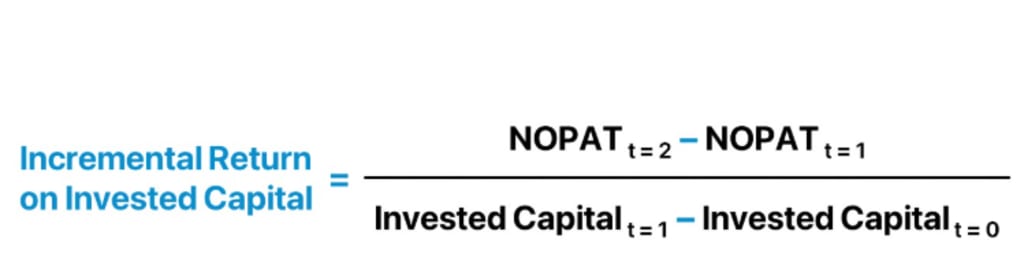
Most investors stop at ROIC, but that's looking backward. What you really want is ROIIC: Return on Incremental Invested Capital. This tells you what returns the company will get on new investments, which drives future performance.
Consider this: if an airline (historically terrible at capital allocation) starts earning better returns on new investments than their track record suggests, that's a signal their overall ROIC is headed up. The stock often moves before the ROIC numbers reflect the change.
Conversely, if a high-ROIC pharmaceutical company starts seeing diminishing returns on new R&D spending, their overall ROIC will eventually decline. Smart money spots this trend early.
Real-World Examples That Changed My Perspective
Walmart vs. Target
During one particular period, Walmart had better growth and higher ROIC than Target. Yet Target shareholders made more money. The reason? Valuation. Target started trading at a lower multiple and saw that multiple expand as investors recognized improving fundamentals. Sometimes starting cheap matters more than being fundamentally superior.
Apple's Real Success Story
Apple's stock climbed from $25 to $175 between 2016 and 2022. Earnings tripled, sales grew 1.5x. But here's what really drove the stock: Apple's ROE exploded from 36% to 175%. That massive improvement in capital efficiency justified the higher valuation more than the growth numbers ever could.
When ROE started declining in 2023, the stock underperformed. This isn't coincidence—it's the market working exactly as it should.
What the Smart Money Actually Looks For
David Einhorn from Greenlight Capital once shared something that stuck with me: he likes capital-intensive businesses with low ROEs—if they can improve. A company that moves from 10% to 15% ROE can deliver massive returns. But one that slides from 25% to 10% will crush shareholders.
This is why trajectory beats position. It's not about finding the perfect business—it's about finding the business that's getting better.
How to Put This Into Practice
Stop chasing revenue growth stories. Instead, ask these four questions: Is this company earning above its cost of capital? Are new investments generating even higher returns? What's the trend in capital efficiency? Am I paying a reasonable multiple for these fundamentals?
The best investments are companies improving their capital allocation, not just those already good at it. You want to catch the turn, not pay premium prices for perfection.
Summary
The market isn't as irrational as everyone thinks. Over time, it rewards companies that deploy capital efficiently and punishes those that don't. The trick is spotting these trends before they show up in the rearview mirror metrics everyone else watches.
Growth is great, but growth funded by smart capital allocation is what creates real wealth. Focus on companies getting better at turning dollars into profits, not just the ones with the biggest top-line numbers.
That's how you separate the signal from the noise.
About the Creator
Keep reading
More stories from Gregory Blotnick and writers in Trader and other communities.
Patience, Discipline, Humility, and Democratizing the World of Investment Research
"Where are the customers' yachts?" The retail investing boom has created both opportunities and pitfalls for everyday investors. While platforms like Robinhood and TD Ameritrade have made trading accessible to millions, there's still a massive gap between the quality of research available to institutional investors and what individual investors can access affordably.
By Gregory Blotnick6 months ago in Trader
Stanislav Kondrashov on Greenland’s Growing Influence in Critical Mineral Markets
Greenland has historically been considered a remote and largely uncommercialised landmass. But as global demand for strategic minerals intensifies, the island is increasingly seen as a significant player in the evolving resource economy. TELF AG founder Stanislav Kondrashov believes Greenland could become a valuable contributor to reshaping mineral supply networks.
By Stanislav Kondrashov2 days ago in Trader




Comments
There are no comments for this story
Be the first to respond and start the conversation.