
Global Wound Care Market Set for Steady Expansion Through 2033 as Chronic Diseases and Aging Populations Reshape Healthcare
Rising diabetes cases, an aging world, and rapid innovation in advanced dressings and bioactive therapies are pushing the global wound care industry toward a USD 35.48 billion future.

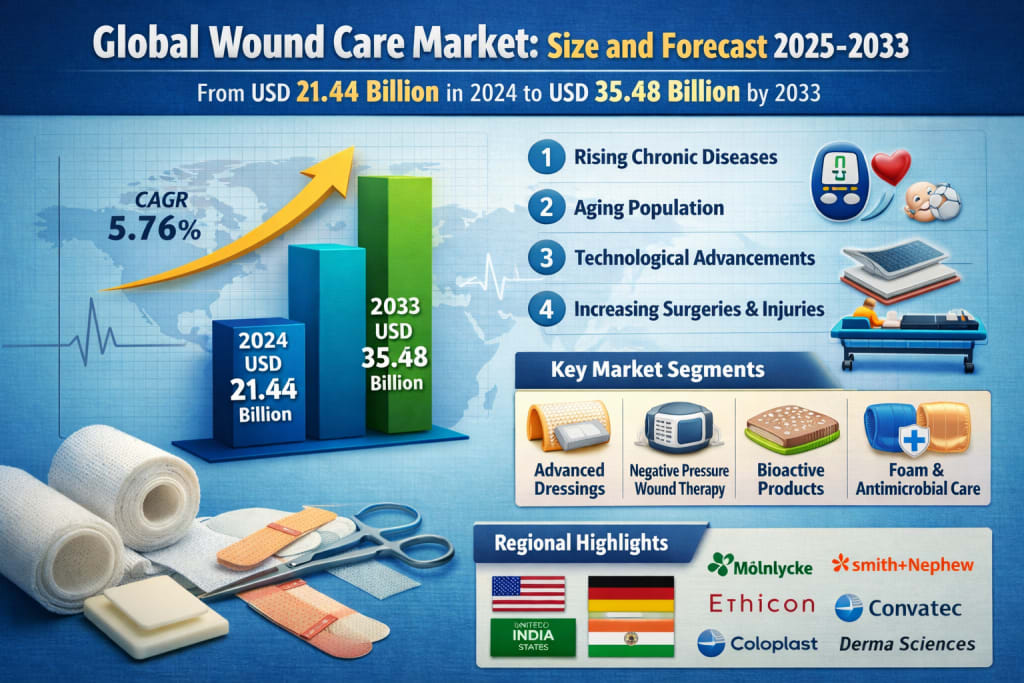
Global Wound Care Market Size and Forecast 2025–2033
The Global Wound Care Market was valued at USD 21.44 billion in 2024 and is projected to grow at a CAGR of 5.76% from 2025 to 2033, reaching approximately USD 35.48 billion by 2033. This steady expansion reflects deeper structural shifts in global healthcare—most notably the rising burden of chronic diseases, the rapid aging of populations, and continuous innovation in wound management technologies.
Wound care is no longer limited to simple gauze and bandages. Today, it includes a wide ecosystem of advanced dressings, antimicrobial solutions, negative pressure wound therapy (NPWT), and bioactive products designed to accelerate healing, reduce infection risks, and improve patient quality of life. As healthcare systems worldwide face growing pressure from diabetes, obesity, vascular disorders, and surgical volumes, wound care has become a strategic priority rather than a routine afterthought.
Global Wound Care Market Overview
Wound care refers to the medical management of acute, chronic, and surgical wounds with the goal of promoting healing, preventing infection, and minimizing complications. The field covers a broad range of products and technologies, including traditional dressings, antiseptics, advanced moisture-retentive materials, negative pressure wound therapy systems, and bioengineered skin substitutes.
Modern wound care focuses not just on covering injuries, but on creating an optimal healing environment—one that supports tissue regeneration, manages exudate, controls infection, and reduces patient discomfort. This shift has been especially important as chronic wounds become more common worldwide due to aging populations and the growing prevalence of lifestyle-related diseases.
Globally, demand is rising across hospitals, specialized wound care clinics, long-term care facilities, and home care settings. Increased surgical volumes, traumatic injuries, and improved awareness among healthcare professionals are further accelerating the adoption of advanced wound care solutions.
Key Growth Drivers in the Global Wound Care Market
Rising Incidence of Chronic Disorders
One of the strongest growth engines for the wound care market is the global surge in chronic diseases such as diabetes, obesity, and cardiovascular conditions. These illnesses are closely linked to hard-to-heal wounds like diabetic foot ulcers, venous leg ulcers, and pressure sores—conditions that often require long-term, specialized care.
As the world’s population ages, the number of patients living with multiple comorbidities continues to rise. This demographic shift significantly increases the demand for advanced wound care products, including NPWT systems, bioactive dressings, and moisture-retentive materials. According to international health projections, the number of people living with diabetes alone is expected to grow dramatically over the coming decades, further reinforcing the long-term growth outlook for wound care solutions.
Technological Advancements in Wound Care Products
Innovation is reshaping how wounds are treated. Today’s advanced dressings include antimicrobial materials, growth factor-infused products, bioengineered skin substitutes, and smart dressings capable of improving healing outcomes while reducing infection risks.
Silver- and iodine-based antimicrobial dressings help control bacterial load, while collagen and growth factor products actively stimulate tissue regeneration. The integration of digital health tools and telemedicine into wound assessment and monitoring is also gaining traction, making specialized wound care more accessible even in remote or home care settings.
Industry innovation continues at a rapid pace. For example, in January 2023, Convatec Group introduced ConvaFoam, a versatile dressing designed for use across multiple wound types and healing stages, highlighting the industry’s focus on simplicity, performance, and patient comfort.
Growth in Surgical Procedures and Traumatic Injuries
The global rise in both elective and emergency surgeries is another major factor fueling demand for wound care products. Post-surgical wounds require careful management to prevent infection, reduce healing time, and minimize complications, driving strong demand for advanced dressings, closure systems, and antimicrobial solutions.
In addition, road accidents, workplace injuries, and sports-related trauma continue to contribute to the volume of acute wounds worldwide. As hospitals and clinics strive to improve outcomes and shorten hospital stays, the use of advanced wound care products in both inpatient and outpatient recovery settings is becoming increasingly common.
In June 2024, Axogen, Inc. introduced Avive+ Soft Tissue Matrix™, a resorbable amniotic membrane allograft designed to protect tissues during critical healing phases, reflecting the ongoing innovation in surgical and wound management solutions.
Challenges Facing the Global Wound Care Market
High Cost of Advanced Wound Care Products
Despite their clinical benefits, advanced wound care solutions such as NPWT systems, bioengineered skin substitutes, and specialized dressings remain expensive. For patients in low- and middle-income countries—or those without adequate insurance coverage—these costs can be prohibitive.
This financial barrier is particularly significant in home care settings, where long-term treatment is often required. As a result, many regions still rely heavily on traditional wound care methods, slowing the adoption of advanced technologies and limiting market growth in cost-sensitive areas.
Limited Awareness and Skilled Professionals in Emerging Markets
In many developing regions, both healthcare professionals and patients lack sufficient awareness of modern wound care options. The shortage of trained wound care specialists further complicates the situation, leading to delayed treatment, higher infection rates, and longer healing times.
Infrastructure gaps, limited follow-up care, and inconsistent access to advanced products continue to restrain market expansion in these regions, even as the underlying need for better wound management grows.
Market Segmentation Insights
Advanced Wound Dressings
Advanced wound dressings—such as hydrocolloids, hydrogels, alginates, and foam dressings—play a central role in modern wound care. These products maintain a moist healing environment, reduce pain, and promote faster tissue regeneration. They are widely used for chronic wounds, including pressure ulcers and diabetic foot ulcers, and are increasingly preferred in both hospitals and home care settings due to their efficiency and reduced need for frequent dressing changes.
Bioactive Wound Care
Bioactive wound care products are designed to actively stimulate the body’s natural healing processes. This category includes collagen-based dressings, growth factors, and bioengineered skin substitutes, which are particularly effective for complex and non-healing wounds such as deep burns and chronic ulcers. Although more expensive than traditional products, their ability to shorten healing times and improve outcomes makes them an attractive option in specialized care settings.
Foam Dressings
Foam dressings are valued for their high absorbency, cushioning, and breathability. They are suitable for moderately to heavily exuding wounds and are commonly used in both acute and chronic wound care. Their comfort and ease of use make them popular in hospitals, clinics, and home care environments.
Antimicrobial Wound Care
With infection control a top priority in healthcare, antimicrobial dressings containing silver, iodine, or PHMB are seeing strong demand. These products help reduce microbial load, prevent biofilm formation, and lower the risk of complications, especially in post-surgical wounds, burns, and diabetic ulcers.
Application-Based Outlook
Chronic Wound Care
Chronic wounds represent one of the fastest-growing segments of the market. Conditions such as diabetic foot ulcers, venous leg ulcers, and pressure ulcers require long-term, specialized treatment and frequent monitoring. The increasing use of NPWT, bioactive dressings, and advanced moisture-retentive technologies is driving strong growth in this segment across hospitals, wound care centers, and home healthcare services.
Acute Wound Care
Acute wounds—including surgical incisions, lacerations, abrasions, and burns—benefit from predictable healing when managed properly. Rising surgical volumes and trauma cases worldwide are sustaining strong demand for surgical dressings, sutures, tissue adhesives, and topical antimicrobial agents, particularly in hospital and emergency care settings.
End-User Insights
Home Care Settings
Home-based wound care is expanding as patients and healthcare systems seek cost-effective, convenient alternatives to prolonged hospital stays. Portable NPWT devices, foam dressings, and hydrocolloids are increasingly used at home, supported by telemedicine and remote monitoring technologies.
Hospitals and Clinics
Hospitals and clinics remain the largest consumers of wound care products, driven by surgical volumes, trauma cases, and chronic disease management. Infection control protocols, access to skilled professionals, and reimbursement support continue to make this segment the backbone of the global wound care market.
Regional Market Highlights
United States
The U.S. is one of the world’s largest wound care markets, supported by advanced healthcare infrastructure, high chronic disease prevalence, and strong reimbursement systems. Innovation remains a key driver, with products ranging from basic dressings to advanced bioactive and NPWT solutions widely adopted across hospitals, outpatient centers, and home care services. In September 2022, MiMedx Group introduced AMNIOEFFECT, a multi-layer human tissue allograft, reinforcing the country’s leadership in advanced wound healing technologies.
Germany
Germany represents a mature European market with strong adoption of advanced wound care products. The country’s focus on chronic wound management, digital health integration, and research-driven innovation supports steady demand. In mid-2023, JeNaCell, a subsidiary of Evonik, launched the epicite balance wound dressing for chronic wounds, highlighting ongoing product development in the region.
India
India’s wound care market is evolving rapidly, driven by a growing population, rising diabetes rates, and improved healthcare access. While traditional products still dominate in many areas, urban hospitals and clinics are increasingly adopting advanced dressings and NPWT systems. In September 2024, HCAH partnered with Aroa Biosurgery to advance wound care solutions, signaling rising investment and awareness in the sector.
Saudi Arabia
Saudi Arabia’s wound care market is expanding alongside healthcare infrastructure development under Vision 2030. High diabetes prevalence and increasing surgical procedures are driving demand for advanced solutions such as antimicrobial dressings and NPWT. In March 2025, AMS BioteQ signed agreements to introduce its SIPSIP® wound care products across the region, reflecting growing market opportunities.
Competitive Landscape
Key players shaping the global wound care market include:
Mölnlycke Healthcare
Smith & Nephew
Ethicon Inc. (Johnson & Johnson)
Coloplast Corp
ConvaTec Group PLC
Derma Sciences Inc. (Integra LifeSciences)
These companies compete across product innovation, portfolio breadth, geographic expansion, and strategic partnerships, with a strong focus on advanced and bioactive wound care solutions.
Final Thoughts
The global wound care market is entering a decade of steady, resilient growth, driven by aging populations, the rising burden of chronic diseases, and continuous technological innovation. From advanced dressings and antimicrobial solutions to bioactive therapies and digital wound management tools, the industry is steadily moving toward more effective, patient-centered care.
With the market expected to grow from USD 21.44 billion in 2024 to USD 35.48 billion by 2033, wound care is no longer just a supporting function in healthcare—it is becoming a strategic pillar in improving outcomes, reducing complications, and managing long-term health challenges worldwide. For healthcare providers, policymakers, and industry players alike, the coming years will be defined by innovation, accessibility, and the ongoing push to make faster, safer healing a global standard.
About the Creator
Australia Soda Ash Market 2026: Forecast to Reach USD 650.5 Million by 2034 on Industrial & Construction Demand
Australia Soda Ash Market Overview The Australia soda ash market is set for steady expansion over the next decade, underpinned by strong demand from industrial sectors such as glass manufacturing, soaps and detergents, chemicals, metallurgy, and water treatment. According to IMARC Group, the market was valued at USD 433.66 million in 2025 and is projected to reach USD 650.48 million by 2034, growing at a compound annual growth rate (CAGR) of 4.61 % from 2026 to 2034.
By Amyra Singh4 days ago in Trader
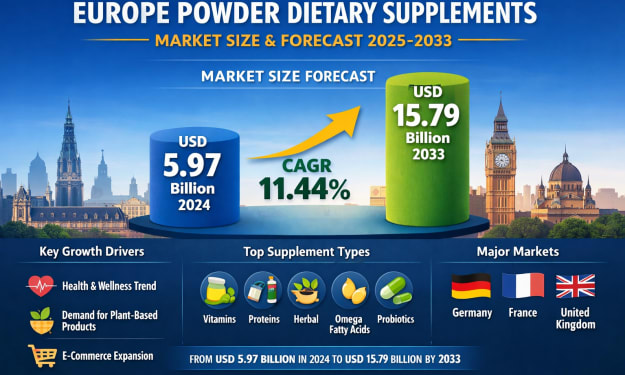
Europe Powder Dietary Supplements Market Size and Forecast 2025
Europe Powder Dietary Supplements Market Outlook The Europe powder dietary supplements market is entering a phase of rapid and sustained expansion, driven by rising health awareness, shifting dietary habits, and a strong consumer focus on preventive healthcare. In 2024, the market is valued at USD 5.97 billion and is projected to reach USD 15.79 billion by 2033, growing at an impressive CAGR of 11.44% from 2025 to 2033.
By shibansh kumar5 days ago in Trader


Comments
There are no comments for this story
Be the first to respond and start the conversation.