
Australia Soda Ash Market 2026: Forecast to Reach USD 650.5 Million by 2034 on Industrial & Construction Demand
Rising use in glass production, detergents, chemicals and sustainability focused applications drives steady growth at a ~4.6 % CAGR through 2034.

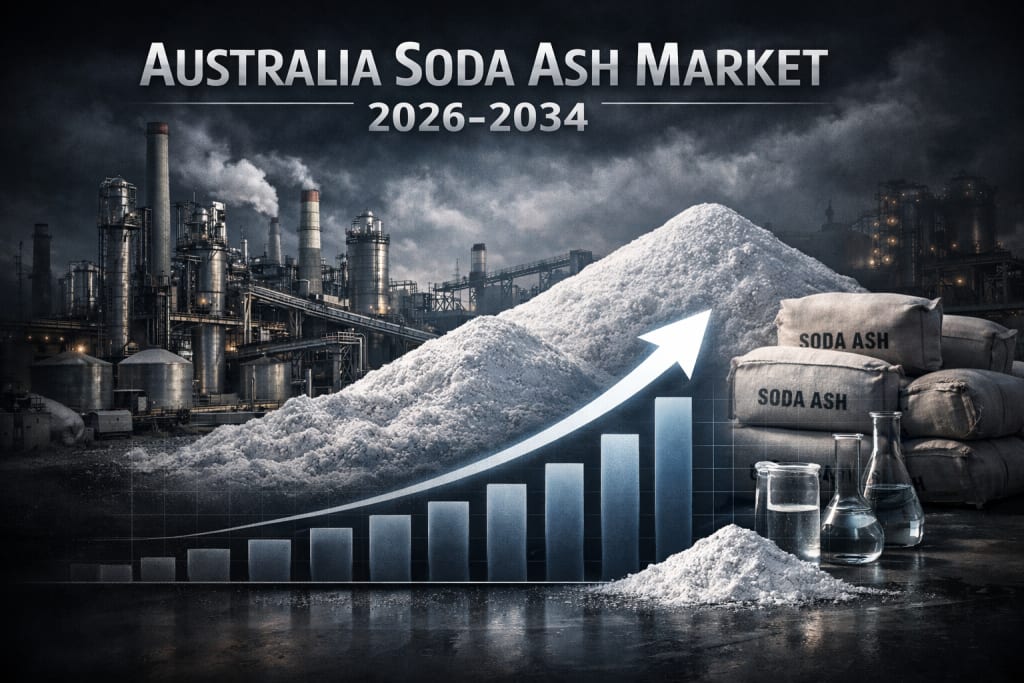
Australia Soda Ash Market Overview
The Australia soda ash market is set for steady expansion over the next decade, underpinned by strong demand from industrial sectors such as glass manufacturing, soaps and detergents, chemicals, metallurgy, and water treatment. According to IMARC Group, the market was valued at USD 433.66 million in 2025 and is projected to reach USD 650.48 million by 2034, growing at a compound annual growth rate (CAGR) of 4.61 % from 2026 to 2034.
Soda ash — chemically known as sodium carbonate — is a critical industrial chemical that supports a wide range of downstream industries. Its versatile applications make it indispensable for glass manufacturing, detergents, and chemical processing. With construction activity on the rise and sustainability gaining traction across industries, the Australia soda ash market is attracting attention from investors and industrial players alike for its solid growth prospects and structural demand drivers.
Why the Market Is Growing So Rapidly
The glass manufacturing sector remains the largest consumer of soda ash in Australia, accounting for the largest share of application demand. Soda ash functions as a flux that lowers the melting temperature of silica, facilitating efficient production of flat, container, and specialty glass used in construction, automotive, packaging, and solar energy applications. Rising construction activity and renewable energy projects increase demand for architectural and photovoltaic glass, sustaining soda ash consumption.
Complementing the glass sector is the expanding detergent and cleaning chemicals industry. Soda ash is widely used as a water softener and cleaning agent in soaps and detergents due to its effectiveness and relative environmental compatibility. Consumer preferences shifting toward eco friendly cleaning products have further driven stable demand within this segment.
Another major growth driver is water treatment infrastructure development. Soda ash plays a key role in pH adjustment, water softening, and corrosion control within municipal and industrial wastewater treatment systems. With governments and private stakeholders investing in water quality improvements and treatment facilities, the chemical’s use in these applications continues to grow.
Additionally, sustainability initiatives and energy efficient manufacturing practices are influencing market dynamics. Glass manufacturers are increasingly adopting energy saving furnace technologies and recycled content processing to reduce carbon emissions. This broad shift to sustainable production methods supports ongoing consumption of soda ash while aligning with circular economy goals, especially as construction codes emphasize eco friendly materials and higher performance glazing solutions.
Finally, diversification into emerging applications — such as solar panel glass and advanced environmental technologies — is creating incremental demand. Government programs supporting renewable energy infrastructure are promoting soda ash use in specialized glass products, while the chemical industry continues to explore innovative uses in materials processing and industrial chemistry.
Request a Sample Report with the Latest 2026 Data & Forecasts
What the Opportunities Are
1. Glass Manufacturing Expansion
As demand for architectural, automotive, and photovoltaic glass grows, soda ash suppliers and investors can benefit from partnerships and long term supply agreements with glass producers.
2. Sustainable Detergent Formulations
The shift toward eco friendly cleaning products presents an opportunity for soda ash producers to supply raw materials for biodegradable and high performance detergent applications.
3. Water Treatment Sector Growth
Expanding municipal and industrial water treatment infrastructure enhances the need for soda ash based chemical solutions, supporting stable demand in essential services.
4. Renewable Energy Glass Applications
Solar energy initiatives stimulate demand for specialty glass used in photovoltaic panels, expanding soda ash’s application base in renewable sectors.
5. Regional Distribution Network Development
Establishing logistics hubs and storage facilities in key regions such as New South Wales, Victoria, and Queensland can improve supply chain efficiency and responsiveness across Australia.
6. Innovation in Production and Recycling
Investments in energy efficient furnace technologies and glass recycling processes strengthen sustainability while reducing operational costs, enabling competitive positioning for manufacturers.
7. Strategic Industry Alliances
Collaborations between chemical producers, industrial end users, and technology providers can enhance market penetration and product differentiation, especially for high purity and specialty soda ash grades.
Recent News & Developments
• March 2025: Federal Solar Manufacturing Grant Initiative: The Australian government announced a USD 151 million Solar Sunshot program to support domestic solar manufacturing facilities in the Hunter Valley. This initiative encourages local production of lightweight photovoltaic glass modules — a soda ash intensive product — strengthening downstream demand for chemical inputs in renewable energy supply chains.
• April 2025: Visy Advances Sustainable Glass Capacity: Visy, a major Australian glass producer, pushed forward construction on its AUD 500 million glass recycling and manufacturing plant in Queensland. Designed to produce over one billion bottles annually with high recycled content, the facility underscores strong industrial investment and long term demand for soda ash as a key glass ingredient.
• December 2025: Water Treatment Infrastructure Upgrade Contract Awarded: VINCI Construction secured an AUD 385 million contract to upgrade Canberra’s Lower Molonglo Water Quality Control Centre, including new wastewater treatment capacity. These enhancements boost procurement of water treatment chemicals, including soda ash, as municipalities expand infrastructure to meet environmental standards.
Why Should You Know About the Australia Soda Ash Market?
For investors, the Australia soda ash market offers a structurally supported growth opportunity with a projected rise from USD 433.66 million in 2025 to USD 650.48 million by 2034 at a solid CAGR of 4.61 %. Key end use industries such as glass, detergents, and water treatment underpin stable demand while emerging sustainability and renewable energy trends add incremental growth avenues.
For industrial producers and suppliers, understanding evolving market drivers — especially sustainability regulations and green product demand — can inform strategic product development and positioning in long term contracts with key manufacturing sectors.
For policy makers, the soda ash market reflects broader industrial and infrastructure priorities. Supporting technologies that enhance energy efficiency, circular manufacturing practices, and renewable energy materials aligns with national sustainability goals while fostering resilient domestic supply chains.
About the Creator
Amyra Singh
Market research analyst who loves spotting patterns, digging into data, and turning insights into strategies that help brands grow and stay ahead of the curve.
Keep reading
More stories from Amyra Singh and writers in Trader and other communities.
Australia Bus Market 2026: Accelerates Toward USD 2.49 Billion by 2034 on Urban Mobility & Fleet Modernization
Australia Bus Market Overview The Australia bus market size is experiencing steady growth as public transportation demand, urbanization, and sustainability initiatives reshape the nation’s mobility landscape. According to IMARC Group, the market was valued at USD 1.58 billion in 2025 and is projected to reach USD 2.49 billion by 2034, growing at a compound annual growth rate (CAGR) of 5.18 % from 2026 to 2034.
By Amyra Singh4 days ago in Trader



Comments
There are no comments for this story
Be the first to respond and start the conversation.