
Europe Powder Dietary Supplements Market Size and Forecast 2025
Rising Health Awareness, Clean-Label Trends, and E-Commerce Expansion Power Europe’s Booming Powder Supplements Industry

Europe Powder Dietary Supplements Market Outlook
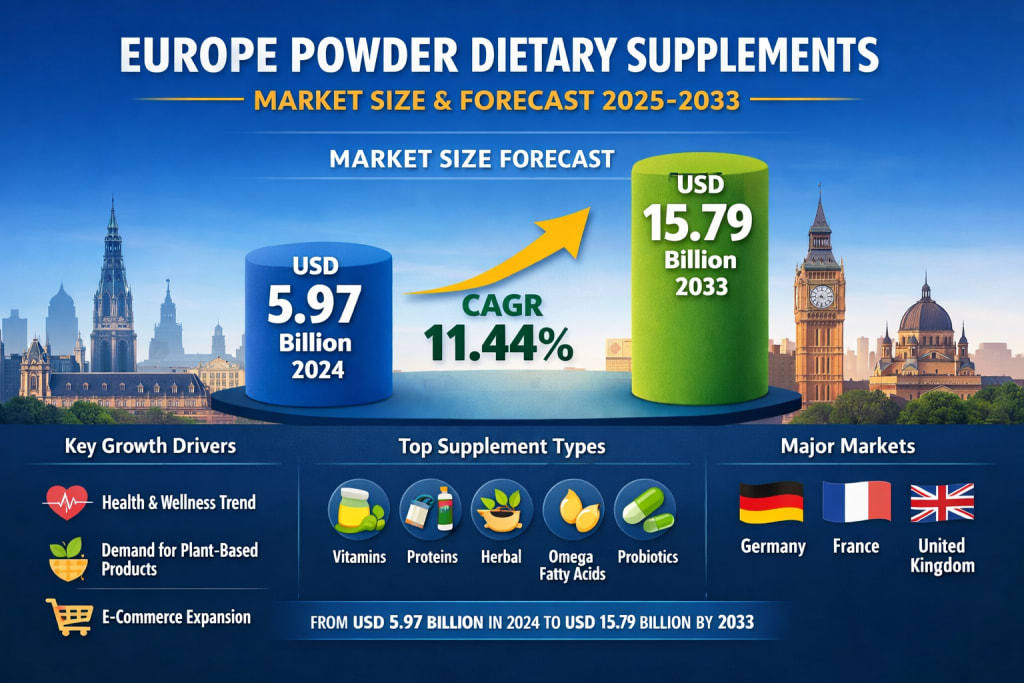
The Europe powder dietary supplements market is entering a phase of rapid and sustained expansion, driven by rising health awareness, shifting dietary habits, and a strong consumer focus on preventive healthcare. In 2024, the market is valued at USD 5.97 billion and is projected to reach USD 15.79 billion by 2033, growing at an impressive CAGR of 11.44% from 2025 to 2033.
This growth reflects a broader transformation in how Europeans approach health and nutrition. Instead of relying only on traditional medicine, consumers are increasingly turning toward functional foods and dietary supplements to support immunity, energy, digestion, muscle recovery, and overall well-being. Powder supplements, in particular, are gaining traction because of their convenience, flexibility in consumption, and faster absorption compared to tablets or capsules.
Trends such as aging populations, urban lifestyles, rising fitness culture, and increasing interest in personalized nutrition are reshaping the market. At the same time, strong regulatory oversight by the European Food Safety Authority (EFSA) is reinforcing consumer trust, ensuring that product quality, safety, and labeling standards remain high across the region.
Europe Dietary Supplements Market Overview
Powder dietary supplements are nutrient-rich formulations designed to support health and wellness in an easily consumable powdered form. These products typically include vitamins, minerals, proteins, amino acids, probiotics, fatty acids, and herbal extracts. Unlike pills or capsules, powders can be mixed into water, smoothies, juices, or shakes, making them highly adaptable to modern lifestyles.
Across Europe, powder supplements are widely used for purposes such as muscle recovery, energy enhancement, immune support, digestive health, and weight management. Protein powders—especially whey and plant-based variants—are popular among athletes and fitness enthusiasts. Collagen powders are increasingly used for skin, hair, and joint health, while green superfood blends are consumed to boost daily nutrient intake.
The market’s growth is closely linked to the rise of preventive healthcare and personalized nutrition. Consumers are becoming more label-conscious, favoring natural, organic, and clean-label products. This has encouraged manufacturers to innovate with plant-based, allergen-free, and sustainably sourced ingredients. Backed by strict EFSA standards, product quality and safety remain central pillars of consumer confidence in Europe’s dietary supplements sector.
Growth Drivers in the Europe Powder Dietary Supplements Market
Increased Health and Wellness Consciousness
One of the most powerful drivers of market growth is the rising awareness of health and wellness among European consumers. People are increasingly focused on preventing illness rather than treating it, leading to strong demand for supplements that support immunity, energy levels, digestion, and overall vitality.
Social media, fitness influencers, healthcare professionals, and nutritionists are playing a key role in educating consumers about the benefits of dietary supplements, particularly in powder form due to their convenience. In addition, the growing prevalence of lifestyle-related conditions such as obesity, diabetes, and cardiovascular diseases is pushing consumers toward nutrition-based solutions.
European initiatives promoting healthier lifestyles—focused on physical activity, balanced diets, and positive behavioral changes—are further reinforcing this trend. As a result, powder dietary supplements are becoming a regular part of daily routines rather than an occasional purchase.
Rising Demand for Plant-Based and Clean-Label Supplements
The shift toward natural, organic, and plant-based products is reshaping the European supplements landscape. Consumers are increasingly seeking clean-label products that are non-GMO, free from artificial additives, and ethically sourced. This trend is especially strong among vegan, vegetarian, and flexitarian populations.
Plant-based protein powders, herbal blends, and superfood mixes are seeing rapid adoption. Regulatory bodies like the EFSA enforce strict quality standards, which further supports the clean-label movement by ensuring transparency and safety.
Brands that emphasize ingredient traceability, sustainable sourcing, and eco-friendly packaging are gaining a competitive edge. Innovations such as carrageenan-free formulations and simplified ingredient lists highlight how manufacturers are responding to evolving consumer expectations.
Growth of E-Commerce and Digital Retail Channels
The rapid expansion of e-commerce has significantly improved access to powder dietary supplements across Europe. Online platforms offer wider product selection, personalized recommendations, subscription models, and detailed product information, making it easier for consumers to make informed choices.
Digital marketing, influencer endorsements, and user reviews have become powerful sales drivers, especially among younger, tech-savvy consumers. The convenience of home delivery and competitive pricing has accelerated the shift from traditional retail to online channels—a trend that gained strong momentum during the COVID-19 pandemic and continues to grow.
Challenges in the Europe Powder Dietary Supplements Market
Stringent Regulatory Requirements
While strict regulations protect consumers, they also create challenges for manufacturers. Compliance with EFSA guidelines requires significant investment in research, testing, documentation, and quality control. Approval processes can be lengthy, and restrictions on health claims limit how products can be marketed.
Additionally, regulatory variations across different European countries can complicate market entry and expansion strategies. For new and smaller players, navigating this complex regulatory landscape can be both time-consuming and costly.
Market Saturation and Intense Competition
The European powder dietary supplements market is highly competitive, particularly in segments like protein powders, vitamins, and herbal supplements. Numerous domestic and international brands are competing for consumer attention, making differentiation essential.
Established players benefit from strong brand recognition, extensive distribution networks, and aggressive marketing strategies. Smaller companies often struggle with visibility and must rely on niche positioning, innovation, and targeted branding to gain market share.
Segment Analysis
Europe Vitamins Powder Dietary Supplements Market
Vitamin powder supplements are experiencing strong growth, driven by demand for immune support, bone health, and general wellness. Vitamin C and Vitamin D powders are especially popular, supported by increased awareness of their role in immunity and overall health.
Consumers prefer powders for their ease of mixing and perceived better absorption. Companies are focusing on natural, sugar-free, and additive-free formulations, while strict quality standards continue to enhance consumer trust in this segment.
Europe Minerals Powder Dietary Supplements Market
Mineral powders such as calcium, magnesium, and zinc are widely used for bone health, muscle function, and metabolic balance. The aging population is a major growth driver, as older consumers look to prevent osteoporosis and maintain mobility.
Athletes and active individuals also rely on mineral powders for hydration and recovery. The trend toward vegan and organic mineral sources is further expanding this segment’s appeal.
Europe Fatty Acids Powder Dietary Supplements Market
Fatty acid supplements, particularly omega-3, omega-6, and omega-9, are gaining popularity due to their cardiovascular, cognitive, and anti-inflammatory benefits. Demand for plant-based omega-3 sources, such as algae powders, is rising as consumers seek sustainable alternatives to fish oil.
Manufacturers are investing in improved bioavailability and innovative formulations to meet evolving consumer needs.
Europe Probiotics Powder Dietary Supplements Market
Probiotic powders are increasingly used to support gut health, digestion, and immunity. Growing awareness of the gut microbiome’s role in overall health is fueling demand, especially for products combined with prebiotics.
Vegan and dairy-free probiotics are expanding rapidly, catering to lactose-intolerant and plant-based consumers. Innovation in strain-specific probiotics for targeted health benefits is also driving market growth.
Distribution Channel Insights
Supermarkets and Hypermarkets
Supermarkets and hypermarkets remain a major sales channel, offering wide product variety, promotional pricing, and easy accessibility. Consumers often prefer in-store purchases to compare products and read labels. Retailers are expanding their health and wellness sections, while private-label brands provide more affordable options.
Online Retail Stores
Online channels are transforming the market by offering convenience, broader choice, and competitive pricing. Subscription services, personalized recommendations, and influencer marketing are boosting engagement. E-commerce platforms and direct-to-consumer brands continue to gain traction across Europe.
Country-Level Insights
Germany
Germany is Europe’s largest market, supported by a health-conscious population, strong fitness culture, and high demand for protein powders, vitamins, and probiotics. Consumers prioritize quality, safety, and natural ingredients. Personalized nutrition and online sales are growing rapidly, complementing traditional pharmacy and health store channels.
France
France’s market is driven by strong interest in organic, plant-based, and clean-label products. Pharmacies and specialty stores remain key channels, though online sales are rising. French consumers are highly ingredient-conscious, and government focus on preventive healthcare continues to support market growth.
United Kingdom
The UK is one of the fastest-growing markets, fueled by demand for sports nutrition, immunity boosters, and gut health products. The rise of vegan and flexitarian lifestyles is boosting plant-based supplements. Despite some supply chain challenges, innovation and e-commerce continue to drive strong growth.
Market Segmentation
By Type:
Vitamins, Minerals, Proteins and Amino Acids, Herbal Supplements, Fatty Acids, Probiotics, Other Types
By Distribution Channel:
Supermarkets/Hypermarkets, Pharmacies and Drug Stores, Convenience/Grocery Stores, Online Retail Stores, Other Distribution Channels
By Countries:
France, Germany, Italy, Spain, United Kingdom, Belgium, Netherlands, Russia, Poland, Greece, Norway, Romania, Portugal
Key Players Covered
Abbott Laboratories, Amway Corp., Nestlé Health Science, Glanbia plc, THG Nutrition, Maxinutrition, Herbalife Nutrition Ltd., NOW Foods, Nutrend
(All key players are analyzed from four viewpoints: Overview, Key Person, Recent Developments, and Revenue.)
Final Thoughts
The Europe powder dietary supplements market is set for remarkable growth through 2033, powered by rising health awareness, the clean-label movement, and the rapid expansion of digital retail. With the market projected to grow from USD 5.97 billion in 2024 to USD 15.79 billion by 2033, opportunities abound for brands that focus on quality, transparency, innovation, and consumer trust.
As preventive healthcare becomes a lifestyle priority rather than a trend, powder dietary supplements are likely to remain at the forefront of Europe’s evolving nutrition landscape—shaping not just what people consume, but how they think about long-term health and well-being.
About the Creator
Keep reading
More stories from shibansh kumar and writers in Trader and other communities.
North America Powder Dietary Supplements Market Size and Forecast 2025
Market Snapshot The North America powder dietary supplements market is estimated to be around USD 9.33 billion in 2024 and is anticipated to grow to USD 23.35 billion by 2033, expanding at a CAGR of 10.78% between 2025 and 2033. This impressive growth is being driven by rising health awareness, increasing demand for vitamin and protein supplementation, and a strong consumer preference for convenient, nutrient-dense powdered formats.
By shibansh kumar2 days ago in Trader
SBI Shares Surge 5.5% to All-Time High Following Robust Q3 Performance
Shares of State Bank of India (SBI) saw a sharp rise of 5.5%, hitting an all-time high following the release of its Q3 financial results. The surge reflects strong investor confidence in SBI’s operational performance, profitability, and strategic initiatives. As India’s largest public sector bank, SBI’s stock movement often sets a benchmark for the banking sector, making this rise noteworthy for both retail and institutional investors.
By Hammad Nawaza day ago in Trader
Dow Jones Industrial Average Trends: What the Latest Surge Means for Investors
The Dow Jones Industrial Average has recently surged, reaching levels that are making investors take notice. Many are wondering if this growth is sustainable or if a market shift is coming. Understanding the trends behind this rise can help investors make smarter decisions and plan their strategies effectively.
By John.doe7987 days ago in Trader


Comments
There are no comments for this story
Be the first to respond and start the conversation.