
Germany Diabetes Devices Market Size & Forecast 2026–2034
How Digital Health, Strong Reimbursement, and an Aging Population Are Reshaping Diabetes Care in Europe’s Largest Economy

Introduction
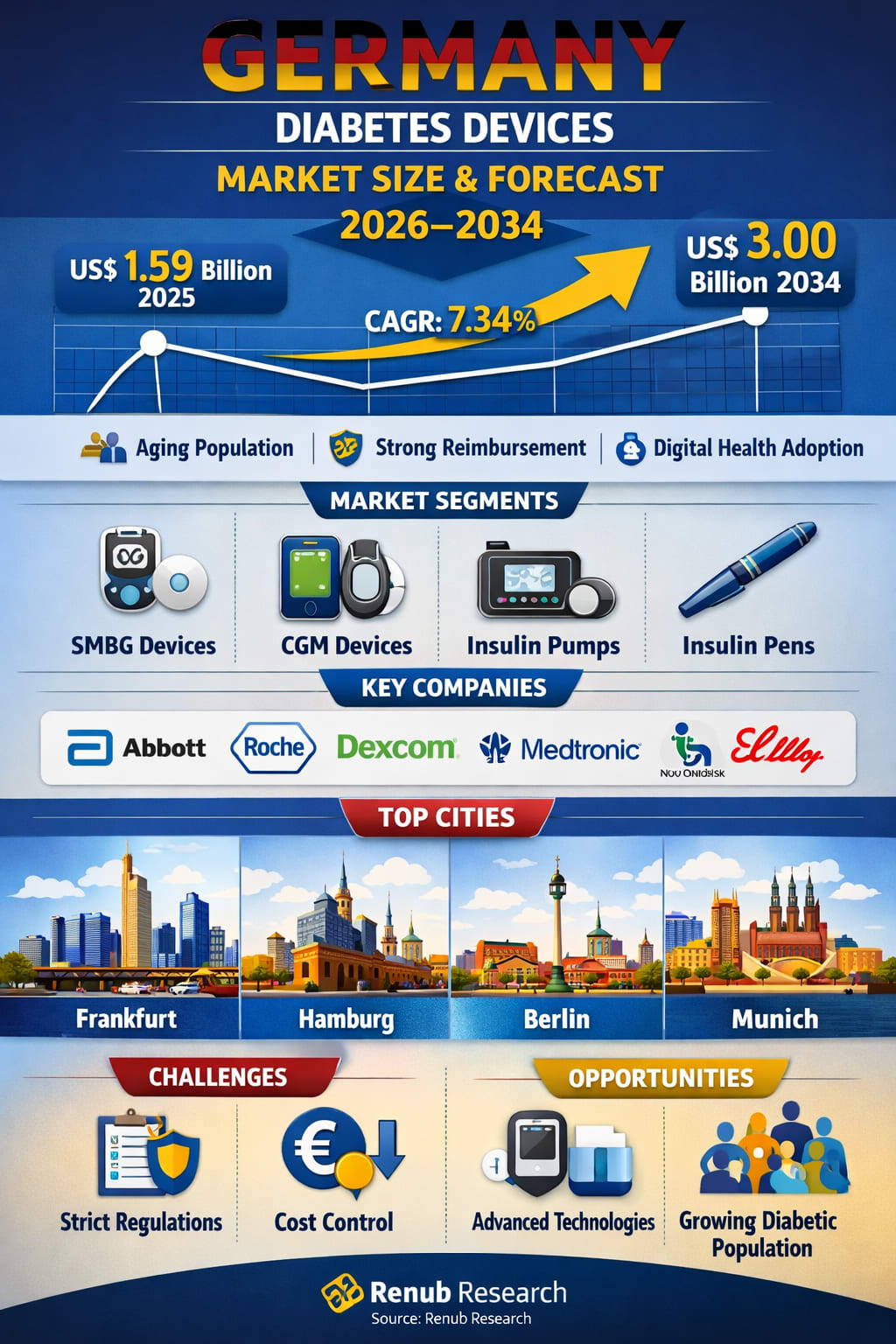
Germany’s healthcare system has long been regarded as one of the most structured and technologically advanced in Europe. Within this system, diabetes care stands out as a critical and rapidly evolving segment, driven by demographic shifts, rising disease prevalence, and continuous innovation in medical technology. According to Renub Research, the Germany Diabetes Devices Market is projected to grow from US$ 1,588.90 million in 2025 to US$ 3,002.0 million by 2034, registering a compound annual growth rate (CAGR) of 7.34% from 2026 to 2034.
This strong growth outlook is supported by several structural factors: a steadily increasing diabetic population, one of the most comprehensive reimbursement systems in Europe, and a high acceptance rate for advanced technologies such as continuous glucose monitoring (CGM) systems and modern insulin delivery devices. At the same time, Germany’s push toward digital health and home-based disease management is reshaping how patients and physicians approach diabetes care.
From traditional self-monitoring blood glucose (SMBG) meters to smart insulin pens and integrated pump-CGM ecosystems, diabetes devices in Germany are no longer just tools for measurement—they are becoming part of a broader, data-driven healthcare environment focused on long-term outcomes, quality of life, and cost-effective disease management.
Germany Diabetes Devices Market Outlook
A diabetes device can be broadly defined as a medical technology used to monitor blood glucose levels and administer insulin or other therapies to manage diabetes. Common categories include SMBG meters, CGM systems, insulin pens, and insulin pumps. Together, these devices allow patients to track glucose trends, adjust medication dosages, and reduce the risk of complications such as hypoglycemia, cardiovascular disease, and nerve damage.
In recent years, diabetes technology has increasingly integrated digital connectivity, enabling patients to share data with healthcare providers through smartphones, cloud platforms, and remote monitoring systems. This shift aligns closely with Germany’s evidence-based healthcare culture, where treatment decisions are increasingly guided by real-world data and continuous monitoring rather than occasional clinic measurements alone.
Germany’s strong healthcare infrastructure plays a central role in the widespread acceptance of these devices. The country also benefits from a comprehensive reimbursement framework, which significantly lowers out-of-pocket costs for patients and encourages physicians to prescribe advanced monitoring and insulin delivery systems. With a large and aging population—particularly in the 65+ age group, which has a higher risk of type 2 diabetes—the need for reliable, easy-to-use, and clinically effective diabetes devices continues to rise.
Key Market Growth Drivers
Increasing Prevalence of Diabetes and an Aging Population
Germany has one of the largest populations living with diabetes in Europe, a trend linked to lifestyle changes, urbanization, and longer life expectancy. The proportion of people aged 65 to 74 is steadily increasing, and this age group has a significantly higher risk of developing type 2 diabetes. As a result, demand for glucose monitoring and insulin delivery devices is expected to grow consistently over the coming decade.
Long-term projections suggest that the number of people living with type 2 diabetes could rise sharply compared to previous decades. This expanding patient base naturally translates into higher demand for both consumable products such as test strips and sensors, and durable devices such as pumps and smart pens. For manufacturers, this demographic reality provides a stable and expanding foundation for market growth.
Strong Reimbursement and Universal Healthcare Coverage
Germany’s statutory health insurance (SHI) system is a cornerstone of diabetes device adoption. Covering around 90% of the population, SHI significantly reduces financial barriers for patients who require glucose monitoring systems, insulin pens, or pumps. Because many of these devices are reimbursed—provided they meet clinical and economic effectiveness criteria—physicians are more willing to prescribe newer technologies such as CGM systems, especially for insulin-dependent patients.
In addition, Disease Management Programs (DMPs) play an important role by promoting structured monitoring and long-term follow-up for chronic conditions like diabetes. These programs indirectly boost device usage by encouraging regular measurement, data tracking, and therapy optimization. For manufacturers, this creates a relatively predictable and stable market environment, even though pricing and reimbursement negotiations remain rigorous.
Adoption of Advanced and Digital Health Technologies
Germany is one of Europe’s leading adopters of digital health solutions, and this trend is strongly influencing the diabetes devices market. Mobile health (mHealth) applications, cloud-based data platforms, and connected devices allow both patients and healthcare providers to access real-time glucose data, analyze trends, and adjust therapies remotely.
Smart CGM systems, connected insulin pens, and sensor-enabled pumps align well with Germany’s emphasis on evidence-based medicine and outcome-driven care. National and regional initiatives supporting telemedicine and digital health applications have further accelerated this transition, making it easier to manage diabetes outside traditional clinical settings. Notably, in April 2025, WHO/Europe appointed the European Campus Rottal-Inn (DIT-ECRI) in Germany as a collaborating center in digital health, highlighting the country’s growing role in shaping digital healthcare strategies.
Challenges Facing the Market
Stringent Regulatory Environment
Germany operates under strict European regulatory frameworks that emphasize safety, clinical performance, and post-market surveillance. While these regulations are essential for patient protection, they can also extend product development timelines and raise entry barriers, particularly for smaller companies and startups. In addition to regulatory approval, manufacturers often need to demonstrate clear clinical and economic benefits to secure reimbursement, adding another layer of complexity.
Cost Containment and Pricing Pressure
Despite strong reimbursement support, cost control remains a key priority for public insurers in Germany. Payers closely evaluate the cost-effectiveness of diabetes devices, which can lead to price negotiations, reference pricing, and competitive bidding processes. Hospitals and clinics may also favor standardized or lower-cost devices unless premium products can clearly demonstrate superior outcomes or efficiency gains.
Segment Analysis
Germany SMBG Devices Market
SMBG devices, including meters and test strips, remain a high-volume and well-established segment, particularly for patients with type 2 diabetes. They continue to play a crucial role in therapy initiation, adjustment, and verification, even for patients who also use CGM systems. The market is highly competitive, with differentiation based on accuracy, ease of use, connectivity, and cost-effectiveness—especially since payers carefully scrutinize the cost of consumables.
Germany CGM Devices Market
CGM is the fastest-growing segment in Germany’s diabetes devices market. Favorable reimbursement policies and strong physician acceptance have driven rapid adoption among type 1 diabetics and insulin-dependent type 2 patients. Real-time glucose data, alerts for hypo- and hyperglycemia, and reduced need for finger-prick testing significantly improve both clinical outcomes and quality of life. Competition in this segment centers on sensor accuracy, wear duration, comfort, and data analytics capabilities.
Germany Insulin Pumps Market
Insulin pumps serve a more specialized patient group, primarily those requiring intensive insulin therapy. Prescribed mainly through diabetes centers and specialized clinics, these devices are valued for precise basal-bolus control and improved lifestyle flexibility. Integration with CGM and automated insulin delivery features has increased their clinical relevance, although adoption still requires substantial patient training and education.
Germany Insulin Pen Devices Market
Insulin pens represent the largest segment in insulin delivery due to their simplicity, accuracy, and convenience, particularly for type 2 diabetics and elderly patients. Modern smart pens with memory and connectivity features are further enhancing therapy management by enabling better dose tracking and data sharing with healthcare providers.
Distribution Channels
Hospital Pharmacies
Hospital pharmacies play a critical role in initiating advanced therapies and shaping brand preferences through formularies and treatment protocols. They are often the first point of access for patients starting on CGM systems or insulin pumps, and education provided by pharmacists and diabetes educators is key to long-term adherence.
Online Pharmacies
Online pharmacies are becoming an increasingly important channel, especially for consumables such as test strips, lancets, needles, and CGM accessories. Convenience, transparent pricing, and home delivery appeal to patients, particularly those already comfortable with digital health tools. Regulatory and reimbursement rules still shape what can be sold online, but this channel is steadily moving into the mainstream.
City-Level Insights
Frankfurt
Frankfurt’s strong healthcare infrastructure, high average income, and concentration of specialty clinics support steady demand for SMBG systems, insulin pens, and increasingly CGM devices. Patient awareness of new technologies is high, and online pharmacies are widely used for refills.
Hamburg
Hamburg’s market is driven by a large chronic disease population and strong hospital presence. SMBG devices and insulin pens dominate due to affordability and familiarity, while CGM adoption is gradually increasing in specialized centers focused on optimized outcomes.
Berlin
Berlin stands out for its diverse patient base and strong digital health ecosystem. CGM adoption is particularly high in university hospitals and tech-savvy patient groups, while cost-effective SMBG devices and insulin pens remain important in public healthcare settings.
Market Segmentation
By Type:
Self-Monitoring Devices
Continuous Glucose Monitoring Devices
Insulin Pumps
Insulin Pens
By End User:
Hospitals
Diagnostic Centers
Homecare
By Cities:
Frankfurt, Munich, Hamburg, Berlin, Düsseldorf, Stuttgart, Cologne, Leipzig, Nuremberg, Dortmund, and Rest of Cities
Company Coverage (5 Viewpoints Each):
Overview
Key Person
Recent Developments
SWOT Analysis
Revenue Analysis
Key Companies:
Abbott Laboratories, Roche, Dexcom Inc., Medtronic, Novo Nordisk A/S, Eli Lilly, Sanofi
Final Thoughts
The Germany Diabetes Devices Market is entering a phase of sustained and technology-driven expansion. With the market expected to nearly double in value from US$ 1.59 billion in 2025 to about US$ 3.00 billion by 2034, the combination of demographic pressure, strong reimbursement support, and rapid digital health adoption creates a compelling long-term growth story.
While regulatory complexity and pricing pressure will continue to shape competitive dynamics, Germany’s commitment to evidence-based medicine and patient-centered care ensures that innovative, clinically proven devices will find a receptive market. In many ways, Germany is setting the benchmark for how advanced healthcare systems can integrate technology into chronic disease management—making diabetes devices not just tools, but central pillars of modern, data-driven care.
About the Creator
Sakshi Sharma
Content Writer with 7+ years of experience crafting SEO-driven blogs, web copy & research reports. Skilled in creating engaging, audience-focused content across diverse industries.
Keep reading
More stories from Sakshi Sharma and writers in Trader and other communities.
Water Soluble Polymer Market Size and Forecast, 2026–2034
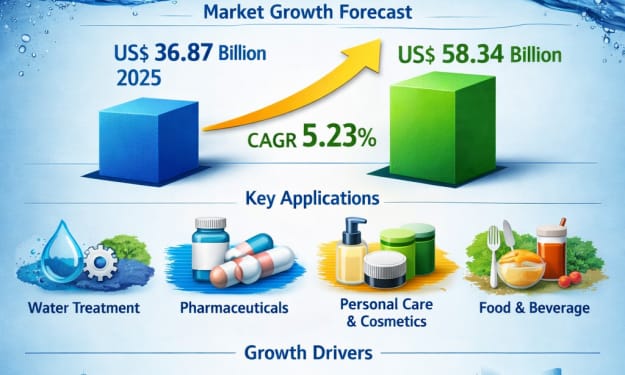
Introduction: A Market Dissolving Barriers Across Industries The global water-soluble polymer industry is entering a decisive growth phase, driven by the world’s rising demand for clean water, efficient industrial processes, and sustainable materials. According to industry estimates, the market is set to expand from US$ 36.87 billion in 2025 to US$ 58.34 billion by 2034, registering a compound annual growth rate (CAGR) of 5.23% between 2026 and 2034.
By Sakshi Sharmaa day ago in Trader
Philippines Medical Tourism Market 2026: Healthcare Services, International Patients & Hospital Investment
Philippines Medical Tourism Market Overview The Philippines medical tourism market is steadily gaining global attention as international patients seek high-quality healthcare services at competitive costs. Medical tourism involves traveling across borders to receive medical, dental or cosmetic treatments, often combined with leisure travel. The Philippines has emerged as an attractive destination due to its English-speaking healthcare workforce, internationally trained medical professionals, modern private hospitals and warm hospitality culture.
By Manisha Dixitabout 5 hours ago in Trader
Union Bank Share Price: Insights for Investors with a Financial Sector Perspective
Tracking Union Bank Share Price has become a priority for investors focused on the financial sector. As a key player in retail banking, corporate lending, and wealth management, Union Bank’s stock reflects both the company’s performance and the overall health of the banking industry. For a broader approach, investors often consider combining individual bank shares with diversified financial sector funds such as the Franklin Mutual Financial Services Fund. This combination allows participation in both individual stock growth and sector-wide opportunities.
By Hammad Nawaz3 days ago in Trader
Off the Book
It ended like every other stupid idea. Badly, and alone. I’m researching digital confession ethics, he said. A tech ethicist. He gestured at floating data I couldn’t see then pulled out a physical notebook. Actual paper, fountain pen. He held it up like he was showing me scripture.
By Nicky Frankly6 days ago in Fiction


Comments
There are no comments for this story
Be the first to respond and start the conversation.