
Europe Meal Replacement Products Market Size & Forecast 2025–2033
How Convenience, Protein Innovation, and Health-Conscious Lifestyles Are Reshaping Europe’s Everyday Nutrition

Introduction: A Market Built for Modern Lifestyles
Europe’s food habits are changing fast. Between busy work schedules, growing fitness awareness, and the steady rise of health-focused consumers, traditional meal patterns are being reshaped. In this evolving landscape, meal replacement products—once seen as niche diet aids—are now becoming a mainstream nutrition choice.
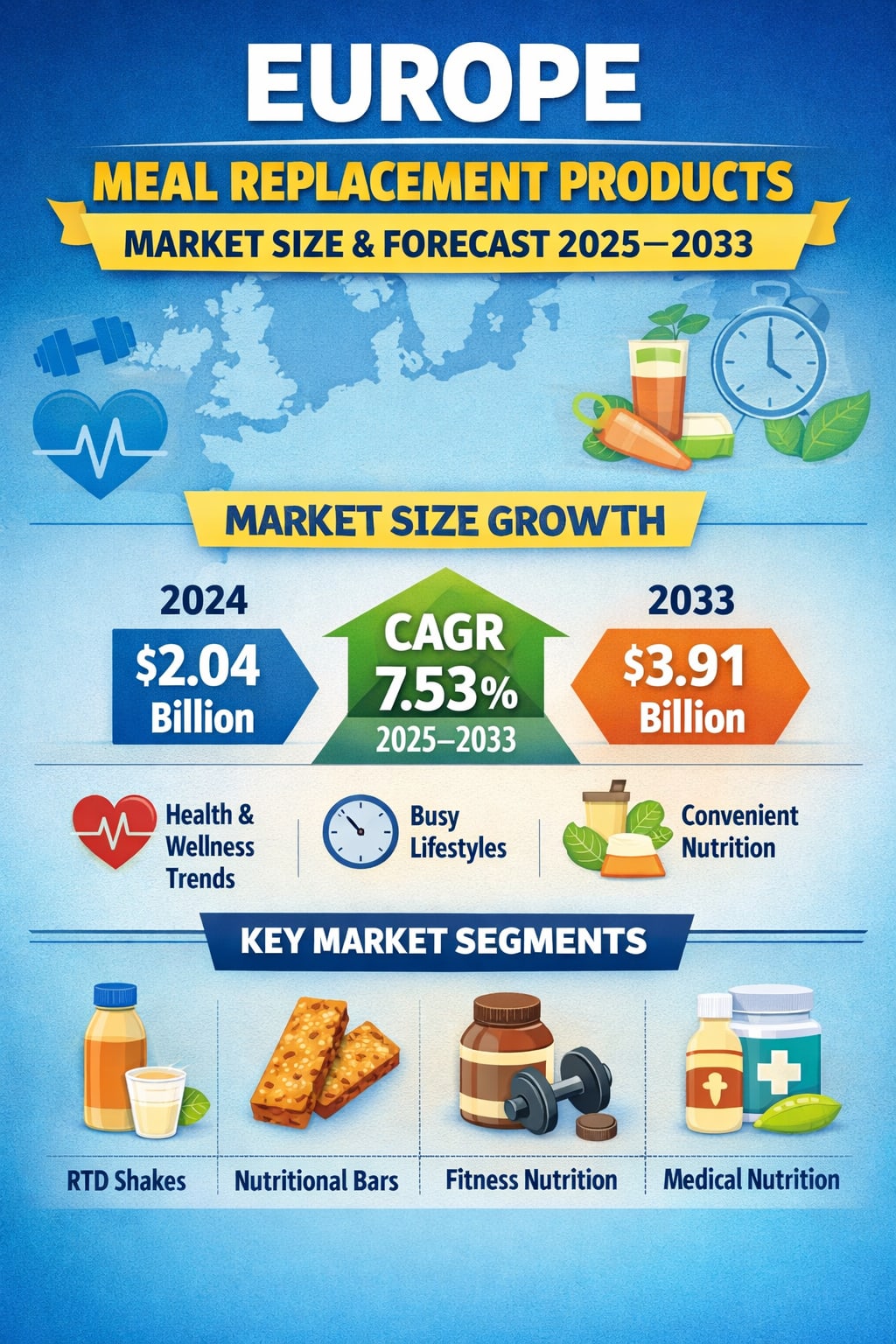
According to Renub Research, the Europe Meal Replacement Products Market was valued at US$ 2.04 billion in 2024 and is expected to reach US$ 3.91 billion by 2033, growing at a CAGR of 7.53% between 2025 and 2033. This strong growth reflects a broader shift in consumer priorities: people want food that is convenient, nutritionally balanced, and aligned with specific health goals.
Meal replacements today are no longer just about weight loss. They are being used for muscle building, recovery, medical nutrition, and everyday balanced eating, making them relevant to a much wider audience across Europe.
Europe Meal Replacement Products Market Outlook
Meal replacements are specially formulated products designed to substitute one or more daily meals. They typically come in the form of ready-to-drink (RTD) shakes, nutritional bars, or powdered supplements and contain a carefully balanced mix of proteins, carbohydrates, vitamins, minerals, and sometimes functional ingredients such as fiber, probiotics, or omega-3s.
In Europe, these products are gaining popularity due to three major trends:
Rising health awareness and focus on preventive nutrition
Time-poor urban lifestyles that favor quick, portable food solutions
Growing interest in fitness, weight management, and plant-based diets
Consumers increasingly see meal replacements not as “diet products” but as smart nutrition tools—whether that’s for calorie control, muscle recovery, or simply avoiding unhealthy fast food.
Key Growth Drivers in the Europe Meal Replacement Products Market
1. Increasing Health and Wellness Awareness
Health and wellness have become central to consumer decision-making across Europe. Rising concerns about obesity, lifestyle diseases, and poor dietary habits are pushing people to look for structured, portion-controlled nutrition options.
Meal replacement products offer a convenient way to manage calories without sacrificing essential nutrients. This makes them particularly attractive to office workers, students, and health-conscious consumers who want to maintain a balanced diet despite busy schedules.
Governments and health institutions across Europe are also promoting nutritional education and healthier eating habits, indirectly supporting the adoption of functional and fortified food products. The growing influence of fitness influencers, wellness apps, and digital health platforms further reinforces this trend, keeping nutrition and protein intake in constant focus.
At the same time, flexitarian and plant-based diets are becoming more popular, encouraging manufacturers to develop vegan and blended-protein meal replacements that align with both health and sustainability goals.
2. Growing Demand for Convenient Nutrition
Modern European lifestyles leave little time for cooking full meals. Long working hours, commuting, and urban living have created strong demand for quick, portable, and reliable nutrition options.
Meal replacements fit perfectly into this routine. They are:
Easy to carry
Quick to consume
Portion-controlled
Nutritionally consistent
Students, professionals, travelers, and even older consumers increasingly rely on these products as breakfast substitutes, lunch alternatives, or post-workout meals. The growth of e-commerce and subscription-based delivery models has further improved accessibility, making it easier for consumers to integrate these products into daily life.
Ongoing improvements in taste, texture, and formulation are also helping meal replacements move closer to traditional food experiences, reducing resistance among first-time users.
3. Product Innovation in Formulation and Flavors
Innovation is one of the strongest forces behind market expansion. European manufacturers are investing heavily in R&D to create products that suit diverse dietary needs, including:
Vegan and plant-based
Gluten-free and lactose-free
High-protein, low-carb, or keto-friendly
Medical and functional nutrition formulas
Functional ingredients such as probiotics, superfoods, omega-3s, and plant proteins are being added to enhance both nutritional value and consumer appeal. At the same time, brands are focusing on clean-label positioning, emphasizing natural ingredients, transparency, and sustainability.
Flavor innovation also plays a critical role. From classic chocolate and vanilla to coffee, berry, and nut-based blends, companies are tailoring products to regional taste preferences, helping reduce taste fatigue and improve repeat purchases.
Key Challenges in the Europe Meal Replacement Products Market
1. High Product Costs and Affordability Concerns
One of the biggest barriers to mass adoption is price. High-quality proteins, functional ingredients, and clean-label formulations significantly increase production costs, making many meal replacement products more expensive than regular meals or snacks.
In parts of Eastern and Southern Europe, where price sensitivity is higher, this limits market penetration. Many consumers still view meal replacements as premium or specialty products rather than everyday food options.
Brands face the ongoing challenge of balancing affordability with quality, sustainability, and nutritional performance—a difficult equation in a competitive and inflation-affected market.
2. Taste Fatigue and Consumer Perception Issues
Despite improvements, some consumers still associate meal replacements with bland taste, chalky textures, or artificial aftertastes. This perception can hurt repeat purchases and long-term adoption.
There are also lingering concerns about over-processing, artificial additives, and long-term health effects, especially among consumers who prefer fresh, home-cooked meals. Negative media coverage or misleading product claims can further damage trust.
To overcome these issues, manufacturers must continue to invest in sensory innovation, transparent labeling, and consumer education.
Market Segmentation Insights
Europe RTD Meal Replacement Products Market
Ready-to-Drink (RTD) meal replacements are among the fastest-growing segments due to their unmatched convenience. These products require no preparation and offer a complete, balanced nutritional profile in a single bottle.
They are especially popular among working professionals, athletes, and travelers. The rise of plant-based RTD drinks, along with eco-friendly and resealable packaging, is further strengthening this segment’s appeal. RTD products also support portion control and calorie management, making them ideal for weight-conscious consumers.
Europe Meal Replacement Nutritional Bars Market
Nutritional bars are gaining strong traction as on-the-go meal substitutes or functional snacks. They are widely used by gym-goers, travelers, and busy professionals who want quick energy with added nutritional value.
Manufacturers are focusing on high-protein, low-sugar, and fortified formulations, often enriched with vitamins, minerals, and superfoods. The growing demand for vegan and gluten-free options is also shaping product development in this segment.
Europe Physical Fitness Meal Replacement Products Market
The fitness-focused segment is expanding rapidly, driven by gym culture, sports participation, and performance-oriented nutrition trends. Consumers in this category look for high-protein, amino acid-rich, and recovery-focused products.
Brands are launching pre-workout and post-workout formulations, using whey, casein, or plant proteins. With better consumer knowledge about nutrient timing and muscle recovery, fitness meal replacements are becoming a regular part of training routines across Europe.
Europe Convalescence Meal Replacement Products Market
Meal replacements for medical and recovery nutrition are becoming increasingly important, especially with Europe’s aging population and rising prevalence of chronic illnesses.
These products are often recommended by hospitals and healthcare professionals for patients who have difficulty consuming solid food. They typically feature high-protein, high-fiber, and vitamin-enriched formulations designed to support healing, immunity, and strength maintenance.
Distribution Channel Analysis
Supermarkets and Hypermarkets
Supermarkets and hypermarkets remain the dominant distribution channels in Europe. Their wide product range, frequent promotions, and strong brand visibility make them the preferred shopping destination for most consumers.
The rise of private-label meal replacement products in major retail chains is also helping improve affordability and market penetration.
Specialty Stores
Specialty nutrition and health stores play a crucial role in premiumization and personalized nutrition. These outlets attract fitness enthusiasts and health-focused consumers who value expert advice and specialized products such as keto, vegan, or medical-grade meal replacements.
Country-Level Market Highlights
United Kingdom
The UK is one of Europe’s most developed meal replacement markets, driven by strong interest in weight management, fitness, and convenient nutrition. Brands like Huel and SlimFast have built strong followings, supported by e-commerce and subscription models. The rise of vegan and flexitarian diets continues to push innovation in plant-based formulations.
Germany
Germany’s market benefits from high health awareness, strong purchasing power, and preference for scientifically formulated products. Demand for protein-rich, organic, and sustainable meal replacements is particularly strong. The country’s well-developed retail and pharmacy networks support wide product availability.
France
France is seeing steady growth as urban professionals adopt more convenient eating habits. While the country values culinary tradition, consumers increasingly seek clean-label, natural, and plant-based meal replacement options. Pharmacies and health stores remain important distribution channels alongside e-commerce.
Europe Meal Replacement Products Market Segmentation
By Product Type:
Ready-to-Drink Products
Nutritional Bars
Powdered Supplements
Other Product Types
By Application:
Weight Loss
Weight Gain
Convalescence
Wound Healing
Physical Fitness
Others
By Distribution Channel:
Supermarkets/Hypermarkets
Online Retail Stores
Convenience Stores
Specialty Stores
Others
By Country:
Spain
United Kingdom
Germany
France
Italy
Russia
Rest of Europe
Competitive Landscape
Major players in the Europe meal replacement products market include:
Abbott Laboratories
Amway Corp.
Herbalife Nutrition Ltd.
The Simply Good Foods Company
Nestlé S.A.
Peeroton GmbH
Huel Inc.
THG PLC (MyProtein)
USN – Ultimate Sports Nutrition
Abnormal
These companies compete through product innovation, brand positioning, distribution expansion, and targeted nutrition solutions, covering everything from everyday wellness to performance and medical nutrition.
Final Thoughts: A Market Built for the Future of Food
The Europe Meal Replacement Products Market is moving far beyond its original niche. With the market expected to grow from US$ 2.04 billion in 2024 to US$ 3.91 billion by 2033 at a CAGR of 7.53%, it is clear that meal replacements are becoming a core part of modern European nutrition habits.
Driven by health awareness, convenience, fitness culture, and product innovation, the sector is well-positioned for long-term expansion. While challenges around price, taste perception, and consumer trust remain, continuous improvements in formulation, flavor, and transparency are steadily reshaping public opinion.
In the years ahead, meal replacement products are likely to shift from being “alternative meals” to becoming mainstream nutrition solutions—supporting healthier, more flexible, and more efficient ways of eating across Europe.
About the Creator
Private Equity Market: Growth Drivers, Investment Trends, and Future Outlook
Private Equity Market: Growth Drivers, Investment Trends, and Future Outlook The Private Equity Market has evolved into one of the most influential segments of the global financial ecosystem, reshaping how companies grow, restructure, and compete. Private equity (PE) refers to investments made in private companies or buyouts of public companies that result in their delisting from stock exchanges. Over the past decade, the private equity industry has witnessed remarkable expansion, fueled by institutional investments, rising entrepreneurial ventures, and the need for capital-driven business transformation.
By Kim Soo hyun6 days ago in Trader
Feelings Never Die
It is Valentine's Day again, and it bought back memories that were over fifty years old. It bought me back to 1971, and I woke up and I knew my baby was due today. I was big and pregnant, and I felt like I was about to burst wide open. Imagine my surprise when the doctor told my I had a due date of February 14. I couldn't believe it, and since my baby was due today, I felt I could indulge myself a bit. I had gained a lot of weight, and chocolate was on the no-no list, but I had came to the end of this pregnancy, and I hoped it would be okay, after all I would deliver this baby today. So I walked across the street to the grocery story, and bought myself, a peppermint patty, covered in chocolate, my favorite. Me and my Valentine's baby would enjoy it together.
By Susan Payton2 days ago in Fiction



Comments
There are no comments for this story
Be the first to respond and start the conversation.