
Global Diabetic Food Market Size and Forecast 2025–2033
How Innovation, Awareness, and Lifestyle Shifts Are Reshaping the Future of Diabetic Nutrition

Introduction: A Market Built Around a Growing Global Need
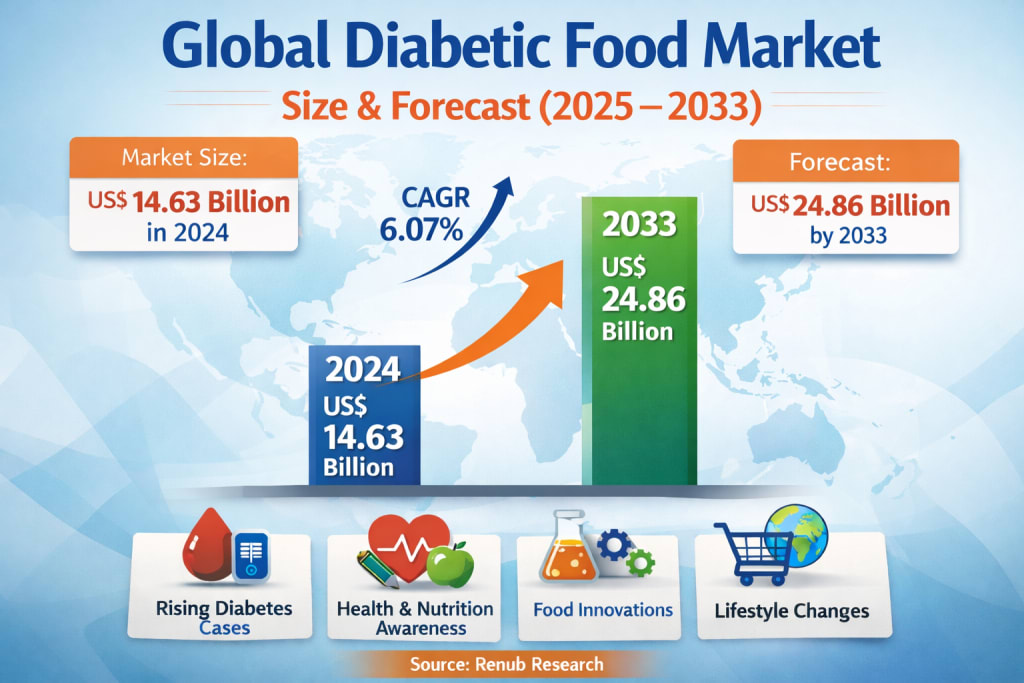
The global diabetic food market is entering a decisive decade, driven by the rising prevalence of diabetes, stronger awareness of nutrition, and rapid innovation in food technology. According to Renub Research, the Diabetic Food Market is expected to reach US$ 24.86 billion by 2033, up from US$ 14.63 billion in 2024, growing at a CAGR of 6.07% from 2025 to 2033. This steady growth reflects not only the expanding diabetic population worldwide, but also a broader shift in consumer behavior toward healthier, more functional, and more personalized food choices.
Diabetic foods are no longer niche or limited to specialty shelves. They now include a wide range of everyday products—snacks, bakery items, dairy products, confectionery, and beverages—reformulated to support better blood sugar management. These products typically focus on low sugar, low carbohydrate, high fiber, and low glycemic index (GI) profiles, while often being fortified with vitamins, minerals, and other functional ingredients.
What is especially notable is that the diabetic food market is no longer serving only people diagnosed with diabetes. A growing number of pre-diabetic, health-conscious, and fitness-oriented consumers are also choosing these products as part of a preventive or balanced lifestyle. This broader consumer base is helping transform diabetic food from a “medical necessity” into a mainstream wellness category.
Market Overview: From Clinical Need to Lifestyle Choice
The rapid rise in diabetes cases worldwide remains the core driver behind this market’s expansion. Both developed and developing countries are witnessing increasing rates of Type 2 diabetes, largely due to urbanization, sedentary lifestyles, unhealthy diets, and rising obesity levels. As a result, dietary management has become one of the most critical pillars of diabetes care.
Diabetic foods are designed to help control blood glucose levels while still providing essential nutrition. This includes sugar-free or reduced-sugar products, low-carb alternatives, high-fiber foods, and functional foods enriched with nutrients that support overall metabolic health. Over time, these products have evolved significantly in terms of taste, texture, and variety—making them far more appealing to everyday consumers.
Innovation plays a central role here. Major food manufacturers are continuously expanding their diabetic-friendly portfolios, launching sugar-free snacks, low-GI bakery products, fortified dairy items, and meal replacements. The rise of functional foods—products that offer health benefits beyond basic nutrition—has further strengthened the market’s momentum.
Regionally, North America and Europe continue to hold significant market shares due to high awareness levels, strong healthcare infrastructure, and well-established functional food industries. At the same time, the Asia-Pacific region is emerging as one of the fastest-growing markets, supported by a rapidly increasing diabetic population, rising disposable incomes, and growing health awareness, especially in countries like China and India.
However, challenges remain. High product prices, inconsistent regulatory standards across regions, and gaps in consumer education still limit broader adoption in some markets. Despite these hurdles, the long-term outlook remains strongly positive.
A Global Health Context Fueling Demand
The scale of the diabetes challenge helps explain why the diabetic food market is gaining such strong momentum. For instance, according to the U.S. Centers for Disease Control and Prevention (CDC), around 37.3 million Americans—roughly one in ten—were living with diabetes in 2021. Similar trends are being observed across Europe, the Middle East, and large parts of Asia.
In response, food manufacturers are becoming more aggressive and creative in product development. A good example is Lo! Foods in India, which expanded its product range in July 2021 with items featuring 50% lower glycemic index, sugar-free formulations, and reduced carbohydrate content. These products were even tested using blood sugar meters and Continuous Glucose Monitors (CGMs), highlighting how closely product development is now tied to real-world health outcomes.
Such innovations are helping diabetic food move beyond simple “sugar-free” labels toward more scientifically informed, performance-driven nutrition.
Key Growth Drivers Shaping the Market
1. Increased Public Awareness of Nutrition and Health
One of the strongest forces behind market growth is the rising awareness of nutrition and health. Governments, healthcare organizations, and media platforms are increasingly promoting education around diabetes prevention and management. As a result, consumers today are far more informed about concepts like glycemic index, balanced nutrition, fiber intake, and sugar reduction.
This awareness is changing buying behavior. People with diabetes are actively seeking foods that fit their dietary needs without forcing them to give up taste or variety. At the same time, non-diabetic consumers who are concerned about weight management, metabolic health, or long-term wellness are also adopting diabetic-friendly products.
This shift has encouraged food companies to innovate aggressively—creating meal replacements, snacks, beverages, and bakery items that are lower in sugar and carbs, but richer in nutrients. In many ways, diabetic food is becoming part of the broader “better-for-you” food movement.
2. Rising Prevalence of Diabetes
The global increase in diabetes cases remains a fundamental driver of demand. Aging populations, rapid urbanization, sedentary work styles, poor dietary habits, and rising obesity levels are all contributing to this trend. As more people are diagnosed with diabetes or pre-diabetes, the need for supportive dietary solutions continues to grow.
Diabetic foods play a crucial role in blood glucose management, which is one of the cornerstones of diabetes treatment. This has boosted demand for products such as low-sugar confectionery, low-carb meals, sugar-free beverages, and high-fiber snacks.
Importantly, the expanding consumer base is also motivating companies to invest more in research and development, leading to a wider variety of products and better overall quality. This virtuous cycle—more patients, more innovation, better products—is helping sustain long-term market growth.
3. Shifting Lifestyles and Consumer Habits
Modern lifestyles are increasingly characterized by lower physical activity and higher consumption of calorie-dense, processed foods. This has not only increased obesity rates but also accelerated the rise of Type 2 diabetes worldwide.
At the same time, awareness of these health risks is pushing consumers toward healthier, more functional, and more convenient food options. The diabetic food industry has responded with a growing range of ready-to-eat meals, on-the-go snacks, and functional beverages that align with busy lifestyles while still supporting blood sugar control.
Another important trend is personalized nutrition. Consumers are increasingly looking for foods that match their specific health goals—whether that is managing diabetes, controlling weight, or improving overall metabolic health. Diabetic food products fit naturally into this personalized approach, further expanding their appeal beyond the core diabetic population.
Challenges Facing the Diabetic Food Market
Stigma Around Diabetic Foods
Despite strong growth, the market still struggles with a persistent stigma. Many consumers associate diabetic foods with being bland, tasteless, or overly “medical”. This perception can discourage not only non-diabetic consumers, but even some diabetic individuals from fully embracing these products.
Overcoming this stigma requires a strong focus on taste, texture, branding, and variety. Companies also need to communicate that diabetic-friendly foods are not just for people with diabetes—they can be part of a healthy lifestyle for anyone concerned about sugar intake and metabolic health.
Taste and Texture Preferences
Another major challenge lies in replicating the taste and mouthfeel of conventional foods. Sugar substitutes and low-carb formulations often change the sensory experience of products, which can reduce consumer acceptance.
While food technology has improved significantly, there is still a gap between many diabetic products and their traditional counterparts. Manufacturers are investing heavily in better formulations, improved sweeteners, and advanced processing techniques to close this gap. Wider acceptance—especially among mainstream consumers—will depend largely on continued progress in this area.
Regional Market Insights
United States Diabetic Food Market
The United States represents one of the most important markets due to the high prevalence of diabetes and strong health awareness. Demand is growing for low-sugar, low-carb, and high-fiber foods across categories such as snacks, beverages, desserts, and meal replacements.
Functional foods fortified with vitamins and minerals are also gaining traction. However, challenges remain, including premium pricing, taste expectations, and gaps in consumer education. Even so, ongoing innovation and a large health-conscious population continue to support market expansion.
United Kingdom Diabetic Food Market
In the UK, rising diabetes rates and a stronger focus on preventive healthcare are driving demand for diabetic-friendly foods. Consumers are increasingly turning to low-sugar, high-fiber, and low-carb alternatives in everyday categories like snacks, ready meals, and beverages.
While price sensitivity and personal taste preferences still influence purchasing decisions, wider availability in mainstream supermarkets and continuous product innovation are helping the market grow steadily.
India Diabetic Food Market
India is one of the fastest-growing markets due to its large and rapidly increasing diabetic population. Demand is strong for low-sugar, low-carb, and high-fiber foods, including snacks, beverages, and ready-to-eat meals.
Rising health and wellness awareness is also boosting interest in functional foods. However, high prices, limited availability in some regions, and lower awareness of diabetic diets remain challenges. Despite this, the long-term outlook is very positive as education and accessibility continue to improve.
United Arab Emirates Diabetic Food Market
In the UAE, lifestyle-related health issues and rising diabetes rates are fueling demand for diabetic-friendly foods. Urban consumers are especially interested in convenient, tasty, and functional products that support blood sugar management.
Although high prices and limited awareness still pose challenges, growing health consciousness and an expanding range of innovative products are keeping the market on a strong growth path.
Market Segmentation Overview
By Product Type
Confectionery
Snacks
Bakery Products
Dairy Products
Others
By Distribution Channel
Supermarkets & Hypermarkets
Specialty Stores
Online
Others
Regional Coverage
North America: United States, Canada
Europe: France, Germany, Italy, Spain, United Kingdom, Belgium, Netherlands, Turkey
Asia Pacific: China, Japan, India, Australia, South Korea, Thailand, Malaysia, Indonesia, New Zealand
Latin America: Brazil, Mexico, Argentina
Middle East & Africa: South Africa, Saudi Arabia, United Arab Emirates
Company Landscape
All key players are analyzed from five viewpoints:
Overview
Key Persons
Recent Developments & Strategies
Product Portfolio
Financial Insights
Major Companies Covered:
Nestlé
Unilever
The Kellogg Company
Conagra Brands, Inc.
Tyson Foods
The Hershey Company
Hain Celestial Group
These companies are increasingly focusing on reformulation, functional ingredients, and better-for-you product lines to capture both diabetic and health-conscious consumers.
Final Thoughts: A Market Moving Into the Mainstream
The global diabetic food market is no longer just a niche healthcare segment—it is becoming a core part of the broader health and wellness food industry. With the market projected to grow from US$ 14.63 billion in 2024 to US$ 24.86 billion by 2033, the opportunities for innovation, expansion, and differentiation are substantial.
Rising diabetes prevalence, stronger nutrition awareness, changing lifestyles, and continuous product innovation will remain the main growth engines. At the same time, success will depend on how effectively companies address challenges related to taste, affordability, accessibility, and consumer perception.
As diabetic-friendly foods become tastier, more affordable, and more widely available, they are likely to move even further into the mainstream—benefiting not only people with diabetes, but anyone seeking a healthier, more balanced way to eat.
About the Creator
Tom Shane
Tom Shane is a content writer specializing in SEO-driven blogs, product descriptions, and thought leadership. He crafts engaging, research-backed content that connects with audiences and drives results.
Australia E-Commerce Market — Growth, Forecast & Strategic Outlook
The Australia e-commerce market has become one of the most dynamic segments of the nation’s digital economy. According to IMARC Group’s latest research, the Australian e-commerce market reached USD 604.1 billion in 2025 and is projected to expand to USD 1,683.9 billion by 2034, representing a compound annual growth rate (CAGR) of 12.07% during 2026–2034.
By Rashi Sharmaa day ago in Trader
Blessed 33
So I woke up on the morning of February 5, 2026 and guess what and you know what I realized? It’s my 33rd birthday. Do you know what that means? Yes, technically I’m getting old, but what I couldn’t have guessed was this would be one of the best days of my life.
By Joe Patterson4 days ago in Confessions



Comments
There are no comments for this story
Be the first to respond and start the conversation.