
Germany Discovers Massive 43 Million-Ton Lithium Reserve Beneath Abandoned Gas Field
A game-changing discovery that could reshape Europe’s energy security, electric vehicle market, and clean-energy future

e
Introduction: A Hidden Resource That Could Power a Continent
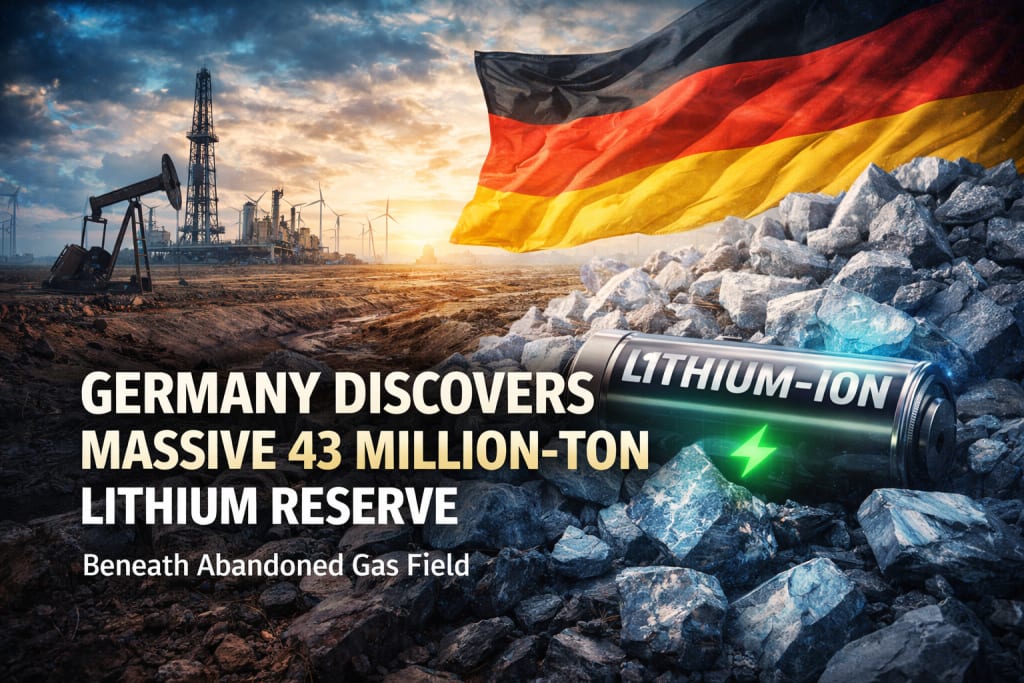
In a moment that may redefine Europe’s role in the global energy transition, Germany has announced the discovery of an enormous lithium reserve estimated at 43 million tons, buried deep beneath an abandoned natural gas field. The find is already being described as one of the largest known lithium resources on Earth, arriving at a time when demand for battery materials is exploding worldwide.
Lithium sits at the heart of modern technology. From electric vehicles and smartphones to renewable energy storage and national power grids, this lightweight metal has become the backbone of a low-carbon future. As countries race to secure reliable supplies, Germany’s discovery could dramatically reduce Europe’s dependence on foreign lithium imports—and challenge the current balance of power in the global battery market.
More than just a geological breakthrough, this discovery carries economic, environmental, and geopolitical implications that could shape the next several decades.
Why Lithium Is One of the World’s Most Valuable Resources
Often referred to as “white gold,” lithium has become one of the most strategically important materials of the 21st century. Its ability to store large amounts of energy in a lightweight form makes it essential for lithium-ion batteries, which power much of modern life.
Key Uses of Lithium Today
• Electric vehicles (EVs)
• Smartphones, laptops, and tablets
• Renewable energy storage for solar and wind
• Power tools and consumer electronics
• Grid-scale battery systems
As governments push for net-zero emissions and car manufacturers shift toward electric fleets, global lithium demand is expected to multiply several times over by 2040. Securing stable, affordable supplies has become a top priority for nations and corporations alike.
The Discovery: Lithium Beneath an Abandoned Gas Field
What makes Germany’s lithium find especially remarkable is where it was found.
The reserve lies beneath a depleted natural gas field, symbolizing a powerful transition from fossil fuels to clean energy. Instead of coal mines or open-pit lithium operations, scientists identified lithium-rich brine deep underground.
This brine-based lithium extraction differs significantly from traditional mining methods. Rather than massive land disruption or evaporation ponds, lithium can potentially be extracted using direct lithium extraction (DLE) technologies,
which:
• Use less land
• Consume less water
• Produce fewer emissions
• Reduce environmental damage
If successfully implemented at scale, this approach could make Germany one of the world’s leaders in low-impact lithium production.
How Big Is a 43 Million-Ton Lithium Reserve?
To put this discovery into perspective:
• A single electric vehicle battery contains about 8–10 kilograms of lithium
• 43 million tons could theoretically support billions of EV batteries
• The reserve could supply European battery needs for decades
While not all lithium will be economically or technically recoverable, even a fraction of this amount would place Germany among the top lithium-holding nations globally.
This scale alone makes the discovery a landmark moment in energy history.
Europe’s Lithium Problem—and Why This Changes Everything
Until now, Europe has relied heavily on lithium imports from countries such as:
• Chile
• Argentina
• Australia
• China
China, in particular, dominates lithium processing and battery manufacturing, giving it outsized control over global supply chains.
Germany’s discovery could significantly shift this dependency by:
• Strengthening Europe’s energy independence
• Supporting domestic battery production
• Reducing geopolitical vulnerability
• Shortening supply chains
The find aligns perfectly with the European Union’s push to build a self-sufficient battery ecosystem, from raw materials to finished electric vehicles.
Economic Opportunities for Germany and the EU
The economic implications of this lithium reserve could be enormous.
1. Supercharging Europe’s Battery Industry
Germany is already home to automotive giants like Volkswagen, BMW, and Mercedes-Benz. A domestic lithium supply could reduce battery costs, speed up EV production, and strengthen Europe’s competitiveness against U.S. and Asian manufacturers.
2. Job Creation and Regional Development
Lithium extraction, processing, and battery manufacturing require engineers, scientists, technicians, and skilled labor—potentially creating thousands of high-value jobs.
3. Attracting Global Investment
International companies may invest heavily in Germany’s energy storage and EV supply chain, boosting innovation and economic growth.
4. Supporting Renewable Energy Storage
Lithium batteries play a critical role in storing wind and solar power, helping stabilize grids as fossil fuels are phased out.
Environmental and Social Concerns Cannot Be Ignored
Despite the excitement, lithium extraction is not without challenges.
Environmental Risks
Even advanced extraction technologies can affect groundwater systems and ecosystems if poorly managed. Strict environmental oversight will be essential to prevent long-term damage.
Community Impact
Local communities may raise concerns about land use, industrial development, and water safety. Transparency, consultation, and fair benefit-sharing will be key to maintaining public trust.
Sustainability Questions
A clean-energy future must avoid repeating the mistakes of fossil fuel extraction. Responsible, regulated, and sustainable lithium production will determine whether this discovery truly supports climate goals.
A Powerful Symbol of the Energy Transition
There is something deeply symbolic about this lithium being found beneath an abandoned gas field.
It represents a turning point—where infrastructure once used for fossil fuels may now support the clean-energy economy. Former gas fields, oil sites, and industrial zones could become hubs for renewable energy, energy storage, and sustainable resource extraction.
Germany’s discovery offers a glimpse into how the energy transition may repurpose the past to power the future.
Global Implications for the Lithium Market
Germany’s lithium reserve could reshape global markets in several ways:
• Stabilizing lithium prices, making EVs more affordable
• Increasing competition for traditional lithium-producing countries
• Redrawing geopolitical influence as lithium becomes as strategic as oil once was
As demand rises, countries with secure lithium supplies will hold significant economic and political leverage.
Challenges Still Ahead
Despite the optimism, hurdles remain:
• Technical challenges in scaling extraction technology
• High upfront investment costs
• Regulatory approvals and environmental assessments
• Market price fluctuations
The discovery is not an instant solution—but it is a powerful opportunity.
What This Means for the Future of Electric Vehicles
Electric vehicles are central to climate targets worldwide, yet battery costs and supply shortages remain obstacles.
Germany’s lithium discovery could:
• Accelerate EV adoption across Europe
• Lower battery production costs
• Strengthen domestic EV manufacturing
• Reduce reliance on imported materials
Ultimately, this could make electric cars more affordable and accessible for everyday consumers.
Conclusion: A Discovery That Could Power the Future
Germany’s discovery of a 43 million-ton lithium reserve beneath an abandoned gas field may prove to be one of the most consequential energy finds of the century. It highlights lithium’s critical role in the green transition and demonstrates how former fossil fuel sites can support a sustainable future.
If developed responsibly, this resource could help Europe secure energy independence, expand electric mobility, and store renewable power for generations. But success will depend on balancing economic opportunity with environmental protection and social responsibility.
As the world accelerates toward a low-carbon future, Germany’s hidden lithium treasure may become a cornerstone of global clean-energy progress—and a defining chapter in the transition away from fossil fuels.
About the Creator
Adil Ali Khan
I’m a passionate writer who loves exploring trending news topics, sharing insights, and keeping readers updated on what’s happening around the world.
Keep reading
More stories from Adil Ali Khan and writers in Trader and other communities.
Buried for 33 Years: The Dream to Revive One of the Country’s Largest Gold Mines Is Back on the Map
For more than three decades, silence ruled the site where one of the country’s largest gold mines once thrived. Rusted machinery stood frozen in time. Flooded tunnels lay hidden beneath layers of earth. Warning signs faded under wind and rain, quietly marking what many believed was the end of an era.
By Adil Ali Khan7 days ago in Trader
Russia Wine Market Size & Forecast 2025–2033: A New Era for Domestic Vineyards and Changing Consumer Tastes
Introduction The Russia wine market is entering a transformative phase marked by rising domestic production, shifting consumer preferences, and a renewed focus on quality and origin. According to market estimates, the Russia wine market is anticipated to grow from US$ 9.23 billion in 2024 to US$ 15.61 billion by 2033, expanding at a compound annual growth rate (CAGR) of 6.11% during 2025–2033. This steady rise reflects not only increasing wine consumption but also the structural evolution of the industry itself.
By shibansh kumar3 days ago in Trader
Junk Silver in 2026: Is It Still a Good Investment?
Junk silver refers to US currency coins in circulation prior to 1965. They are often considered a great way to get into silver investments. The reason for this is that junk silver coins have a 90% silver composition, which allows them to track the spot price of silver.
By Sound Moneyabout 6 hours ago in Trader



Comments
There are no comments for this story
Be the first to respond and start the conversation.