
Junk Silver in 2026: Is It Still a Good Investment?
Learn what junk silver is, how it’s valued, and why 90% silver coins minted before 1965 remain a smart investment for 2026 and beyond.

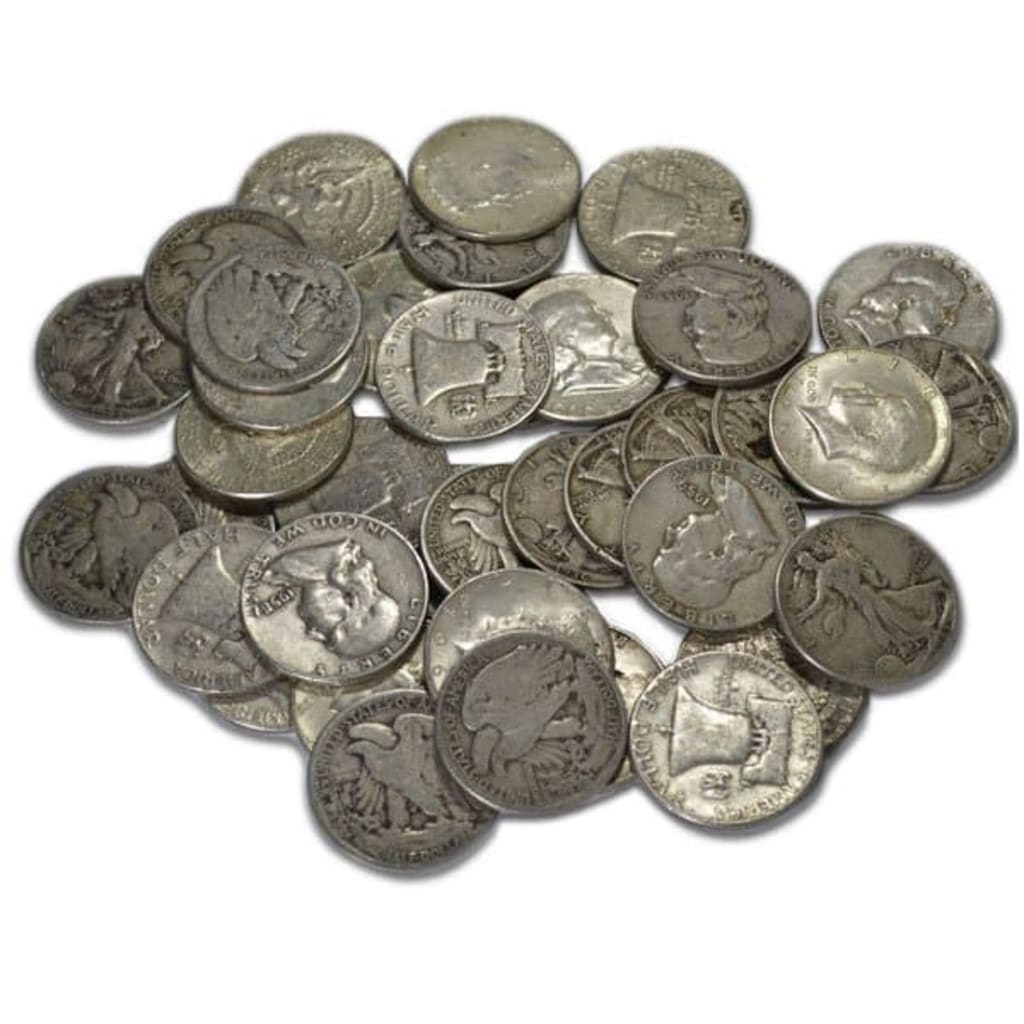
Junk silver refers to US currency coins in circulation prior to 1965. They are often considered a great way to get into silver investments. The reason for this is that junk silver coins have a 90% silver composition, which allows them to track the spot price of silver.
Junk silver coins can be a good silver investment, but it functions differently than traditional silver bullion investments. It’s crucial to understand how it differs so that you can make this investment asset work for you.
We’ll explore the ways what junk silver is, how it compares to other silver assets, and how you can make this investment work for your portfolio. Read on to find the answers to these questions!
What Is Junk Silver?
As mentioned before, junk silver refers to currency coins that were in circulation prior to the year 1965. These coins had a composition of 90% silver and 10% copper. More often, silver enthusiasts prefer to call these coins “Constitutional silver.”
The reason for this name goes back to the Coinage Act of 1792. After the ratification of the Constitution in 1789, the federal government had a new freedom not previously granted in the Articles of Confederation: the minting of nationwide currency.
From 1789-1792, the nation had a great deal of confusion with currency. The states used leftover state currencies from the previous Articles of Confederation, or else Spanish silver coins.
With the Coinage Act of 1792, Congress determined what type of coins would be in circulation, along with its design and composition. Part of that design was that these coins must be 90% silver and 10% copper.
That law continued until 1965. During the 1960s, silver’s spot price surpassed the face value of silver coins. As a result, many people began to hoard silver coins, which caused problems with the circulation.
To cut off this problem, Congress passed the Coinage Act of 1965. At this time, most of these coins had all their silver content replaced with a copper and nickel alloy. There was an exception for the half dollar, which was reduced to 40% silver content.
However, since these coins were a part of the currency, some of them still circulate. It’s possible to find them in your change to this day.
Where Does The Value of Junk Silver Come From?
Junk silver differs from silver bullion in a few ways. First of all, it has 90% silver purity, which is reduced from most silver bullion. Typically, bullion products have 99.9% silver purity, with some refineries and mints going so far as to make products with 99.99% silver purity.
Additionally, sterling silver has more silver content. This silver product has 92.5% silver content, while the remaining content is made from a copper alloy.
So, how does the value of junk silver differ from these silver products? Unlike silver bullion, junk silver derives its value from its melt value. It can also have numismatic value, making it a popular option in the coin collector community.
Junk silver can be melted down to access its silver value. Since silver has so many industrial uses, there is a high demand for that melted silver.
What Coins Are Junk Silver?
There are three primary denominations of “junk” coins in the United States. The categories are:
- Dimes
- Quarters
- Half-dollars
You may also see old silver dollars, which ceased production after 1965. That was one of the easiest ways for Congress to cut down on silver hoarding.
However, these different coins have not always had the same designs. So, it may help to know what designs can fall under the “junk silver” label:
- Barber Dimes (1892-1916)
- Mercury Dimes (1916-1945)
- Roosevelt Dimes (1946-1964)
- Barber Quarters (1892-1916)
- Standing Liberty Quarters (1916-1930)
- Washington Quarters (1932-1964)
- Barber Half Dollars (1892-1915)
- Walking Liberty Half Dollars (1916-1947)
- Franklin Half Dollars (1948-1963)
- Kennedy Half Dollars (1964) - 90% silver
- Kennedy Half Dollars (1965-1970) - 40% silver
- Morgan Dollars (1878-1904; 1921) - 90% silver
- Peace Dollars (1921-1928; 1934-1935)
You may find other coins and denominations in the category of junk silver, but the term primarily references dimes, quarters, half dollars, and occasional dollar coins.
How Can You Tell the Value of Junk Silver?
There is a basic calculation that you can use to find the silver content value in a junk silver coin. The calculation is as follows:
(0.715) x (Coin’s Face Value) x (Spot Price + Premium) = Silver Content Value
It is worth noting that you will likely pay more than the melt value of coins. When you sell older coins to a company, you will also likely receive less than the melt value for the coins.
There are a few reasons for this. First, heavily circulated coins have a lot of wear and tear. As a result, they may have a reduced amount of silver.
Another reason is even more pragmatic: businesses need to turn a profit. So, they will likely charge a premium on whatever junk silver coins you purchase. Check on the general market price of junk silver before purchasing to make sure you’re not paying an exorbitant amount on premiums.
What Are the Benefits of Buying Junk Silver?
There are several benefits to investing in junk silver. Some of those benefits include:
- Lower premiums
- High liquidity and recognizability
- Affordable entry point
- Finite and decreasing supply
Lower Premiums
We have mentioned that most exchanges will charge premiums on these coins. However, the premiums are also reduced from other silver products. The main reasons for this are that these coins have less silver and reduced manufacturing costs.
Liquidity and Recognizability
These coins have a tremendous advantage over other silver products for their liquidity. As former legal tender items, these coins are instantly recognizable to the general public. That recognizability makes it easy to buy, sell, or trade these coins. There is no need for specialized authentication technology, and a much more reduced risk of counterfeiting.
Affordable Entry Point
Another great advantage of junk silver coins is that they provide an affordable way to begin investing in silver. Bullion products have higher premiums and charge the full spot price of silver. In contrast, junk silver coins have lower premiums and more affordable prices.
This combination makes them a helpful way to diversify your portfolio and own silver. You can also build up a junk silver collection and exchange it for silver bullion over time.
Finite and Decreasing Supply
The final advantage of junk silver is its finite and decreasing supply. The government no longer mints coins with this silver composition, and many people have caught on to these coins’ worth. It is becoming more and more rare to see junk silver in everyday circulation.
This scarcity drives the cycle of supply and demand. As the supply of a product decreases and its demand increases, the more valuable the product becomes. This fact makes junk silver an investment opportunity: coins that may not be worth much now can become far more valuable over time.
Frequently Asked Questions (FAQ)
Q: What is junk silver (and why is it called that)?
A: “Junk silver” refers to US dimes, quarters, and half dollars minted before 1965 that contain 90% silver. The term “junk” doesn’t mean the coins have no value; it simply means they have little or no numismatic (collector) premium and are valued primarily for their silver content, not rarity or condition (grade).
Q: Is junk silver a good investment in 2026?
A: Yes, many investors still consider junk silver a solid hedge against inflation and fiat currency risk. Unlike silver bullion, junk silver is readily recognizable, divisible, and legal tender, making it a practical option for barter and wealth preservation.
Q: How much is $1 face value of junk silver worth today?
A: As a rule of thumb, $1 face value of 90% junk silver contains 0.715 troy ounces of pure silver (when circulated). Its market value depends on the current silver spot price. For example, if silver is $25 per ounce, $1 face in junk silver would be worth approximately $17.88 (0.715 x $25).
Q: Which coins are considered junk silver?
A: US coins typically classified as junk silver include:
- Dimes: Mercury and Roosevelt (pre-1965)
- Quarters: Washington and earlier (pre-1965)
- Half dollars: Walking Liberty, Franklin, and Kennedy (pre-1970; only 1964 is 90%)
These coins all contain 90% silver by weight.
Q: Can junk silver be used for barter in a currency crisis?
A: Yes. Junk silver is one of the most widely accepted forms of barter metal in prepper and survivalist circles. Its recognizable denomination, legal tender status, and small size make it ideal for everyday trade, unlike larger bullion bars or numismatic coins.
Decide If Junk Silver Is Right For Your Portfolio
Junk silver can be a good investment asset for your portfolio. Its many benefits make it a good starting place for new silver investors to start their precious metals journey.
Junk silver also represents a tangible link to the nation’s history through its coinage. Many of the nation’s most prized leaders and national symbols decorate these coins. Even for investors with a diversified precious metals portfolio, that appeal can be profound. It is also difficult to match with other investment options.
If you’re on the fence about junk silver coins, look into junk silver deals across precious metals exchanges and decide if the price is worth the benefits. You can always speak with a financial advisor about the topic, too. From there, you can decide whether junk silver is right for you!
About the Creator
Sound Money
Sound Money Reform
The Sound Money Defense League advocates for restoring gold and silver as constitutional money through grassroots activism, policy reform, and public education on the risks of fiat currency and the benefits of sound money.
Keep reading
More stories from Sound Money and writers in Trader and other communities.
How Much Gold and Silver Should I Own?
In recent months, gold and silver underwent an incredible rise in value, prompting many investors to ask, “How much gold and silver should I own?” These recent trends may explain why, according to Morningstar, roughly 38.6% of Americans aged 35-64 bought gold or silver in 2025.
By Sound Money5 days ago in Trader
Orthopedic Prosthetics Market Trends & Summary: Innovation, Aging Populations, and the Future of Mobility
Introduction The global orthopedic prosthetics market is entering a new era of transformation, driven by rapid technological progress, shifting demographics, and rising expectations for quality of life. According to Renub Research, the Orthopedic Prosthetics Market is expected to reach US$ 3.79 billion by 2033, up from US$ 2.27 billion in 2024, growing at a CAGR of 5.86% from 2025 to 2033. This steady growth reflects not only the increasing medical need for prosthetic solutions but also the expanding acceptance of these devices as life-enhancing technologies rather than mere medical aids.
By shibansh kumarabout 12 hours ago in Trader
Germany Discovers Massive 43 Million-Ton Lithium Reserve Beneath Abandoned Gas Field
e Introduction: A Hidden Resource That Could Power a Continent In a moment that may redefine Europe’s role in the global energy transition, Germany has announced the discovery of an enormous lithium reserve estimated at 43 million tons, buried deep beneath an abandoned natural gas field. The find is already being described as one of the largest known lithium resources on Earth, arriving at a time when demand for battery materials is exploding worldwide.
By Adil Ali Khan2 days ago in Trader



Comments
There are no comments for this story
Be the first to respond and start the conversation.