
Four Primary Reasons For The Depreciation Of The Pakistani Rupee
Becoming Asia’s worst-performing currency, the Pakistani rupee has continuously been depreciating against the US dollar, which currently stands at 175.58 (dated:01-12-21).

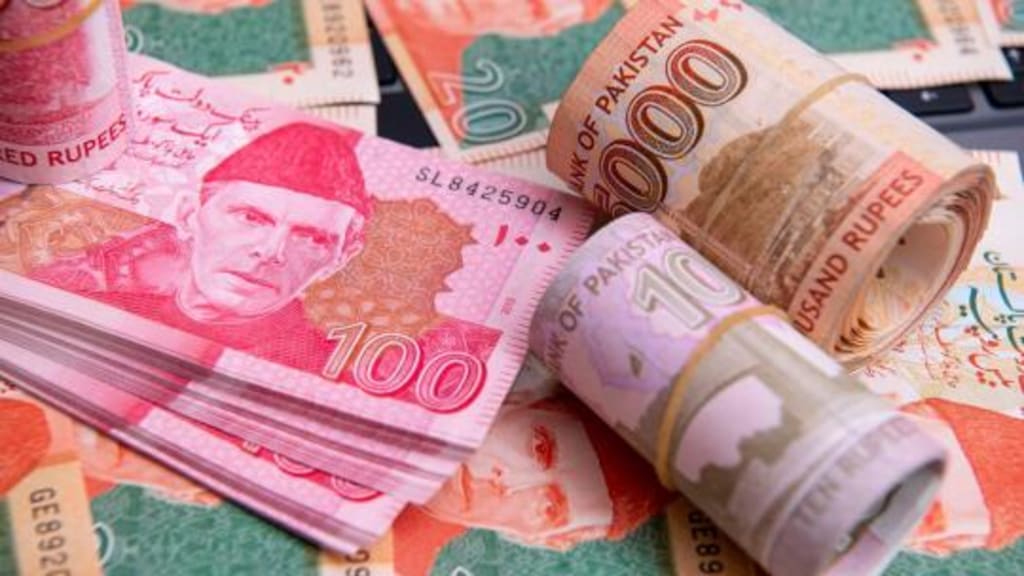
This is a result of increasing inflation, Trade shortfall, and negative interest rate trends. This has been top news that the situation for Pakistan is getting alarming, and this volatility of exchange rate is making Pakistan suffer on the economic front, making it unable to move forward with its indebtedness. We’ve made a list of four primary reasons for the deterioration of the Pakistani rupee against the US dollar.
Account Deficit:
The first and most significant reason behind the devaluation of the rupee is Pakistan’s current account deficit Pakistan’s, i.e., the gap between foreign payments and inflows which was narrowed down to $1.47 billion in September 2021. Another top news in Pakistan has been a recent tweet in which The State Bank of Pakistan (SBP) reported that the current account balance recorded a surfeit of $27 million in the same period of last months. In addition to this, the extended delays and negotiations with the International Monetary Fund (IMF) have made the situation worse. Its continued demand for further rupee devaluation due to the unsettled talks has created an atmosphere of hesitancy in the market.
Increase In Imports:
The second most considerable factor behind the rupee depreciation is the extreme increase in Pakistan’s imports, which increased by 65%. This increase has occurred only in the first four months of the current financial year, and the change is dramatic compared to the last year. The trade deficit has been increasing drastically since December 2020, triggered by dramatic growth in imports and comparatively slow growth in exports. The annual import bill went up by 25.8 percent, or USD 11.517 billion, to USD 56.091 billion in FY21 from USD 44.574 billion over the corresponding months of last year. With a total import amount of Rs. 25 billion, the total import amount is expected to reach Rs75 billion by the end of this year. With no significant increase in exports, these drastic increases in imports have played a crucial role in the deterioration of the rupee. While addressing a news conference, Adviser on Commerce Razak Dawood said that the main reason for increasing import bills is wheat and sugar imports. According to him, the import value of wheat and sugar rested at USD 1.2 billion in the last financial year. The commodities that Pakistan used to export are now being imported. Moreover, mobile phones worth $650 million, airplanes, ships, and luxury boats worth $300 million, grams and pulses worth $250 million, and cooking oil worth over $250 million have been imported in the past four months
deficit. Going to the IMF with such a massive current account deficit would create problems in the economy.
Inflation:
The third factor contributing to rupee devaluation is the drastic increase in the inflation rate, which has been ranked the fourth highest in the world by the Economist. as the fourth highest in the world. In the last three years, most indices indicated double-digit inflation during 2018-2021, compared to low single-digit maintained by the PMLN during 2015-18. A simple addition of annual inflations across all the three indices shows the PTI’s inflation on an average was Ten physical capital (pc) per annum or more which was less than 3pc in PMLN’s government. The thing to be worried about most is food inflation, which was under 2pc by the end of the PMLN government n 2018. By November 2018, it had gone as high as twenty-four physical capital in rural areas and nineteen in urban areas under the PTI government. To date, It remains high in double digits, unfortunately.
Money Supply:
The fourth and the last most significant factor behind the rupee devaluation is the money supply. In September, Pakistan’s Money Supply increased to 23921017 PKR Million from 23518559 PKR Million in August 2021. It is estimated to have increased by 49% over the last three years. According to a calculation by Doctor Hafeez Pasha, a 1% increase in money supply causes inflation to rise by 0.6%, making Pakistan’s inflation expected to rise by 30% after 50%.
To Wrap Up:
To keep up with Pakistan’s latest news, continue reading Pakistan Observer. We give you daily updates on Pakistan’s most current entertainment news, keeping you informed and entertained.
About the Creator
Hasnain Alam
SEO Services in Pakistan Experienced with a history of working in the information technology and services industry.
Keep reading
More stories from Hasnain Alam and writers in Trader and other communities.
Local SEO Services In Pakistan
The demand for affordable, yet professional and reliable Local SEO Services in Pakistan is on the rise. Local SEO Services in Pakistan are required by every business from small to large industries to large international corporations. Lahore and Karachi are the top tier cities in Pakistan which are known for their commercial importance. Lahore being the second largest city in Pakistan and Karachi being the third largest city in Pakistan has huge potential to be the next big hit on the Google map. With increasing population and increasing commercial significance, business owners and managers are now considering Lahore and Karachi as their Local SEO destination.
By Hasnain Alam4 years ago in 01
Australia E-Invoicing Market Set for Strong Digital Growth on the Back of Standardization and Government Leadership
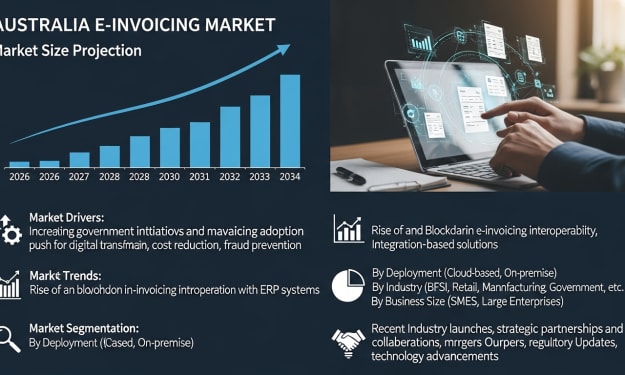
The Australia e-invoicing market is transitioning from paper-based and semi-digital billing processes to fully automated, standardized digital invoicing as businesses and government alike pursue efficiency, compliance, and enhanced cash flow management. According to IMARC Group, the market reached a value of USD 445.2 Million in 2024 and is expected to expand at a CAGR of 15.20% between 2025-2033, reaching USD 1,832.7 Million by 2033. This robust growth outlook reflects not only the broad opportunities presented by digital transformation initiatives but also active public-sector support and enterprise uptake of advanced e-invoicing solutions.
By Rashi Sharma4 days ago in Trader


Comments
There are no comments for this story
Be the first to respond and start the conversation.