
Europe Sugar Confectionery Market Size and Forecast 2025–2033
Sweet Traditions Meet Smart Innovation as Europe’s Confectionery Industry Evolves

Europe Sugar Confectionery Market Outlook
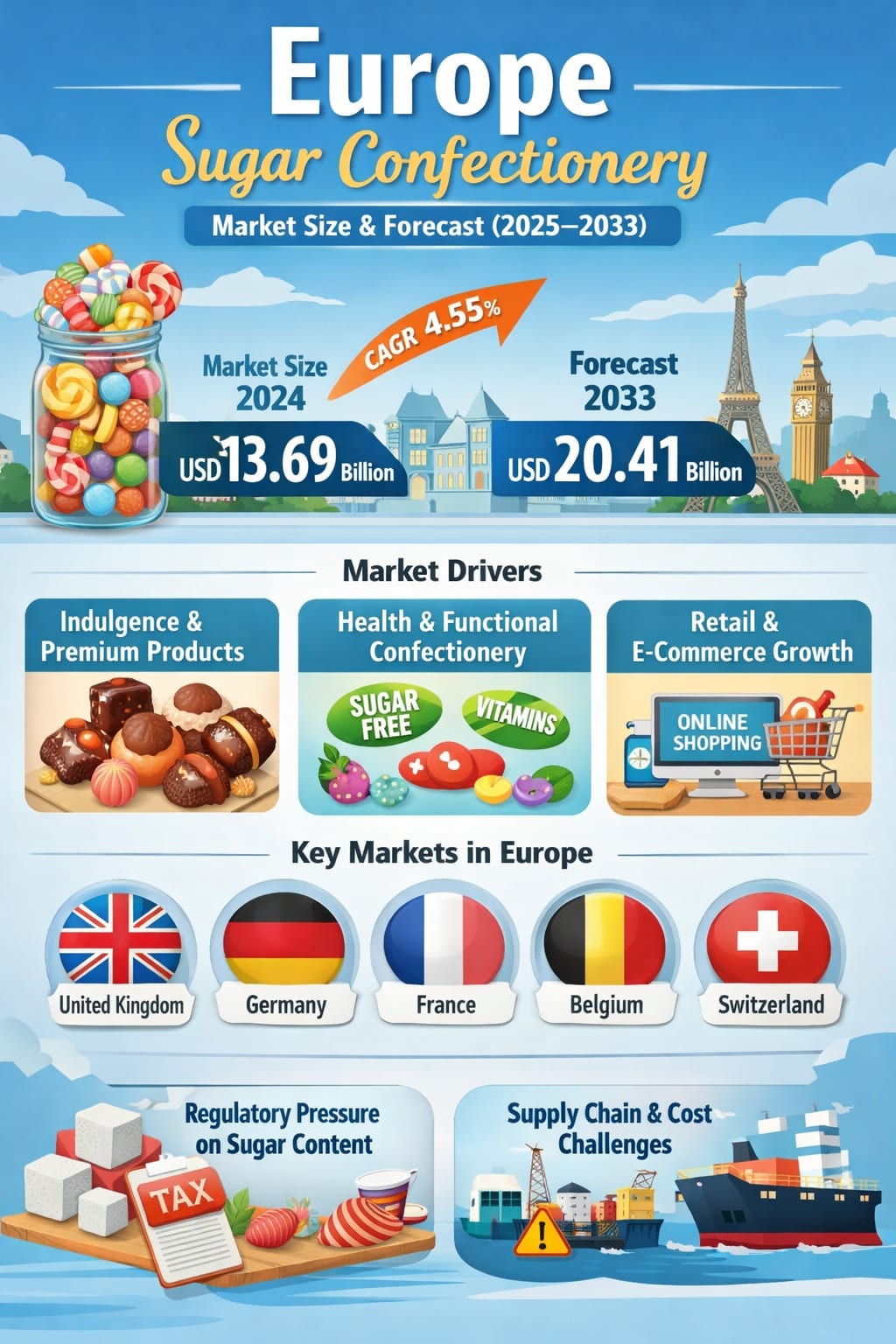
The Europe Sugar Confectionery Market continues to demonstrate resilience and adaptability in a rapidly changing food and consumer goods landscape. According to Renub Research, the market was valued at USD 13.69 billion in 2024 and is projected to reach USD 20.41 billion by 2033, expanding at a compound annual growth rate (CAGR) of 4.55% during the forecast period from 2025 to 2033.
This steady growth reflects the enduring appeal of sweet treats across European cultures, combined with the industry’s ability to evolve in response to health trends, premiumization, and changing retail habits. While sugar confectionery is often associated with indulgence rather than nutrition, it continues to occupy a powerful emotional and cultural space in Europe—linked to celebrations, gifting, seasonal traditions, and everyday moments of pleasure.
Market expansion is being driven by several converging forces: rising demand for indulgent and premium sweets, continuous product innovation, and strong seasonal consumption patterns. At the same time, consumer preferences are shifting toward sugar-free, reduced-sugar, and functional confectionery, encouraging manufacturers to rethink formulations without sacrificing taste or experience. The rapid expansion of modern retail and e-commerce platforms is further strengthening product accessibility and market penetration across the region.
Europe Sugar Confectionery Market Overview
Sugar confectionery refers to sweet-based food products primarily made from sugar and other carbohydrate sweeteners, often blended with flavorings, colorings, and textural ingredients. This broad category includes hard candies, gummies, toffees, caramels, mints, marshmallows, lollipops, fondants, and jellies. These products are largely consumed for enjoyment and sensory pleasure rather than nutritional value, offering a combination of sweetness, flavor, and texture that appeals to a wide demographic.
In Europe, sugar confectionery holds a unique cultural position. Many countries in the region have centuries-old confectionery traditions, with artisanal recipes passed down through generations. Markets such as Germany, the United Kingdom, France, Italy, Belgium, and Switzerland combine strong domestic consumption with well-established export-oriented premium brands. European consumers tend to value both tradition and innovation, creating demand for classic recipes alongside modern offerings such as vegan, natural-ingredient, and sugar-free sweets.
The region’s sophisticated retail ecosystem—spanning supermarkets, hypermarkets, convenience stores, specialty confectionery shops, travel retail, and online platforms—ensures wide availability and strong visibility for sugar confectionery products. This combination of cultural relevance, product diversity, and retail strength continues to make sugar confectionery a stable and attractive segment within Europe’s broader food industry.
Growth Drivers in the Europe Sugar Confectionery Market
Growing Demand for Indulgence and Premium Experiences
Despite increasing health awareness, European consumers continue to seek out indulgent food experiences, particularly in categories linked to pleasure, gifting, and social occasions. Sugar confectionery fits naturally into this space. One of the strongest trends shaping the market is premiumization, with consumers showing a greater willingness to pay for artisanal textures, unique flavor combinations, high-quality ingredients, and sophisticated packaging.
Seasonal occasions such as Christmas, Easter, Valentine’s Day, and regional festivals create strong demand spikes for premium and gift-oriented confectionery products. Limited-edition flavors, themed collections, and brand collaborations keep the category fresh and relevant, especially among younger consumers who are influenced by social media trends and visual appeal.
Manufacturers are also expanding into more “adult” flavor profiles, including botanical, herbal, and gourmet-inspired tastes, which help reposition sugar confectionery as a treat for all age groups rather than only for children. In March 2023, for example, Hershey’s launched Hershey’s Kisses Milklicious candies, featuring a creamy milk chocolate filling inside the classic Kisses format—highlighting how even established brands continue to innovate around indulgence and texture.
Overall, the ongoing appetite for premium and experiential products remains a powerful engine for growth in Europe’s sugar confectionery market.
Innovation in Health-Conscious and Functional Offerings
One of the most important structural shifts in the market is the move toward health-conscious and functional confectionery. Rather than abandoning sweets altogether, many consumers are looking for “better-for-you” alternatives that align with modern lifestyles. In response, manufacturers are investing heavily in reduced-sugar, sugar-free, plant-based, and clean-label formulations.
The use of alternative sweeteners, added fibers, vitamins, and even probiotics is helping brands create products that offer perceived functional benefits such as digestive support or energy, while still delivering on taste and enjoyment. Transparency in ingredient sourcing and labeling has become especially important for millennial and Gen Z consumers, who tend to scrutinize product claims more closely than previous generations.
This wave of innovation is not only helping the industry respond to regulatory and health pressures, but also expanding the overall consumer base by attracting people who previously avoided traditional sugary candies. In April 2023, Applied Nutrition partnered with Swizzels Sweets to launch sports nutrition products in popular confectionery flavors, including Drumstick-flavored hydration drinks and pre-workout shots—an example of how confectionery-inspired flavors are crossing into functional nutrition categories.
By blending wellness positioning with indulgent experiences, these new offerings are strengthening the long-term resilience of the European sugar confectionery market.
Wider Distribution and E-commerce Reach
Distribution transformation is another major growth driver. While supermarkets and convenience stores remain central sales channels, e-commerce and omnichannel retail have significantly expanded consumer access to both mass-market and niche confectionery products.
Online platforms allow brands—especially smaller or artisanal producers—to reach audiences well beyond their local markets. Subscription boxes, themed bundles, and direct-to-consumer websites are creating new ways to engage customers and build loyalty. Digital marketing tools also enable faster product testing, targeted promotions, and more personalized shopping experiences.
At the same time, convenience stores and travel retail outlets continue to benefit from impulse purchases and on-the-go consumption, while specialty stores focus on premium and gift-oriented assortments. In March 2024, Europraliné introduced new products, including the Chest Trap box of chocolates and the Trapa Collection 100% cocoa tablet, with some of its offerings receiving “Flavor of the Year” recognition—showing how new product launches are supported by diversified retail strategies.
This evolving distribution landscape is increasing purchase frequency, improving product visibility, and accelerating market expansion across Europe.
Challenges in the Europe Sugar Confectionery Market
Regulatory and Health-Induced Pressure on Sugar Content
One of the biggest challenges facing the industry is growing regulatory and public health pressure to reduce sugar consumption. Several European governments have introduced or are considering sugar taxes, stricter labeling requirements, and tighter marketing regulations, particularly for products aimed at children.
These measures are pushing manufacturers to reformulate products, which can be costly and technically challenging. Maintaining taste, texture, and shelf stability while reducing sugar often requires more expensive ingredients or complex production processes. There is also the risk that loyal consumers may resist changes to familiar products.
At the same time, rising health awareness is gradually shifting some consumer spending toward lower-sugar snacks and alternative treats, potentially weakening impulse purchases in traditional confectionery categories. To remain competitive, brands must invest in innovation, transparent communication, and portfolio diversification—often under tighter margin conditions.
Ingredient Cost Volatility and Supply Chain Disruption
The sugar confectionery industry is also exposed to raw material price volatility and supply chain disruptions. Key inputs such as sugar, cocoa derivatives, fruit ingredients, and packaging materials are sensitive to weather events, geopolitical tensions, and logistical bottlenecks. These factors can drive up costs and complicate inventory planning, especially during peak seasonal periods.
Smaller and mid-sized producers are particularly vulnerable, as they may lack the scale or financial flexibility to hedge against price fluctuations or secure long-term supply contracts. In addition, rising demand for traceable and sustainably sourced ingredients increases complexity and compliance costs, requiring more rigorous supplier audits and certification processes.
While better supply chain management and diversified sourcing strategies can reduce risk, volatility remains a persistent challenge for profitability and operational stability in the European sugar confectionery market.
Segment Insights
Europe Lollipops Market
Lollipops remain one of the most visible and accessible segments within Europe’s sugar confectionery market. Traditionally associated with children, they are now increasingly being repositioned for broader audiences through novel flavors, premium ingredients, and creative designs. Trends such as cocktail-inspired tastes, herbal infusions, multi-layered constructions, and sugar-free variants are expanding the category’s appeal.
Packaging innovations, including individually wrapped sticks and multipacks for sharing, continue to support both hygiene and convenience. Seasonal and novelty-themed lollipops perform particularly well in e-commerce and social media-driven retail environments, where visual appeal plays a major role in purchasing decisions. Despite health concerns around sugar intake, lollipops remain popular for festive occasions and impulse snacking across Europe.
Europe Toffees and Nougats Market
Toffees and nougats occupy a more heritage-driven and premium-leaning space within the market. These products are often associated with artisanal production, regional specialties, and gift-oriented consumption. Chewy textures and rich flavor profiles appeal to consumers seeking a more indulgent and traditional confectionery experience.
Current trends include the use of single-origin ingredients, gourmet additions such as sea salt or chocolate, and lower-sugar formulations. Attractive packaging, often in tins or premium boxes, reinforces their positioning as suitable gifts. While demand peaks during holidays and special occasions, year-round artisanal offerings provide a stable revenue base for producers focused on quality and authenticity.
Europe Sugar Confectionery Online Retail Store Market
Online retail is reshaping how European consumers discover and buy sugar confectionery. Digital platforms offer access to a far wider range of products than most physical stores, including niche, imported, and limited-edition items. Subscription models, curated gift boxes, and themed assortments are increasing average order values and strengthening customer loyalty.
E-commerce also enables cross-border sales, giving smaller producers the opportunity to reach international audiences without heavy investment in physical retail. Although impulse buying remains stronger in brick-and-mortar stores, online channels excel in convenience, variety, and storytelling, particularly for premium and artisanal confectionery brands.
Europe Sugar Confectionery Convenience Store Market
Convenience stores continue to play a crucial role in driving volume sales through impulse purchases and immediate consumption. Located near transport hubs, fuel stations, and busy urban areas, these outlets are ideal for small-pack items such as boiled sweets, toffees, and lollipops.
Effective merchandising—especially checkout displays and promotional racks—remains key to performance. While price sensitivity is high in this channel, there is growing space for reduced-sugar and “better-for-you” options that align with changing consumer expectations. Fast restocking cycles and tailored product assortments help convenience retailers stay relevant despite the growth of online shopping.
Country-Level Highlights
Belgium
Belgium’s sugar confectionery market blends a strong artisanal heritage with modern premium positioning. While the country is globally famous for chocolate, it also has a rich tradition of high-quality sweets, nougats, and caramels. Tourism and gifting culture support strong demand for premium boxed assortments, and sustainability and ingredient traceability are increasingly important to local consumers. In September 2025, Neuhaus partnered with three-Michelin-star chef Tim Boury to launch the “Les Savoureux” collection, highlighting Belgium’s continued focus on craftsmanship and high-end innovation.
Switzerland
Switzerland’s confectionery market is strongly oriented toward quality and premium value. Although chocolate dominates the country’s image, sugar confectionery also benefits from the same reputation for craftsmanship and fine ingredients. Boutique stores, high-end retailers, and travel retail are key channels. In September 2023, Maestrani collaborated with Lagardère Travel Retail Switzerland to launch Avelines Princesses chocolate as a travel-retail exclusive, underscoring the importance of premium positioning in the Swiss market.
United Kingdom
The UK represents one of Europe’s most dynamic and competitive sugar confectionery markets. Strong mass-market brands coexist with independent producers, supported by a wide retail footprint that includes supermarkets, convenience stores, discounters, and online platforms. Seasonal launches, novelty products, and reduced-sugar innovations drive frequent product refresh cycles, while private labels play a significant role in value-oriented segments.
Germany
Germany’s market is characterized by consumers who value quality, transparency, and tradition. Fruit gummies, hard candies, and marzipan are especially popular. Clean-label and naturally flavored products are gaining traction, and seasonal events such as Christmas markets remain important demand drivers. Both mass-market and premium strategies find strong acceptance in this market.
France
France approaches sugar confectionery with an emphasis on balance, texture, and presentation. Products such as pâtes de fruits and nougats are part of the country’s culinary heritage. Consumers favor natural ingredients and refined flavors, supporting premium and regional specialties. Boutique stores and patisseries remain central to discovery, while modern retail serves everyday consumption needs.
Market Segmentation
By Confectionery Variant:
Hard Candy
Lollipops
Mints
Pastilles, Gummies, and Jellies
Toffees and Nougats
Others
By Distribution Channel:
Convenience Store
Online Retail Store
Supermarket/Hypermarket
Others
By Country:
Belgium, France, Germany, Italy, Netherlands, Russia, Spain, Switzerland, Turkey, United Kingdom, Rest of Europe
Competitive Landscape
Key players operating in the Europe Sugar Confectionery Market include:
August Storck KG, Cloetta AB, Ferrero International SA, Lavdas SA, Mars Incorporated, Mondelēz International Inc., Nestlé SA, Perfetti Van Melle BV, Ricola AG, Swizzels Matlow Ltd.
All major players are analyzed across four viewpoints: Overview, Key Persons, Recent Developments, and Revenue, highlighting a competitive environment driven by brand strength, innovation pipelines, and expanding distribution networks.
Final Thoughts
The Europe Sugar Confectionery Market is entering a phase where tradition and transformation coexist. With the market expected to grow from USD 13.69 billion in 2024 to USD 20.41 billion by 2033, the industry is proving that indulgence still has a strong place in modern consumer culture. At the same time, innovation in reduced-sugar, functional, and premium products is reshaping how confectionery fits into contemporary lifestyles.
As brands navigate regulatory pressures, cost volatility, and shifting consumer expectations, those that successfully balance taste, trust, and transparency will be best positioned to capture long-term growth. In this evolving landscape, Europe’s sugar confectionery sector remains not just a market of sweets—but a reflection of changing tastes, habits, and values across the region.
About the Creator
Philippines Menswear Market 2026: Style Evolution, Urban Fashion & the Rise of Modern Male Identity
Philippines Menswear Market Overview The Philippines menswear market is undergoing a visible transformation as fashion becomes an increasingly important part of self-expression, lifestyle identity, and professional presence for Filipino men. What was once a largely functional clothing market has evolved into a style-driven industry influenced by urban culture, social media, international brands, and a growing middle class. The Philippines menswear market size reached USD 13,072.8 Million in 2025. Looking forward, the market is expected to reach USD 19,369.0 Million by 2034, exhibiting a growth rate (CAGR) of 4.47% during 2026-2034.
By Manisha Dixitabout 22 hours ago in Trader
Australia Smart Homes Market: From Connected Devices to Intelligent Living Spaces
The Australia smart homes market is undergoing rapid transformation as consumers increasingly adopt connected technologies that automate everyday household activities. According to IMARC Group’s latest analysis, the market reached USD 4.29 billion in 2025 and is projected to grow to USD 11.54 billion by 2034, exhibiting a strong CAGR of 11.64% during 2026–2034.
By Amélie Belle4 days ago in Trader



Comments
There are no comments for this story
Be the first to respond and start the conversation.