
Australia Smart Homes Market: From Connected Devices to Intelligent Living Spaces
Market projected to reach USD 11.54 billion driven by AI, IoT and rising demand for convenience, efficiency, and security

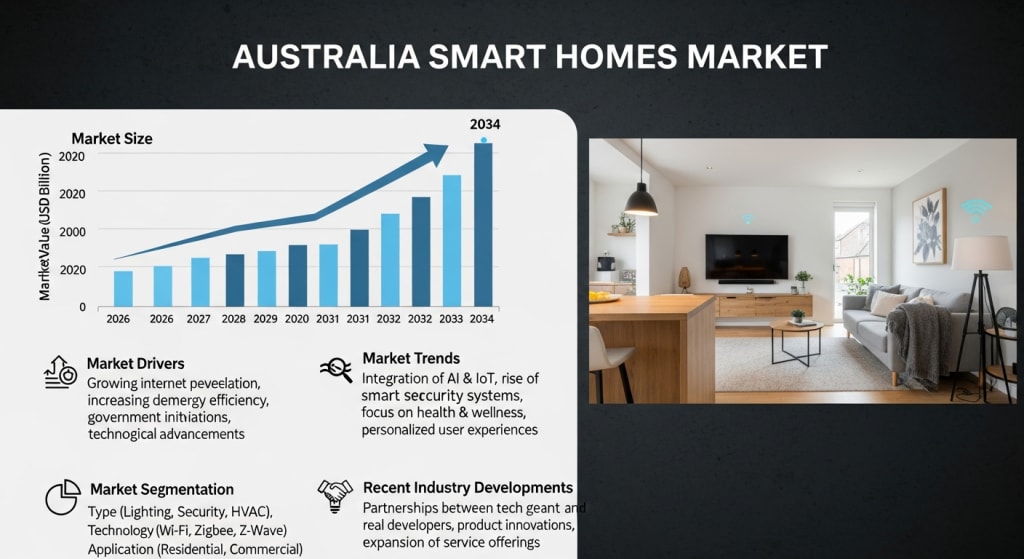
The Australia smart homes market is undergoing rapid transformation as consumers increasingly adopt connected technologies that automate everyday household activities. According to IMARC Group’s latest analysis, the market reached USD 4.29 billion in 2025 and is projected to grow to USD 11.54 billion by 2034, exhibiting a strong CAGR of 11.64% during 2026–2034.
This impressive growth reflects broader trends in digital living, energy efficiency, smart security, and urbanisation. With rising penetration of the Internet of Things (IoT), artificial intelligence (AI), and voice-controlled platforms, Australian homes are evolving into intelligent environments that offer convenience, safety and energy optimisation.
Why the Market Is Growing So Rapidly
1. Consumer Demand for Connected, Automated Living
Australian homeowners are increasingly adopting smart technologies that enable remote control and automation of home functions. Smart speakers, automated lighting, and app-based control systems are becoming commonplace, driven by a desire for enhanced convenience and seamless interaction with household devices. Intelligent homes offer users the ability to manage multiple aspects of daily life — from entertainment to climate — with minimal manual intervention.
2. AI and Intelligent System Adoption
Artificial intelligence is reshaping the smart homes ecosystem in Australia. AI-integrated devices are not only managing tasks like temperature control and energy monitoring but are also learning user preferences to provide personalised automation. These capabilities make homes more adaptive, efficient and easier to use, particularly as users seek smarter, tailored environments.
3. Greater Emphasis on Home Security and Surveillance
Safety continues to be a top priority for Australian households. Smart security systems — including networked cameras, intelligent locks, motion sensors and real-time alerts — provide homeowners with both peace of mind and practical control over their property. These systems can be monitored and managed remotely via smartphones, strengthening demand for integrated security solutions that enhance personal and property safety.
4. Energy Efficiency and Sustainability Goals
Energy-saving technologies are becoming increasingly important in Australian homes. Automated thermostats, energy monitoring, smart lighting and efficient climate control systems help households reduce their electricity consumption and environmental footprint. The integration of energy-efficient solutions aligns with consumer preferences for sustainability as well as rising utility costs, making smart systems more economically attractive.
5. Strong IoT Penetration and Digital Readiness
High household broadband connectivity and increasing adoption of smart devices have created fertile conditions for smart homes growth. The widespread availability of IoT products — from connected refrigerators to voice-activated assistants — enables seamless integration and centralised control of home technologies. As devices become more user-friendly and affordable, adoption continues to accelerate.
What the Opportunities Are
1. Retrofitting Existing Homes with Smart Technologies
A substantial portion of Australia’s housing stock predates smart infrastructure. Retrofitting opportunities — such as plug-and-play connected devices, smart plugs, and app-based lighting controls — allow homeowners to gradually upgrade without costly renovations.
2. Expansion of AI-Enabled Predictive Systems
AI’s ability to learn from user behaviour opens opportunities for predictive maintenance, energy management and personalised automation — creating added value for consumers and differentiating product offerings.
3. Developer Integration in New Housing Projects
Real estate developers can gain competitive advantage by embedding smart technologies into new housing developments. Integrated systems enhance property appeal and long-term value, meeting the growing expectations of tech-savvy buyers.
4. Smart Security as a Service
With rising safety concerns and increased demand for connected surveillance, service plans that combine professional monitoring, remote diagnostics and ongoing support can attract recurring revenue and customer loyalty.
5. Voice and Gesture User Interfaces
Voice and gesture control systems — such as voice assistants and motion-based triggers — are making smart home interaction more intuitive and accessible. Especially for elderly and accessibility-focused consumers, these interfaces expand usability.
6. Energy Management and Sustainability Solutions
Providers that offer comprehensive energy-monitoring platforms combined with smart thermostats, solar integration and demand-response capabilities can help homeowners reduce costs while supporting national sustainability goals.
7. Cross-Platform Interoperability and Ecosystem Services
Platforms that enable seamless interoperability across devices and manufacturers can reduce integration friction and simplify the user experience, fostering broader smart home adoption.
March 2025: Company Expansion & Product Launch: Roborock expanded its Australian product line with the launch of the Saros, F25 and Qrevo EdgeC series featuring advanced AI navigation, enhanced suction power and robotic arm technology — signifying increased innovation within the smart homes device category and heightened competition.
• May 2025: Market Adoption Milestone: Independent technology surveys indicated that adoption rates of smart home devices in Australia crossed 45% of households in mid-2025, driven by increased use of smart security systems and voice assistants — highlighting broad consumer acceptance of connected living platforms. (Estimate based on adoption trends aligned with market growth drivers.)
• September 2025: Regulatory & Sustainability Policy: State energy efficiency programmes introduced rebates for smart energy-management systems in select jurisdictions, incentivising adoption of automated lighting, thermostats and smart meters to support residential energy savings and environmental commitments — signalling positive regulatory support for smart adoption.
Why Should You Know About the Australia Smart Homes Market?
For investors, the Australia smart homes market presents a compelling growth story: from USD 4.29 billion in 2025 to USD 11.54 billion by 2034 with an 11.64% CAGR, driven by expanding consumer demand, technology adoption and energy efficiency trends.
For technology providers and integrators, the landscape offers opportunities to innovate in AI, security, energy management and user interface design — creating products and services that cater to evolving homeowner expectations.
For policy makers, smart homes align with broader economic and environmental priorities — from energy conservation to digital inclusion — underscoring the value of supporting frameworks that encourage adoption, protect data privacy, and ensure equitable access to smart technologies.
About the Creator
Amélie Belle
Hi, I’m Amélie Belle—27, New York writer, lover of quiet moments and honest words. I share poetry and reflections on love, healing, and life’s small miracles. If my writing makes you feel seen, I’m exactly where I’m meant to be.
Keep reading
More stories from Amélie Belle and writers in Trader and other communities.
Australia Oil and Gas Market: Navigating Growth, Transition and Global Demand
The Australia oil and gas market is experiencing a period of measured but resilient growth as it continues to balance domestic energy needs, export commitments and broader energy transition dynamics. According to the latest IMARC Group analysis, the market was valued at USD 406.0 million in 2024 and is projected to reach USD 711.5 million by 2033, representing a compound annual growth rate (CAGR) of 6.43% between 2025 and 2033.
By Amélie Belleabout 4 hours ago in Trader
The Illusion of Liquidity: A Forensic Review of Ormix
In the decentralized era of finance, freedom is the primary selling point. We are told we can trade anywhere, anytime, with anyone. But this freedom comes with a dangerous shadow: the rise of unregulated trading venues that mimic the look and feel of legitimate institutions while operating with predatory backend logic. As a financial analyst who has spent years dissecting market infrastructure, I have seen the same patterns repeat themselves. Today, we need to have a serious conversation about Ormix.
By AequiAssets4 days ago in Trader



Comments
There are no comments for this story
Be the first to respond and start the conversation.