
Europe Kids Food & Beverage Market Size and Forecast 2025–2033
How nutrition-first parenting, organic trends, and smart product innovation are reshaping Europe’s kids food and beverage industry

Europe Kids Food & Beverage Market Overview
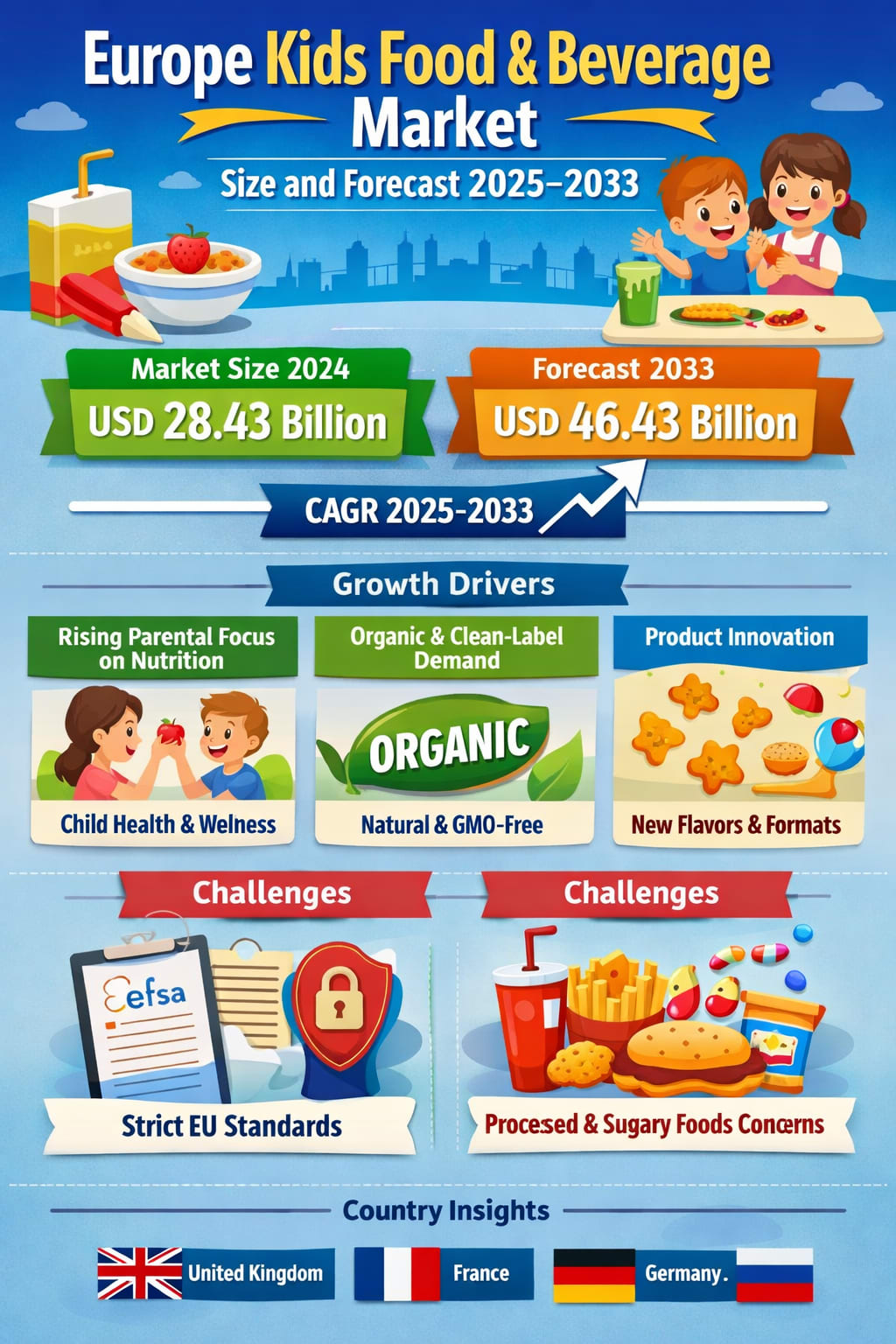
The Europe Kids Food & Beverage Market is entering a dynamic phase of growth, driven by changing parental attitudes toward child nutrition, stronger regulatory oversight, and continuous innovation in product formulation and packaging. According to Renub Research, the market was valued at USD 28.43 billion in 2024 and is projected to reach USD 46.43 billion by 2033, expanding at a compound annual growth rate (CAGR) of 5.60% during 2025–2033.
Kids food and beverage products represent a specialized segment of the broader food industry, designed to meet children’s nutritional requirements while also appealing to their taste preferences. This category includes fortified cereals, dairy products, snacks, frozen meals, shelf-stable foods, juices, flavored waters, and a growing range of plant-based and functional products. These offerings are often enriched with essential vitamins and minerals to support healthy growth, cognitive development, and immunity.
Across Europe, parents are increasingly conscious of what their children consume. Concerns over childhood obesity, sugar intake, food allergies, and long-term health outcomes are reshaping purchasing decisions. As a result, demand is rising for organic, clean-label, low-sugar, and allergen-free products. At the same time, manufacturers are responding with innovative flavors, attractive packaging, portion-controlled servings, and nutritionally balanced formulations that satisfy both children and parents.
The European kids food and beverage market is also benefiting from strong retail infrastructure, expanding e-commerce penetration, and supportive public health initiatives that promote better eating habits from an early age. Together, these factors are transforming the category from a convenience-driven segment into a nutrition-led, value-added market with long-term growth potential.
Market Growth Drivers
Rising Parental Focus on Child Nutrition
One of the strongest growth drivers in the European kids food and beverage market is the rising emphasis on child nutrition. Parents today are far more informed about the link between diet and long-term health outcomes, including immunity, cognitive development, and the risk of lifestyle-related diseases. This awareness has increased demand for foods that are not only tasty but also nutritionally balanced.
Manufacturers are responding by launching products fortified with vitamins, minerals, fiber, and proteins while reducing sugar, salt, and artificial additives. Breakfast cereals, dairy-based snacks, fruit-based drinks, and ready-to-eat meals are increasingly positioned as functional foods that support growth and overall well-being.
Public health campaigns and clearer nutritional labeling across Europe are also playing a key role in shaping consumer behavior. These initiatives encourage parents to read labels carefully and choose healthier options, accelerating the shift toward transparency and clean-label products. A notable example of policy-level commitment to child nutrition was seen in November 2024, when ministers and representatives from across Europe gathered in Kyiv for the European Regional School Meals Summit, emphasizing the goal of ensuring nutritious meals for every child by 2030.
Expansion of Organic and Clean-Label Offerings
The organic and clean-label movement is having a profound impact on the kids food and beverage segment in Europe. Parents are increasingly concerned about artificial preservatives, synthetic colors, flavor enhancers, and genetically modified ingredients. As a result, products that are organic, minimally processed, and free from artificial additives are witnessing strong demand.
Leading food companies and emerging brands alike are expanding their portfolios with certified organic snacks, juices, cereals, and ready meals for children. Retailers are also supporting this shift by dedicating more shelf space—both online and offline—to organic and health-focused kids products. The European Union’s stringent food safety and quality regulations further strengthen consumer confidence in these offerings, making organic and clean-label products a premium yet fast-growing segment of the market.
Innovation in Product Formats and Flavors
Innovation remains a key competitive strategy in the Europe kids food and beverage market. Brands are continuously experimenting with new formats, flavors, and packaging designs to make products more appealing to children while meeting parental expectations around health and safety.
Fun shapes, colorful yet responsible packaging, and convenient portion sizes are helping brands stand out on crowded shelves. At the same time, companies are introducing diverse flavor profiles using natural ingredients, regional fruits, and alternative sweeteners. The rise of plant-based and allergen-free options is also expanding the market’s reach among children with specific dietary needs.
A notable example of innovation-driven expansion is ELSE Nutrition Holdings Inc., which in November 2023 launched its Plant-Based Complete Nutrition Toddler Drink in the UK, marking its entry into the European market as part of a broader international growth strategy.
Key Market Challenges
Stringent Regulatory Framework and Product Compliance
While Europe’s strict regulatory environment ensures high standards of food safety and transparency, it also presents significant challenges for manufacturers. Companies must comply with complex rules related to ingredient sourcing, nutritional labeling, advertising to children, and health claims. Any functional or nutritional claim must meet the approval standards set by the European Food Safety Authority (EFSA).
This regulatory burden increases the cost and time required for product development and market entry. Smaller and emerging players, in particular, may find it difficult to navigate these requirements, which can slow innovation and limit competition. However, for established brands, compliance also acts as a barrier to entry that protects market position and reinforces consumer trust.
Rising Concerns Around Sugar and Ultra-Processed Foods
European governments and health organizations are increasingly focused on reducing children’s consumption of high-sugar, high-salt, and ultra-processed foods. Measures such as sugar taxes, advertising restrictions, and school meal reforms are putting pressure on manufacturers to reformulate products.
While these changes are positive from a public health perspective, they create operational challenges for food companies. Reformulating products without compromising taste, shelf life, or affordability is a complex task. Brands must invest heavily in research and development to strike the right balance between health, cost, and consumer appeal.
Segment Insights
Europe Kids Frozen Foods Market
Kids’ frozen foods are gaining popularity due to their convenience, variety, and longer shelf life. Products such as mini pizzas, nuggets, vegetable bites, and ready meals are designed to cater to children’s tastes while offering acceptable nutritional profiles. Increasingly, brands are focusing on cleaner ingredient lists and fortification to align with health-conscious parenting trends.
Europe Kids Beverages Market
The kids beverages segment is shifting away from traditional sugary drinks toward low-sugar, sugar-free, and fortified options. Juice boxes, flavored water, milk-based drinks, and plant-based alternatives are seeing strong demand. Fun packaging remains important, but parents now prioritize natural ingredients and preservative-free formulations.
Europe Kids Meals Market
Ready-to-eat and easy-to-prepare kids’ meals are becoming more common, especially in urban households with busy lifestyles. These meals often focus on balanced nutrition, combining proteins, grains, and vegetables. Organic, vegetarian, and allergen-free variants are gaining traction, reflecting broader dietary trends across Europe.
Europe Kids Snacks Market
Healthy snacking is a major growth area. Products such as fruit bars, yogurt bites, mini crackers, and nut or seed mixes are increasingly popular. There is strong demand for snacks that are low in sugar and additives but high in taste and nutritional value. Innovations like air-popped snacks and vegetable-based chips are also gaining market share.
Category Trends
Europe Organic Kids Food & Beverage Market
The organic segment continues to outperform the broader market in terms of growth. Parents are willing to pay a premium for products perceived as safer and healthier for their children. Organic baby food, fruit purées, snacks, and beverages are widely available in supermarkets, specialty stores, and online platforms, reinforcing the segment’s long-term potential.
Europe Conventional Kids Food & Beverage Market
Despite the rapid growth of organic products, conventional kids food and beverages still account for a significant share of the market due to their affordability and wide availability. However, conventional brands are under increasing pressure to reduce sugar, salt, and artificial additives while maintaining competitive pricing.
Distribution Channel Insights
Europe Online Kids Food & Beverage Market
E-commerce is transforming how parents shop for kids food and beverages. Online platforms offer convenience, product variety, subscription models, and easy access to ingredient information and reviews. The surge in online grocery shopping during the pandemic has had a lasting impact, making digital channels a key growth driver, especially among working parents.
Country-Level Highlights
United Kingdom
The UK market is shaped by strong regulatory pressure around sugar reduction and child health. Brands are actively reformulating products and introducing healthier alternatives, particularly for school lunches. Organic and plant-based kids foods are gaining popularity, supported by major supermarket chains.
France
France emphasizes balanced diets and culinary quality, even in children’s food. Products with natural ingredients, low sugar, and high nutritional value dominate the market. Yogurts, fruit pouches, and organic cereals are especially popular, supported by government initiatives promoting early nutrition.
Germany
Germany stands out for its strong organic food culture and high health awareness. Demand for sugar-free, additive-free, and fortified kids products is rising, and private-label organic ranges in major supermarkets are gaining traction. Sustainable packaging is also an important purchasing factor.
Russia
Russia’s kids food and beverage market is growing steadily, supported by urbanization and rising incomes. Fortified snacks and drinks are in demand, while frozen meals and dairy-based products are becoming more popular. However, economic factors continue to influence pricing and accessibility.
Market Segmentation Snapshot
By Product Type:
Frozen Foods, Dairy Products, Beverages, Cereals, Meals, Shelf-stable Products, Snacks (Salty and Sweet), Fortified Foods, Others
By Age Group:
2 to 3 years, 4 to 8 years, 9 to 13 years, 14 to 18 years
By Category:
Organic, Conventional, Others
By Distribution Channel:
Online, Offline
By Countries:
United Kingdom, France, Germany, Italy, Russia, Spain, Denmark, Switzerland, Rest of Europe
Competitive Landscape
The Europe kids food and beverage market is moderately consolidated, with several global and regional players competing on product quality, innovation, pricing, and brand trust. Key companies covered in the market include:
General Mills Inc.
Campbell Soup Company
Kellogg Company
Conagra Brands Inc.
Lifeway Foods Inc.
Nestlé S.A.
Mondelez International
The Kraft Heinz Company
These players are focusing on product reformulation, organic and clean-label expansion, new product launches, and strategic partnerships to strengthen their market positions.
Final Thoughts
The Europe Kids Food & Beverage Market is on a strong and sustainable growth path, driven by a powerful combination of health-conscious parenting, regulatory support for better nutrition, and continuous product innovation. With the market expected to grow from USD 28.43 billion in 2024 to USD 46.43 billion by 2033, the sector offers significant opportunities for both established brands and innovative newcomers.
As parents continue to prioritize quality, transparency, and nutrition, the future of this market will be shaped by brands that can successfully balance health, taste, convenience, and trust. In this evolving landscape, kids food and beverages are no longer just about feeding children—they are about investing in the next generation’s long-term well-being.
About the Creator
Australia Artificial Intelligence Market — Growth, Forecast & Strategic Outlook
The Australia artificial intelligence market has solidified its position as one of the nation’s most dynamic technology segments, underpinned by increasing digitalization and enterprise adoption. According to IMARC Group, the market reached USD 2,387.1 million in 2025 and is projected to expand to USD 8,017.3 million by 2034, growing at a compound annual growth rate (CAGR) of 14.41% from 2026 to 2034.
By Rashi Sharma6 days ago in Trader



Comments
There are no comments for this story
Be the first to respond and start the conversation.