
United States Cafes & Bars Market Size and Forecast: A Decade of Social Sipping and Experiential Dining (2025–2033)
How changing lifestyles, specialty beverages, and experience-driven dining are reshaping America’s cafes and bars landscape

Introduction: A Market Built on Moments, Not Just Menus
Cafes and bars have long been woven into the cultural and social fabric of the United States. From neighborhood coffee shops doubling as remote offices to lively bars hosting trivia nights, live music, and sports screenings, these venues are no longer just places to eat and drink—they are social hubs, creative spaces, and lifestyle destinations.
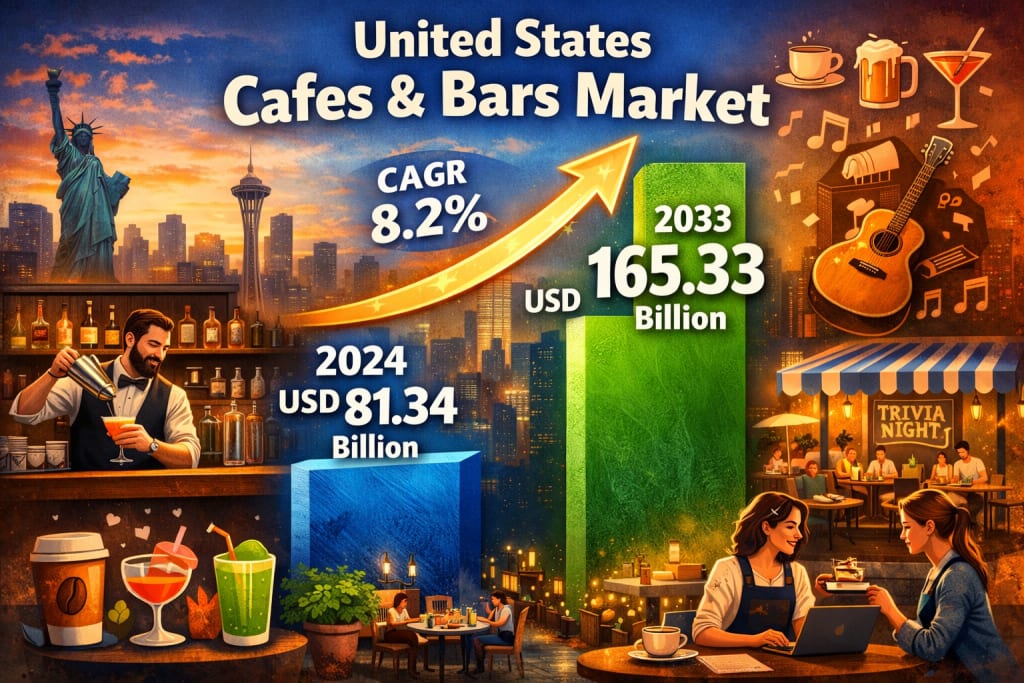
According to Renub Research, the United States Cafes & Bars Market is set for robust expansion, growing from USD 81.34 billion in 2024 to USD 165.33 billion by 2033, registering a strong CAGR of 8.2% from 2025 to 2033. This impressive growth trajectory reflects more than just rising consumer spending; it signals a deeper shift in how Americans socialize, work, relax, and seek experiences outside their homes.
Urbanization, evolving work patterns, the rise of specialty beverages, and the growing importance of “experience-first” dining are all reshaping the competitive landscape. Whether it’s a craft cocktail bar in downtown Austin, a specialty coffee shop in Seattle, or a smoothie bar in suburban California, the U.S. cafes and bars sector is riding a powerful wave of cultural and economic change.
United States Cafes & Bars Market Outlook
Cafes and bars serve a diverse range of consumer needs. Cafes typically focus on coffee, tea, baked goods, and light meals, often acting as informal meeting spaces or remote work hubs. Bars, on the other hand, emphasize alcoholic beverages such as beer, wine, and cocktails, frequently paired with entertainment and social events.
Over the past decade, the boundaries between these formats have increasingly blurred. Many cafes now serve evening cocktails, while bars offer premium coffee during daytime hours. This convergence has expanded customer touchpoints and extended operating hours, boosting revenue potential across the sector.
The growing popularity of specialty coffee, craft beer, and artisanal cocktails has attracted a broad demographic—from young professionals seeking aesthetic workspaces to mature consumers looking for relaxed yet vibrant social environments. At the same time, the rise of remote and hybrid work models has turned cafes into “third spaces” that sit somewhere between home and office, further strengthening their relevance in daily life.
Collectively, these shifts position cafes and bars as key contributors to the U.S. hospitality industry and urban social culture, underpinning the strong growth outlook projected by Renub Research.
Key Drivers of Growth in the U.S. Cafes & Bars Market
1. Growing Coffee Culture and Specialty Offerings
The United States has witnessed a sustained surge in coffee consumption, particularly in the specialty segment. Major chains such as Starbucks, Dunkin’, and Panera Bread continue to expand their footprints, while independent cafes focus on artisanal roasting, single-origin beans, and unique brewing methods.
Consumers are no longer satisfied with just a basic cup of coffee. They seek curated experiences—latte art, seasonal flavors, ethically sourced beans, and personalized напитки (drinks). This shift toward premiumization has significantly increased average ticket sizes and customer loyalty.
While many Americans still enjoy coffee at home, the cafe experience—ambience, community, and craftsmanship—remains a powerful draw that keeps foot traffic strong, especially in urban and high-density suburban areas.
2. Rise of Socializing and Experiential Dining
Bars and pubs have evolved into experience-driven venues. Today’s consumers, particularly younger demographics, value memorable experiences as much as the food and drinks themselves. Live music, themed nights, trivia competitions, and immersive interiors have become key differentiators.
The integration of dining with entertainment has transformed many cafes and bars into lifestyle destinations rather than mere consumption points. A notable example of this trend is the launch of themed venues inspired by popular culture, such as the real-life “Central Perk” coffee shop concept introduced in Boston, tapping into nostalgia-driven consumer engagement.
This focus on experience not only increases visit frequency but also encourages social sharing, amplifying brand visibility through digital platforms.
3. Expansion of Health-Focused and Non-Alcoholic Alternatives
Health and wellness trends are reshaping menus across the industry. Consumers are increasingly looking for plant-based options, organic ingredients, low-sugar beverages, and non-alcoholic alternatives.
Juice bars, smoothie bars, and dessert-focused beverage outlets have gained strong traction, especially among health-conscious and fitness-oriented consumers. At the same time, many traditional bars now offer sophisticated non-alcoholic cocktails and wellness drinks, broadening their appeal.
The rise of vegan and plant-based concepts, such as specialized plant-forward pubs and cafes, highlights how the sector is adapting to changing dietary preferences while unlocking new customer segments.
Challenges Facing the United States Cafes & Bars Market
1. Shifting Consumer Tastes and Home Dining Trends
While the market outlook remains strong, cafes and bars face growing competition from home dining. Increased health awareness, convenience-driven lifestyles, and the popularity of home cooking—supported by food delivery apps and meal kits—have altered consumption patterns.
To counter this, operators must continuously innovate, offering healthier menus, unique experiences, and compelling reasons for customers to step out rather than stay in.
2. Economic Pressures and Rising Operational Costs
Rising costs of labor, rent, utilities, and ingredients continue to pressure profit margins. The broader restaurant industry has already seen several high-profile financial struggles, highlighting the importance of cost optimization and operational efficiency.
In this environment, success increasingly depends on smart pricing strategies, supply chain efficiency, and flexible business models that can adapt to economic fluctuations without compromising customer experience.
Segment Insights: A Market of Many Formats
United States Bars & Pubs Market
Bars and pubs remain central to American social life. The focus on craft beers, signature cocktails, and themed environments has intensified competition, pushing operators to differentiate through creativity and ambiance. Establishments that combine strong beverage programs with engaging atmospheres are best positioned to win in this space.
United States Juice, Smoothie, and Dessert Bars Market
This segment has grown rapidly, driven by wellness trends and demand for fresh, functional beverages. Customizable drinks, fresh ingredients, and visually appealing presentations have helped these outlets carve out a strong niche in the broader beverage ecosystem.
United States Cafes & Bars Chained Outlets Market
Chained outlets dominate much of the landscape thanks to strong brand recognition, standardized quality, and extensive geographic reach. Their scale allows for significant investment in technology, marketing, and menu innovation, helping them stay competitive in a crowded market.
United States Cafes & Bars Leisure Market
The leisure segment emphasizes atmosphere, comfort, and entertainment. These venues aim to become regular “escape spots” for consumers, focusing on interior design, seating comfort, music, and overall experience to drive repeat visits and customer loyalty.
United States Cafes & Bars Retail Market
Retail-oriented cafes and bars blend food and beverage service with merchandise sales, including branded products, packaged goods, and brewing kits. This model not only diversifies revenue streams but also strengthens brand engagement beyond the physical venue.
Regional Outlook: A Diverse and Dynamic Landscape
West United States
The Western region, particularly states like California and Washington, is known for innovation and sustainability. Cafes and bars here often lead in eco-friendly practices, organic sourcing, and trend-setting menus that cater to diverse dietary preferences such as vegan, gluten-free, and farm-to-table concepts. These venues frequently serve as community hubs, reflecting the region’s progressive and health-conscious culture.
South United States
The South blends legendary hospitality with a vibrant modern dining scene. Cities like Austin and Nashville are famous for their energetic nightlife, live music culture, and creative food and beverage concepts. Traditional comfort foods coexist with contemporary twists, creating a rich and appealing culinary identity that continues to attract both locals and tourists.
Midwest United States
The Midwest offers a compelling mix of big-city sophistication and small-town charm. Cities such as Chicago and Minneapolis feature everything from rooftop bars to cozy neighborhood cafes. A strong emphasis on local sourcing and community connections resonates with consumers seeking authenticity and regional character in their dining experiences.
Northeast United States
Although not detailed as extensively, the Northeast remains a mature and competitive market, characterized by dense urban centers, high foot traffic, and a strong café culture driven by students, professionals, and tourists alike.
Market Segmentation Overview
By Cuisine:
Bars & Pubs
Cafes
Juice/Smoothie/Dessert Bars
Specialist Coffee & Tea Shops
By Outlet:
Chained Outlets
Independent Outlets
By Location:
Leisure
Lodging
Retail
Standalone
Travel
By Region:
West
South
Midwest
Northeast
Competitive Landscape and Company Analysis
The U.S. cafes and bars market features a mix of global giants and strong regional players. According to the market overview, company analysis covers four key viewpoints: Overview, Key Persons, Recent Developments & Strategies, and Financial Insights.
Key players include:
Dutch Bros Inc.
Smoothie King Franchises Inc.
Focus Brands LLC
McDonald’s Corporation
Inspire Brands Inc.
International Dairy Queen, Inc.
Tropical Smoothie Cafe LLC
Restaurant Brands International Inc.
Starbucks Corporation
These companies continue to invest in menu innovation, digital ordering platforms, loyalty programs, and store expansion strategies to capture a larger share of this fast-growing market.
The Road Ahead: Innovation, Experience, and Adaptability
Looking ahead, the U.S. cafes and bars market is poised to benefit from continued urbanization, evolving consumer lifestyles, and the growing importance of experience-driven dining. Technology will play a larger role, from mobile ordering and personalized promotions to data-driven menu optimization.
At the same time, sustainability, health consciousness, and community engagement will become even more critical in shaping brand perception and customer loyalty. Operators that can balance cost pressures with creativity and operational efficiency will be best positioned to thrive in this competitive environment.
Final Thoughts
The United States Cafes & Bars Market, projected by Renub Research to grow from USD 81.34 billion in 2024 to USD 165.33 billion by 2033 at a CAGR of 8.2%, reflects far more than financial expansion. It represents a cultural shift in how Americans connect, work, relax, and seek meaningful experiences outside their homes.
From specialty coffee shops and craft cocktail bars to health-focused smoothie outlets and experience-driven leisure venues, this sector continues to reinvent itself. As consumer expectations evolve, cafes and bars that embrace innovation, authenticity, and adaptability will not only survive—but lead the next chapter of America’s social dining story.
About the Creator
Australia Outdoor Advertising Market — Growth, Forecast & Strategic Outlook 2026–2034
The Australia outdoor advertising market is experiencing steady expansion as brands leverage physical media to enhance visibility, engage audiences, and complement digital campaigns. According to IMARC Group, the market reached USD 1,207.7 million in 2025 and is projected to grow to USD 1,914.4 million by 2034, exhibiting a compound annual growth rate (CAGR) of 5.09% during 2026–2034. This growth reflects investment in both traditional and digital out-of-home (OOH) formats — including billboards, transport ads, street furniture, and other outdoor placements — across urban and regional landscapes.
By Amélie Belle5 days ago in Trader


Comments
There are no comments for this story
Be the first to respond and start the conversation.